
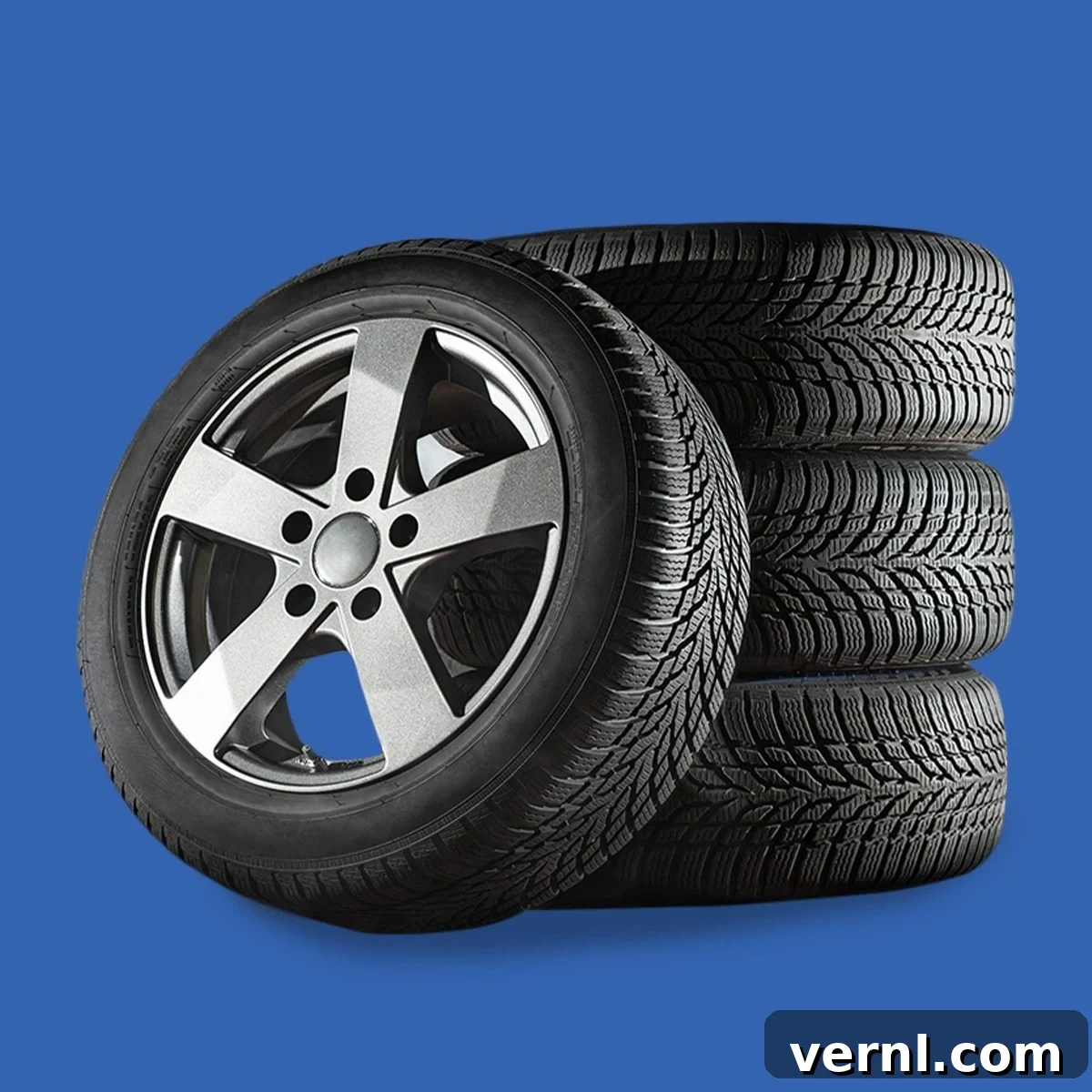
Modern tires may visually resemble their predecessors from a century ago – black and round – but that’s where the superficial similarities end. With over five decades deeply embedded in the automotive service industry, including 47 years as an ASE Master Technician, I’ve had a unique vantage point to witness the revolutionary introduction of countless new tire types and innovative designs. As what many would call a “tire snob,” I can confidently attest that virtually every new tire engineering breakthrough I encountered proved vastly superior to older models. This advancement wasn’t limited to a single aspect; it spanned across the board, encompassing radical improvements in tread design, speed ratings, aspect ratio, temperature resistance, and wear characteristics. These improvements were not just welcome; they were long overdue, especially for vehicles whose rapidly escalating engine power and performance capabilities had far outstripped the safety and control offered by their braking systems and tires.
Today’s cutting-edge tires are a marvel of chemical and material science, often incorporating up to 200 unique compounds in their construction. This complex alchemy results in tires that are significantly less prone to catastrophic blowouts, offer a smoother and quieter ride, and fundamentally contribute to a safer and more enjoyable driving experience. Yet, despite these profound technological leaps, a persistent belief circulates among consumers: that modern tires simply do not last as long as those manufactured 40 or 50 years ago. Given that tires, alongside brakes, constitute the most critical safety components on any vehicle, it’s imperative to delve into this perception. Here, we present insights directly from a seasoned tire distributor and other highly knowledgeable tire experts, shedding light on the true state of modern tire technology and performance.
How Are Modern Tires Designed? The Fusion of Science and Engineering
The design and manufacturing of modern tires represent a sophisticated synergy of precision engineering, advanced material science, chemistry, and exhaustive testing protocols. This meticulous process ensures that every tire not only meets but often exceeds the stringent performance, safety, traction, temperature, and durability standards set forth by regulatory bodies like the National Highway Traffic Safety Administration (NHTSA) and various Federal Motor Vehicle Safety Standards (FMVSS).
Enrique Dent, a respected figure from Dent Tire Distributors, illuminates the foundational process: “Tires begin their life as multiple layers of meticulously selected synthetic and natural rubber compounds. These layers are precisely assembled, then molded, cured under specific conditions, and rigorously reinforced with high-strength steel belts or resilient textile plies. These reinforcements are critical for structural integrity and performance. A major paradigm shift occurred with the transition from older bias-ply tires, prevalent 50 years ago, to the radial construction technique that defines the vast majority of today’s passenger tires. Radial construction is revolutionary because it allows the tire’s sidewalls to exhibit remarkable flexibility, while simultaneously maintaining exceptional rigidity in the tread area. This innovative design delivers a trifecta of benefits: significantly improved ride comfort, enhanced vehicle stability, and notable gains in fuel efficiency due to reduced rolling resistance.”
Beyond the general design principles, tire manufacturers engage in deep collaborative efforts with leading automakers. This partnership aims to establish precise performance goals tailored for specific vehicle models. The outcome is often a custom-designed and purpose-built tire, optimized to complement the unique dynamics, weight distribution, and performance characteristics of that particular vehicle. This level of customization ensures seamless integration with advanced vehicle systems like anti-lock brakes, traction control, and sophisticated Advanced Driver Assistance Systems (ADAS), maximizing overall vehicle safety and performance.
Why the Perception: Are Modern Tires Really Worse?
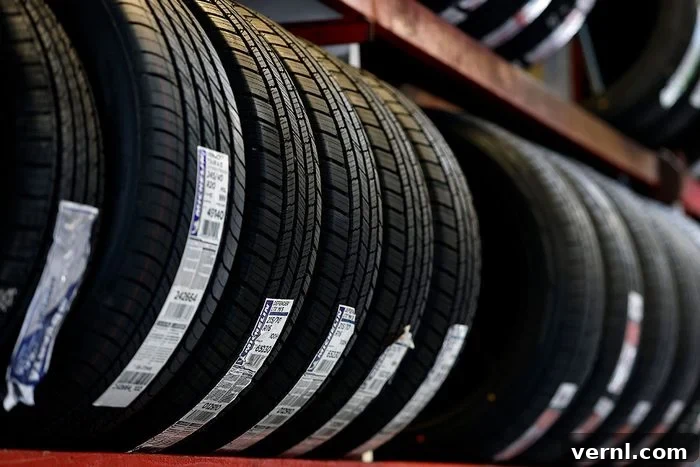
The notion that modern tires are somehow “worse” or less durable than their predecessors from decades past is a widespread sentiment. This perception, while understandable from a consumer perspective, often stems from a fundamental shift in tire design priorities. In bygone eras, tires were indeed constructed using harder, denser rubber compounds. These formulations were inherently more resistant to wear and tear, offering superior mileage figures. However, this longevity came at a significant cost: compromised grip, inferior handling dynamics, and a harsher, less comfortable ride.
“Today’s modern tires prioritize a different set of performance metrics, namely superior road performance, enhanced fuel efficiency, and elevated ride quality,” explains Enrique Dent. He further elaborates, “The use of softer rubber compounds, combined with more flexible and advanced material structures, dramatically boosts traction capabilities and significantly improves braking performance. This is a crucial safety advantage. However, the trade-off is that these softer compounds, by their very nature, tend to wear down faster. This accelerated wear can lead consumers to feel they are receiving less value for their investment, fueling the perception that modern tires are inferior. In reality, it’s not a decline in quality, but rather a deliberate re-prioritization of tire characteristics to meet the demands of contemporary vehicles and driver expectations.”
The Trade-off in Tread Life: Performance vs. Durability
One of the primary drivers behind the perception of reduced longevity is the deliberate choice by manufacturers to employ softer rubber compounds in modern tires. These compounds are engineered to perform exceptionally well across a wider range of temperatures, particularly offering superior grip and flexibility in colder climates. This enhances safety and control in adverse conditions, but it also means a shorter tread lifespan compared to the harder rubber formulations of the past, which were optimized for warm-weather durability. For instance, a traditional, harder all-season touring tire might boast a 70,000-mile warranty, while a softer, high-performance all-weather tire, specifically tailored for optimal handling in colder, snowy conditions, might only be rated for 50,000 miles. This difference is not a flaw, but a conscious engineering decision to provide specific performance benefits.
Understanding how to maximize your tire’s lifespan, regardless of its inherent compound characteristics, remains a critical aspect of vehicle maintenance. Regular rotation, proper inflation, and alignment are more important than ever with these advanced tire technologies.
Increased Cost: Investing in Advanced Technology
The higher price point of modern tires compared to their historical counterparts is another factor contributing to the “worse” perception. However, this increased cost is a direct reflection of the groundbreaking materials and sophisticated manufacturing methods that simply did not exist decades ago. Modern tires are intricate assemblies of advanced polymers, high-silica compounds, meticulously computer-enhanced tread patterns, and internal belts that are both stronger and lighter. These aren’t just minor tweaks; they represent significant leaps in material science and engineering.
“All these advanced factors work synergistically to improve critical aspects like handling precision, fuel economy, and overall safety,” states Enrique Dent. He emphasizes, “These improvements are particularly vital for today’s vehicles, which typically boast increased engine power, heavier curb weights, and far more complex and advanced suspension systems than their ancestors. Consequently, these innovations have substantially driven up production costs. When you purchase a modern tire, you’re not merely buying a block of rubber. You are investing in decades of cumulative engineering research and development. This allows your vehicle to achieve shorter stopping distances, utilize fuel more efficiently, and ensures the tires are meticulously designed to precise Original Equipment Manufacturer (OEM) specifications. Furthermore, they are seamlessly compatible with advanced systems like Tire Pressure Monitoring Systems (TPMS), which are integral to modern vehicle safety.”
Beyond the technological advancements, global economic factors also play a significant role in tire pricing. Rising tariffs, increased shipping costs, and fluctuating raw material prices across the world have collectively contributed to the upward trajectory of tire prices, irrespective of the underlying technology.
Thinner Sidewalls: A Design Choice for Performance
A noticeable characteristic of many modern tires is their thinner sidewalls, particularly evident in the popular low-profile designs often paired with larger diameter wheels. This design choice is not arbitrary; it’s driven by both aesthetic preferences and distinct performance advantages. “Thinner sidewalls are engineered to minimize tire deflection and twisting during aggressive cornering maneuvers,” explains Dent. “This design significantly improves vehicle handling response, enhances overall stability, and even contributes to superior aerodynamic performance, ultimately granting the driver a far more precise and connected sense of control over the vehicle.”
The term “thinner” doesn’t equate to “weaker.” Modern sidewalls are incredibly resilient, constructed using advanced multi-ply materials, sophisticated synthetic cords, and specialized bead reinforcements. This allows them to effectively withstand lateral loads and impacts that would have undoubtedly destroyed older, seemingly thicker tires. A prime example of cutting-edge sidewall technology can be found in run-flat tires. These exceptionally modern tires feature stiff, often reinforced sidewalls specifically designed to support the vehicle’s entire weight, even when there is a complete loss of air pressure. This allows a driver to continue for a limited distance, providing a crucial safety net and convenience.
What Do Modern Tires Do Better? Nearly Everything!
To put it simply, modern tires excel in virtually every measurable performance category when compared to their predecessors, such as those from the 1970s. These contemporary marvels deliver unparalleled braking control, superior steering stability, razor-sharp handling, dramatically increased hydroplaning resistance, enhanced heat tolerance, better shock absorption for a smoother ride, significantly quieter operation, and notably lower rolling resistance. These aren’t just incremental improvements; they represent a fundamental redesign for a safer, more efficient, and more enjoyable driving experience.
Crucially, modern tires are not standalone components; they are engineered to integrate seamlessly and work in perfect harmony with advanced vehicle safety and control systems. This includes anti-lock braking systems (ABS), sophisticated traction control systems, and the increasingly prevalent Advanced Driver Assistance Systems (ADAS). This holistic design ensures that the tire’s capabilities enhance and are enhanced by the vehicle’s electronic aids, creating a safer and more responsive driving dynamic.
Enrique Dent succinctly summarizes the value proposition: “You’re not simply paying for rubber; you’re investing in decades of meticulous engineering that empowers your vehicle to stop faster, navigate with greater precision, and consume fuel more efficiently. This engineering is continually pushing the boundaries of what’s possible in automotive safety and performance.”
Improved Fuel Economy: The Science of Lower Rolling Resistance
Indeed, a significant and tangible benefit of modern tire technology is improved fuel economy. This advancement stems from the widespread adoption of lower rolling resistance (LRR) technology. LRR tires are meticulously designed to minimize the energy a tire consumes as it deforms and flexes against the road surface. By reducing this energy loss, less power is required from the engine to maintain momentum, directly translating into better fuel efficiency.
Dent explains the mechanics: “The shift towards lower rolling resistance designs is achieved through a combination of innovative techniques. This includes utilizing specialized tread patterns that reduce deformation, incorporating advanced silica-infused rubber compounds that lessen energy absorption, and employing shallower tread depths. Each of these elements, when combined, makes a measurable and positive difference in a vehicle’s fuel economy, contributing to both cost savings for the consumer and reduced environmental impact.” For electric vehicles, this translates directly into an extended driving range, a critical consideration for EV owners.
So, Are Modern Tires Really Worse? The Undeniable Truth
Categorically, no, modern tires are emphatically not worse. The perceived drawbacks, such as reduced tread life in certain contexts or higher initial cost, are not indicators of diminished quality. Instead, they represent strategic trade-offs made in pursuit of far greater gains in critical areas. The undeniable fact is that modern tires are overwhelmingly superior to older tires, particularly when it comes to the paramount aspects of safety, traction, and overall performance.
“In truth,” affirms Dent, “tire quality has not merely improved; it has reached an unprecedented zenith. Precision manufacturing techniques, advanced balancing methodologies, and exceptional uniformity standards are at their highest levels in the entire history of tire production.” He further elaborates, “What has undeniably changed is the delicate balance – the trade-off, if you will – of achieving dramatically increased safety and unparalleled performance, often at the strategic cost of ultimate tire longevity. This is a deliberate choice, driven by consumer demand for safer vehicles and legislative requirements for higher performance standards.” The benefits far outweigh the perceived disadvantages, making modern tires a cornerstone of contemporary vehicle safety and efficiency.
Frequently Asked Questions About Modern Tires
Are Tires for Electric Vehicles (EVs) Different?
Yes, tires designed for Electric Vehicles (EVs) are indeed distinct and specifically engineered to address the unique characteristics of these powertrains. As Jason Banys from Goodyear Tire and Rubber Company explains, “EV tires are purpose-built with specialized features to handle an EV’s unique attributes, particularly their significantly added weight due to heavy battery packs and the instant, high torque output of electric motors, especially during acceleration.”
Beyond weight and torque, EV tires often feature an aerodynamically optimized sidewall design, coupled with a specialized compound that works to lower aerodynamic drag. This, in turn, reduces rolling resistance, leading to an extended driving range – a crucial consideration for EV drivers. While many general all-weather tires are now marketed as “electric vehicle (EV) ready,” prospective buyers should exercise due diligence. Standard all-season tires might offer lower rolling resistance, but they frequently lack the reinforced sidewalls and stiffer construction critically needed to effectively manage an EV’s increased weight and mass. Using such tires on an EV can lead to premature wear and a significantly reduced lifespan, compromising both performance and investment.
What’s the Deal with “Performance” and “Eco” Tires?
Performance Tires: These tires are engineered for enthusiasts who demand the utmost in vehicle response and grip. They typically feature high-speed ratings, often denoted by V, W, Y, or Z (V-rated up to 149 MPH; Z-rated up to 186 MPH, with W and Y even higher). Performance tires are constructed from much softer, high-grip rubber compounds, often with specialized tread patterns optimized for maximum contact patch and rapid heat dissipation. These materials are designed to maximize traction, precise steering response, and exceptional cornering ability, making them the ideal choice for sports cars, high-performance sedans, and spirited driving. The inherent trade-off, however, is a significantly shorter lifespan, often in the range of 25,000–30,000 miles, and typically lower fuel efficiency due to their higher rolling resistance compounds and aggressive tread designs.
Eco-Tires (or Low Rolling Resistance Tires): In stark contrast, eco-tires are primarily designed for efficiency, sustainability, and are often manufactured using more environmentally friendly processes and materials. They leverage innovations such as increased natural rubber content, silica derived from rice husks, and recycled polymers. While these advanced, eco-conscious materials might result in a slightly higher upfront cost compared to standard tires, they offer a tangible return. Their primary design goal is low rolling resistance, which directly translates into improved fuel economy for internal combustion engine vehicles and an extended range for electric vehicles. Optimized tread designs in eco-tires also contribute to increased tire longevity, provide a smooth and quieter ride by minimizing road noise, and help in reducing overall vehicle emissions by improving efficiency.
About the Experts
- Enrique Dent of Dent Tire Distributors is the Founder of Dent Tires, LLC in Lithia Springs, GA, and Co-Founder of Wood’s Tire Center at Dent Tire LLC and Wood’s Tire Center. Enrique has over half a century of expertise in the tire industry, logistics, inventory management, and business operations, including working with major companies such as Goodyear Tire and Rubber Company. (Electronic communication, Nov. 4, 2025)
- Howard Boylan Jr. is a Co-Founder of Wood’s Tire Center and Dent Tire Distributors.
- Jason Banys is the Assistant District Manager for Goodyear Tire and Rubber Company.
- Jim DeLeo is the Northeast Division Manager for Hunter Engineering Company.
- Melanie Musson is an auto industry expert with AutoInsurance.org.
References
- § 575.104 Uniform tire quality grading standards, Code of Federal Regulations, Oct 29, 2025.
- Bias Ply vs. Radial Tires: Understanding the Differences, Counteract, Sep 18, 2024.
- Federal Motor Vehicle Safety Standards; Tires, Federal Register, Oct 29, 2025.
- How to convert from bias-ply tire measurements to modern metric tire measurements without using a chart, Hemmings, July 3, 2025.
- Spectroscopy of Polymers, pg. 420, J.L. Koenig, Science Direct, 2nd Ed.
- How a Tire Is Made, U.S. Tire Manufacturers Association, Nov 4, 2025.
RELATED:
- Do You Know What That Little Button on Your Seat Belt Is For?
- What Those Lines on Your Backup Camera Really Tell You
- Here’s What The Small Panel On Your Car’s Front Bumper Is For