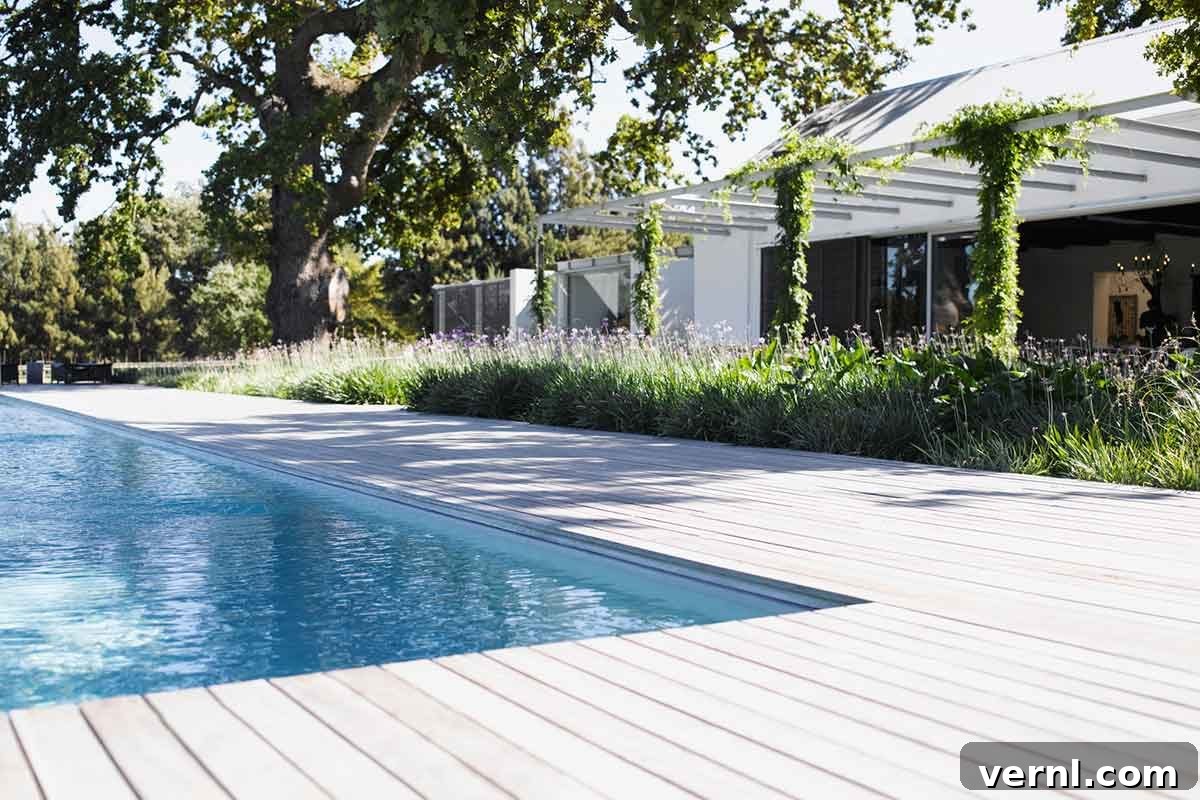
A swimming pool is the vibrant centerpiece of any backyard oasis, a refreshing escape for family fun and relaxation. Yet, the area surrounding the pool – the pool deck – is just as vital as the water itself. Far more than a mere border, a well-designed pool deck transforms your outdoor space into a versatile and inviting living area. It’s the designated spot for lounge chairs, sun umbrellas, patio dining sets, and secure storage, creating a seamless extension of your home into the natural beauty of your backyard.
The right pool decking enhances both the aesthetics and functionality of your newly installed pool. It provides a clean, safe, and comfortable surface for gathering and relaxation, while also acting as a crucial barrier. This perimeter effectively prevents lawn clippings, dirt, and other garden debris from finding their way into your pristine pool water, significantly reducing cleaning and maintenance efforts.
Choosing the ideal pool deck material involves a thoughtful balance of various factors: desired aesthetic, long-term durability, necessary maintenance, safety features, and of course, your project budget. Whether you’re considering a budget-friendly concrete option, elegant pavers, or a modern wood or composite deck, there’s a perfect solution waiting for you. This comprehensive guide will delve into the most common and effective pool decking options, equipping you with the knowledge to make an informed decision that will elevate your outdoor living experience for years to come.
Concrete Pool Decking: Durability, Affordability, and Design Versatility
Poured concrete remains one of the most popular choices for pool decking, and for good reason. It offers an excellent combination of affordability, robust durability, and incredible versatility in design, making it suitable for nearly any backyard style or budget. While concrete is exceptionally strong and long-lasting, it’s important to understand that minor cracks are an inevitable, albeit manageable, aspect of its natural behavior over time. Fortunately, modern concrete finishes can transform this utilitarian material into a sophisticated and inviting surface. Below are some of the most common and attractive concrete decking options:
-
Brushed or Broom-Swept Concrete: The Non-Slip Standard.
The most straightforward and cost-effective concrete decking method involves pouring large concrete sections and then, as the concrete begins to cure, sweeping its surface with a stiff broom. This technique creates a distinctive non-slip texture, which is paramount for safety in a wet poolside environment. While highly functional, this textured surface may feel somewhat rough under bare feet. To minimize the formation of undesirable cracks, professional installers often pour concrete in smaller, manageable sections or strategically cut control joints into larger slabs. These joints act as predetermined weak points, guiding where any potential cracks will form discreetly. For installation, you can expect to pay between $5 and $10 per square foot, a price that can vary based on your geographic location and the availability of materials and labor. -
Colored Concrete: Infusing Custom Hues.
For those seeking to move beyond plain gray, adding color to concrete pool decking is an attractive upgrade. This can be achieved by mixing pigments directly into the wet concrete batch (integral color) or by applying stains or dyes to the surface after it has cured (topical color). The result is a custom look that complements your home’s exterior or landscaping, offering a warmer or more vibrant aesthetic without significantly increasing your overall project cost. A key consideration for colored concrete is the challenge of color matching. If a section of the deck requires repair or replacement in the future, achieving an exact match to the original color can be difficult due to variations in concrete batches, environmental factors, and the aging process of the color. -
Stamped Concrete: Artistry in Stone & Wood Mimicry.
Stamped concrete is one of the most sought-after and aesthetically pleasing options for both pool and patio decking, celebrated for its ability to mimic high-end materials at a fraction of the cost. After the concrete is poured and colored to the desired base tone, large, flexible mats or “stamps” are pressed into the still-wet surface. These stamps create uniform or semi-uniform patterns that can convincingly replicate the natural textures and appearances of irregular stone slabs, classic bricks, intricate pavers, elegant tiles, or even rustic wood planks. The combination of color and pattern allows for incredible design flexibility. However, it’s important to note that the intricate textures created by stamping, especially when sealed with a glossy finish, can sometimes be more slippery than a simple brushed surface. Therefore, using sealants with anti-slip additives is highly recommended for pool surrounds. Stamped concrete typically costs between $12 and $20 per square foot, with the final price depending on the complexity of the design, the number of colors used, and the labor intensity. -
Textured Concrete: The Refined Middle Ground.
Offering a sophisticated alternative that bridges the gap between basic brushed and elaborate stamped concrete, textured concrete is poured in smaller sections. Then, joints and lines are precisely incised into the surface, either manually by skilled artisans or mechanically with a saw. This technique creates clean, geometric, or linear patterns that add visual interest and a contemporary feel to the deck. Beyond aesthetics, these incised lines serve a practical purpose by acting as control joints, helping to manage potential cracking more effectively. Textured concrete provides a clean, modern look and is generally priced from $8 to $10 per square foot, offering excellent value for those desiring an elevated finish without the premium cost of complex stamped designs. - Maintaining Your Concrete Deck: All concrete pool decks benefit greatly from routine care. This includes regular cleaning to remove dirt and debris, and periodic sealing. Applying a high-quality concrete sealer every 2-3 years helps protect the surface from water absorption, staining, UV damage, and chemical erosion from pool water. Promptly addressing minor cracks with appropriate repair kits can prevent them from expanding and compromising the deck’s structural integrity over time.
Pool Deck Pavers: Modularity, Aesthetic Appeal, and Effortless Repair
Similar to the pavers commonly used for patios and walkways, pool deck pavers provide an exceptional degree of design freedom and customization. Their modular nature allows for endless creative possibilities in terms of color combinations, shapes, sizes, and installation patterns, enabling you to craft a truly unique and personalized pool area that perfectly complements your home’s architectural style and landscape. Pavers come in a broad price range, generally between $5 and $40 per square foot installed, with the cost largely dependent on the specific material chosen and the complexity of the installation.
A significant advantage of choosing pavers – whether they are concrete, natural stone, or brick pavers – is their inherent repairability. If an individual paver cracks, stains, or becomes damaged, it can be easily lifted and replaced without disturbing the surrounding deck. This contrasts sharply with monolithic surfaces like concrete, where repairs often require breaking up and re-pouring larger sections. While proper base preparation and underlayment are crucial for the long-term stability and drainage of any paver installation, a skilled DIYer with patience and the right tools can certainly undertake this project, especially for simpler patterns.
-
Concrete Paving Stones: Durable and Economical.
Concrete paving stones represent the most budget-friendly option within the paver category, typically costing around $5 to $10 per square foot. They are manufactured in an impressive variety of shapes, sizes, and colors, and often feature textured surfaces designed to enhance slip resistance, a critical safety feature around a pool. While inherently durable and robust, concrete pavers are somewhat porous. Therefore, they require sealing upon installation and periodic resealing (generally every 1-3 years) to prevent water absorption, inhibit the growth of moss and algae, and protect against staining from pool chemicals or spills. Their versatility and strength make them a very popular choice for high-traffic areas around swimming pools. -
Natural Stone Pavers: Unmatched Elegance and Resilience.
Natural stone pavers are at the higher end of the investment scale but offer unparalleled aesthetic appeal, luxury, and durability. Materials such as travertine, bluestone, flagstone, and granite are highly sought after for pool decks. Travertine, in particular, is a favored choice due to its naturally cool-to-the-touch surface, even when exposed to intense sunlight, and its inherent slip resistance when left unpolished or tumbled. Natural stone pavers boast unique variations in color and texture, resist fading beautifully, and with proper installation and sealing, are highly resistant to cracking and water absorption. While the initial cost is higher, the timeless elegance, exceptional longevity, and superior performance of natural stone often justify the investment, creating a truly sophisticated and enduring pool environment. -
Brick Pavers: Classic Charm with Practical Considerations.
Brick pavers evoke a sense of traditional charm and can create a warm, inviting, and visually stunning pool area. Made from natural clay, these pavers are incredibly durable and, like other modular options, offer the distinct advantage of easy replacement should any individual unit crack or become damaged. However, brick pavers have specific environmental considerations. They are not ideal for areas that experience significant shade or high humidity, as their porous surface can become a breeding ground for moss and algae. This organic growth not only detracts from their classic beauty but also makes the surface dangerously slippery when wet. To maintain their appearance and ensure safety, regular cleaning and the application of a suitable sealant are essential in damp conditions or shaded areas.
Pro Tip: When installing pavers, proper drainage is paramount. Ensure the base and paver surface are designed with a slight slope (at least 1/4 inch per foot) away from the pool to prevent standing water, which can lead to slippery conditions, foundation damage, and issues with the pool’s coping over time.
Wood and Wood Plastic Composite (WPC) Pool Decking: Natural Warmth and Modern Innovation
When constructing a raised deck, particularly for an above-ground pool where the deck needs to be flush with the pool’s coping, traditional ground-laid concrete slabs or pavers are simply not suitable. In these scenarios, wood or wood plastic composite (WPC) decking materials become the superior and often exclusive choice. These materials are also increasingly popular for in-ground pools, offering a distinct aesthetic and a more natural, warmer feel underfoot. For homeowners with adequate carpentry skills and experience, installing a wood or WPC deck can be a gratifying and achievable DIY project.
-
Wood Pool Decking: Organic Beauty with Diverse Maintenance.
The quality and longevity of wood decking are often directly proportional to its cost. Higher-quality, more expensive wood species generally offer superior natural resistance to mold, insect damage, water absorption, and rot, leading to less intensive maintenance over their lifespan. Common wood types used for pool decking include pressure-treated pine, cedar, redwood, and the premium hardwoods such as teak and mahogany.- Pressure-Treated Pine: This is an economical and readily available option. Pine is chemically treated to enhance its resistance to rot and insect infestation. However, it still requires consistent maintenance, including regular sealing and staining, to preserve its appearance, prevent splintering, and protect against weathering.
- Cedar and Redwood: These softwoods are naturally resistant to decay and insects due to their inherent oils and resins. They boast beautiful natural tones that mellow over time. While durable, they benefit significantly from regular sealing to lock in their color and protect against the elements.
- Teak and Mahogany: Considered the epitome of wood decking, these exotic hardwoods are exceptionally dense, naturally rich in protective oils, making them incredibly resistant to pests, rot, and water. They are remarkably durable, offer a luxurious aesthetic, and typically require the least maintenance among wood options, often needing only occasional cleaning. Their superior qualities, however, come with a significantly higher price point, typically ranging from $10 to $15 per square foot for materials alone, excluding installation.
Regardless of the wood species chosen, consistent maintenance – which includes regular cleaning, periodic sanding (if necessary), and the timely reapplication of protective stains or sealants – is crucial to preserve its beauty, prevent splintering, and ensure its structural integrity and longevity around a pool.
-
WPC Pool Decking (Wood Plastic Composite): The Low-Maintenance Revolution.
Sold under numerous brand names, WPC (often referred to as wood polymer composite) is an innovative material engineered from a blend of recycled plastic polymers and wood fibers. This modern composite material offers the desirable aesthetic appeal of natural wood but without many of its traditional drawbacks.- Key Benefits: WPC is highly resistant to pests, rot, and splinters, providing an exceptionally safe and durable surface around a pool. It also features excellent fade resistance, maintaining its color and appearance over many years with minimal to no maintenance beyond occasional cleaning. This “set it and forget it” quality is a primary draw for homeowners seeking a beautiful, long-lasting, and hassle-free pool deck.
- Important Considerations: While its long-term advantages in terms of longevity and significantly reduced maintenance costs are compelling, WPC typically has a higher initial installation cost compared to most natural wood options, often starting at $50 or more per square foot installed. Another notable characteristic is its tendency to retain heat, which can make it uncomfortably hot underfoot on intensely sunny days. Homeowners should consider lighter color options or ensure adequate shade if heat retention is a significant concern.
The initial investment in WPC often proves cost-effective over its lifespan by eliminating the need for annual staining, sealing, and frequent repairs that are common with traditional wood decking.
Retractable Pool Decks: The Pinnacle of Innovation, Safety, and Space Optimization
For discerning homeowners with seasonal pools, limited backyard space, or those who prioritize the ultimate in pool safety and versatility, a retractable pool deck represents a luxurious and cutting-edge investment. This ingenious system is engineered to slide seamlessly over the surface of the pool, effectively transforming the water feature into a solid, robust, and fully usable patio space. These advanced decks are designed to be remarkably sturdy, capable of supporting patio furniture, heavy foot traffic, and even light vehicles, thereby dramatically expanding your outdoor living area when the pool is not in active use.
- Multifunctional Design: The primary allure of a retractable pool deck lies in its unparalleled dual functionality. It allows you to elegantly conceal your pool, instantly creating a larger, uninterrupted hardscape area perfect for alfresco dining, large gatherings, children’s play, or simply extending your existing lawn or patio space. This feature is particularly invaluable in smaller backyards where maximizing every square foot is essential.
- Enhanced Safety & Security: When in its closed position, a retractable pool deck forms an impenetrable barrier over the water, offering an unmatched level of safety for children, pets, and even curious wildlife. This solid cover completely eliminates the risk of accidental falls into the pool, providing homeowners with profound peace of mind. Furthermore, it acts as a robust security measure, deterring unauthorized access to your pool.
- Thermal Insulation & Cleanliness: Beyond its safety and spatial benefits, these decks offer significant practical advantages. They provide exceptional thermal insulation, which drastically reduces water evaporation and heat loss from heated pools, leading to substantial energy savings. Additionally, they effectively keep the pool free from leaves, dirt, dust, and other environmental debris, significantly minimizing cleaning efforts and reducing the consumption of pool chemicals.
- Seamless Aesthetic Integration: Retractable decks can be custom-designed to integrate flawlessly with your existing outdoor décor and patio materials. They can be finished with various materials, including natural wood, sophisticated composite, or even elegant stone, ensuring they complement your home’s architectural style and aesthetic vision.
- Investment & Key Considerations: Given their advanced engineering, custom fabrication, and automated mechanisms, retractable pool decks represent a significant investment. Smaller systems typically start around $15,000, while larger, more elaborate or highly customized installations can cost substantially more. Factors influencing the final price include the size of the pool, the chosen decking materials, and the complexity of the automated control system. While the initial upfront cost is high, the long-term benefits in terms of superior safety, versatile space optimization, reduced pool maintenance, and energy savings can offer considerable value for discerning homeowners seeking the ultimate in backyard luxury and functionality.
Crucial Considerations for Your Pool Deck: Beyond Materials
While selecting the perfect decking material is a fundamental step, several other critical factors must be carefully considered during the design and installation phases to ensure your pool deck is not only beautiful but also safe, functional, and durable for many years to come. Keeping these aspects in mind will help maximize your investment and enhance your overall poolside experience.
-
Safety First: Prioritizing Slip Resistance.
Given the inevitable presence of water around any pool, ensuring adequate slip resistance is paramount. Always prioritize materials with inherent non-slip properties or those that can be specifically treated to enhance friction. Excellent choices include textured surfaces like brushed or broomed concrete, unglazed tiles, natural stones such as travertine with a tumbled or honed finish, and composite decking with defined texture. When opting for sealed surfaces like stamped concrete or smooth pavers, always inquire about sealants that incorporate anti-slip additives. Smooth, polished surfaces and glazed tiles are generally the most slippery when wet and should be used with extreme caution, if at all, in direct proximity to the pool’s edge. -
Durability and Longevity: Building to Last.
Your pool deck will be subjected to a challenging environment: intense UV radiation from sunlight, constant exposure to moisture, the corrosive effects of pool chemicals, and consistent heavy foot traffic. Therefore, it is crucial to select a material renowned for its resilience and ability to withstand these harsh elements without significant degradation. Research the material’s expected lifespan and thoroughly review any warranties offered by manufacturers to ensure your investment is protected. -
Heat Retention: Staying Cool Underfoot.
Darker-colored decking materials, especially dense options like certain types of stone or composite decking, can absorb and retain a significant amount of solar heat. This can make them uncomfortably hot to walk on barefoot during peak summer hours. Lighter color palettes and materials like travertine are naturally cooler underfoot due to their reflective properties and porosity. If heat retention is a major concern in your climate, it is highly advisable to test samples of your preferred materials under direct sunlight before making a final decision. -
Maintenance Requirements: Planning for Upkeep.
Different decking materials come with varying levels of maintenance demands. While concrete and pavers typically require periodic cleaning and sealing, natural wood decks will need more frequent staining or sealing, and potentially sanding, to maintain their appearance and integrity. Composite decking is often marketed as “low-maintenance,” generally only requiring occasional washing. Factor in both the time commitment and the ongoing financial cost associated with upkeep (e.g., sealants, cleaners, repair materials) when making your material choice. -
Drainage: Preventing Water Accumulation.
Effective drainage is absolutely critical for a safe and durable pool deck. Improper drainage can lead to hazardous slippery surfaces, hasten water damage to the deck’s substructure, and even compromise the integrity of the pool shell or coping over time. Ensure your deck is designed with a minimum slope of 1/4 inch per linear foot away from the pool. Consider incorporating trench drains, French drains, or strategically grading the surrounding landscape to efficiently direct water away from the deck and pool area. -
Local Climate Considerations: Adapting to Your Environment.
The climate of your region will heavily influence the most suitable decking material. In areas prone to harsh freeze-thaw cycles, materials must possess excellent freeze-thaw resistance to prevent cracking and spalling. In hot, arid, or intensely sunny regions, heat retention and UV stability become primary considerations. High humidity environments may necessitate materials less prone to mold and algae growth. -
Comprehensive Budgeting: Beyond the Initial Cost.
When budgeting for your pool deck, look beyond just the initial material cost. Remember to factor in the labor for installation (which often constitutes a significant portion of the total project expense), preparation costs (e.g., excavation, grading, base materials), and ongoing maintenance expenses over the deck’s lifespan (e.g., sealants, specialized cleaners, potential repair costs). Obtain multiple detailed quotes from reputable contractors to gain a clear understanding of the full financial commitment.
Frequently Asked Questions About Pool Decking
Which pool decking material is the most slip-resistant?
Decking materials known for excellent anti-slip properties include wood (especially those with a natural grain or textured finish), brick (though care must be taken to prevent moss in damp areas), composite decking with a pronounced textured surface, textured concrete (such as brushed or broom-swept finishes), unpolished natural stone (like tumbled or honed travertine), and unglazed tiles. In contrast, smooth concrete, polished natural stone, and glazed tiles are generally the most slippery when wet and should be approached with extreme caution, or ideally avoided, directly around a pool.
Is it important for pool decking to be waterproof or sealed?
Yes, it is critically important, particularly for porous materials like concrete, natural stone, and many types of pavers. When water seeps into these materials, it can lead to a cascade of problems, including unsightly staining, the growth of slippery moss and algae, and in colder climates, significant damage from freeze-thaw cycles. Over time, absorbed moisture can cause hairline cracks to develop and expand, severely undermining the structural integrity and aesthetic appeal of your deck. Applying a high-quality waterproofing sealer every few years is strongly recommended for these materials to provide robust protection against moisture penetration, chemical exposure from pool water, and UV degradation, thereby significantly extending the life and preserving the beauty of your pool deck.
What are the best pool decking options for an above-ground pool?
For above-ground pools, especially those that benefit from a raised deck built level with the pool’s top edge, wood and wood plastic composite (WPC) decking are the most ideal and practical choices. These materials allow for the construction of elevated platforms that provide seamless access, integrate the pool beautifully into your backyard landscape, and offer a comfortable surface. While concrete and ground-laid pavers are typically used for in-ground or ground-level installations, a small, level concrete pad can often serve as a stable and long-lasting base directly underneath the above-ground pool itself.
How can I keep my pool deck cool in hot weather?
To effectively minimize heat retention on your pool deck, prioritize lighter-colored decking materials. Natural stones such as travertine are particularly renowned for staying remarkably cooler underfoot, even in direct sunlight, due to their natural porosity and reflective qualities. Similarly, light-colored concrete finishes or lighter shades of composite decking will absorb less heat and be significantly more comfortable to walk on than darker alternatives. Additionally, strategically incorporating shade structures like pergolas, cantilever umbrellas, or thoughtfully planted trees can provide crucial relief from direct solar radiation during the hottest parts of the day.
Can I install a pool deck myself, or should I hire a professional?
The feasibility of a DIY pool deck installation largely depends on the specific decking material you choose and your personal skill level and experience with construction projects. Simpler options, such as basic brushed concrete slabs or dry-laid concrete pavers, can often be successfully tackled by an experienced DIY enthusiast who possesses the right tools, knowledge, and meticulous planning skills. However, more complex installations, including intricate stamped concrete designs, elaborate natural stone layouts, or multi-level raised wood and composite decks, generally necessitate the expertise of professional contractors. These projects demand precise measurements, specialized equipment, structural engineering considerations, and adherence to local building codes. Always consult local regulations and obtain any necessary permits before commencing any pool deck project.
Sources
- Azenco: Sliding Deck Pool Cover; (Accessed 2024)