
Welcome to Family Handyman‘s Guide to Winterization, your essential resource for preparing your home for the colder months. Discover expert advice on fortifying your property against winter’s chill, from preventing frozen pipes to minimizing heating costs. This comprehensive guide ensures you’re well-equipped to face the season without the stress of unexpected damage or inflated utility bills. Your home’s resilience starts here.
Investing in outdoor patio furniture elevates your living space, creating a perfect environment for relaxation and entertainment. However, as the crisp air of autumn transitions into the biting cold of winter, a new challenge arises: how to protect this valuable investment from the harsh elements. Neglecting proper winterization can lead to significant damage, drastically shortening the lifespan of your beautiful outdoor pieces.
“I’ve personally witnessed the destructive impact harsh winter weather can have on unprotected outdoor furniture,” explains Paul Knapp, a distinguished landscape designer based in Davenport, Iowa. “It’s shocking how quickly brand-new furniture can appear a decade old after just one winter season. Common issues include rust on metals, unraveling wicker, wood splitting, and plastic cracking, all preventable with the right precautions.”
To help you preserve your outdoor oasis for many seasons to come, we’ve compiled a comprehensive guide to winterizing your deck, outdoor kitchen, and patio furniture effectively. With these strategies, you can safeguard your furniture, ensuring it remains as inviting and durable as the day you bought it.
Ultimate Guide to Winterizing Outdoor Furniture
Whether you’re contending with limited indoor storage space or exploring the best protective covers, these essential steps will empower you to effectively shield your outdoor furniture against winter’s ravages. Proactive care not only extends the life of your investment but also maintains its aesthetic appeal and structural integrity, saving you time and money on repairs or replacements.
Optimal Protection: Storing Furniture Indoors
The most effective strategy for protecting your outdoor furniture from winter’s wrath is to bring it indoors, advises landscape designer Paul Knapp. A garage, shed, or even a basement offers a controlled environment, free from snow, ice, strong winds, and extreme temperature fluctuations. Before moving furniture inside, thoroughly clean each piece to remove dirt, debris, and potential mold spores. Ensure everything is completely dry to prevent mildew growth during storage. If storage space is at a premium, maximize your area by disassembling larger items where possible and stacking chairs or tables efficiently. For those without on-site storage, Knapp suggests considering a rented storage unit. While an added expense, it’s a worthwhile investment to protect the considerable sum you’ve already spent on quality outdoor furniture, ensuring you can enjoy it for many seasons to come.
Superior Shielding: Utilizing Outdoor Furniture Covers
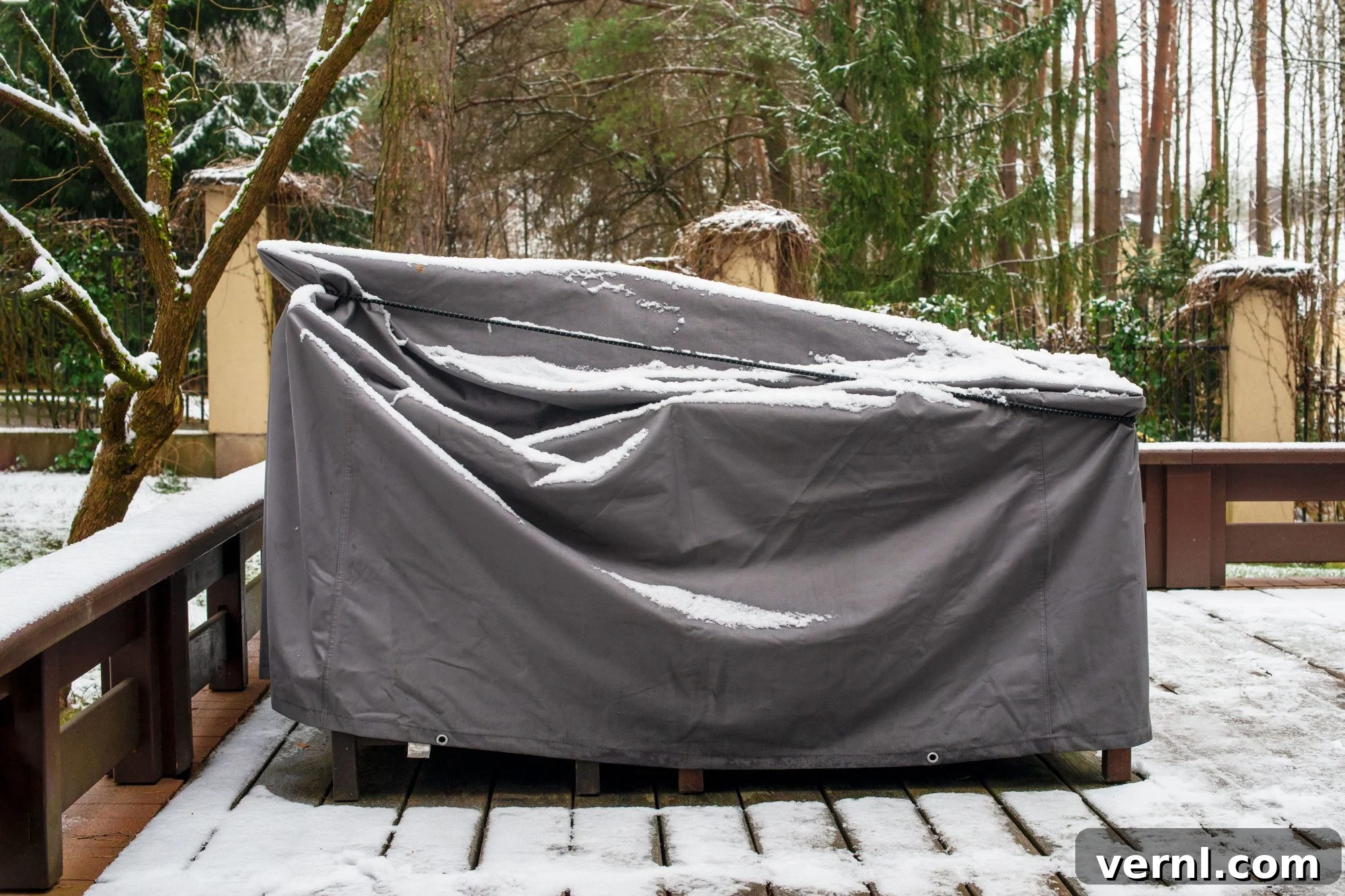
When indoor storage isn’t an option, investing in high-quality outdoor furniture covers is your next best line of defense. Knapp recommends reputable brands like Coverstore and Outer, alongside widely available options at Amazon and Walmart. The market offers a vast array of covers in various sizes, materials, and designs, ensuring a snug fit for virtually any piece. Look for covers made from durable, weather-resistant fabrics that are both waterproof and breathable, preventing moisture buildup while keeping elements out.
“It’s crucial to inspect your covers periodically throughout the winter,” Knapp emphasizes. “Ensure they remain securely fitted, especially after strong winds, and promptly brush off any accumulation of snow, ice, or heavy debris.” This vigilance prevents sagging, which can create pockets for water to pool. Additionally, consider applying a specialized water-repellent spray to both your furniture (if appropriate for the material) and the covers themselves, enhancing their protective capabilities and keeping your outdoor furniture in pristine condition for longer.
Budget-Friendly Defense: Covering Furniture with Tarps
For a more economical approach to protecting outdoor furniture, heavy-duty plastic tarps offer a viable alternative to specialized covers. Easily found online or at your local hardware store, tarps are available in a wide range of sizes and thicknesses. When selecting a tarp, prioritize durability and UV resistance to ensure it withstands prolonged exposure to winter conditions without degrading.
Many tarps feature reinforced grommet holes, making them exceptionally easy to secure over your furniture. Paul Knapp advises using bungee cords, strong twine, or rope to cinch the bottom of the tarp tightly around the base of the furniture. “Position the tarp carefully, wrapping the sides securely and fastening the bottom to create as watertight a seal as possible,” he explains. However, it’s vital to allow for some ventilation underneath the furniture to prevent the accumulation of condensation, which can lead to mold and mildew growth. Elevating furniture slightly or placing small blocks under the tarp can help facilitate airflow. For painted wooden furniture, taking extra precautions to prevent moisture exposure is particularly important to avoid peeling or cracking.
Strategic Storage: Cushions In, Frames Out
One of the simplest yet most impactful steps in winterizing your patio setup is separating cushions from frames. “In climates where temperatures consistently dip below freezing, it’s always best to bring cushions indoors for the winter,” advises Paul Knapp. Fabrics, foam, and padding are highly susceptible to moisture, freezing, and UV degradation, which can lead to mold, mildew, fading, and structural breakdown.
Once inside, thoroughly clean your cushions. If the covers are removable, follow the manufacturer’s washing instructions on the tag. For non-removable covers or minor spots, gentle spot cleaning is recommended. Crucially, ensure that cushions are completely dry before storage – even the slightest dampness can promote mold growth. Store them in breathable containers or sturdy boxes in a climate-controlled environment, away from pests. Meanwhile, the durable frames, once cleaned, can remain outdoors under appropriate covers, significantly reducing your indoor storage needs.
Essential Tips for Winter Storage and Protection
Beyond general covering strategies, specific materials demand tailored care to ensure their longevity through the winter months. Understanding these nuances can make a significant difference in the condition of your furniture come spring.
Special Care for Wood Furniture
Wood furniture, with its natural beauty, requires particular attention when preparing for winter. As advised by This Old House, a reputable home enthusiast company, applying a high-quality sealant or wood protector is crucial. This creates a barrier against moisture absorption, which is the primary cause of warping, cracking, and rot. Different wood types (e.g., teak, cedar, acacia) may require specific oils or sealants, so always check manufacturer recommendations. For outdoor storage, breathable covers are paramount, allowing air circulation to prevent condensation. If stored indoors, a dry, unheated space is ideal to avoid drastic temperature fluctuations that can stress the wood.
Protecting Metal Furniture from Corrosion
The main adversary for metal outdoor furniture during winter is rust. Before storing any metal pieces, conduct a thorough inspection for existing rust spots. Treat these immediately with a wire brush and rust-inhibiting primer. A key preventative step is applying a rust inhibitor or a protective wax coating to all metal surfaces before putting the furniture away for the season. For wrought iron, consider a fresh coat of rust-resistant paint. Aluminum furniture is generally less prone to rust but can still benefit from cleaning and a protective wax, especially if it has painted finishes that could chip or fade. Ensure all metal parts are completely dry before covering or storing.
Winterizing Wicker and Plastic Furniture
Wicker furniture, whether natural or synthetic, and plastic/resin pieces also benefit from proper winter care. Natural wicker is highly susceptible to moisture damage, becoming brittle and prone to unraveling or mold. It should ideally be stored indoors in a dry, temperate environment. Synthetic wicker (resin wicker) is more weather-resistant but can still suffer from extreme cold, which may cause cracking, especially in less durable varieties. Both types should be thoroughly cleaned and dried. Plastic and resin furniture, while robust, can become brittle in freezing temperatures, leading to cracks. Cleaning them thoroughly and storing them indoors or under sturdy covers is recommended. Stacking plastic chairs can save space but ensure they are stable and not prone to tipping.
The Consequences of Neglecting Winter Furniture Protection
Failing to learn how to protect outdoor furniture in winter can result in more than just minor cosmetic damage; it often leads to a cascade of problems that demand significant time, effort, and financial outlay. Leaving furniture exposed year-round means facing hours of intensive cleaning, rust removal, re-sealing, or even repainting come spring. Beyond the labor, untreated damage can compromise the structural integrity of your pieces, shortening their lifespan and necessitating costly replacements sooner than anticipated. The smart choice is always to invest a little time in prevention now, saving yourself substantial headaches and expenses later.
Frequently Asked Questions About Winterizing Outdoor Furniture
How do I prevent mold on my patio cushions during storage?
Preventing mold on patio cushions is a critical aspect of winter protection. The key is ensuring cushions are absolutely dry before storage; even slight dampness can foster mold growth. Store them in a climate-controlled environment, such as a dry basement or spare room, rather than a humid garage or shed. Opt for breathable storage containers or fabric bags instead of sealed plastic bins, which can trap moisture. Adding silica gel packets or moisture absorbers to your storage boxes can also significantly help in absorbing any residual humidity and preventing mold development.
When is the best time to start winterizing my outdoor furniture?
The ideal time to begin winterizing your outdoor furniture is typically in late autumn, before the first hard freeze or consistent inclement weather arrives. Monitor local weather forecasts for anticipated drops in temperature or significant precipitation. Early preparation ensures you’re not rushing the process or caught off guard by sudden severe weather conditions. Cleaning and drying furniture takes time, so starting proactively allows for thorough preparation.
Can I leave my outdoor fire pit or grill outside all winter?
While many fire pits and grills are designed to be relatively durable, leaving them completely exposed to winter elements is not advisable. Moisture can lead to rust in metal components, and extreme temperatures can affect igniters, hoses, and paint finishes. It’s best to thoroughly clean your fire pit or grill, remove any ash or grease, disconnect propane tanks (storing them upright and outdoors, away from your home), and then cover them with a heavy-duty, weather-resistant cover. If possible, storing smaller units in a shed or garage offers even greater protection.
How should I store outdoor rugs for the winter?
Outdoor rugs, like cushions, are susceptible to mold and mildew if stored improperly. First, thoroughly clean your outdoor rug, removing all dirt and debris. Use a hose and mild soap, then rinse completely. Hang the rug to ensure it is 100% dry before rolling it up tightly. Store the rolled rug in a dry, climate-controlled indoor space, ideally in a breathable storage bag or container to protect it from dust and pests. Avoid folding, as this can create permanent creases.
About the Expert
- Paul Knapp is the esteemed founder and landscape designer at LandscapeArchitectural.com. With a rich background spanning two decades in the landscaping industry, Knapp has honed his expertise through diverse roles, including landscape material supplier, innovative designer, and meticulous construction manager. His profound understanding of outdoor environments makes him an invaluable resource for this guide.
Sources:
- This Old House: “How To Care for Wood Patio Furniture”
- Coverstore: “Outdoor Patio Furniture Covers & Indoor Storage Solutions”
- LandscapeArchitectural.com: “Landscape designer and architect in Davenport, Iowa”