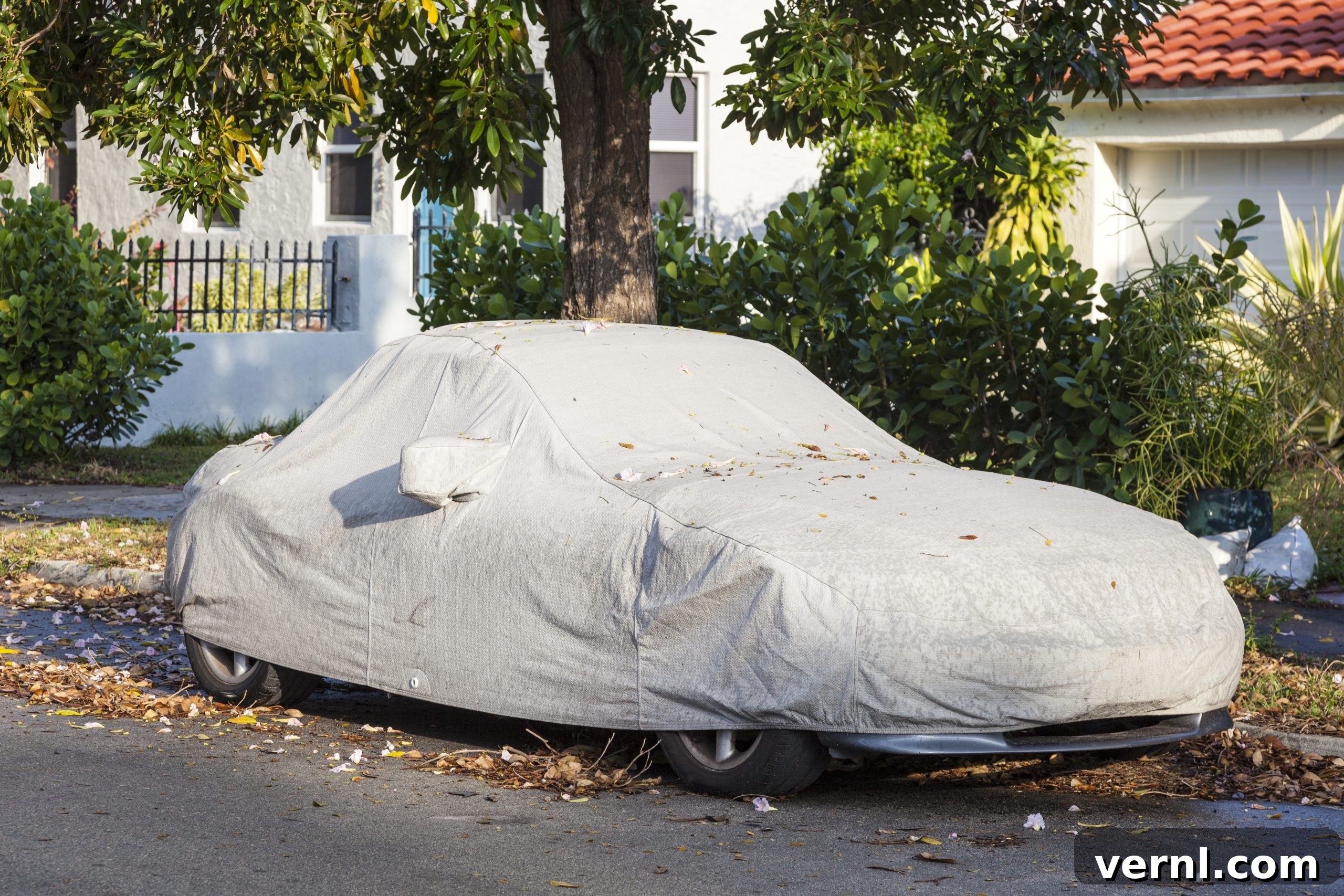
Whether you’re shifting to remote work, embarking on an extended vacation, or simply have a vehicle you don’t use daily, understanding the impact of infrequent usage on your car is crucial. Leaving a car parked for weeks or months without proper preparation can lead to a host of problems that range from minor inconveniences to costly repairs. From a depleted battery to issues with fuel and tires, neglecting your parked vehicle can result in unwanted surprises when you’re ready to hit the road again.
Shawn Miller, an experienced auto mechanic and founder of Modified Rides, warns, “Long-term parking can quietly lead to a range of issues, from a dead battery to sticky brakes and fuel degradation. A little preventative maintenance goes a long way in avoiding costly repairs and unexpected breakdowns.”
One of the simplest yet most effective preventative measures, as suggested by Meegan Hall, senior editor of Car Talk, is to drive your car for at least 20 minutes once every week or two. This brief drive helps maintain battery health, ensures essential fluids circulate properly, and prevents flat spots from developing on tire treads. Hall emphasizes, “Flat spots can be temporary or permanent. With permanent flat spots, the very construction of the tire can become compromised, leading to safety hazards and the need for expensive replacements.”
Drawing from over 30 years of experience maintaining and storing cars, especially through harsh northern winters, we’ve compiled essential tips to help you protect your vehicle. Whether your car is a modern marvel or a beloved classic, keeping an eye out for these common pitfalls is vital if you’re parking it at home for multiple weeks or months. Proper long-term car storage isn’t just about saving money; it’s about preserving your vehicle’s reliability and ensuring it’s ready for your next journey.
Understanding the Impact of Long-Term Car Storage
Extended periods of inactivity can take a significant toll on various components of your vehicle. Unlike a car that is driven regularly, a parked car doesn’t benefit from the constant circulation of fluids, the recharging of its battery, or the movement that keeps mechanical parts lubricated and free from seizing. This section delves into the specific problems that can arise and how to mitigate them, ensuring your vehicle remains in optimal condition.
Protecting Your Car’s Battery: Preventing a Weakened Battery
The most frequent issue encountered when parking a vehicle for more than a week is returning to a dead car battery. Even when off, modern vehicles have a constant, albeit small, “parasitic draw” from systems like the alarm, clock, radio presets, and engine control unit (ECU). Over time, this draw, combined with natural battery self-discharge, can deplete the battery’s charge. Factors like cold weather further compound this problem, as batteries are less efficient in lower temperatures and require more power for cold-weather starting. For those with RVs, similar considerations apply; understanding the best RV battery options can make a difference in extended storage.
To combat battery drain, driving your car for even a few miles every few days or once a week can keep the charge topped off. This allows the alternator to replenish the battery. However, if you anticipate parking your car for prolonged periods, especially a month or longer, connecting a smart battery charger or maintainer is highly recommended. Devices like the Battery Tender Junior automatically monitor battery voltage and deliver a trickle charge as needed, keeping your battery at an optimal level without overcharging. Simply plug it into a readily accessible garage outlet, and it will ensure a healthy charge for your battery.
If your battery is consistently dead after short parking periods, you might need to troubleshoot for a more significant issue beyond simple self-discharge. A healthy vehicle electrical system should generally manage for at least two weeks without the battery dying. Repeated deep discharges, especially in conventional lead-acid batteries, can cause permanent damage, reducing their overall lifespan. Discharging below approximately 80 percent of its capacity (often the point where the car won’t start) can harm the battery plates, leading to premature failure.
For enhanced durability, consider upgrading to an Absorbent Glass Mat (AGM) battery. AGM batteries are designed to handle more discharge cycles without suffering damage, making them a robust option for vehicles that experience intermittent use. While more expensive, they offer greater resilience, though they are not a complete remedy if underlying electrical issues are causing excessive battery depletion.
Combating Rusty Brakes: Keeping Your Stopping Power Intact
A week parked in damp or wet conditions can lead to surface rust on brake rotors, and in severe cases, the brakes can even seize. This is particularly common in humid climates or during rainy seasons. When you start driving after a period of rest, you might initially hear a slight grinding noise or feel a mild vibration. In most instances, this is just superficial rust being scrubbed away by the brake pads, and it usually disappears after a few gentle stops. Over short periods, this surface rust is unlikely to cause permanent damage to your braking system.
However, in extremely wet conditions coupled with longer parking durations (two weeks or more), corrosion can become more pronounced. I’ve personally encountered situations where the brake pads corroded so strongly to the rotors that the car wouldn’t move with the foot off the brake, even in Drive. To remedy this, a gentle application of gas while ensuring you’re ready to control the vehicle if it moves suddenly can often free the brakes. Afterward, driving slowly and performing a few light stops helps to clean the rotors thoroughly. To prevent rust, consider parking your vehicle in a garage or under a protective cover to shield it from the elements. Regularly moving the vehicle, even just a few feet, can also help by changing the contact points between pads and rotors.
Preventing Stale Gas: Maintaining Fuel System Health
If you anticipate your car will go two months or more without using a full tank of gas, taking preventative measures is essential to avoid potential engine problems. Stale gas can lead to reduced engine efficiency, rough idling, misfires, or even a complete failure to start. Modern gasoline, especially blends containing ethanol, can degrade over time. Ethanol attracts and absorbs moisture, which can lead to phase separation (water settling at the bottom of the tank) and promote corrosion within the fuel system.
The primary precaution for preventing stale gas is to treat your fuel tank with a high-quality fuel stabilizer, such as Sta-Bil or Seafoam. These products work by preventing oxidation and chemical breakdown of the fuel. You can purchase them at any auto parts store or gas station. Add the specified amount to your fuel tank according to the product instructions, and then run the engine for about 5-10 minutes to ensure the stabilizer circulates throughout the entire fuel system, including the fuel lines and injectors. Remember, fuel preservatives cannot restore gas once it has gone stale, so early treatment is key. This advice also applies to gas stored in external cans for lawnmowers or generators.
Secondly, it’s advisable to fill your gas tank closer to full rather than leaving it nearly empty when storing the car. A full tank minimizes the amount of air space, thereby reducing the exposure of fuel to oxygen which accelerates degradation. It also significantly lowers the risk of condensation forming within the tank, which can lead to water contamination and internal corrosion. As an added benefit, keeping your tank full is a smart safety practice, providing a reserve in case of unexpected emergencies or needing to move the vehicle suddenly.
Avoiding Flat-Spotting Tires: Preserving Tire Integrity
For vehicles parked for three months or longer, tires can develop “flat spots.” This occurs when the weight of the car rests on the same section of the tire for an extended period, causing the rubber and internal structure to deform. This problem is exacerbated by low tire pressure and cold weather, as lower temperatures cause tire pressure to drop by approximately one pound per square inch (PSI) for every 10 degrees Fahrenheit decrease.
The onset of the cold season is an ideal time to check your tire pressure anyway, as underinflation can compromise both safety and fuel efficiency. When preparing your car for long-term storage, there are several strategies to prevent flat-spotting. One method is to periodically move the car, even just a few inches, to shift the contact point on the tires. Another effective approach is to slightly overinflate your tires, typically by 5 to 10 PSI above the recommended pressure (check your owner’s manual for safe limits), to better support the vehicle’s weight. For truly long-term storage, the best practice is to lift the car onto jack stands, ensuring the tires are completely off the ground. This completely removes pressure from the tires, preserving their shape and extending their lifespan.
Protecting Against Pests: Keeping Unwanted Guests Out
Mice, rats, and other rodents pose a significant threat to parked vehicles, often causing permanent and expensive damage. They seek out dark, quiet, and secluded spaces to nest, and a parked car’s engine bay, interior, or trunk can be an ideal habitat. Damage can include chewing through electrical wires (a common cause of unexplained electrical failures), eating fabric upholstery, contaminating air filters, and leaving droppings that can cause unpleasant odors and hygiene issues.
You can significantly reduce the risk of rodent infestation by parking your car in an active garage, a well-lit area, or a spot that receives regular sunlight exposure. Before storage, thoroughly clean the vehicle’s interior, removing any potential food sources, crumbs, or trash that might attract pests. To actively deter rodents, consider placing physical barriers like steel wool in tailpipes and air duct openings (remember to remove them before driving!). Leaving the hood and trunk open can also discourage nesting, though you’ll need to unplug lights or fuses to prevent battery drain. For active infestations, deploying your preferred mouse trap or bait station can be effective.
Finally, regarding home remedies for pest control in vehicles, let me share some insights from experience. In vehicle storage communities, particularly among classic car and RV owners, there’s ongoing debate about the efficacy of scented Bounce dryer sheets and bars of Irish Spring soap. While mice might initially be repelled by the strong scent of dryer sheets, this scent dissipates rapidly, often within a week or two, making them a very limited and short-term solution. As for Irish Spring bar soap, I’ve personally witnessed instances where mice simply gnawed through and consumed chunks of the soap, indicating it’s not a reliable deterrent. It’s best to stick to proven methods and commercial pest control products for effective protection.
FAQ: Your Questions About Long-Term Car Storage Answered
What should I do to prepare my car for being parked for a month or longer?
When preparing your vehicle for extended storage, prioritize the battery, fuel system, tires, and interior cleanliness. Meegan Hall recommends either disconnecting the battery’s negative terminal or, preferably, installing a smart battery tender to maintain its charge. She advises filling the gas tank and adding a fuel stabilizer to prevent moisture accumulation, fuel degradation, and corrosion. Ensure your tires are properly inflated, or even slightly overinflated, to prevent flat spots.
“Crucially, thoroughly clean the interior of your vehicle,” Hall adds. “A car free of personal valuables makes it less appealing to thieves, and a vehicle devoid of crumbs, trash, and excessive dust will be far less interesting to rodents looking for a new home.”
What should I do if the car doesn’t start after being parked for a long time?
If your car fails to start after a long period of inactivity, begin by troubleshooting for a dead battery. A common indicator of a dead battery is a rapid clicking sound when you turn the key, with no engine turnover. If the engine attempts to crank but doesn’t catch, or if it stalls immediately after starting, you might be facing issues with stale fuel, a faulty starter motor, significant rodent damage to wiring, or even critical fluid leaks, as noted by Hall. In such cases, if basic jump-starting doesn’t work, it’s best to consult a professional mechanic.
About the Experts
- Shawn Miller is an auto mechanic, founder of Modified Rides, and describes himself as being obsessed with building and fixing cars. His practical insights come from years of hands-on experience in vehicle maintenance and repair.
- Meegan Hall is the senior editor of Car Talk, the digital content iteration of the long-running NPR show dedicated to all things automotive. Her expertise lies in translating complex car care information into accessible advice for vehicle owners.