
Should You Cover Your AC Unit in Winter? Expert Insights & Essential Maintenance
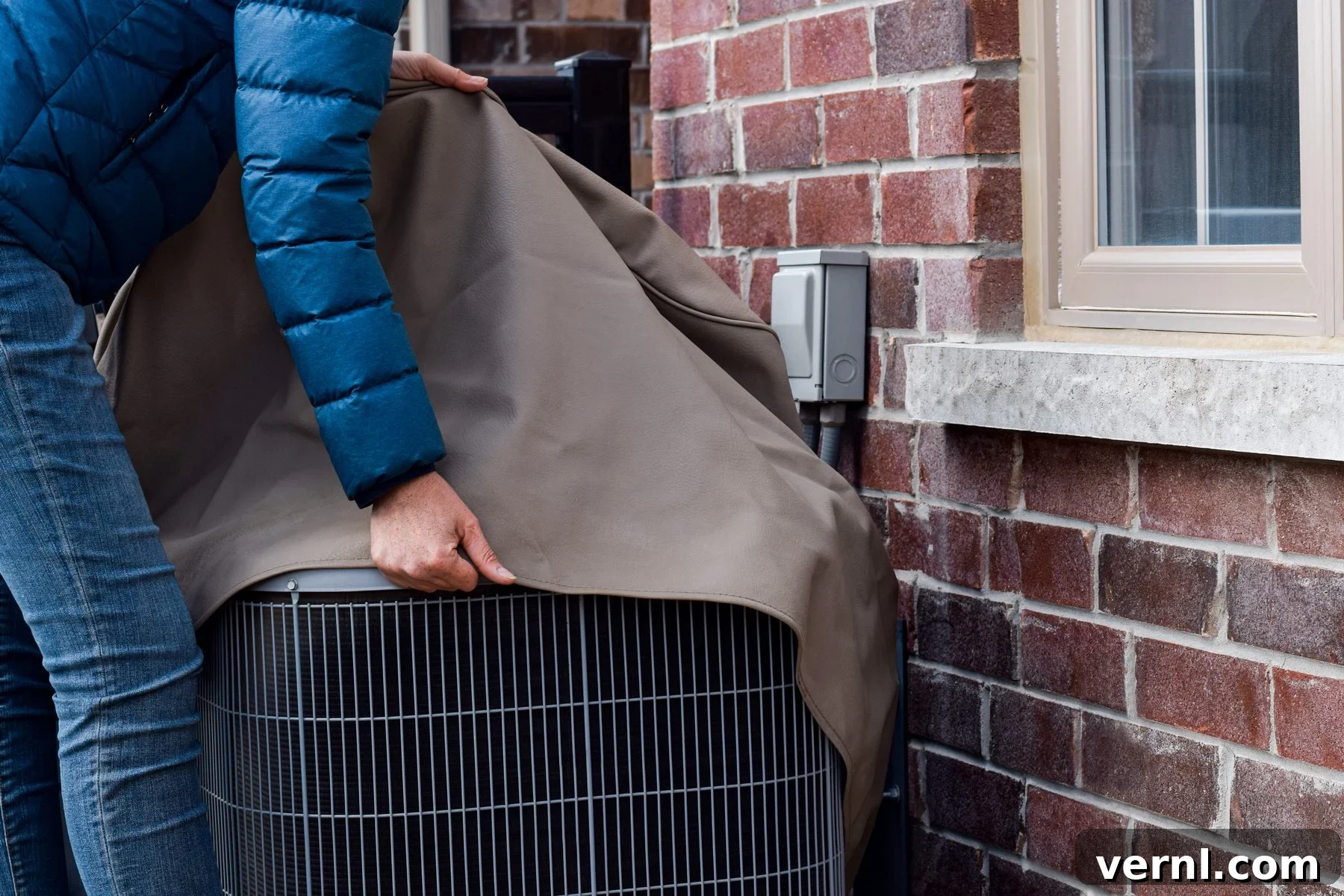
As winter approaches and temperatures drop, many homeowners find themselves pondering a common question: “Should I cover my outdoor air conditioning unit for the colder months?” While heat pumps operate year-round, providing both heating and cooling, traditional central air conditioners remain dormant throughout winter. This seasonal inactivity sparks the debate about whether protective covers are beneficial or, surprisingly, detrimental.
To navigate this discussion, we’ve gathered insights from HVAC professionals across the country. Their diverse opinions highlight that the answer isn’t always straightforward and often depends on various factors, including your local climate and the specific design of your unit.
Mike Naughton, a sustainability expert, succinctly explains, “Whether or not you should cover your AC unit depends on your specific climate and property. If you live further up North, where it’s prone to heavier snowfall, it would be a good idea to protect your unit with a covering.” This statement sets the stage for a deeper dive into the nuances of AC unit winterization, exploring the ‘why,’ ‘when,’ and ‘how’ of covering your system.
Understanding Your AC Compressor: The Heart of Your Cooling System
Before deciding on a cover, it’s essential to understand the component you’re aiming to protect: the AC compressor. At its core, an AC compressor functions much like an oversized version of the compressor found in your refrigerator. Its primary role is to pressurize a liquid refrigerant within a closed condenser coil system. This high-pressure refrigerant then transforms into a gas as it expands through a valve into a separate set of evaporator coils located inside your home. This process effectively absorbs heat from your indoor air.
Once the refrigerant has absorbed heat indoors, the compressor takes over again, exhausting this heat outdoors as it re-pressurizes the gas, converting it back into a liquid state to repeat the cooling cycle. The compressor and its surrounding condenser coils are typically housed in a durable metal casing situated just outside your home. This housing is designed with a network of fins, which are crucial for dissipating the heat generated by the compressor during operation. However, these very fins, while vital for efficiency, can also leave the sensitive internal components vulnerable to environmental elements like snow, ice, moisture-laden air, and various forms of yard debris. Understanding this vulnerability is key to appreciating the arguments for and against winter covers.
The Great Debate: To Cover Your AC Unit or Not?
The question of whether to cover your AC compressor during winter is not a one-size-fits-all answer. As sustainability expert Mike Naughton highlighted, geography plays a significant role. The advice often varies dramatically between colder, snow-prone regions and milder, southern climates.
When a Cover Might Be Beneficial (Northern Climates)
For homeowners in regions experiencing heavy snowfall and prolonged freezing temperatures, covering your AC unit can offer considerable benefits. Glenn Wiseman, a sales representative at an HVAC and Home Services firm in Ottawa, Ontario – a city well-acquainted with harsh winters – strongly advises, “If your HVAC unit has an outdoor component, it is best to cover it during snow storms. If any ice or snow builds up on the system, remove it immediately to help restore airflow and prevent rust from forming.”
In these challenging environments, a cover acts as a physical barrier against several threats:
- Heavy Snow Accumulation: A cover prevents large amounts of snow from piling up inside and around the unit, which can stress components and make springtime cleanup more difficult.
- Ice Formation: Ice can form within the fins and coils, potentially damaging delicate parts or blocking airflow pathways when the unit is reactivated.
- Falling Debris: Tree branches, ice chunks sliding off roofs, and other winter debris can cause physical damage to the unit’s exterior or internal components.
When a Cover Might Do More Harm Than Good (Southern Climates)
Conversely, for those in warmer climates, covering an AC unit can introduce new problems. Aaron Traub, an HVAC professional serving the New Orleans area, states, “You don’t always need to cover your outdoor AC unit during winter. Most modern AC units are built to handle the elements.” This sentiment is echoed by WG Hickman, an HVAC service pro from Mississippi, who adds that “covering the outdoor AC unit can even do more harm than good, as covers prevent proper airflow and trap moisture, leading to rust and mold growth.”
The primary concerns in milder climates include:
- Moisture Trapping: Even in winter, temperatures can fluctuate, leading to condensation under an impermeable cover. This trapped moisture creates an ideal environment for rust to form on metal components and for mold and mildew to flourish, which can spread when the unit starts up.
- Lack of Airflow: A tightly sealed cover restricts natural ventilation, which is crucial for preventing moisture buildup and allowing the unit to “breathe” even when inactive.
- Pest Infestation: A warm, sheltered, and dark space beneath a cover can become an inviting home for rodents, insects, and other small animals. These unwelcome guests can chew on electrical wires, build nests, and cause significant damage to the unit.
- Forgetting to Remove: Mark Woodruff, a product manager at Trane Residential, warns, “There are challenges for some of the warmer areas of the country, which may still periodically need cooling during the fall. Homeowners may turn on the AC and forget the cover is on, and that can hurt the air conditioning system.” Operating a unit with a cover on can severely restrict airflow, leading to overheating, compressor damage, and costly repairs.
If you do decide to cover your AC unit, the optimal time is in the fall, after you’ve used it for the last time for cooling and before the first major cold snap. However, the critical caveat remains: always remember to remove the cover completely before operating your AC unit again in the spring or on any unseasonably warm winter day.
Choosing the Right Protection: Best Ways to Cover Your AC Unit
If you’ve determined that covering your AC unit is appropriate for your climate and property, the next crucial step is selecting the right type of cover. The market offers various options, but not all are created equal. In fact, some common choices can do more harm than good.
What NOT to Use: The Tarp Trap
A widespread misconception is that a simple tarp is a suitable solution for covering an AC unit. However, our experts strongly advise against this. David Lewis, a Houston-based HVAC expert, warns, “That can do more harm than good. [It could trap] moisture inside, which can lead to rust and mold.” Tarps are typically non-breathable and seal the unit off from natural airflow, creating a humid, stagnant environment ripe for corrosion and fungal growth.
Recommended Cover Solutions: Breathability and Durability are Key
When selecting a cover, prioritize materials and designs that allow for adequate ventilation while still offering protection:
1. Breathable, Fitted Fabric Covers (OEM Recommended)
According to Mark Woodruff, the best option is often an original equipment manufacturer (OEM) cover specifically designed for your unit. These covers are typically made from high-quality, breathable fabrics that are custom-fitted to the unit’s dimensions. Mike Naughton further advises, “Look for unit covers with ventilation flaps or mesh panels to allow for proper air circulation and avoid the risk of mold.”
Key features to look for in a fabric cover:
- Breathable Material: Allows moisture to evaporate and air to circulate, preventing condensation and mildew.
- Ventilation Openings: Mesh panels or strategically placed vents further enhance airflow.
- Snug Fit: A custom or semi-custom fit prevents the cover from flapping in the wind and keeps out larger debris.
- Durable & UV-Resistant: Ensures the cover lasts multiple seasons without degrading.
While effective, Woodruff notes a potential drawback: “A cover provides a wonderful warm spot for mice and other critters to live, and they often like to chew on wires and create other issues.” Regular inspection for signs of animal activity is crucial if you opt for a full fabric cover.
2. Plywood Top Cover: Simple & Effective for Snow/Ice
For areas primarily concerned with heavy snow and falling ice, a simple piece of plywood placed on top of the unit can be a highly effective solution. Aaron Traub suggests, “Placing a piece of plywood on top of the unit can help protect it from falling ice or heavy snow. But I’d be sure to clear it off as needed.”
Many experts endorse this method, especially in regions where the primary winter threat is physical damage from above. To implement this:
- Choose a piece of exterior-grade plywood that is slightly larger than the top of your AC unit, ensuring it extends beyond the edges to offer adequate protection.
- Place it directly on top of the unit’s housing.
- Secure it in place with heavy objects like bricks or stones to prevent it from being dislodged by wind.
- Periodically check and clear off any accumulated snow or ice from the plywood to prevent excessive weight or moisture buildup around the unit.
However, Woodruff points out a limitation for this method in certain cold climates: “A plywood cover is inadequate in cold climates where salt is used on the roads. Salt is corrosive and will cause rust, and so keeping salt off of the unit is generally a good thing.” In such scenarios, a full, breathable fabric cover might be preferable if it can also protect against airborne corrosive elements.
Beyond Covers: Essential Winter Maintenance for Your AC Units
Regardless of whether you choose to cover your AC unit, proactive winter maintenance is vital to ensure its longevity and efficient performance when spring arrives. These steps help protect your investment and prevent common winter-related issues.
1. Clear the Surrounding Area
As Mike Naughton emphasizes, “Whether or not you choose to cover your A/C unit this winter, make sure to clear the surrounding area of dirt, debris, twigs, leaves, and animal nests. While most A/C units are built to withstand weather conditions, a build-up of debris can severely impact its efficiency and performance.” Even if the unit is dormant, accumulated leaves and other organic matter can trap moisture against the coils, leading to corrosion and providing shelter for pests.
Regularly check the area around your unit throughout the fall and early winter to ensure it remains clear. Trim back any overgrown shrubs or branches that could fall onto the unit.
2. Apply a Coil-Safe Anti-Corrosion Spray
WG Hickman provides an excellent additional tip: “Before winter hits, apply a coil-safe anti-corrosion spray to the AC coils to protect them against rust and moisture. Just make sure to use one specifically designed for HVAC systems.” These specialized sprays create a protective barrier that repels moisture and prevents oxidation, significantly reducing the risk of rust forming on the delicate aluminum or copper fins and coils. Always follow the manufacturer’s instructions for application.
3. Elevate the Unit (Especially in Snowy Areas)
If your area experiences significant snowfall and subsequent melting, elevating your AC unit slightly can be highly beneficial. Hickman recommends, “If your area gets a lot of snow, elevate the unit slightly by placing it on bricks or pavers, which helps prevent moisture buildup around the base when snow is melting.” Raising the unit a few inches off the ground prevents it from sitting in standing water or melting snow, which can lead to moisture infiltration into the base and potential rust or electrical issues.
4. Turn Off Power to the Unit
Before winterizing your unit, it’s a good safety practice to turn off the power at the outdoor disconnect switch or the circuit breaker inside your home. This prevents accidental activation, especially if you’re working on the unit, and protects it from potential power surges during winter storms.
5. Inspect for Damage Before Winter
Take a few moments in the fall to visually inspect your unit for any existing damage. Look for bent fins, loose wires, or signs of wear and tear. Addressing these minor issues before winter can prevent them from worsening under harsh conditions. Consider scheduling a professional inspection if you notice any significant concerns.
By combining thoughtful consideration of a cover with these essential winter maintenance steps, you can help ensure your AC unit remains in optimal condition, ready to provide efficient cooling for many seasons to come.
About the Experts
- Mike Naughton is the founder and CEO of Cleveland-based energy brokerage firm Integrity Energy. He has over 14 years of experience in the energy industry.
- Glenn Wiseman RASDT, RHDT is an experienced HVAC technician and the sales manager at Ottawa-based Top Hat Home Comfort Services.
- Aaron Traub grew up around the HVAC industry. He currently owns Benny’s A/C & Heating in Metairie, LA.
- WG Hickman founded Mississippi-based Tri-County Air Services in 2005.
- Mark Woodruff is Senior Product Manager at Trane Residential.
- David Lewis is a seasoned professional in the field of HVAC, plumbing and home services. He is the owner of Mission AC in Houston, TX.