
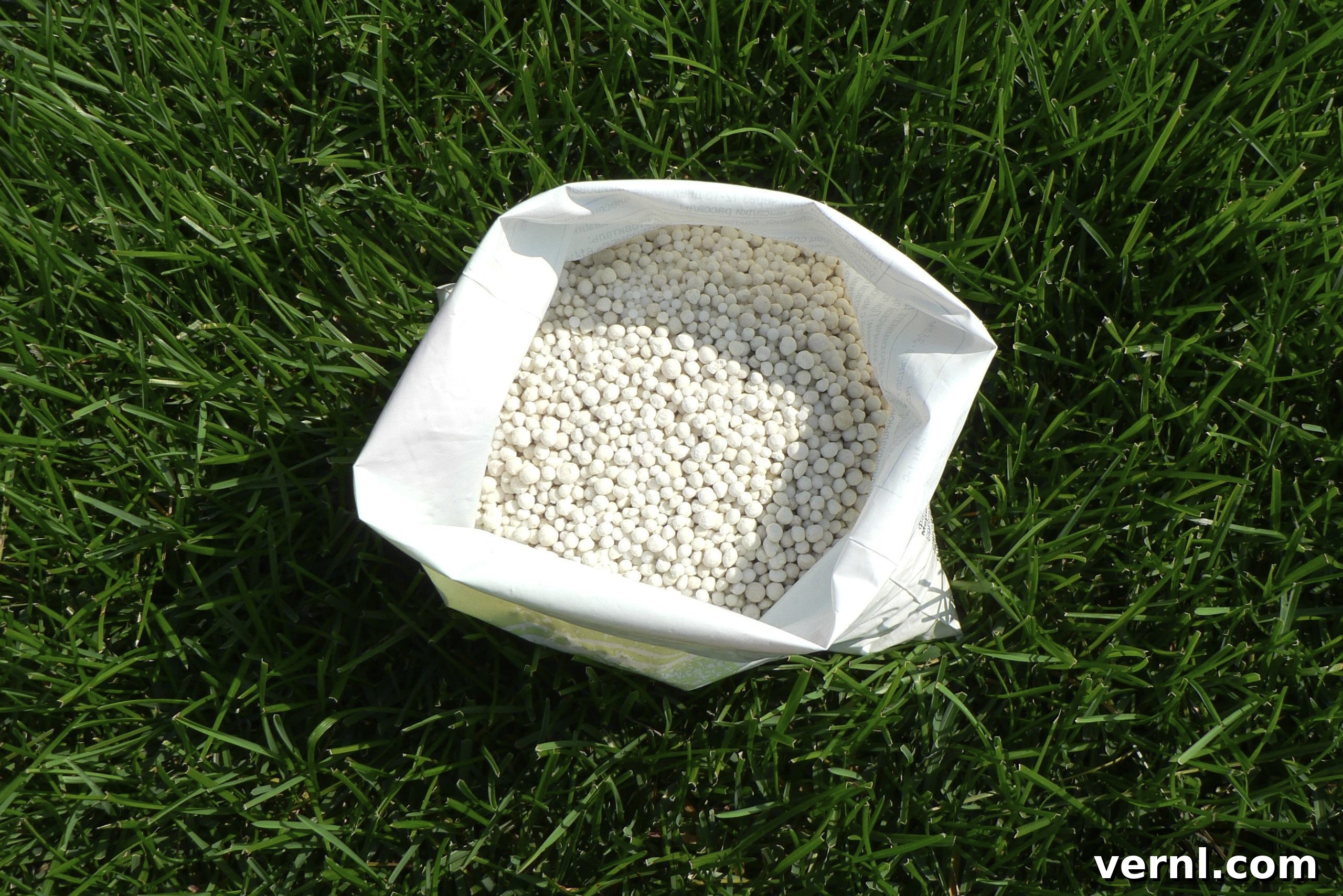
With a growing global awareness of environmental responsibility, homeowners are increasingly focusing on sustainable practices for maintaining their lawns and gardens. The traditional approach to lawn care, often reliant on harsh chemicals and synthetic fertilizers, is giving way to more eco-conscious methods that prioritize the health of our planet. The lawn care industry has responded by developing innovative products and promoting sustainable solutions that minimize our ecological footprint. While significant advancements have been made in improving fertilization techniques over the past decades, there’s always room for further improvement and adoption of greener alternatives.
It’s often said that the issue isn’t inherently with fertilizers and chemicals themselves, but rather with their misuse. By choosing to transition from aggressive, synthetic fertilizers to more organic and sustainable products, you can significantly reduce the potential harmful effects associated with conventional lawn care chemicals, fostering a healthier environment for your family and local ecosystem. This shift is not just about avoiding negatives; it’s about actively promoting a thriving, resilient lawn through natural means.
Nourishing Your Lawn the Right Way: Understanding Fertilizer Choices
Not all fertilizers are created equal, and understanding the differences is crucial for optimal lawn health. High-quality fertilizers are rich in essential nutrients, energy sources, and beneficial proteins. These components work synergistically to feed both your lawn and the intricate soil ecosystem beneath it, promoting robust growth and vitality. They act as a balanced meal, slowly releasing nutrients as your grass needs them, ensuring sustained nourishment.
In contrast, many conventional fertilizers fall into the category of “quick-release” products. These deliver a rapid burst of nutrients, often providing a dramatic green-up that fades just as quickly. While they might offer an immediate aesthetic improvement, their effects are often short-lived and can be detrimental in the long run. Using inefficient or poorly aligned fertilizers not only limits the long-term benefits to your lawn but can also negatively impact the surrounding environment, leading to nutrient runoff and atmospheric volatilization.
Avoiding Lawn “Junk Food”: The Pitfalls of Synthetic Fertilizers
Many mainstream fertilizers are formulated with rapidly available forms of nitrogen, such as urea, ammonium sulfate, and ammonium nitrate. These are the equivalent of “fast food” for your lawn – offering a quick fix but lacking the sustained nourishment for true health. While these quick-release nitrogen sources aren’t inherently bad in every scenario, their frequent and indiscriminate use by many homeowners and lawn care professionals can lead to problems.
The primary concern with these synthetically manufactured fertilizers lies in their environmental impact. Their high solubility means they can easily leach through the soil, contaminating groundwater and local waterways. Furthermore, a significant portion of the nitrogen can volatilize into the atmosphere as gases, contributing to air pollution and greenhouse gas emissions. Both scenarios not only harm the environment but also mean that a substantial amount of the fertilizer you apply never actually reaches your grass roots, effectively wasting your money and effort. These synthetic options often bypass the natural soil biology, failing to build long-term soil health.
Feeding Your Lawn “Health Foods”: The Power of Organic Alternatives
Transitioning to fertilizers derived from composted manures and meal-based ingredients is like switching your lawn from a diet of junk food to nutrient-dense health foods. This approach not only results in a healthier, safer, and more aesthetically pleasing lawn but also fundamentally improves the quality and structure of your soil over time. Organic fertilizers work with the soil’s natural biology, encouraging microbial activity and building a robust foundation for grass growth.
Meal-based sources, such as bone meal, blood meal, feather meal, meat meal, soybean meal, alfalfa meal, and even crushed eggshells, are packed with natural ingredients, free from harsh chemicals and synthetic compounds. In my professional experience, these represent the most effective and sustainable path toward a truly chemical-free lawn care program. They release nutrients slowly, reducing the risk of runoff and providing a steady supply of nourishment for your grass.
Poultry-based fertilizers, like Pearl Valley Organix Coop Poop Plant and Lawn Food and Sustane 8-2-4 All Purpose Fertilizer, are excellent natural organic choices. They are derived from composted poultry manure, offering a rich source of nutrients and organic matter. However, my personal favorites for natural organic fertilization are those made from various meals. Common and highly effective ingredients include bone meal (for phosphorus), blood meal (for nitrogen), meat meal, and feather meal (both provide slow-release nitrogen).
A notable option in the meal-based category is Scotts Natural Lawn Food. However, similar to some poultry-based products, it contains phosphorus. It is crucial to verify that phosphorus application is permitted in your specific state or community before making a purchase, as regulations vary widely to prevent waterway pollution.
There are several other exceptional meal-based organic fertilizers that utilize naturally occurring and recycled ingredients, though they can sometimes be more challenging to source for the average homeowner. One such company is NatureSafe Fertilizers. NatureSafe primarily caters to professional turf managers, supplying golf courses and sports fields. Nevertheless, with a bit of dedicated effort, you can often locate one of their dealers, such as Reinders, Inc., who may be willing to assist residential customers. These professional-grade products often offer superior formulations for long-term soil and turf health.
Another widely recognized and effective meal-based lawn fertilizer is corn gluten. Beyond its nutrient content, corn gluten serves as an excellent natural nitrogen fertilizer that, when applied correctly and at the right time, can also act as a pre-emergent weed suppressor, preventing weed seeds from germinating. A great example of this dual-action product is Jonathan Green Corn Gluten Lawn Fertilizer. Investing in a high-quality meal-based organic fertilizer is undoubtedly your lawn’s equivalent of a lean steak and a fresh green salad – providing complete, wholesome nutrition for vibrant, sustained growth.
Reducing Your Lawn’s Dependency on Fertilizer: A Holistic Approach
While providing your lawn with the right nutrients is essential, it’s just one component of a comprehensive healthy lawn care regimen. A truly thriving lawn requires several interconnected practices to work in harmony, ensuring it receives all it needs to flourish naturally and reduce reliance on external inputs. This integrated approach begins beneath the surface, with the unseen foundation: the soil.
A healthy soil environment, rich in organic matter and beneficial organisms, is where grass roots can truly thrive. When the roots are strong and expansive, the grass blades above ground will naturally follow suit, becoming more resilient to stress, disease, and drought. The soil is teeming with billions of microscopic beneficial bacteria, fungi, and other microorganisms that play an indispensable role in nutrient cycling and overall soil health. These vital microbes facilitate the uptake of fertilizers by grass, converting nutrients into forms readily accessible to the plant. They also significantly improve soil structure, leading to reduced compaction and an increase in pore space, which allows for better water infiltration and oxygen circulation – both critical for healthy root development.
Boosting Soil Microbes with Compost and Humic Substances
You can actively increase the population and activity of these beneficial microorganisms by consistently feeding them with compost or compost tea. Compost, rich in decomposed organic matter, provides a diverse food source for soil life, while compost tea offers a liquid infusion of beneficial microbes and nutrients. You have the option to make your own compost or brew compost tea at home, or you can conveniently purchase ready-to-use products. Excellent commercially available options include Liquid Compost and Worm Tea or All-Natural Root Ruckus Liquid Compost.
Another powerful strategy to promote microbial growth and enhance nutrient availability is through the application of humic acid or biochar products. These naturally derived soil amendments offer a wealth of benefits for your lawn. Humic substances act as chelating agents, binding to nutrients in the soil and making them more soluble and accessible to grass roots. Biochar, a stable form of carbon, creates micro-habitats for beneficial microbes and significantly improves the soil’s water retention and cation exchange capacity (CEC), which is its ability to hold onto essential nutrients. By applying these, you can unlock tied-up nutrients already present in your soil, thereby reducing your overall need for supplemental fertilizers. Products like The Andersons HumiChar Organic Soil Amendment and GS Plant Foods Organic Liquid Humic Acid are highly recommended choices for improving soil vitality. For those looking to fertilize and apply humic acid simultaneously, The Andersons Professional 16-0-8 Fertilizer with Humic DG is an excellent option, even favored by high-end sports turf managers for its superior performance.
Optimizing Your Soil Environment: Checking pH Levels
Understanding your soil’s pH is a fundamental step in effective lawn care and can pinpoint underlying issues that might be increasing your lawn’s reliance on fertilizers. Soil pH measures the acidity or alkalinity of your soil on a scale of 0 to 14, with 7 being neutral. A simple and inexpensive soil test, typically costing around $25, can be obtained from your local garden center or county extension service. This test will provide a precise reading of your soil’s pH and often include recommendations for amendments.
The importance of pH cannot be overstated: it directly affects nutrient availability. When soil pH is either too low (acidic, below 6.0) or too high (alkaline, above 9.0), many essential lawn fertilizers and nutrients become locked up in the soil, making them unavailable to your grass roots, regardless of how much you apply.
If your soil pH is too low (acidic), it can often be remedied by applying lime. Agricultural lime (calcium carbonate) or dolomitic lime (calcium and magnesium carbonate) are common choices, working to raise the pH over time. It’s crucial to follow application rates provided by your soil test results to avoid over-liming.
Conversely, high soil pH (alkaline) is generally more challenging to lower significantly but can be effectively managed. Strategies include applying elemental sulfur, which acidifies the soil as it oxidizes, or utilizing synthetic fertilizers that specifically contain sulfur, such as Ammonium Sulfate 21-0-0 Fertilizer “Greenway Biotech Brand.” For most turfgrass varieties, the ideal pH range, often referred to as the “sweet spot,” is between 6.0 and 7.0, though some grasses can tolerate up to 8.0. Maintaining this optimal pH ensures maximum nutrient uptake and overall lawn health.
Maximizing Water Efficiency and Nutrient Absorption
Beyond soil amendments and proper fertilization, another critical factor in nurturing a resilient lawn is optimizing your watering practices. Consider incorporating a wetting agent into your lawn care routine. These specialized products are widely used in the professional turf industry by golf course superintendents and sports field managers to enhance water penetration and improve the efficiency with which lawn food is absorbed.
As unusual as it may sound, these wetting surfactants actually make water “wetter” by reducing its surface tension. Water, by nature, tends to bead up or run off, especially on compacted or hydrophobic soils (soils that repel water). Wetting agents break this surface tension, allowing water to penetrate deeper into the soil profile and spread more evenly. This deep and uniform penetration means your grass roots have better access to moisture, leading to more efficient water utilization and reduced waste. Furthermore, by improving water distribution, wetting agents help ensure that dissolved nutrients from fertilizers are carried down to the root zone where they can be absorbed, rather than sitting on the surface or evaporating.
A highly effective option for home use is Turf Titan Hydro Holder Grass Wetting Agent, which often comes with a convenient hose-end applicator for easy use. Another excellent choice is Yucca Wet Organic Wetting Agent, which is derived from a naturally occurring yucca plant extract. This organic option is particularly beneficial for correcting hydrophobic soils, helping them to accept and retain water more effectively. Integrating a wetting agent into your watering or fertilizing schedule can significantly boost your lawn’s health, particularly during dry spells, and ensure your water and nutrient investments are working their hardest.
Return Your Clippings: The Easiest and Cheapest Nutrient Boost
Saving the simplest, most cost-effective, and impactful solution for last: don’t bag your grass clippings! If you maintain a regular mowing schedule, leaving the clippings on your lawn is a powerful practice that provides numerous benefits. Grass clippings are rich in vital nutrients, particularly nitrogen, but also potassium and various micronutrients essential for healthy grass growth.
Throughout a single growing season, consistently returning clippings to your lawn can reduce your overall fertilizer needs by at least one full application. As the clippings decompose, they act as a natural, slow-release fertilizer, continuously feeding your lawn. Furthermore, they contribute valuable organic matter to the soil, which is especially beneficial for improving the structure and water-holding capacity of sandy soils and loosening heavy clay soils. Over time, this practice significantly enhances overall soil health, fostering a more robust and self-sufficient lawn ecosystem.
Contrary to a persistent popular belief, leaving clippings on your lawn does *not* cause thatch problems. Thatch is primarily composed of dead grass stems and roots that accumulate faster than they can decompose, often due to aggressive growth, improper fertilization, or poor soil biology. Finely chopped grass clippings, especially from regular mowing, decompose quickly and contribute to healthy topsoil, not thatch build-up. In fact, they encourage the microbial activity that helps break down existing thatch. Returning clippings also makes mowing an easier and quicker task, as you eliminate the need to empty a heavy bag. Your lawn will undoubtedly thank you for this simple yet profound act of natural nourishment and care.