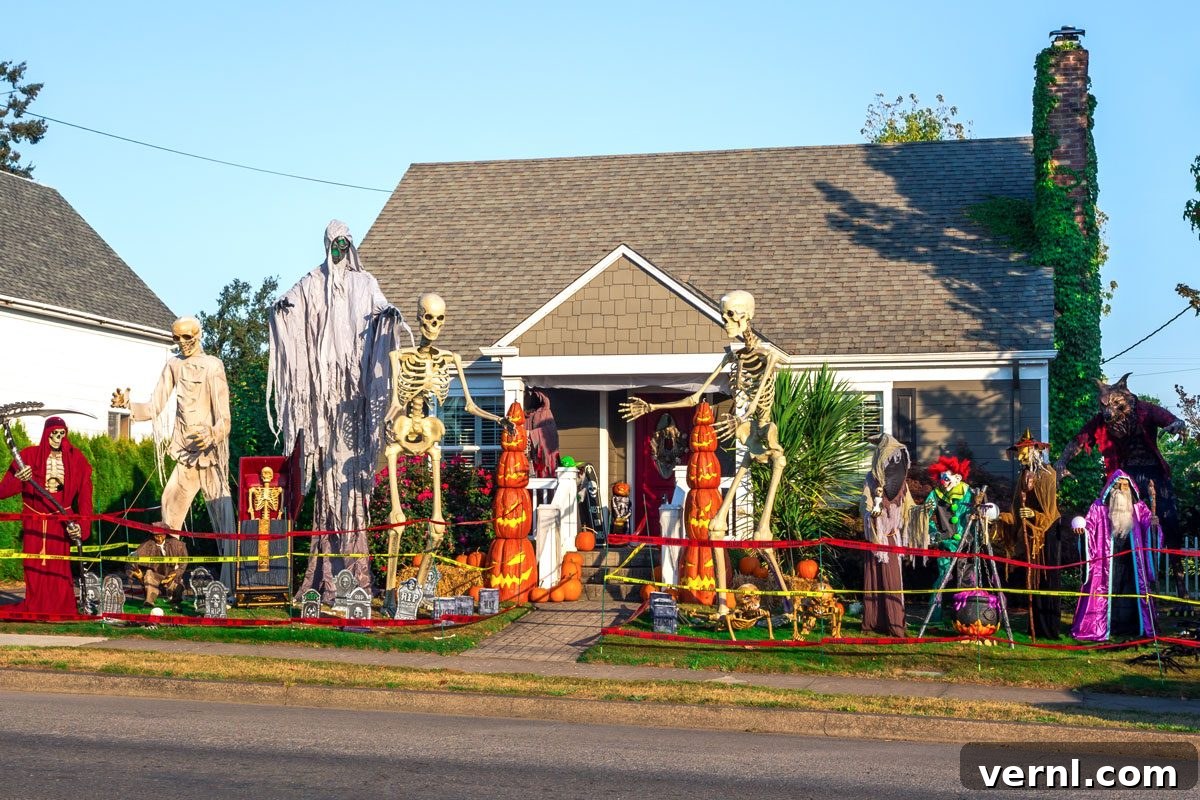
Navigating Neighborhood Nuisances: A Diplomatic Guide to Excessive Holiday Decorations
The holiday season ushers in a cherished tradition for many: transforming homes and yards into festive spectacles. From twinkling lights that dance with the winter wind to joyful melodies that echo through the crisp air, decorating for the holidays is a delightful way to spread cheer and embrace the spirit of the season. However, what brings joy to one household can, at times, become a source of unwelcome disruption for another. While most neighbors strike a harmonious balance, there are instances where enthusiasm for holiday decor crosses the line from festive to excessive. When a neighbor’s decorations plunge the street into perpetual daylight with blinding lights late into the night, or when incessant, loud holiday music infringes upon your peace and quiet, it can quickly erode the festive spirit and create tension within the community. Addressing such situations requires tact, understanding, and a structured approach to ensure both peace of mind and neighborly harmony. This comprehensive guide will walk you through the essential steps to diplomatically resolve issues stemming from overly exuberant holiday displays, offering practical advice to restore tranquility to your neighborhood.
Understanding Local Ordinances and HOA Guidelines
Before initiating any conversation or formal complaint, it is absolutely paramount to confirm whether your neighbor’s holiday display is actually in violation of any established rules or regulations. What might seem inconvenient or excessive to you may not necessarily be against local laws or community standards. This initial research phase is critical because it provides a solid foundation for any subsequent actions, ensuring your concerns are legitimate and actionable.
Begin by visiting your city’s official website. Most municipalities publish detailed information regarding noise ordinances and lighting restrictions. Pay close attention to sections that define “quiet hours,” typically when noise levels must be significantly reduced, and any stipulations regarding the intensity, duration, or type of outdoor lighting permitted, especially during late-night hours. Some cities have specific bylaws against light pollution or excessive brightness that could affect neighboring properties. Understanding these specific parameters will help you objectively assess the situation.
If you reside within a planned community, a condominium complex, or any area governed by a Homeowners’ Association (HOA), consulting your HOA’s rules and regulations is an equally vital step. HOAs often have specific guidelines pertaining to holiday decorations, which can include:
- Duration of Display: Setting specific start and end dates for when decorations can be put up and must be taken down.
- Permitted Lighting: Restrictions on the brightness (e.g., lumens), type (e.g., flashing vs. static), or number of lights.
- Noise Levels: Rules about outdoor music, animated decorations with sound, and quiet hours.
- Placement and Size: Guidelines preventing decorations from encroaching on common areas, sidewalks, or neighboring properties, or exceeding certain height/size limits.
Thoroughly reviewing these documents will confirm if a violation exists. Having this information readily available not only empowers you but also lends credibility to your concerns should you need to discuss the matter with your neighbor or a governing body. Remember, approaching the situation with factual knowledge rather than just subjective annoyance is key to a successful resolution.
Self-Assessment: Ensuring Your Own Holiday Spirit Isn’t Overboard
Before you even consider approaching your neighbor about their festive display, it’s crucial to take a moment for honest self-reflection. Evaluate your own holiday decorations to ensure they aren’t inadvertently contributing to similar neighborhood issues. This step is not about shifting blame but about ensuring you maintain credibility and lead by example. Attempting to address a problem you’re also guilty of can significantly undermine your position and make any request seem hypocritical.
- Adherence to Quiet Hours: Scrutinize your own lighting and sound displays. Do your festive tunes blare past city quiet hours? Do your dazzling lights remain illuminated until the early morning, potentially disturbing your neighbors’ sleep? Ensure all your sound systems are turned off and lights are extinguished at or before the designated quiet hours in your city or HOA regulations.
- Respecting Property Lines: Check the placement of your decorations. Are your inflatable characters spilling onto the sidewalk, impeding pedestrian traffic? Do your light strands or yard ornaments creep onto your neighbors’ property or into shared common spaces? Ensure all your decorations are confined strictly within your property boundaries, respecting the shared environment and accessibility for all.
- Brightness and Audibility: While you might love a vibrant display, consider its impact. Are your lights excessively bright, causing light pollution that streams into neighboring bedrooms? Is your holiday music clearly audible from several houses away, even if it’s during acceptable hours? The goal is festive, not overwhelming.
If your own decorations are found to be equally exuberant or in violation of rules, it’s imperative to scale them back first. Your ability to make a reasonable request of your neighbor will be severely hampered if you’re not practicing what you preach. Furthermore, take a moment to consider the overall reasonableness of your request. Holiday decorations are typically temporary, gracing our neighborhoods for only a few weeks each year. If your neighbor isn’t explicitly breaking any ordinances, and if others in the community don’t share your level of concern, it might be worth considering whether to let the issue slide. Creating lasting animosity over a short-term festive display could have long-term negative impacts on your neighborly relations. Seeking an objective opinion from a trusted friend or family member who can provide an unbiased perspective can also be incredibly valuable in this self-assessment phase.
The Art of the Amicable Conversation: Resolving Issues with Diplomacy
Should you find that your neighbor’s decorations are indeed problematic, and especially if they aren’t in violation of any formal rules, the most effective and preferred first step is always a friendly, face-to-face conversation. Rapidly escalating to formal complaints can irrevocably damage neighborly relationships, fostering animosity that can linger long after the holiday season has passed. Your neighbor is part of your community, and maintaining a respectful relationship is beneficial for everyone.
When approaching your neighbor, choose an appropriate time and setting – ideally during daylight hours, not late at night when tensions might be higher, and away from an audience. Start the conversation on a positive and friendly note, perhaps by offering a genuine compliment on an aspect of their decorations or simply wishing them happy holidays. This sets a collaborative tone rather than an accusatory one.
When you transition to discussing the issue, focus on how their decorations are impacting you, using “I” statements rather than “you” statements. For example, instead of saying, “Your lights are too bright and keep me awake,” try, “I’ve been finding it difficult to get a good night’s sleep because of the brightness from the lights after 10 PM.” This phrasing expresses your experience without making them feel personally attacked or blamed.
Be specific about the problem. Is it the volume of the music, the duration of the lights, or the intensity of flashing elements? Clearly articulate the impact on your daily life. Perhaps you have a new baby whose sleep schedule is delicate, a family member with a medical condition like epilepsy who is sensitive to flashing lights, or perhaps your work schedule requires early morning rest. Gently and clearly explaining these unique needs can help your neighbor understand the personal implications of their decor, making them more empathetic and amenable to finding a solution.
The goal of this conversation is not to dictate terms but to seek a mutually agreeable compromise. Chances are, your neighbor is unaware their decorations are causing a disturbance. Most people are reasonable and willing to make adjustments once they understand the impact on others. They might offer to adjust timers, dim certain lights, or turn down music volume. This approach not only resolves the immediate issue but also salvages and potentially strengthens your relationship, fostering a sense of community rather than conflict.
Escalation with Caution: Formalizing Your Concerns
If your friendly conversation doesn’t yield a satisfactory resolution, and you have confirmed that your neighbor’s decorations are indeed violating established city ordinances or HOA rules, it may be time to consider a more formal approach. However, even at this stage, it’s wise to proceed with caution and give your neighbor one final opportunity to rectify the situation before initiating an official complaint.
Inform your neighbor, calmly and clearly, of your intention to file a formal complaint if the violation is not addressed. This conversation should reiterate the specific rules or ordinances being broken (which you confirmed in the initial steps) and the impact it continues to have. For instance, you might say, “I’ve checked the city’s noise ordinance, and loud music is prohibited after 10 PM. Since the volume hasn’t been adjusted, I’ll unfortunately have to report it to code enforcement if the issue persists.”
Sometimes, the mere threat of official action, coupled with the understanding that you’ve done your research and are serious, can be enough to prompt your neighbor to make the necessary changes. Many individuals prefer to avoid formal disputes and potential fines, and this serves as a final warning. If you’ve had a verbal discussion, it might be beneficial to follow up with a polite, concise email summarizing your concerns and stating your intent to file a complaint if no action is taken. This creates a valuable written record of your attempts to resolve the issue amicably.
Crucially, at this stage, you should also begin compiling clear, objective documentation. This includes:
- Photographs: Take photos of excessively bright lights (preferably with a timestamp feature on your camera or phone).
- Videos: Record videos of loud music or disruptive animated displays, ensuring the date and time are evident, and potentially capturing the sound level if possible.
- Dates and Times: Keep a detailed log of every instance the decorations caused a disturbance, noting the specific time, duration, and nature of the nuisance.
- Relevant Ordinances: Have copies or links to the specific city or HOA rules that are being violated.
Having this evidence prepared will strengthen your case significantly if you ultimately need to file a formal complaint, demonstrating that your concerns are well-substantiated and not merely subjective.
Taking Formal Action: When All Else Fails
Filing a formal complaint should always be considered a last resort, reserved for situations where friendly dialogue and warnings have proven ineffective, and clear violations of rules persist. While it can strain neighborly relations, sometimes it is the only way to ensure peace and quiet in your own home and uphold community standards.
The process for filing a complaint depends on your living situation:
If You Live in an HOA-Governed Community:
Contact your Homeowners’ Association board or management company. They are responsible for enforcing the community’s covenants, conditions, and restrictions (CC&Rs), which often include specific rules about holiday decorations.
- Submit a Written Complaint: Most HOAs require complaints to be submitted in writing. Clearly state the nature of the violation, referencing specific rules from the HOA bylaws. Include all your gathered documentation (photos, videos, dates/times of disturbances).
- Follow HOA Procedures: Be aware of your HOA’s specific complaint and enforcement process. They may issue warnings, levy fines, or take other actions as outlined in their governing documents. Keep copies of all correspondence for your records.
- Attend Board Meetings: If necessary, you may be invited or encouraged to attend an HOA board meeting to present your case, though typically the board will handle the enforcement directly.
The HOA’s role is to mediate and enforce community standards, ensuring that all residents adhere to the agreed-upon rules for harmonious living.
If You Do Not Live in an HOA-Governed Community:
You will need to contact your local municipal authorities, specifically code enforcement or, in extreme cases of noise or public disturbance, the non-emergency police line.
- Contact City Code Enforcement: Most cities have a code enforcement division responsible for upholding local ordinances related to property maintenance, noise, and public nuisances. You can typically find their contact information on your city’s official website. Clearly explain the situation, citing the specific city ordinances being violated (e.g., quiet hours, light pollution). Provide all your documentation.
- Understand the Process: Code enforcement officers will typically investigate the complaint. If they find a violation, they may issue a warning, followed by citations or fines if the issue is not corrected. The process can take time, so patience is key.
- In Cases of Extreme Noise/Disturbance: For immediate and severe noise disturbances during quiet hours, you may need to call your local police department’s non-emergency line. While police typically handle criminal matters, extreme and persistent noise can sometimes fall under public nuisance laws.
Throughout this formal process, maintaining clear, objective records of all communications, interactions, and evidence is crucial. It ensures transparency, strengthens your position, and protects you should any further disputes arise. While this final step can feel uncomfortable, it is sometimes necessary to restore peace and uphold community standards. Ideally, such drastic measures will not be required, and neighbors can find common ground in the spirit of mutual respect and holiday cheer.