
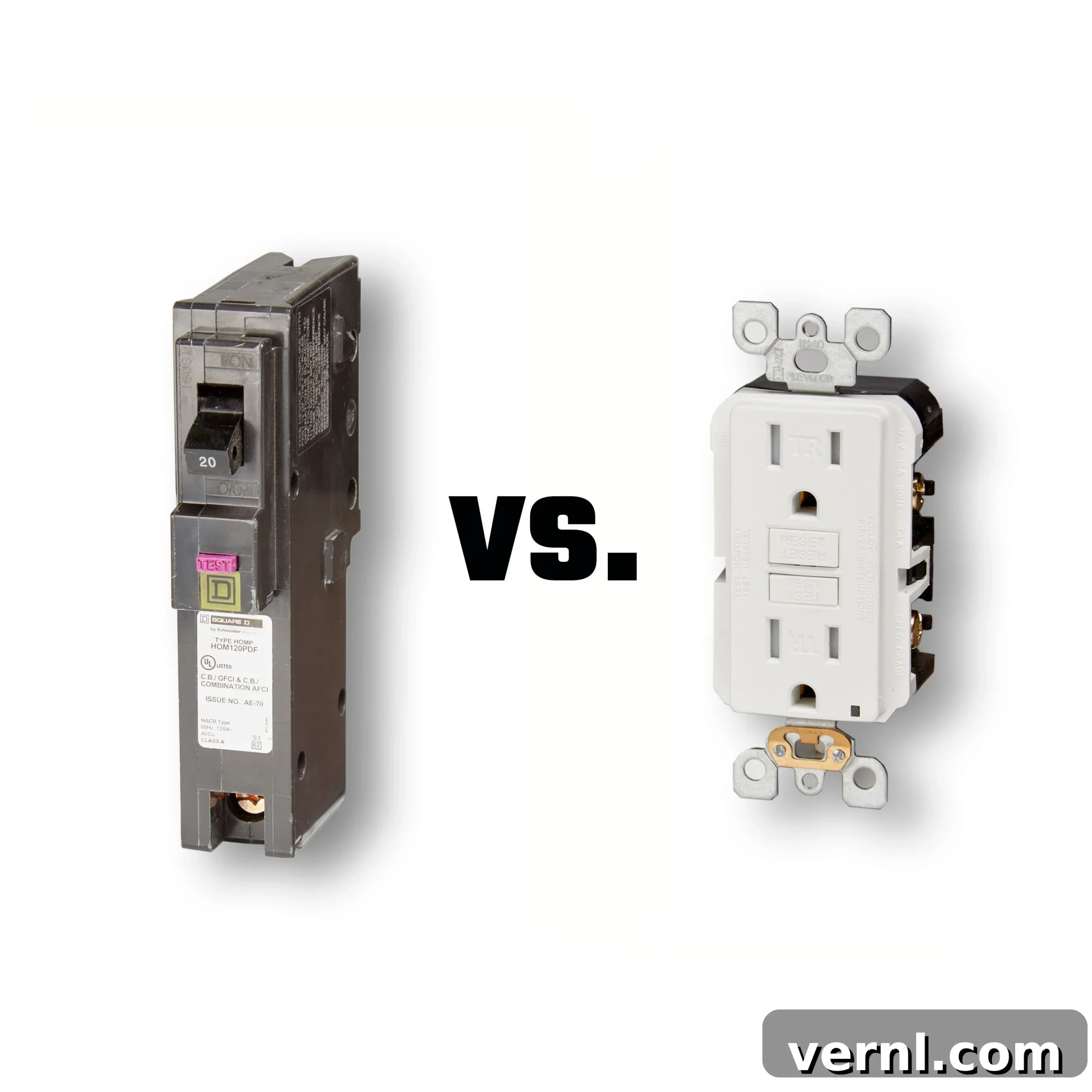
GFCI Protection: Breaker vs. Receptacle – An In-Depth Guide to Electrical Safety
Ensuring the electrical safety of your home or workplace is paramount, and a critical component in this endeavor is the Ground-Fault Circuit Interrupter (GFCI). For over half a century, GFCI devices have been safeguarding lives by preventing severe electric shocks, marking a significant milestone in electrical engineering and public safety. These devices are now a standard requirement in numerous regions globally, contributing to countless accident preventions.
With various GFCI options available today, a common question arises for homeowners, DIY enthusiasts, and electricians alike: Is it better to install a GFCI protection device directly in the electrical panel as a circuit breaker, or at the point of use as a GFCI receptacle? This comprehensive guide will delve into the nuances of each option, helping you make an informed decision tailored to your specific electrical needs and ensuring optimal safety.
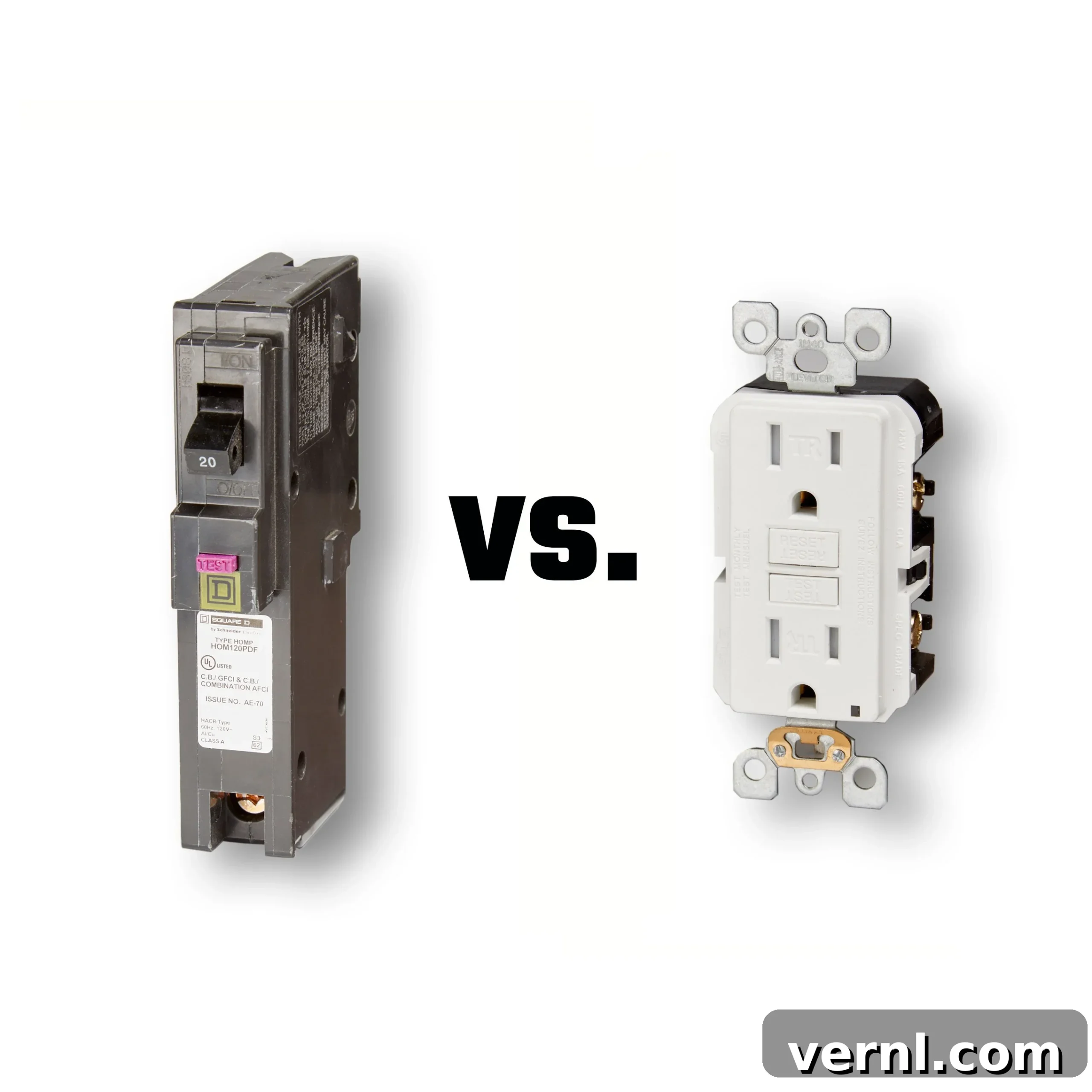
Understanding Ground-Fault Circuit Interrupters (GFCIs)
Before we compare the types, it’s essential to grasp what a GFCI does. A GFCI is a fast-acting circuit breaker designed to shut off electric power in the event of a ground fault within as little as 1/40 of a second. A ground fault occurs when electricity takes an unintended path to the ground, often through a person, which can lead to severe electric shock or electrocution. Unlike standard circuit breakers that protect against overloads and short circuits, GFCIs are specifically engineered to detect minute differences in current flowing into a circuit compared to the current returning from it. Even a small leakage current, undetectable by conventional breakers, can indicate a dangerous situation that a GFCI will immediately interrupt, saving lives.
GFCI Circuit Breakers: Comprehensive Circuit Protection
One of the primary ways to implement GFCI protection is by installing a GFCI circuit breaker directly into your home’s main electrical panel. When a GFCI breaker is installed, it replaces a standard circuit breaker and provides ground-fault protection for the entire branch circuit it controls. This means every outlet, light fixture, and permanently wired appliance connected to that specific circuit receives GFCI protection.
Advantages of GFCI Circuit Breakers:
- Whole-Circuit Protection: A single GFCI breaker can protect all devices on an entire branch circuit, including all standard receptacles, lights, and hardwired appliances. This offers a broad shield of safety from a centralized point.
- Aesthetics: Since the GFCI mechanism is housed within the electrical panel, the visible receptacles throughout your home can remain standard, preserving a uniform aesthetic without the bulkier GFCI outlet design.
- Centralized Troubleshooting: If a ground fault occurs, the breaker trips in the main panel, providing a single, easily identifiable location for reset and troubleshooting. This can be particularly helpful in identifying the affected circuit.
- Ideal for New Installations: For new construction or comprehensive electrical overhauls, GFCI breakers are often the preferred choice, allowing for seamless integration and full circuit protection from the outset.
- Combination Protection: Many modern GFCI breakers are now dual-function, also incorporating Arc-Fault Circuit Interrupter (AFCI) protection. These AFCI/GFCI breakers offer both shock protection (GFCI) and fire protection (AFCI) from dangerous electrical arcs, fulfilling multiple code requirements with a single device.
Considerations and Potential Disadvantages:
- Higher Upfront Cost: GFCI breakers typically cost more per unit than GFCI receptacles. While fewer might be needed for full circuit coverage, the initial investment can be higher.
- Installation Complexity: Installing a GFCI breaker involves working inside the main electrical panel, which should ideally be done by a qualified and licensed electrician due to the inherent dangers of high voltage.
- Nuisance Tripping: In older wiring systems, or circuits with shared neutrals (multi-wire branch circuits), GFCI breakers can sometimes experience nuisance tripping. This occurs when the breaker incorrectly detects a ground fault due to existing wiring conditions or current leakage from multiple circuits sharing a neutral, leading to frustration and difficulty in diagnosis.
- Not Suitable for All Scenarios: Certain sensitive equipment or circuits with complex loads might not be compatible with GFCI breakers, or might require specific breaker types.
GFCI Receptacles: Targeted Point-of-Use Safety
The alternative to a GFCI breaker is the GFCI receptacle. This device replaces a standard electrical outlet and provides ground-fault protection at the specific location where it’s installed. Furthermore, a GFCI receptacle can be wired to protect other standard “downstream” outlets on the same circuit, providing a cascading layer of safety.
Advantages of GFCI Receptacles:
- Cost-Effective for Specific Locations: For protecting individual outlets or small groups of outlets in specific areas (like bathrooms or kitchens) without needing to upgrade the entire circuit, GFCI receptacles are often more budget-friendly.
- Easier Installation for Existing Circuits: Replacing a standard outlet with a GFCI receptacle is often a simpler task for a competent DIYer, as it doesn’t require opening the main electrical panel. This makes them ideal for targeted upgrades in existing homes.
- Simple Troubleshooting: If a ground fault occurs, the GFCI receptacle itself will trip, and it can be reset directly at the device. This makes it easy to identify which specific device or location caused the trip.
- Ideal for Multi-Wire Branch Circuits (MWBCs): In scenarios where multi-wire branch circuits with shared neutrals are present, GFCI receptacles are often the preferred solution over GFCI breakers, as they circumvent the nuisance tripping issues that can plague GFCI breakers on such setups.
- Flexibility: They offer great flexibility for adding GFCI protection exactly where it’s needed, even on circuits that might be problematic for GFCI breakers.
Considerations and Potential Disadvantages:
- Local Protection Only: A GFCI receptacle only protects itself and any standard outlets wired downstream from it. Other outlets or hardwired devices on the same circuit upstream from the GFCI receptacle, or on different branches, will not be protected unless they also have their own GFCI protection.
- Visual Impact: GFCI receptacles have distinct “Test” and “Reset” buttons, making them visually different and sometimes bulkier than standard outlets, which some homeowners may find less appealing.
- Multiple Devices Needed: To ensure comprehensive protection across an entire circuit using receptacles, you might need to install multiple GFCI receptacles, which could add up in cost and require more installation points.
Portable GFCI Devices: On-Demand Safety Where You Need It
Beyond permanent installations, portable GFCI devices offer invaluable, temporary protection. These include GFCI-protected extension cords, plug-in adapters, or inline GFCIs. They are designed to provide immediate ground-fault protection in transient, outdoor, or hazardous environments where permanent GFCI outlets might not be available or practical.
Portable GFCIs are indispensable for a variety of applications: on construction sites, when working with power tools outdoors, during travel, or when using portable generators. They are particularly vital in damp or wet locations where the risk of electric shock is significantly elevated due to the combination of electricity and moisture. These devices act as an immediate safeguard, instantly cutting power if a fault is detected, providing peace of mind in less controlled environments.
Choosing the Right GFCI: Panel vs. Receptacle – Which is Better?
The answer to whether a GFCI breaker or receptacle is “better” isn’t universal; it largely depends on the specific circumstances, existing wiring, budget, and local electrical code requirements.
Factors Influencing Your Decision:
- New Construction vs. Existing Wiring:
- New Construction: GFCI breakers are often preferred for new builds, especially when combined with AFCI protection (dual-function breakers). They offer comprehensive, clean protection from the panel, streamlining the installation process for electricians.
- Existing Wiring: For older homes, especially those with multi-wire branch circuits (MWBCs) or specific nuisance tripping issues with breakers, GFCI receptacles are frequently the more practical and reliable solution. They allow for targeted upgrades without extensive rewiring or panel modifications.
- Cost vs. Coverage:
- If you need to protect a single, isolated outlet in an existing home, a GFCI receptacle is usually more cost-effective.
- If you need to protect an entire circuit with multiple outlets and devices, a single GFCI breaker might offer better overall value and simpler management in the long run, despite its higher individual unit cost.
- Ease of Installation and Maintenance:
- Installing GFCI receptacles is generally simpler for those with basic electrical knowledge, making it a common DIY project.
- GFCI breaker installation requires proficiency in working with electrical panels, which should typically be left to licensed professionals.
- Resetting a tripped GFCI is intuitive for both, but locating the source of a trip might be easier with a receptacle-based system as the trip occurs at the point of fault.
- Specific Location Requirements: The National Electrical Code (NEC) mandates GFCI protection in numerous locations prone to moisture or ground faults, including:
- Bathrooms
- Kitchens (for countertop outlets)
- Garages and accessory buildings
- Outdoors (all receptacles)
- Basements (unfinished areas)
- Crawl spaces
- Laundry rooms
- Boathouses and docks
- Areas near sinks and wet bars
In these specific high-risk areas, ensuring GFCI protection, whether by breaker or receptacle, is non-negotiable.
- Compatibility with AFCI Protection: Modern homes often require both GFCI (shock protection) and AFCI (fire protection) for various circuits. Dual-function GFCI/AFCI breakers offer a streamlined solution by combining both protections in one device, typically installed in the panel. If you need both types of protection, a dual-function breaker can be an efficient choice.
Essential GFCI Testing and Maintenance
Regardless of whether you choose GFCI breakers or receptacles, regular testing is crucial to ensure they are functioning correctly. It is recommended to test all GFCI devices monthly to verify their ability to detect ground faults and interrupt power. The process is simple:
- Plug a lamp or radio into the GFCI outlet (or an outlet downstream from a GFCI breaker) to confirm power is present.
- Press the “TEST” button on the GFCI device. The power should immediately trip off, and the lamp/radio should turn off.
- Press the “RESET” button. The power should be restored, and the lamp/radio should turn back on.
- If the GFCI does not trip when tested, or if it does not reset, it is faulty and needs to be replaced immediately.
This simple routine can literally save a life, confirming that your critical safety devices are operational.
Navigating Electrical Codes and Professional Guidance
Always check with your local electrical inspector about the specific code requirements in your area for GFCI breakers and GFCI receptacles. Electrical codes, such as the National Electrical Code (NEC), are updated periodically, and local jurisdictions may have specific amendments or interpretations. What was acceptable a few years ago might not meet current safety standards. Consulting with your local authorities ensures that your installations comply with the latest regulations, avoiding potential fines, safety hazards, or issues during home inspections.
While some GFCI receptacle installations might seem straightforward, any work involving your home’s electrical system carries inherent risks. For installations involving the main electrical panel (like GFCI breakers), new circuit wiring, or if you have any doubts about your abilities, it is always best to engage a licensed and certified electrician. Professionals ensure that the installation is not only code-compliant but also performed safely and correctly, protecting your property and loved ones.
Expert Insights: John Williamson on Electrical Safety
This critical advice on GFCI applications comes from John Williamson, Chief Electrical Inspector for the Minnesota Department of Labor and Industry. With an impressive 40 years of experience in the electrical industry, John is not only a licensed master electrician but also a certified building official. His extensive career includes over 23 years with the state of Minnesota, where he leads as the Chief Electrical Inspector. Furthermore, John has dedicated the past 25 years to providing invaluable electrical code consultation to various esteemed book and magazine publishers, solidifying his reputation as a leading authority in electrical safety and code compliance. His expertise underscores the importance of proper GFCI installation and adherence to local regulations.
Conclusion: Prioritizing Electrical Safety
Ground-Fault Circuit Interrupters are indispensable components of a safe electrical system, offering vital protection against potentially fatal electric shocks. Whether you opt for a GFCI breaker in your panel or a GFCI receptacle at the point of use, the ultimate goal is to ensure robust safety measures are in place, particularly in areas susceptible to moisture.
The choice between a GFCI breaker and a GFCI receptacle hinges on several factors, including the specifics of your wiring system (new vs. existing, multi-wire circuits), your budget, aesthetic preferences, and critically, local electrical code requirements. By understanding the distinct advantages and considerations of each type, you can make an informed decision that enhances the safety of your home or project. Remember, when in doubt, or for any work involving your electrical panel, always consult with a licensed electrical professional to guarantee a safe and compliant installation. Prioritizing electrical safety is an investment in peace of mind and the well-being of everyone.