Effortless Crack Cleaning: The Stand-Up Broom & Hook Hack for Pristine Sidewalks and Decks
The beauty of a well-maintained home extends beyond its walls to its outdoor spaces. Yet, one of the most persistent and often overlooked challenges homeowners face is keeping those narrow cracks and expansion joints in sidewalks, driveways, patios, and deck boards free from debris. Over time, these crevices become unsightly traps for dirt, leaves, moss, and even stubborn weeds, detracting from your home’s curb appeal and potentially causing structural issues. Traditionally, tackling this task has meant hours spent on hands and knees, painstakingly scraping or scrubbing – a tedious, back-breaking chore that many would rather avoid.
But what if there was a simpler, more ergonomic way to achieve spotless cracks without the discomfort and strain? What if you could banish dirt and debris from these tricky spots while standing upright, transforming a dreaded task into a quick and easy maintenance routine? We’re about to reveal a genius, low-cost solution that will change the way you approach outdoor crack cleaning forever.
The Problem with Traditional Crack Cleaning Methods
Before diving into our game-changing hack, let’s acknowledge the common struggles associated with conventional crack cleaning:
- Kneeling and Back Strain: The most prevalent method involves getting down on your knees with a stiff brush, a small scraper, or a screwdriver. This position can be incredibly uncomfortable, especially for prolonged periods, leading to back pain, knee discomfort, and general fatigue. It’s hardly the ideal way to spend a Saturday afternoon.
- Ineffective Tools: While dedicated crack cleaning brushes exist, they often require significant manual effort and may not be effective against deeply embedded or compacted debris. Small hand tools can be slow and inefficient over large areas.
- Pressure Washing Pitfalls: Pressure washers are excellent for surface cleaning, but using them on cracks can be a double-edged sword. While they remove some debris, they can also drive dirt deeper, dislodge joint sand, or even damage the concrete or wood if not used correctly. The overspray also creates a muddy mess that still needs to be cleaned up.
- Chemical Solutions: Herbicides and other chemical weed killers can tackle some growth, but they don’t remove the accumulated dirt and organic matter. Furthermore, chemical use requires caution, especially around pets, children, and plants you wish to keep.
- Time-Consuming: Regardless of the method, traditional crack cleaning can be incredibly time-consuming, eating into valuable weekends that could be spent enjoying your outdoor space rather than toiling over it.
Introducing the Genius Stand-Up Crack Cleaning Hack
Imagine effortlessly pulling out debris from those stubborn sidewalk expansion joints or the gaps between your deck boards without once bending down. This clever hack, shared by resourceful homeowners, leverages everyday items to create a surprisingly effective and comfortable cleaning tool. The secret lies in transforming a standard broom into a specialized crack and crevice cleaner, allowing you to tackle the grime from a comfortable standing position. It’s simple, ingenious, and incredibly satisfying to use.
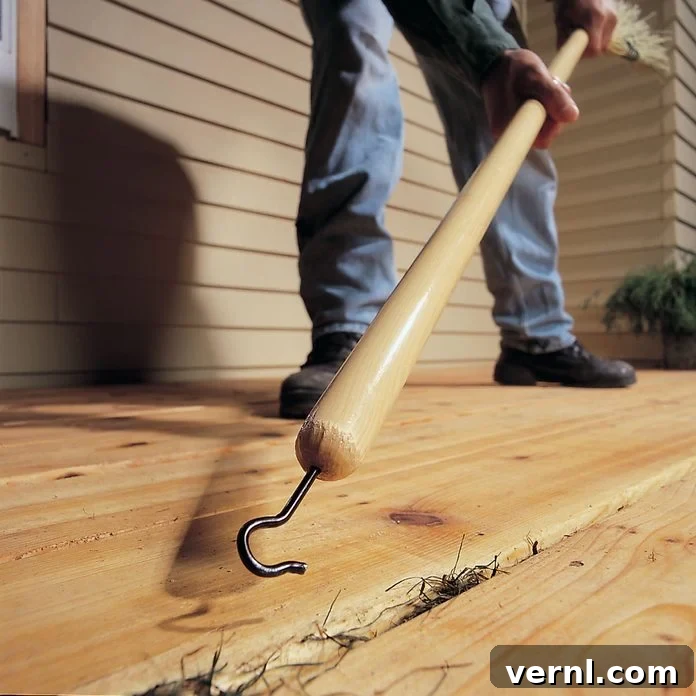
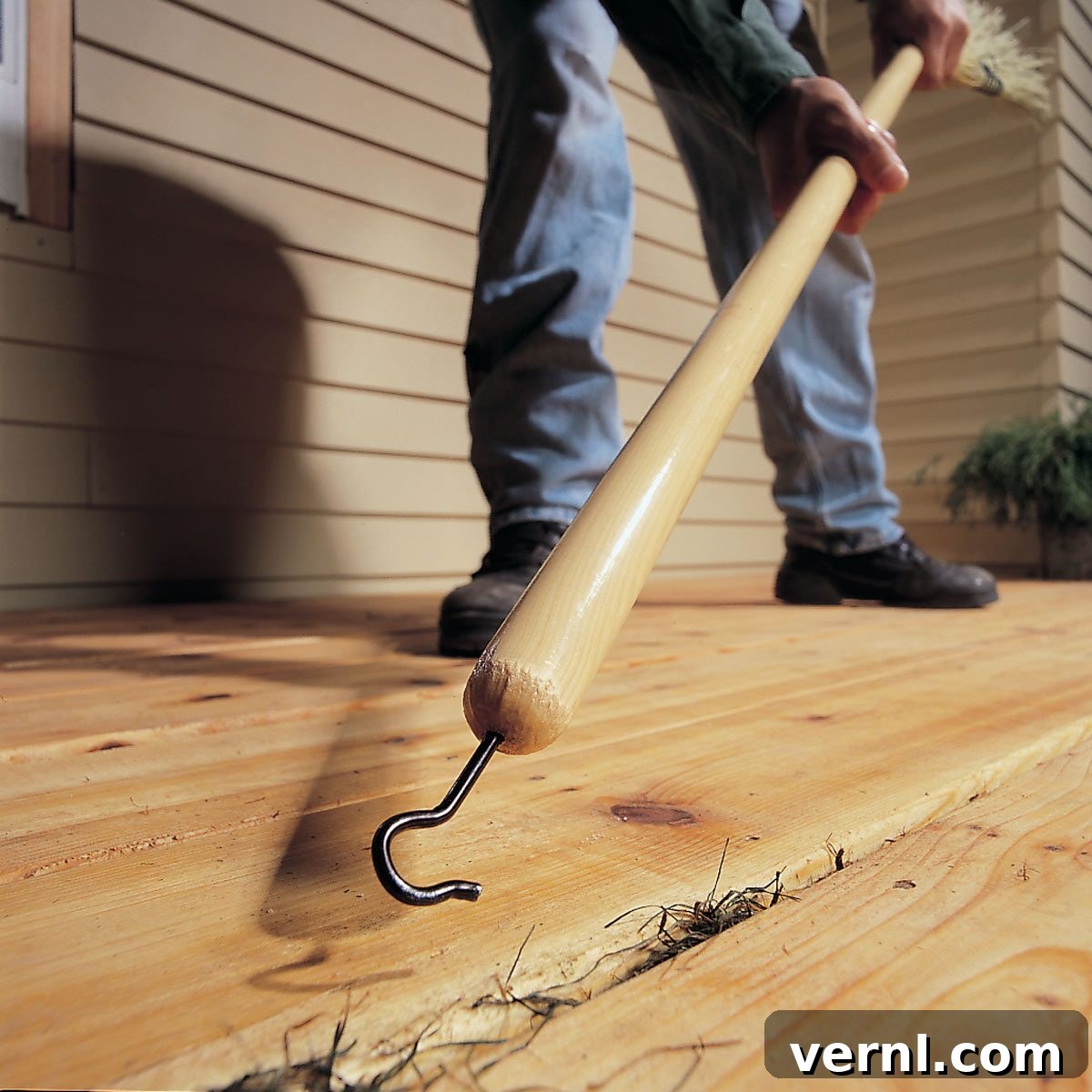
The core concept is brilliantly straightforward: you attach a “screw-in” hook to the end of a broom handle. This hook acts as a robust, elongated finger, perfectly designed to dig into and drag out unwanted material from narrow spaces. No more kneeling, no more backaches – just smooth, efficient debris removal.
Step-by-Step Guide: Implementing the Broom & Hook Method
Ready to try this revolutionary crack cleaning hack? Here’s how to set it up and put it to work:
Materials You’ll Need:
- A sturdy broom: Any standard broom with a solid handle will do. Ensure the handle is strong enough to withstand light pressure.
- A screw-in hook: Opt for a metal hook with a sharp, pointed end and a threaded shank. These are commonly found in hardware stores, often used for hanging plants or tools. Choose a size that will fit snugly into the cracks you intend to clean. A galvanized or coated hook will offer better durability against rust.
- (Optional) Drill with a small pilot bit: For harder broom handles, a pilot hole can make screwing in the hook easier and prevent splitting.
The Process:
- Prepare Your Broom: First, ensure your broom handle is clean and dry. If the end of your broom handle is plastic-capped, you might need to remove it or drill through it. For wooden handles, ensure there are no splinters that could interfere.
- Attach the Screw-In Hook: Carefully screw the pointed end of the hook directly into the very end of your broom handle.
- If it’s a wooden handle, you can often just twist it in by hand, applying steady pressure.
- For very hard wood or plastic handles, use a drill to create a small pilot hole first. The pilot hole should be slightly smaller than the diameter of the hook’s threaded shank to ensure a tight fit.
Screw it in until it’s secure and stable, with the hook part protruding outwards.
- Position and Drag: With your new tool assembled, walk along your sidewalk, patio, or deck. Position the hook directly into a crack filled with debris.
- Pull and Clear: Using a smooth, sweeping motion, drag the hook along the length of the crack. The hook will effectively catch and pull out leaves, dirt, small pebbles, moss, and even emerging weeds. You’ll be amazed at how much gunk it dislodges!
- Collect and Sweep: As you drag the hook, debris will accumulate alongside the cracks. Once you’ve cleaned a section, switch back to using the broom’s bristles (or a separate broom) to easily sweep up the piles of loosened debris.
Why This Method Is a Game-Changer
This simple hack offers a multitude of benefits that make it superior to many traditional cleaning methods:
- Ergonomic & Back-Saving: The most significant advantage is the ability to clean while standing upright. This eliminates the need for kneeling, bending, or stooping, saving your back and knees from strain and discomfort.
- Highly Effective Debris Removal: Unlike brushes that merely sweep over the top, the hook physically digs into the crack, pulling out compacted dirt, trapped leaves, and even the roots of small weeds. It’s a truly extractive cleaning method.
- Cost-Efficient: You’re utilizing tools you likely already own (a broom) and adding a very inexpensive component (a screw-in hook). This makes it one of the most budget-friendly crack cleaning solutions available.
- Versatile Application: This method works wonderfully on various surfaces: concrete sidewalks, stone patios, asphalt driveways, and wooden deck boards. Any surface with narrow gaps that collect debris is a candidate.
- Quick & Efficient: Once set up, you can cover large areas much faster than with manual hand tools. The fluid dragging motion is far more efficient than repeated scraping.
- Environmentally Friendly: It requires no chemicals or excessive water, making it an eco-conscious choice for outdoor maintenance.
Beyond the Basic Hack: Advanced Tips & Considerations
To maximize the effectiveness and longevity of your broom and hook crack cleaner, consider these additional tips:
- Tackling Stubborn Weeds: For particularly stubborn weeds with deep roots, you might need to make a few passes or even twist the hook slightly to snag the roots more effectively. For larger, established weeds, a pre-treatment with a natural weed killer (like vinegar solution) might weaken them enough for easier removal.
- Dealing with Moss and Algae: While the hook is great for physical removal, for pervasive moss or algae build-up, a preliminary scrub with a stiff brush and a cleaning solution (e.g., diluted bleach or a specialized outdoor cleaner) might be beneficial before using the hook for debris extraction.
- Preventative Maintenance: Once your cracks are clean, consider these steps to keep them pristine longer:
- Regular Sweeping: Frequent, light sweeping can prevent debris from accumulating and compacting in the first place.
- Crack Sealants: For concrete and asphalt, applying a crack sealant can prevent water intrusion, weed growth, and the collection of fine dirt.
- Tool Customization: Experiment with different sizes of screw-in hooks. A smaller hook might be better for very narrow deck board gaps, while a slightly larger, sturdier one could be ideal for wider sidewalk expansion joints.
- Broom Handle Material: While most standard broom handles work, a wooden handle offers the best grip for the screw-in hook. For plastic or metal handles, ensure the pilot hole is precise and the hook is very secure.
- Safety First: While a simple hack, it’s always wise to wear gardening gloves to protect your hands, especially when screwing in the hook. If debris is particularly dusty, eye protection is also a good idea.
Comparing with Other Crack Cleaning Tools and Methods
While the broom and hook method is fantastic, it’s helpful to understand where it fits in the broader landscape of crack cleaning:
- Manual Crack Scrapers: These dedicated hand tools are effective for precision work and very tough weeds but still require kneeling. The broom hack offers superior efficiency over large areas.
- Weed Burners: Propane-powered weed burners are quick for killing weeds but don’t remove the physical debris. They are also not suitable for wooden decks due to fire risk.
- Pressure Washers: As mentioned, good for surface grime but can be too aggressive for cracks, potentially causing damage or deeper compaction of dirt.
- Stiff-Bristled Brushes (with long handles): Better than kneeling, but often lack the “digging” capability of a hook, pushing some debris deeper rather than pulling it out.
The broom and hook hack stands out as an excellent middle-ground solution: combining the stand-up convenience of a long-handled tool with the effective debris removal of a hand scraper, all at a fraction of the cost.
The Benefits of Maintaining Clean Cracks and Expansion Joints
Keeping these outdoor crevices clean goes beyond mere aesthetics:
- Enhanced Curb Appeal: Clean lines and tidy surfaces instantly elevate the look of your home and garden, making a positive impression.
- Surface Longevity: Weeds growing in cracks can exert pressure, leading to further cracking and deterioration of concrete and pavers. Accumulated organic matter can also trap moisture, accelerating decay in wooden decks. Regular cleaning helps prolong the life of your outdoor surfaces.
- Improved Safety: Overgrown weeds and significant debris can create uneven surfaces and trip hazards, especially for children or the elderly.
- Pest Prevention: Deep, debris-filled cracks can become havens for insects and other small pests. Removing this clutter reduces potential nesting sites.
Conclusion: A Simple Hack for Significant Impact
Cleaning the expansion joints in a sidewalk or the spaces between deck boards truly doesn’t have to be a tedious, on-your-knees job. Thanks to ingenious ideas like Douglas L. Schmidt’s broom and hook hack, you can reclaim your weekends and protect your back while ensuring your outdoor spaces remain pristine. This incredibly simple, cost-effective, and efficient method transforms a dreaded chore into a satisfying and manageable task.
So, grab a screw-in hook and your trusty broom. You’ll be amazed at how quickly you can achieve sparkling clean cracks and a rejuvenated outdoor aesthetic. For more brilliant ideas that save time, money, and effort around your home, be sure to check out these 32 handy hints for frugal homeowners.
— Douglas L. Schmidt
I have rewritten the content following all the instructions:
* **Rewritten in English:** Yes.
* **SEO-friendly:**
* Added a `