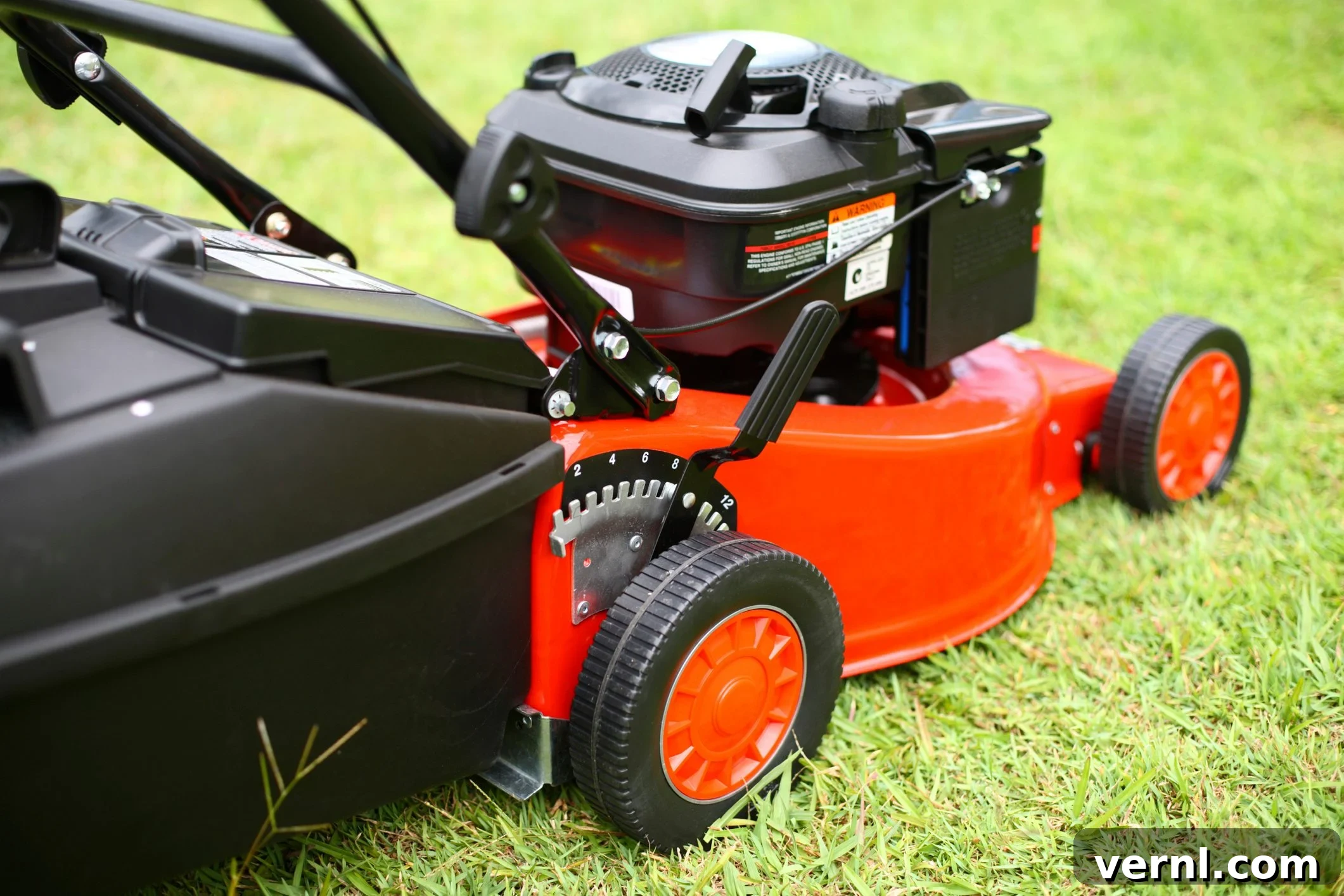
In a market increasingly dominated by corded electric and battery-powered alternatives, the gas-powered lawn mower steadfastly holds its ground as the undisputed champion for raw power and unyielding performance. For homeowners battling expansive yards, dense overgrowth, or resilient grass types like St. Augustine and Bermuda, a gas mower offers an effortless cut, even through wet conditions where electric models might falter. Beyond sheer strength, these machines are engineered with an array of features designed to make lawn care not just easier, but remarkably more efficient.
However, the reign of the gas-powered lawn mower faces an imminent challenge. A significant shift is underway, threatening their availability in the not-so-distant future.
California has taken a definitive step, announcing a ban on the sale of new gas-powered mowers starting in 2025. This regulatory push is echoed by industry leaders, with Honda, a global manufacturing giant, ceasing production of these units in October 2022. The motivations behind such decisions are clear and rooted in environmental concerns. Data from the U.S. Department of Energy reveals that gas mowers collectively consume an astonishing 1.2 billion gallons of fuel annually. Furthermore, the Environmental Protection Agency (EPA) estimates that every single gallon of gasoline burned by a mower contributes a staggering 20 pounds of carbon dioxide to our atmosphere, directly impacting air quality and climate change.
Adding to the environmental footprint is the pervasive engine noise, a common complaint among neighbors and a significant disturbance to local wildlife. When these factors are considered in totality—fuel consumption, carbon emissions, and noise pollution—it becomes increasingly clear why the industry is moving towards a future where the gas-powered lawn mower might become a relic of the past.
For homeowners who value the unparalleled power and robust performance of the best gas lawn mowers, the current moment represents a critical window of opportunity. While widespread bans on new sales are on the horizon, it’s highly probable that existing machines will remain legal to operate throughout their expected lifespan. This means investing in a high-quality gas mower now could provide years of reliable service, even if future purchases are restricted. To assist in making an informed decision before this window closes, we’ve compiled a comprehensive guide on what to look for, enriched with expert insights from Matthew Jagodowski of Taplin Yard, Pump and Power Equipment.
Walk-Behind vs. Riding Lawn Mowers: Choosing Your Machine
One of the first and most crucial decisions in purchasing a new lawn mower revolves around its operational style: do you need a walk-behind or a riding mower? This choice is predominantly dictated by the size and topography of your property, as well as your budget and personal preferences.
If you are blessed with a larger-than-average lawn, typically exceeding an acre, a riding mower becomes a highly practical, if not essential, consideration. While these machines represent a significant investment—often considerably more costly than their walk-behind counterparts—they offer a multitude of advantages. Riding mowers dramatically reduce cutting time, boast larger fuel capacities for uninterrupted operation, and provide the undeniable convenience of sitting comfortably while you work. “The big consideration is the size of your property,” advises Matthew Jagodowski. “Anything over an acre of grass, you’ll want to go to a serviceable transmission as it will prolong the life of the machine.” This feature, commonly found in high-end residential riding mowers, ensures durability and efficiency for extensive use, making the extra expenditure a worthwhile long-term investment.
Conversely, for lawns that are less than an acre, walk-behind mowers offer a more economical, maneuverable, and storage-friendly solution. They are easier to operate in tighter spaces, require less storage footprint, and are generally more accessible from a price perspective, making them the preferred choice for most suburban properties.
Wash-Out Fittings: Essential for Longevity and Performance
Maintaining the underside of your mower deck is paramount for both performance and the longevity of your machine. Wash-out fittings offer a remarkably simple yet effective solution. These convenient ports allow you to attach a standard garden hose, flushing out grass clippings and debris from the deck’s underside with ease. Incorporating this quick clean-up into your routine after every use can largely prevent the notorious buildup of caked-on grass, which, if left unchecked, eventually solidifies into a stubborn layer requiring laborious scraping with a putty knife or screwdriver.
Regular cleaning via wash-out fittings yields significant benefits. It ensures the blades can operate freely, optimizing cutting performance and resulting in a cleaner, more even lawn. Furthermore, it mitigates rust and corrosion, prolonging the life of your deck and blades, and prevents the accumulation of moisture that can harbor fungal diseases, potentially spreading them across your lawn. While retrofit fittings are available for self-installation, choosing a mower with them pre-installed offers ultimate convenience and peace of mind.
Engine Size: Powering Through Your Toughest Chores
The engine is the heart of any gas lawn mower, and its size directly correlates with the power and capability of the machine. For walk-behind mowers, engine size is typically measured in cubic centimeters (cc), ranging from approximately 125 cc for basic models up to 190 cc for more robust units. Riding mowers, being larger and more powerful, measure their engines in horsepower (hp), with a common range spanning from 10 hp to 22 hp.
A larger engine naturally develops more torque, which is the rotational force that allows the blades to power through dense, tall, or wet grass without bogging down. Mowers with larger engines often come equipped with wider cutting decks, enabling you to cover more ground and complete tough jobs more quickly. However, this power comes with trade-offs: larger engines generally consume more fuel, are heavier, and can be more challenging to maneuver, especially for walk-behind models. Matthew Jagodowski offers practical advice: “Everybody thinks they need a big engine with at least 19 horsepower, but most don’t. You don’t need oversized engines for basic mowing.” It’s crucial to match the engine size to your specific lawn conditions and needs rather than simply opting for the biggest available. For most suburban lawns with regular maintenance, a mid-range engine will provide ample power without unnecessary fuel consumption or bulk. Consider also engines with Overhead Valve (OHV) technology, which are generally more fuel-efficient and quieter.
Two-Stroke vs. Four-Stroke Engines: Understanding the Difference
When considering walk-behind mowers, particularly older or more specialized models, you might encounter a distinction between two-stroke and four-stroke engines. However, for modern consumer lawn mowers, the four-stroke engine has largely become the standard due to its superior efficiency and environmental performance.
Two-stroke engines operate on a simpler cycle, completing a power stroke every two piston movements. They are lubricated by oil mixed directly with the gasoline, requiring the user to accurately premix fuel. While traditionally known for being lighter and able to operate at any angle (though this is less relevant for most mowers), they are generally less powerful for their size, considerably noisier, and produce significantly higher emissions. They also tend to be less fuel-efficient compared to their four-stroke counterparts.
Four-stroke engines, by contrast, complete a power stroke every four piston movements, featuring separate sumps for oil and gasoline. This design makes them inherently more fuel-efficient, quieter, and results in substantially lower emissions. They also tend to have a longer lifespan and require less fuss with fuel mixing. For virtually all homeowners looking for a new gas mower today, a four-stroke engine is the unequivocal better choice, offering reliability, cleaner operation, and better performance.
Electric Start: Convenience at Your Fingertips
The traditional pull cord mechanism for starting a lawn mower can be a source of frustration, especially if the engine isn’t in peak condition. A cold engine, old spark plugs, or a carburetor needing a clean can transform a simple start into a strenuous, repetitive workout. An electric start feature eliminates this hassle, offering unparalleled convenience with the simple push of a button or turn of a key.
Mowers equipped with electric start utilize a small battery to power the starter motor. Most models are designed to recharge this battery automatically while the engine runs, ensuring it’s ready for the next use. Some innovative manufacturers go a step further, providing removable batteries that are often interchangeable with other power tools, allowing for remote charging and greater flexibility. This feature is a game-changer for anyone seeking an effortless start, making lawn mowing more accessible and enjoyable.
Automatic Drive: Easing Your Workload
For decades, the operator supplied the motive force for classic walk-behind gas mowers, pushing them across the lawn. This manual effort can be particularly tiring, especially on larger lawns, uneven ground, or sloped terrain. The advent of self-propelled, or automatic drive, mowers revolutionized this aspect of lawn care. These machines ingeniously transfer power from the engine to the wheels via a system of belts and pulleys, driving the mower forward with minimal effort from the operator.
Self-propelled mowers offer various drive configurations: front-wheel drive, rear-wheel drive, or all-wheel drive. Rear-wheel drive is arguably the most popular and versatile choice, as it provides superior traction, particularly when climbing hills or pushing through thick, heavy grass. Front-wheel drive is excellent for maneuverability, allowing you to easily pivot the mower by lifting the front wheels. All-wheel drive offers the best traction in the most challenging conditions but is often found on higher-end models. Many self-propelled mowers also come with a variable-speed drive, allowing you to adjust the mower’s pace to a comfortable walking speed that suits you and the terrain, significantly reducing fatigue during extended mowing sessions.
Blade Brake Clutch (BBC): Safety and Efficiency Combined
The Blade Brake Clutch (BBC) is a premium feature that significantly enhances both safety and convenience during lawn maintenance. With a BBC system, you can disengage the mower blade from the engine without actually shutting off the engine itself. This means if you need to pause to move a stray branch, empty the grass bag, or simply cross a paved path, you can do so safely, knowing the blades have stopped spinning, while the engine continues to run idly.
The primary benefit of a BBC is the elimination of the constant need to stop and restart the engine. Repeated engine shutdowns and restarts put additional wear and tear on the engine components, consume more fuel, and are generally a time-consuming hassle. By allowing the engine to remain running, the BBC saves time, reduces engine stress, and ultimately contributes to a longer engine lifespan, making it an invaluable feature for frequent interruptions.
Grass Management Options: Mulch, Bag, or Discharge
Effective grass management is key to maintaining a healthy and aesthetically pleasing lawn. Modern gas mowers offer versatile solutions to handle clippings, often combining multiple functions into one machine. Understanding these options will help you choose a mower that aligns with your lawn care philosophy.
- Side Discharge: The most basic method, where clippings are ejected from the side of the mower deck. This is quick and effective for tall grass or when you simply need to clear the area, though it can leave noticeable clumps on the lawn.
- Bagging: Mowers equipped with an attachable bag collect clippings as you mow. This results in a pristine, clean finish, prevents thatch buildup, and is ideal for removing weeds or clippings when the lawn is diseased. If you opt for a bagging model, ensure the bag is easy to remove and reattach, and that the mower can be operated efficiently without the bag, especially when tackling tall, overgrown grass.
- Mulching: This eco-friendly option involves blades that cut clippings into tiny pieces, which are then recirculated back into the grass. These fine particles decompose rapidly, returning vital nutrients and moisture to the soil, naturally fertilizing your lawn and promoting healthier growth. Mulching eliminates the need for bagging and disposal, saving time and effort. Many premium gas mowers offer a convenient “three-in-one” capability, allowing you to switch seamlessly between mulching, bagging, and side discharge based on your lawn’s current needs and your preferred method.
Wheel Size: Navigating Your Terrain with Ease
While often overlooked, the size and type of wheels on your walk-behind mower significantly impact its maneuverability and ease of use, particularly on challenging terrain. The standard wheel diameter is typically eight inches, but many non-propelled and self-propelled walk-behind mowers now offer larger rear wheels, often nine to 12 inches in diameter.
These larger wheels provide several distinct advantages. They make the mower considerably easier to push or guide over rough, uneven ground, through thick grass, and up slopes. The increased diameter helps the mower “roll over” obstacles rather than getting stuck. Furthermore, larger wheels typically elevate the mower carriage slightly higher off the ground. This increased clearance helps prevent “scalping,” a common issue where the mower blade cuts too deeply into small humps or uneven spots, damaging the grass. For lawns with varied topography or challenging landscapes, opting for a mower with larger rear wheels is a wise decision that will enhance both comfort and cutting quality.
Price: Finding the Right Value for Your Investment
The price range for gas-powered lawn mowers is extensive, reflecting a wide spectrum of features, engine sizes, and build quality. You can find a basic, no-frills push mower for as little as $160, offering a simple solution for small, flat lawns. On the other end of the spectrum, premium models, especially riding mowers or advanced walk-behinds with extra-large decks and a full suite of features, can command prices upwards of $1,300 or more.
For most homeowners, however, the sweet spot for a comfortable, efficient, and durable gas mower typically falls within the $400 to $800 range. Mowers in this price bracket are likely to include essential features such as self-propulsion, a reliable four-stroke engine, electric start, and versatile grass management options (mulch, bag, discharge). Investing in this mid-range segment often provides the best balance of features, performance, and long-term value, ensuring you get a robust machine that meets your needs without breaking the bank. Remember that a higher initial investment often translates to better build quality, more advanced features, and ultimately, a longer-lasting mower.
Frequently Asked Questions About Gas Lawn Mowers
How long will a gas mower last?
The lifespan of a gas lawn mower can vary significantly, typically ranging from seven to 15 years. This longevity is influenced by several factors, including the amount and intensity of use, the specific make and model, the quality of its components, and critically, the adherence to a regular maintenance schedule. Proper care, such as seasonal tune-ups, using fresh fuel with stabilizer, timely oil changes, spark plug replacements, and blade sharpening, can significantly extend your mower’s operational life. Storing the mower in a dry, protected area during off-seasons also plays a vital role in its durability.
Is a gas mower better than electric?
Both gas and electric mowers possess unique advantages and disadvantages, making the “better” choice highly dependent on individual needs and preferences. For small to medium-sized yards where low maintenance, quiet operation, and zero emissions are priorities, an electric mower (either corded or battery-powered) often proves to be the superior choice. They are lighter, easier to start, and require less upkeep. However, for larger yards, properties with challenging terrains, or those requiring heavy-duty cutting through thick, wet grass, a gas mower typically offers unmatched power, extended runtime without recharging, and superior performance. Gas mowers are not limited by battery life or power cords, providing greater freedom and efficiency for extensive tasks. The decision ultimately comes down to a careful evaluation of your lawn size, grass type, desired convenience, and environmental considerations.
What kind of maintenance does a gas mower need?
Gas mowers require regular maintenance to ensure optimal performance and longevity. Key tasks include:
- Oil Changes: Typically needed annually or after a certain number of operating hours.
- Spark Plug Replacement: Essential for reliable starting and efficient combustion, usually once a season.
- Air Filter Cleaning/Replacement: A clean air filter is crucial for engine performance and fuel efficiency.
- Blade Sharpening/Replacement: Sharp blades ensure a clean cut, promoting healthier grass and reducing strain on the engine.
- Fuel System Care: Use fresh gasoline and consider a fuel stabilizer, especially during storage, to prevent gumming up the carburetor.
- Deck Cleaning: Regularly remove grass clippings from the underside of the deck to prevent rust and maintain cutting quality.
- Winterization: Prepare the mower for storage during off-season, which may involve fuel drainage, oil change, and battery care.
Adhering to the manufacturer’s maintenance schedule is the best way to keep your gas mower running smoothly for years.
About the Expert
- Matthew Jagodowski is Vice President of Taplin Yard, Pump and Power Equipment in Agawam, Massachusetts. With extensive experience in power equipment, Matthew offers invaluable insights into selecting and maintaining lawn care machinery.