
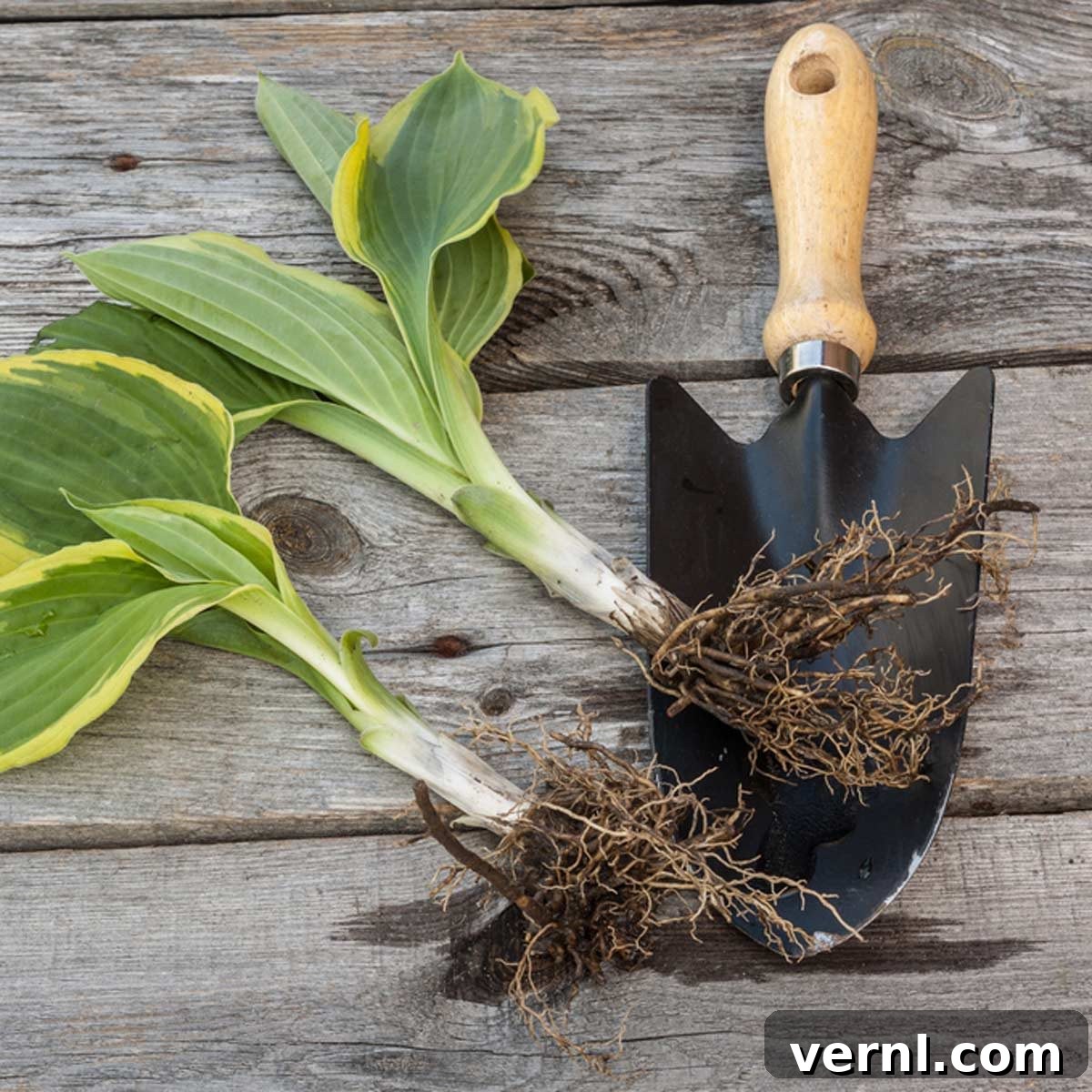
Hostas, renowned for their lush foliage and adaptability, are mainstays in shade gardens across the globe. Their captivating leaves, ranging from deep greens to vibrant blues and variegated patterns, offer unparalleled texture and visual interest. Beyond their aesthetic appeal, hostas are also celebrated for their relative ease of care, thriving in various soil conditions and even attracting charming hummingbirds to your garden space. While generally low-maintenance, one crucial practice ensures their continued health and vibrancy: division.
Dividing, or splitting, hostas is an essential gardening task that offers multiple benefits, from propagating new plants to rejuvenating existing clumps and maintaining their optimal size. If you’re new to the world of hostas, understanding the best season for division, the ideal frequency, and the correct techniques is paramount to success. This comprehensive guide will equip you with all the knowledge you need to master hosta division, ensuring your plants remain healthy, vigorous, and abundant for years to come.
Why Is Dividing Hostas So Important?
The question of whether hostas should be divided is met with a resounding “yes.” While it might seem counterintuitive to disturb a thriving plant, regular division is a cornerstone of hosta care. It’s not merely about creating more plants, though that is a fantastic benefit. Division plays a critical role in the long-term health and aesthetic appeal of your hosta collection. Here’s a closer look at the compelling reasons to incorporate this practice into your gardening routine:
- Promotes Plant Health and Vigor: As hostas mature, their root systems can become dense and overcrowded. This overcrowding competes for nutrients, water, and air circulation, leading to diminished plant health. Division alleviates this congestion, allowing each section to access resources more effectively. The result is more robust growth, larger leaves, and an overall healthier plant.
- Rejuvenates Older Clumps: Over time, the centers of mature hosta clumps can become sparse or even die out, leaving a less attractive “doughnut hole” appearance. Dividing the plant removes these weaker, older sections, encouraging fresh, vigorous growth from the remaining divisions. This process effectively gives your aging hostas a new lease on life.
- Increases Foliage Quality and Size: A healthy, uncrowded hosta is a happy hosta. By reducing competition for resources, divided plants often produce larger, more vibrant leaves with better color and texture. This ensures your hostas maintain their signature lush appearance.
- Propagates New Plants: One of the most gratifying aspects of dividing hostas is the ability to create new plants for free. Each healthy division with its own “eye” (growth point) and root system can be replanted to expand your existing beds, fill new areas of your garden, or even shared with fellow gardening enthusiasts. It’s an economical way to grow your plant collection.
- Manages Plant Size and Spread: Hostas can grow quite large over several years, potentially outgrowing their designated space or encroaching on neighboring plants. Regular division helps manage their size and spread, keeping your garden beds looking tidy and harmonious. It allows you to control the growth without sacrificing the plant’s health.
- Removes Dead or Diseased Portions: During the division process, you have an excellent opportunity to inspect the plant’s roots and crown. This allows you to identify and remove any dead, decaying, or diseased sections, preventing potential issues from spreading to the healthy parts of the plant.
While the benefits are clear, it’s important to note that you shouldn’t divide your hostas every year. The typical recommendation is every three to five years, depending on the plant’s growth rate and overall health. Observing your plants and understanding the cues they give will help you determine the optimal division schedule.
The Best Time for Hosta Division
Timing is everything when it comes to successfully dividing and transplanting hostas. Choosing the right season significantly impacts the plant’s ability to recover and establish itself in its new location. While hostas are relatively resilient, providing them with optimal conditions minimizes stress and maximizes their chances of thriving.
Spring: The Ideal Season for Division
Hands down, spring is considered the best season to divide or transplant hostas. There are several compelling reasons why this time of year offers the most favorable conditions for the plant:
- Cooler Temperatures: The moderate temperatures of spring are gentle on newly divided plants. Intense heat, especially combined with transplant shock, can quickly lead to wilting and failure. Spring’s cooler air and soil temperatures reduce water loss through the foliage, allowing the plant to focus its energy on root establishment.
- Emerging Foliage: In spring, hosta foliage is typically just emerging or still small and unfurling. This means there’s less leaf mass to support, which reduces the plant’s demand for water. With less foliage to maintain, the plant can direct its energy towards developing a strong new root system. Handling smaller plants is also much easier and causes less damage to the leaves.
- Ample Time for Establishment: Dividing hostas in spring gives them the entire growing season to establish a robust root system before the stresses of summer heat and the dormancy of winter. This long period of gentle growth ensures they are well-anchored and hydrated before facing more challenging conditions.
The ideal window in spring is usually after the last threat of frost has passed, but before the heat of summer sets in – often from late April through early June, depending on your climate zone. Look for the “pips” (the emerging shoots) to be about 2-4 inches tall.
Early Fall: A Viable Alternative
While spring is preferred, early fall can also be a suitable time for hosta division, provided certain conditions are met:
- Cooler Temperatures Return: Similar to spring, early fall brings a return of cooler temperatures, which helps reduce transplant shock. The soil is still warm enough from summer to encourage root growth, but the air is crisp, reducing water stress.
- Crucial Establishment Window: The key to successful fall division is ensuring there is enough time for the plants to reestablish themselves before winter. This typically means dividing at least 4-6 weeks before the ground is expected to freeze solid in your area. This allows the newly planted divisions to develop sufficient roots to anchor themselves and access water through the winter, preventing frost heave and dehydration.
The main drawback of fall division is dealing with the plant’s full, mature foliage, which can make digging and handling more cumbersome. It’s often advisable to trim back some of the larger leaves before division to reduce transplant shock. If you miss the early fall window, it’s best to wait until the following spring.
Seasons to Avoid
To ensure the best chances of success, it’s advisable to avoid dividing hostas during:
- Summer: The intense heat and strong sun of summer cause extreme water stress on newly divided plants, which are already struggling with transplant shock. The chances of survival are significantly reduced.
- Late Fall/Winter: Once the ground begins to freeze, root growth ceases. Dividing plants in late fall or winter means they won’t have the opportunity to establish any new roots before dormancy, leaving them vulnerable to frost heave and winter desiccation.
Essential Tools and Preparations for Hosta Division
Before you embark on the division process, having the right tools and making a few preparations will make the task smoother, more efficient, and ultimately more successful for both you and your hostas.
What You’ll Need:
Hostas are known for being easy to grow and tolerant of various soils, even thriving in full to part shade. However, their root systems can vary in length and density, which will dictate the type and size of the tools you’ll need for effective division. Here’s a checklist of essentials:
- Sharp Spade or Long-Handled Shovel: This is your primary tool for digging up the main clump. A sharp, sturdy spade will cut through dense roots more easily. Depending on the size and root system of your hosta, you’ll either need a standard garden spade or a long-handled shovel for deeper root systems.
- Garden Fork: Useful for gently loosening soil around the plant and for prying up the root ball without causing excessive damage.
- Hand Trowel or Garden Knife: For smaller hostas or for making more precise divisions, especially when separating individual “eyes.” A serrated garden knife can be particularly effective.
- Sturdy Garden Gloves: Essential for protecting your hands from soil, thorns (if present in the area), and blisters.
- Wheelbarrow or Tarp: For easily transporting the dug-up hosta clump, excess soil, and new divisions to their planting sites.
- Hose or Watering Can: For pre-watering the plant and for thoroughly watering in the new divisions.
- Pruners or Shears: To trim any damaged roots or excess foliage, which can help reduce transplant shock.
- Buckets or Bags: To hold the newly divided plants temporarily if they aren’t going directly into the ground.
- Rooting Hormone (Optional): While not strictly necessary for hostas, some gardeners use rooting hormone to encourage faster root development, especially for smaller divisions.
Pre-Division Preparation:
A little foresight goes a long way:
- Water Thoroughly: Deeply water the hosta clump you plan to divide one or two days before the procedure. Moist soil is easier to dig, and a well-hydrated plant will experience less stress during the division and transplanting process.
- Prepare New Planting Sites: Before you even dig up the old plant, decide where your new hosta divisions will go. Dig the new holes and amend the soil with compost or other organic matter to ensure good drainage and nutrient availability. Having the new sites ready minimizes the time the divisions spend out of the ground, further reducing stress.
- Clear the Area: Remove any weeds or debris around the hosta to give yourself ample working space.
Step-by-Step Guide to Dividing Hostas
With your tools ready and preparations made, you’re ready to dive into the practical steps of dividing your hostas. This process can be incredibly rewarding, yielding multiple healthy plants from a single parent.
Step 1: Digging Up the Hosta Clump
- Assess the Plant: Before digging, take a moment to observe the size and general growth habit of your hosta. This will give you an idea of the root ball’s potential spread.
- Dig a Wide Perimeter: Using your sharp spade or shovel, begin digging a wide circle around the perimeter of the hosta clump. Start about 6-12 inches away from the outermost leaves, depending on the plant’s size. Dig deep enough to get underneath the entire root clump, severing the roots as you go.
- Loosen and Lift: Once you’ve dug around the entire clump, use your spade or garden fork to carefully pry the plant out of the ground. Rock it gently back and forth to loosen it, and once it feels free, lift the entire root ball onto your tarp or into your wheelbarrow. Avoid pulling forcefully on the leaves, as this can damage the crown.
Step 2: Preparing the Clump for Division
- Shake Off Excess Soil: Gently shake or brush off as much excess soil from the root ball as possible. This will allow you to better see the individual crowns (growth points) and roots, making the division process easier and more precise.
- Inspect the Roots and Crowns: Take this opportunity to inspect the root ball for any dead, mushy, or diseased roots. Use your pruners to cleanly trim away any unhealthy sections. Also, identify the individual crowns, which are the points where the leaves emerge from the roots. Each division will need at least one healthy crown (or “eye”) and a sufficient root system.
Step 3: The Division Process
How you divide the clump depends on its size and density:
- For Smaller, Looser Clumps (or younger plants): You might be able to simply pull the clump apart by hand. Gently tease apart the individual crowns and their attached root systems.
- For Larger, Denser Clumps (or older plants): This will require more effort and possibly tools.
- Using a Spade or Garden Fork: Place the clump on your tarp. You can often use your spade to cut directly through the crown, creating two or more divisions. For very dense clumps, a garden fork can be inserted into the center and used to pry the clump apart into manageable sections.
- Ensuring Viable Divisions: Aim for each division to have at least 2-3 healthy “eyes” and a robust root system. Divisions that are too small may struggle to establish. You can create as many divisions as you like, from two large halves to multiple smaller plants.
- Trim Foliage (Optional): If dividing in fall or if the leaves are very large, you can trim about one-third to one-half of the foliage from each division. This reduces the plant’s water demands and minimizes transplant shock.
Step 4: Replanting the Divisions
- Prepare New Planting Holes: Dig holes for your new divisions that are twice as wide as the root ball and about as deep. Ensure the bottom of the hole is firm but not compacted.
- Planting Depth: Place each division into its new hole, making sure the crown (where the leaves emerge) is at the same level as, or slightly above, the surrounding soil surface. Planting too deep can lead to rot, while planting too shallow can expose roots.
- Proper Spacing: Remember to give your new hostas enough space to grow to their mature size. Research the mature dimensions of your specific hosta variety to ensure adequate spacing.
- Backfill and Water Thoroughly: Gently backfill the hole with amended soil, lightly firming it around the roots to remove any large air pockets. Once filled, water each newly planted division deeply. This settles the soil around the roots and provides essential hydration.
Post-Division Care for Thriving Hostas
The work doesn’t stop once the hostas are in the ground. Proper aftercare is crucial for ensuring your newly divided plants recover from the shock of transplanting and establish themselves successfully in their new homes.
Immediate Aftercare:
- Consistent Watering: This is the most critical step. For the first 4-6 weeks after division, your hostas will need consistent moisture to help them develop new roots. Water deeply every few days, especially during dry spells, ensuring the soil remains moist but not waterlogged. Avoid letting the soil dry out completely.
- Provide Protection: If you’ve divided during a slightly warmer period or if your new planting sites are more exposed, consider providing some temporary shade for the first week or two. A shade cloth or even a garden chair can shield them from intense midday sun, reducing stress.
- Mulching: Apply a 2-3 inch layer of organic mulch (like wood chips, shredded bark, or compost) around the base of the newly planted hostas, keeping it a few inches away from the crown. Mulch helps conserve soil moisture, regulates soil temperature, and suppresses weeds, all of which benefit establishing plants.
Long-Term Care:
- Fertilization: While you don’t need to fertilize immediately after division (as the plant needs to focus on root development), you can apply a balanced, slow-release granular fertilizer about 4-6 weeks after transplanting. Alternatively, top-dress with a layer of compost. Avoid over-fertilizing, which can burn new roots.
- Monitoring for Stress or Pests: Keep a close eye on your divided hostas. Wilting (beyond initial transplant shock), yellowing leaves, or signs of pests (like slugs or snails, which love hostas) should be addressed promptly. While some wilting is normal, persistent droopiness indicates insufficient water or excessive stress.
- Weed Control: Regularly remove any weeds that sprout near your hostas. Weeds compete for water and nutrients, which your newly established plants need to thrive.
Patience is key during this period. While some hostas may look a bit sad for a week or two after division, with proper care, they will typically bounce back and put on new growth, eventually rewarding you with more abundant and healthier plants.
Frequency of Division: When Do Your Hostas Need It?
Understanding when to divide your hostas is as important as knowing how. While the general recommendation is every three to five years, several factors can influence this timeline. Observing your plants for specific cues will help you determine the optimal moment for intervention.
The 3-5 Year Rule of Thumb:
For most hosta varieties, dividing every 3 to 5 years is a good general guideline. This frequency allows the plants ample time to mature and establish significant clumps without becoming overly crowded or stressed. However, this is just a starting point; individual plant characteristics and environmental conditions play a significant role.
Factors Influencing Division Frequency:
- Hosta Variety and Growth Rate: Some hosta varieties are naturally vigorous and fast-growing, quickly forming large clumps. These may benefit from division closer to the 3-year mark. Slower-growing or miniature varieties, on the other hand, might happily remain undivided for 5 years or even longer.
- Desired Size: If you wish to maintain your hostas at a specific size or prevent them from encroaching on other plants in a smaller garden space, more frequent division (perhaps every 2-3 years) might be necessary. Conversely, if you want massive specimen plants and have the space, you can extend the time between divisions.
- Overall Plant Health and Vigor: This is perhaps the most important indicator. Healthy, thriving hostas can go longer without division. However, if you notice signs of decline, it’s a clear signal.
Signs Your Hosta Needs Dividing:
Your hostas will often tell you when they are ready for division. Look out for these visual cues:
- Decreased Vigor or Growth: If your hosta plant seems less robust than usual, produces smaller leaves, or exhibits generally slower growth despite adequate water and nutrients, overcrowding might be the culprit.
- Sparse or “Doughnut Hole” Center: A classic sign of an overcrowded, aging hosta is when the center of the clump becomes sparse, yellow, or even dies out completely, leaving a ring of growth around the edges. This indicates the older, inner roots are struggling.
- Reduced Leaf Size and Color: Overcrowding can lead to increased competition for resources, resulting in leaves that are noticeably smaller or less vibrant in color than they once were. The characteristic variegation of some hostas might also become less pronounced.
- Root-Bound in Pots: If your hosta is in a container, roots growing out of the drainage holes or the plant lifting itself out of the pot are sure signs it needs to be divided or repotted into a larger container.
- Overwhelming Its Space: Simply put, if your hosta has grown so large that it’s crowding out neighboring plants or spilling over pathways, it’s time for division to manage its size.
- Pest and Disease Issues: While not a direct cause, an overcrowded hosta with poor air circulation can become more susceptible to fungal diseases (like crown rot) and pest infestations (such as slugs and snails). Division can help improve airflow and reduce hiding spots for pests.
By paying attention to these signals, you can ensure you divide your hostas at the optimal time, promoting their health and enhancing the beauty of your garden.
Common Mistakes to Avoid When Dividing Hostas
While dividing hostas is a relatively straightforward process, certain missteps can hinder success. Being aware of these common pitfalls will help you ensure your plants thrive after their big move.
- Dividing at the Wrong Time of Year: As emphasized earlier, attempting to divide hostas during peak summer heat or late fall/winter is a recipe for disaster. Extreme temperatures cause undue stress and prevent proper root establishment, often leading to plant death. Always aim for spring or early fall.
- Making Divisions Too Small: Each new division needs enough “eyes” (growth points) and a healthy, intact root system to survive and thrive. Divisions that are too tiny or have insufficient roots will struggle to establish and may not grow well, if at all. Aim for at least 2-3 eyes per division.
- Not Watering Adequately: Failing to water the parent plant thoroughly before division and the new divisions consistently afterward is a critical mistake. Dehydration is a major cause of transplant shock and failure.
- Planting Too Deep or Too Shallow: The crown of the hosta (where the leaves emerge) should be planted at or slightly above soil level. Planting too deep can lead to crown rot, while planting too shallow can expose sensitive roots to desiccation.
- Ignoring Soil Preparation: Simply digging a hole and sticking a division in can lead to poor establishment. Amend new planting sites with organic matter to improve drainage, aeration, and nutrient content, providing an optimal environment for new root growth.
- Not Providing Enough Space: While divisions start small, remember their mature size. Planting them too close together will lead to overcrowding issues again in just a few years, negating the benefits of division. Research the mature size of your specific hosta variety.
- Forgetting Safety Precautions: Gardening involves tools, and it’s easy to get absorbed in the task. Always wear sturdy garden gloves to protect your hands, and be mindful of your posture to prevent back strain while digging.
- Being Too Gentle (or too rough) with Dense Clumps: Some hosta clumps are incredibly dense and woody. Being overly gentle might prevent you from making clean divisions. Conversely, being too rough can damage too many roots. Use a sharp spade or garden fork to make clean cuts when necessary.
By avoiding these common mistakes, you’ll significantly increase the chances of successfully dividing your hostas and enjoying a more vibrant and abundant garden.
Conclusion
Hostas are truly magnificent plants, offering unparalleled beauty and versatility to any shade garden. While their low-maintenance nature makes them a favorite among gardeners, understanding and implementing the practice of division is key to unlocking their full potential. Dividing your hostas isn’t just about creating more plants; it’s a vital act of care that rejuvenates old clumps, promotes robust health, and ensures your foliage remains lush and vibrant year after year.
By choosing the right season, gathering the appropriate tools, and following the step-by-step guidance provided, you can approach hosta division with confidence. Remember to prioritize consistent watering, provide adequate space for growth, and pay attention to the subtle cues your plants offer. With a little effort and attention, you’ll not only expand your hosta collection but also cultivate healthier, more resilient plants that will continue to enhance the beauty of your garden for many seasons to come. Embrace the art of hosta division, and watch your shade garden flourish with renewed vigor and splendor.