
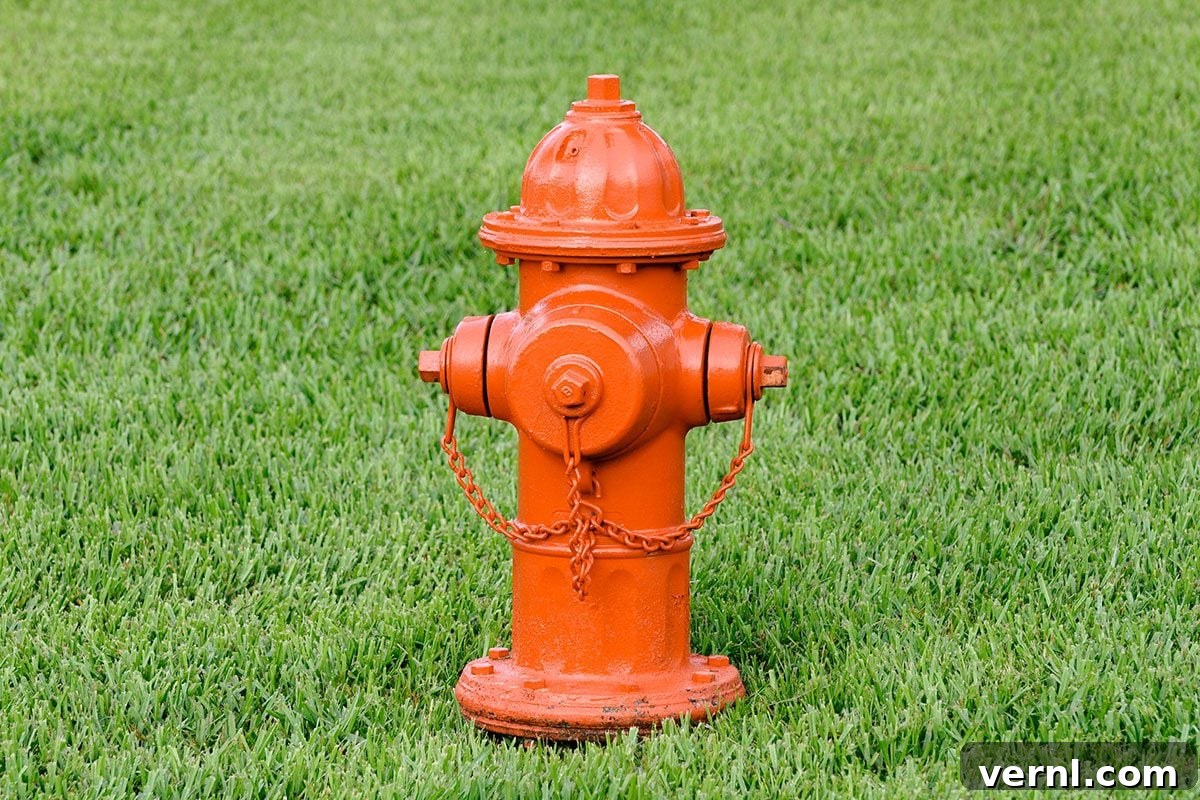
When most people envision a fire hydrant, a classic red or perhaps bright yellow structure at the curb’s edge typically comes to mind. This image feels universally standard, an unchanging fixture in our urban and suburban landscapes. However, beneath this common perception lies a fascinating and critically important reality: the color of a fire hydrant is far from arbitrary. In fact, it varies significantly and often conveys specific, life-saving meanings upon which firefighters depend in the heat of an emergency.
This array of colors isn’t merely for aesthetic variation. It’s an intricate communication system, primarily designed to signal crucial information about water flow capacity and, consequently, the most effective emergency response strategy. In this comprehensive guide, we will unravel the mystery behind fire hydrant colors, explore their specific meanings, and explain precisely why this seemingly small detail holds such immense importance for fire safety and public well-being.
Why Fire Hydrant Color is a Lifeline in Emergencies
It’s an undeniable truth that fire hydrants are indispensable tools for fire crews. They represent the primary accessible water source for combating fires, and the speed and efficiency with which firefighters can tap into this resource directly impact their ability to save lives and property. A quick glance at a fire hydrant can provide an experienced firefighter with a wealth of critical information about the unit they are about to engage with, enabling them to make rapid, informed decisions during high-stress situations.
Across the United States, a significant number of municipalities adhere to the authoritative recommendations set forth by the National Fire Protection Association (NFPA). The NFPA, a global leader in fire, electrical, and building safety, publishes comprehensive guidance through its document NFPA 291, titled “Recommended Practice for Fire Flow Testing and Marking of Hydrants.” This crucial standard provides a uniform system designed to help fire crews instantly identify a hydrant’s water-flow capacity, ensuring they can deploy the right resources and tactics without delay.
While many hydrants emerge from the factory painted in a highly visible chrome yellow, departments frequently customize these units by adding distinct colors to the caps, bonnets, or sometimes the entire barrel. These added colors are not decorative; they are performance indicators. They communicate vital operational details, which explains why you might observe a fire hydrant in your neighborhood sporting a color other than the traditional red or yellow. This also underscores why tampering with or applying graffiti to a fire hydrant is far more serious than many people realize. Such acts can obscure critical information, potentially hindering emergency response and jeopardizing safety.
Beyond flow rates, NFPA 291 also strongly encourages fire departments to differentiate between private and public hydrants. This distinction is critical for ownership, maintenance responsibility, and operational protocols. In many jurisdictions, private hydrants—those owned and maintained by private entities such as businesses, industrial complexes, or gated communities—are often painted red. This immediate visual cue allows firefighters to identify whose responsibility it is to maintain the hydrant and, in some cases, alerts them to potential differences in water pressure or supply. Public hydrants, on the other hand, which are maintained by the municipal water department, commonly appear in their default chrome yellow, often accented with color-coded caps to denote their flow capacity.
It is important to remember, however, that while NFPA 291 provides widely respected recommendations, it functions as guidance rather than a legally binding law. Consequently, this is not a universally set practice observed by every fire department nationwide. Many cities and local governments retain the autonomy to establish their own specific color-coding systems. These variations might be driven by aesthetic preferences, local branding initiatives, or unique local coding requirements. This flexibility means that from one city to another, and even occasionally between different neighborhoods within the same city, you might encounter a diverse palette of hydrant colors, each speaking a distinct local language of emergency preparedness.
Decoding the Palette: Different Hydrant Colors and Their Meanings
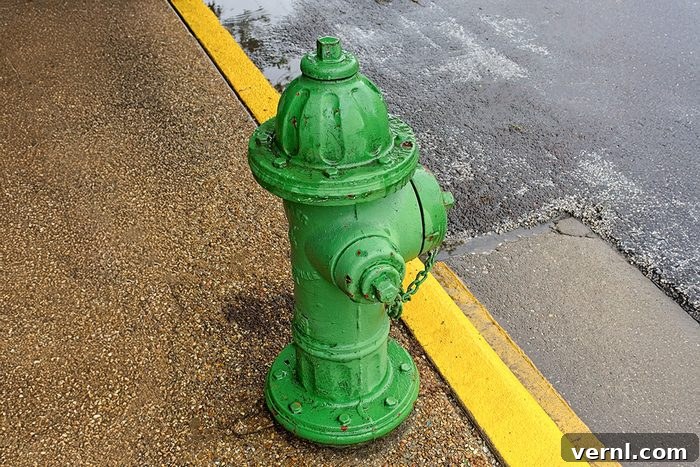
Understanding the standard color codes is paramount for firefighters, as it allows them to quickly evaluate the available water resources and plan their attack strategy. While local variations exist, the NFPA 291 recommendations for color-coding the tops or nozzle caps are widely adopted and serve as a baseline for effective operations:
- Red: A hydrant with a red top or cap generally signifies a low-flow hydrant, capable of delivering fewer than 500 gallons per minute (GPM). Firefighters encountering a red-capped hydrant understand that it offers a more limited water supply, which might influence their decision to call for additional tankers, lay longer hose lines from another source, or adjust their firefighting tactics for smaller or less intense fires.
- Orange (or Yellow, sometimes): Hydrants marked with an orange top typically identify a hydrant rated between 500 and 999 GPM. This “ordinary” flow rate is common and suitable for many standard firefighting operations. It provides a reliable water source for initial attacks and can support several hose lines, making it a workhorse in urban and suburban settings.
- Green: A green-capped hydrant often designates a high-flow hydrant, capable of supplying between 1,000 to 1,499 GPM. This level of flow is considerably more robust, making these hydrants ideal for larger fires, commercial buildings, or situations where multiple hose streams are required simultaneously to rapidly suppress a blaze.
- Blue: Hydrants with blue tops or caps usually indicate a very high-flow hydrant, capable of delivering 1,500 GPM or more. These are considered superior hydrants, often strategically placed near industrial areas, large public buildings, or dense residential zones where substantial water volume is critical. Firefighters know that a blue hydrant offers an exceptional water supply, allowing for aggressive firefighting strategies and sustained operations.
It’s crucial to reiterate that while these GPM ranges and associated colors are common and recommended by NFPA, they are not universally binding. As previously discussed, local municipalities maintain the prerogative to implement their own systems, which might include different color schemes or alternative flow classifications. However, the underlying principle of using color to communicate water capacity remains consistent, even if the specific hues or ranges vary.
The extent to which a hydrant is painted also lacks a universal standard. While the color of a hydrant’s top or “nozzle cap” most frequently indicates its water delivery capacity, some communities opt to paint the entire hydrant body with the color corresponding to its flow rate. This full-body painting can enhance visibility and ensure the information is clear from a distance or in challenging conditions. The key is that local fire crews are extensively trained on their specific community’s coding system. They will know precisely whether they should be looking at the entire body, just the cap, or other markings to ascertain the hydrant’s capabilities quickly.
Beyond Color: The Full Message of a Fire Hydrant
While color coding provides a fundamental layer of information, it is only one part of a fire hydrant’s comprehensive messaging system. In fact, fire hydrants often display a variety of other markings and indicators that provide further critical details to fire crews, ensuring maximum efficiency and safety during an incident. Firefighters are trained to observe these nuances:
- Stenciled Information: In certain areas, hydrants may feature stenciled information directly on the top or barrel. This can include precise GPM ratings, the specific water main size, or, importantly, alerts regarding low-pressure ratings. Knowing a hydrant has intrinsically low pressure allows crews to adjust their pump operations or seek an alternative water source proactively, preventing delays.
- Reflective Paint and Markings: Visibility is paramount, especially during nighttime operations or in adverse weather conditions. Fire crews often look for hydrants that have been treated with reflective paint or feature reflective bands. These materials significantly improve nighttime visibility, allowing firefighters to locate and access hydrants quickly in low-light environments, which are common during many emergencies.
- Bags, Covers, or Flags: If you ever see a bag, a specially designed cover, or a flag draped over a fire hydrant, it’s a clear and serious sign. This typically indicates that the hydrant is defective, undergoing maintenance, out of service, or otherwise should not be used. These visual warnings are crucial for firefighters, preventing them from attempting to connect to a non-functional hydrant, which could cause critical delays in emergency response. Reasons for a hydrant being out of service can range from mechanical issues, nearby construction affecting water mains, or even seasonal limitations in colder climates.
- Curb Markings and Arrows: In some municipalities, additional markings on the street curb or ground near the hydrant, such as painted arrows or specific colors, can indicate the exact location of a buried shut-off valve or the direction of the water main. This extra layer of information can be invaluable for water department personnel during maintenance or in situations where a hydrant needs to be isolated.
- Private vs. Public Indicators: As mentioned, beyond just color, sometimes specific plaques or tags are attached to clearly delineate whether a hydrant is private or public, reinforcing maintenance responsibilities.
These multifaceted visual systems collectively work to reduce guesswork significantly. When firefighters arrive on a scene, often amidst chaos and urgency, these clear, concise visual cues allow them to quickly assess all critical information at their disposal. This immediate understanding of a hydrant’s status and capabilities is vital for making rapid, effective decisions that can mean the difference between life and death.
The Evolution of Hydrant Intelligence: Bridging the Digital Divide
While many of these essential color codes and visual markings were first implemented in pre-digital eras, leveraging simplicity and universal understanding, the advent of modern technology has added powerful new dimensions to hydrant intelligence. Today, digital tools and Geographic Information Systems (GIS) store incredibly detailed hydrant data. Fire crews can access this information instantly on mobile devices, tablets, or in-vehicle computers. Before even arriving at a scene, dispatchers or on-scene commanders can be alerted to the precise location, flow rate, pressure, last maintenance date, and any known issues for every hydrant in a given area.
This digital integration offers immense benefits: improved route planning to hydrants, better resource allocation, proactive maintenance scheduling, and a more comprehensive understanding of the water infrastructure. However, despite the undeniable advantages of digital mapping and data, these traditional visual codes remain profoundly important. Technology, for all its power, can fail. Mobile devices can lose signal, batteries can die, and software glitches can occur. Furthermore, in the intense environment of a fire, smoke can drastically limit visibility, and the sheer urgency of emergencies often demands rapid, on-the-spot decision-making without the luxury of consulting a digital screen. In such critical moments, the immediate visual language of a hydrant’s color or markings becomes the most reliable and fastest source of information.
Public Awareness: Our Role in Fire Safety
For the average citizen, noticing and understanding these colors adds a new, intriguing layer of awareness to our everyday surroundings. What might have once looked like a simple, utilitarian fixture on the curb now reveals itself as a sophisticated, functional code that firefighters read and interpret instantly. Beyond mere curiosity, recognizing the importance of these hydrants also reinforces our collective responsibility in ensuring their functionality.
Public awareness extends to ensuring hydrants are never obstructed by parked vehicles, overgrown vegetation, snow, or debris. A blocked hydrant can delay fire crews by precious minutes—minutes that can have catastrophic consequences during an emergency. Reporting damaged or obstructed hydrants to local authorities or fire departments is a simple yet crucial act of civic duty that directly contributes to community safety. Understanding the silent language of hydrants transforms them from passive objects into active components of our shared safety infrastructure, reminding us all of the continuous vigilance required for effective emergency preparedness.
Conclusion
The humble fire hydrant, often overlooked, is a cornerstone of fire safety. Its colors and markings are not decorative but are part of a critical, silent language understood by those who risk their lives to protect us. From the widespread recommendations of NFPA 291 to the unique codes adopted by local municipalities, every hue and stencil on a fire hydrant communicates vital information about water flow capacity, ownership, and operational status. While digital tools enhance our ability to manage and utilize these essential resources, the immediate, visual cues on the hydrants themselves remain indispensable, especially when seconds count and lives are on the line. Next time you pass a fire hydrant, remember that it’s more than just a pipe; it’s a vital, coded message in the ongoing effort to ensure public safety.
Sources
- National Fire Protection Association, NFPA 291 Recommended Practice for Fire Flow Testing and Marking of Hydrants
- American Water Works Association, Fire Hydrants Overview and Testing Practices