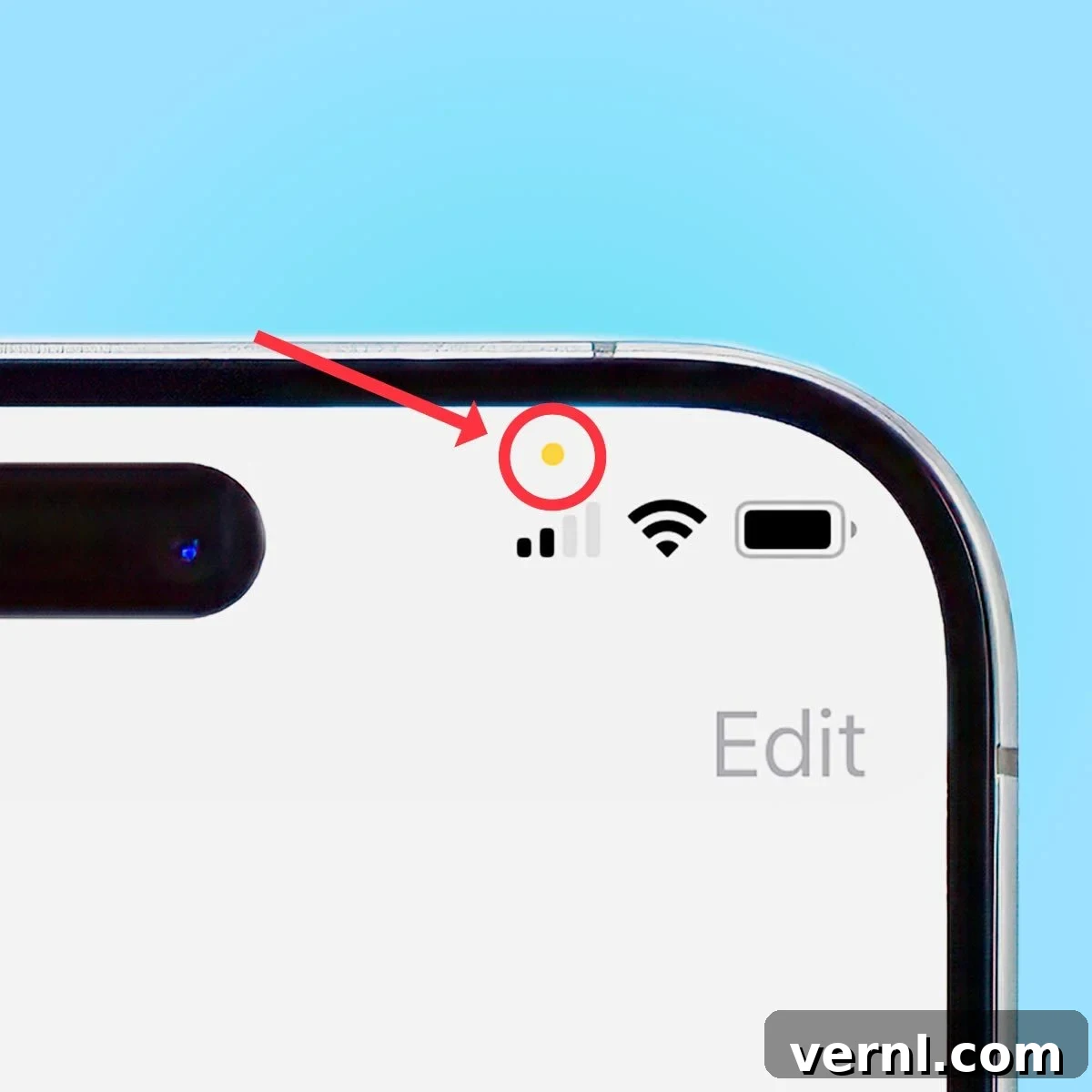
Understanding the iPhone Orange Dot: Your Comprehensive Guide to Microphone Privacy and Security
In an era where digital privacy is paramount, understanding the subtle indicators on your smartphone is crucial. Your iPhone is a sophisticated device, brimming with applications that often request access to sensitive hardware like the microphone and camera. While these permissions are necessary for many app functionalities, it’s essential for users to know when these features are actively being used. Apple introduced specific indicator lights to empower users with this knowledge, ensuring transparency and control over their personal data. This guide will delve into the meaning of the orange dot in the top corner of your iPhone, explain its significance for your security, and provide actionable steps to manage your privacy settings effectively.
What Does the iPhone Orange Dot Mean?
The orange dot, appearing in the upper right corner of your iPhone’s status bar, serves as a critical privacy indicator. According to Apple, this indicator light signifies that an app on your phone is actively using the microphone. It’s a clear visual cue designed to alert you to audio recording activity. This differs from the green dot, which appears when your camera (and often the microphone concurrently) is in use, such as during a FaceTime call or when recording a video with an app like Snapchat.
Specifically, the orange dot confirms that your device’s microphone is engaged and currently capturing audio. In many scenarios, this is perfectly normal and expected. For instance, if you’re making a phone call, recording a voice memo, sending an audio message, or using a voice-activated assistant like Siri, the orange dot will illuminate. However, its unexpected appearance can be a cause for concern, potentially indicating an app recording audio without your explicit knowledge or immediate intent. Apple implemented this feature with iOS 14 to enhance user transparency and provide greater control over hardware access, making it easier for users to identify and address potential privacy breaches.
Why is This Indicator Essential for Your Privacy?
The introduction of the orange dot was a significant step in Apple’s ongoing commitment to user privacy. In an age where apps constantly seek access to various device functionalities, it’s easy for users to inadvertently grant permissions that might later be misused. The microphone, in particular, is a highly sensitive component, capable of capturing personal conversations, ambient sounds, and potentially private information. Unauthorized or unnoticed microphone access could lead to:
- Unwanted Surveillance: Malicious or poorly designed apps could record your conversations in the background, potentially transmitting sensitive data to third parties.
- Data Harvesting: Even legitimate apps might use microphone access to gather ambient sound data for targeted advertising or analytical purposes, which some users may find intrusive.
- Security Breaches: If an app with microphone access is compromised, the audio data it collects could fall into the wrong hands.
- Erosion of Trust: A lack of transparency can lead to users feeling their privacy is constantly at risk, eroding trust in their devices and the apps they use.
By providing a clear, real-time indicator, Apple empowers users to be vigilant. It transforms a potentially hidden activity into an immediately visible one, prompting you to question and understand why your microphone is active.
When Seeing the Orange Dot is Normal
Before you jump to conclusions, it’s important to understand the legitimate situations in which the orange dot will appear. Its presence doesn’t automatically imply a privacy breach. Here are some common and expected scenarios:
- Phone Calls: During a standard phone call, FaceTime audio call, or any voice over IP (VoIP) call (e.g., WhatsApp, Zoom, Skype), your microphone is active.
- Voice Memos: When you’re using the native Voice Memos app or a third-party audio recording app.
- Video Recording: If you’re recording a video using your camera app, Instagram, Snapchat, or TikTok, the microphone is almost always active to capture sound.
- Voice Assistants: Interacting with Siri (if set to listen for “Hey Siri”) or other voice assistants will activate the microphone.
- Dictation: When using the dictation feature to convert your speech into text.
- Audio Messages: Sending an audio message in apps like Messages or WhatsApp.
- Music Recognition: Apps like Shazam that listen for music in your environment.
- Gaming Apps: Many games utilize the microphone for in-game chat features.
In these instances, the orange dot is merely confirming that the app is performing its intended function, and your microphone is operating as expected based on your interaction.
When the Orange Dot Signals a Concern
The true utility of the orange dot comes into play when you see it unexpectedly. If the orange dot appears and you are not actively using an app that should be accessing your microphone, it’s a clear signal to investigate. This could happen if:
- An app is running in the background and recording without your knowledge.
- A recently used app didn’t properly close its microphone access.
- There’s a bug in an application causing it to mistakenly activate the microphone.
- In rare and more severe cases, a malicious app might be attempting to record audio surreptitiously.
It’s this “unexpected” appearance that demands your immediate attention and prompts you to take action to protect your privacy.
Proactive Steps When You See the Orange Dot
If you observe the orange dot when you’re not intentionally using your microphone, here’s a structured approach to identify the cause and resolve the situation:
1. Check the Control Center for Recent Activity
One of the quickest ways to see which app recently used your microphone (or camera) is through the Control Center. Simply swipe down from the top-right corner of your screen (or up from the bottom on older iPhones). At the very top of the Control Center, you’ll see a small message indicating which app recently accessed your microphone (or camera). For example, it might say “Voice Memos recently used Microphone.” This can often immediately clarify if an app you just used failed to release the microphone.
2. Identify the Culprit App
If the Control Center doesn’t immediately provide clarity, or if you suspect an app is misbehaving, you’ll need to identify which app is currently using the microphone. Start by checking your open apps. If you have many apps running, you can systematically close them one by one. After closing each app, observe if the orange dot disappears. This method allows you to pinpoint the specific application responsible for the microphone activity.
To close apps:
- Swipe up from the bottom of the screen (or double-press the Home button on older models) to reveal the App Switcher.
- Swipe left or right to browse through your open apps.
- Swipe an app’s preview card upwards to force close it.
Repeat this process until the orange dot vanishes. Once you’ve identified the app, you can decide on the next course of action.
3. Force Quitting Apps
Sometimes, simply closing an app from the App Switcher is enough. However, if the dot persists, a force quit can often resolve temporary glitches. Ensure the app is fully terminated before reapplying the permissions or considering deletion.
4. Restart Your iPhone
If you’re still unable to identify the app or the orange dot remains stubbornly present after trying the above steps, a full restart of your iPhone can often clear any lingering software glitches that might be causing an app to hold onto microphone access. This is a common troubleshooting step for many minor iOS issues.
Managing Microphone Permissions for Enhanced Security
Beyond reacting to the orange dot, proactively managing your app permissions is a cornerstone of digital privacy. You have granular control over which apps can access your microphone, and you should periodically review these settings.
1. Navigating Microphone Settings
To access and manage microphone permissions:
- Open the Settings app on your iPhone.
- Scroll down and tap on Privacy & Security.
- Tap on Microphone.
Here, you’ll see a comprehensive list of all applications that have ever requested microphone access. Each app will have a toggle switch next to it, indicating whether it currently has permission.
2. Understanding Permission Options
While the Microphone section primarily offers an on/off toggle for each app, some apps, particularly those that use the microphone while running in the background, might offer more nuanced permission options within their individual app settings (found by tapping on the app name in the main Settings menu, then “Microphone”). Generally, for most apps, you’ll see:
- On/Off Toggle: This allows you to completely enable or disable microphone access for that specific app.
- “Only Allow While App is Open” / “Ask Next Time”: For newer apps or those updated to use Apple’s latest privacy frameworks, you might get more flexible options when granting permission. Always opt for “Ask Next Time” or “While Using the App” if available, as this restricts background access.
The best practice is to disable microphone access for any app that doesn’t explicitly need it to function. If you find an app with microphone permission that seems unnecessary or suspicious, simply toggle the switch off.
3. Regularly Reviewing Permissions
It’s advisable to make a habit of reviewing your app permissions, especially microphone access, every few months or after installing a significant number of new apps. Apps often request broad permissions upon installation, and you might have granted them without fully considering the implications at the time. A periodic audit ensures that only trusted and necessary applications have access to your microphone, significantly bolstering your phone’s security posture.
Beyond the Orange Dot: Comprehensive iPhone Privacy Tips
While the orange dot is a vital privacy feature, it’s part of a larger ecosystem of security measures on your iPhone. Embracing a holistic approach to privacy can further protect your personal information.
1. Camera Privacy
Just as the orange dot signals microphone use, the green dot indicates camera (and usually microphone) activity. Apply the same vigilance: if you see the green dot when not using your camera, investigate immediately. Review camera permissions in Settings > Privacy & Security > Camera.
2. App Tracking Transparency (ATT)
Introduced in iOS 14.5, ATT requires apps to ask for your permission before tracking your activity across other companies’ apps and websites. Always choose “Ask App Not to Track” unless you have a specific reason to allow tracking. Manage these settings in Settings > Privacy & Security > Tracking.
3. Location Services
Many apps request access to your location, even when it’s not essential for their core function. For most apps, “Ask Next Time Or When I Share” or “While Using the App” is sufficient. Rarely should an app have “Always” access to your location. Manage these in Settings > Privacy > Location Services.
4. Strong Passcodes & Biometrics
Ensure your iPhone is always protected by a strong alphanumeric passcode, Face ID, or Touch ID. This is your first line of defense against unauthorized access to your device and, by extension, your app data and permissions.
5. Keep iOS Updated
Apple regularly releases iOS updates that include critical security patches and privacy enhancements. Always keep your iPhone’s operating system up to date to benefit from the latest protections.
6. Review App Privacy Reports
iOS also offers an App Privacy Report (Settings > Privacy & Security > App Privacy Report) that shows you a detailed timeline of when apps accessed your data and hardware, and what network domains they contacted. This can be invaluable for identifying unexpected app behavior.
The Importance of Digital Vigilance
The orange dot on your iPhone is more than just a light; it’s a powerful symbol of your right to privacy in the digital age. By understanding its meaning, knowing how to respond, and proactively managing your app permissions, you take control of your personal data. In an increasingly connected world, digital vigilance is not just recommended; it’s essential for maintaining your security and peace of mind. Empower yourself with knowledge, and let your iPhone’s privacy indicators guide you toward a safer digital experience.
Always remember that while Apple provides robust privacy tools, the ultimate responsibility for maintaining privacy rests with the user. Be mindful of the apps you install, the permissions you grant, and the information you share.
Source
About the orange and green indicators in your iPhone status bar, Apple, 2023.