
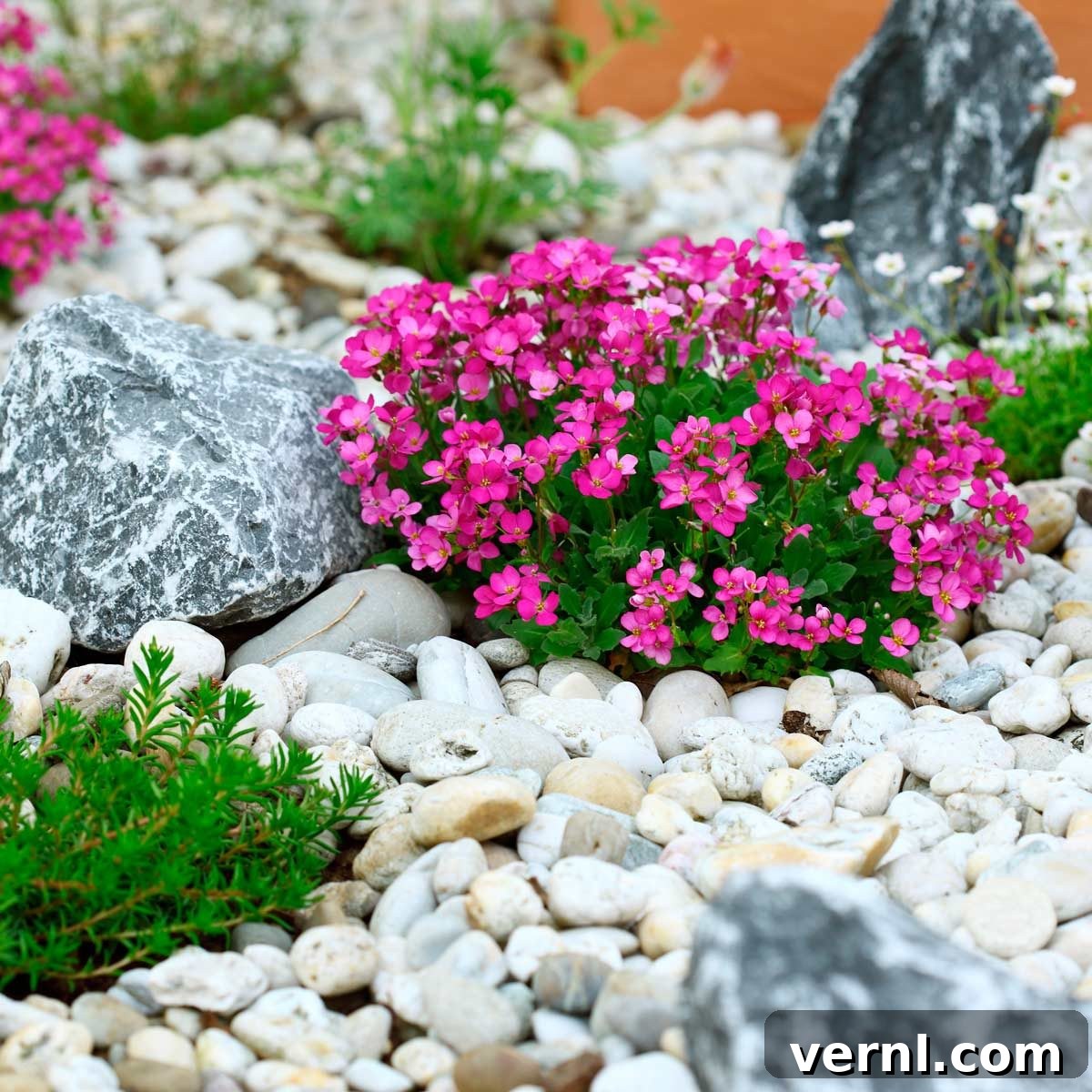
Imagine a landscape feature that not only enhances the beauty of your garden but also offers unparalleled durability and minimal upkeep. That’s precisely what river rock flower beds deliver. With their naturally smooth, often polished surfaces and varied textures, river rocks introduce a handsome, organic element to any outdoor space. Unlike traditional organic mulches that break down over time, requiring constant replenishment, river rocks are a permanent solution, offering a timeless aesthetic and practical benefits that make them incredibly popular among discerning homeowners. They create a distinct, sophisticated look while simultaneously solving common gardening challenges, making them an ideal choice for both novice and experienced gardeners seeking a blend of elegance and efficiency in their yard.
Choosing the Right Plants for Your River Rock Garden
The success of any river rock flower bed hinges significantly on thoughtful plant selection. River rocks boast excellent drainage properties, making them an ideal companion for plants that thrive in well-drained soil and don’t appreciate excessive moisture pooling around their stems. This characteristic makes them perfect for a wide array of succulents, various types of cacti, and other drought-tolerant species that mimic the arid or rocky environments where such plants naturally flourish. Beyond drainage, river rocks are also adept at retaining and radiating heat throughout the day, creating a microclimate that benefits sun- and heat-loving plants. Consider vibrant plants like lavender, rosemary, agave, sedum, and certain ornamental grasses that can withstand intense sunlight and warm conditions, complementing the natural warmth radiated by the rocks.
However, it’s crucial to exercise caution with delicate plants or those that prefer cooler, moister conditions, as the reflected heat from river rocks can be detrimental to their health. Shade-loving perennials, shallow-rooted plants sensitive to temperature fluctuations, or those requiring consistently damp soil may struggle in a river rock environment. Always research the specific needs of your chosen flora to ensure a harmonious and thriving garden. For inspiration, explore our selection of flower bed ideas for full sun that beautifully integrate with rock landscaping.
Foundation First: Essential Role of Landscape Fabric
A beautifully laid river rock flower bed can quickly lose its appeal if not properly prepared against the relentless invasion of weeds. Even the densest layer of river rocks won’t deter persistent weeds from finding their way through, pushing up to spoil your carefully crafted aesthetic. This is where landscape fabric becomes an indispensable first step in your river rock project. Lining the base of your bed with high-quality landscape fabric creates a formidable barrier, significantly minimizing weed growth and saving you countless hours of back-breaking maintenance in the long run. It’s a simple, yet profoundly effective and cost-efficient measure that ensures the pristine appearance and longevity of your river rock installation.
When installing, ensure the fabric is laid smoothly, overlapping edges by at least 6-12 inches to prevent gaps. Secure the fabric with landscape staples or pins to keep it firmly in place, especially on slopes or in windy areas. While preventing weeds, landscape fabric also allows water to drain through, ensuring your chosen plants receive adequate moisture without waterlogging, which is crucial for the health of drought-tolerant species. This foundational step is non-negotiable for anyone desiring a truly low-maintenance and visually stunning river rock display.
Designing with Dimension: Mixing River Rock Sizes
One of the most captivating aspects of river rock landscaping is its versatility in texture and scale. Landscape river rocks are available in a broad spectrum of sizes, typically ranging from a fine 3/8 inch for subtle ground cover to bold 5-inch stones that command attention. By strategically mixing these various sizes within your flower beds, you can create a dynamic and visually stimulating landscape that offers year-round interest. Smaller river rocks are excellent for use as a permeable mulch, filling in spaces around plants, defining pathways, or creating a smooth, uniform base. Their finer texture provides a subtle contrast against foliage and other larger elements.
Conversely, larger river rocks serve as powerful structural elements. They can anchor a bed, provide a natural border, or act as intriguing focal points that draw the eye. Grouping larger rocks or placing them individually amidst smaller stones and plants adds depth and a sense of natural grandeur, mimicking organic rock formations found in nature. This interplay of sizes enhances visual contrast, adds layers of interest, and allows for greater creative expression in your garden design. For more innovative approaches to using rocks in your yard, consider these front yard landscaping ideas with rocks.
Creating Visual Harmony: Breaking Up Garden Space with Rocks
An overly dense planting, while lush, can sometimes appear monotonous or “jungle-like,” causing the eye to wander without a clear focal point. River rocks offer an elegant solution to break up expansive masses of greenery, providing visual pauses and defining distinct zones within your planting beds. By strategically placing larger rocks, you create natural anchors that prevent the landscape from becoming overwhelming. These rocks act as visual resting points, guiding the viewer’s gaze and allowing the individual beauty of plants to be appreciated.
Incorporating exposed sections of smaller river rock mulch amidst your plantings further enhances this effect. These exposed areas introduce negative space, which is just as important as the planted areas in achieving a balanced and sophisticated design. The smooth, consistent texture of the rocks contrasts beautifully with the organic forms of plants, preventing a flat, uniform look. This technique not only adds aesthetic appeal but also contributes to the perceived depth and dimension of your garden. Discover more ingenious methods for integrating stones and rocks into your landscape design with these super-smart ways to use stones and rocks in the landscape.
Embracing Authenticity: Making Your River Rock Beds Look Natural
The true beauty of a river rock flower bed lies in its ability to mimic nature. To achieve an authentic and integrated look, especially with larger river rocks, avoid simply placing them on the surface. Instead, partially dig a portion of each substantial rock into the ground. This simple technique grounds the rock, making it appear as if it has been there for ages, naturally emerging from the earth rather than being an artificial addition. Think of how rocks appear in natural stream beds or mountain landscapes – they are never just resting on top.
Position larger rocks informally, in clusters or asymmetrical arrangements, rather than in rigid lines or perfect symmetry. Surround them with a diverse array of plants that complement their scale and texture. A classic, eye-catching arrangement often involves placing taller grasses or upright shrubs behind the larger rocks, creating a lush backdrop, while smaller succulents or groundcovers are planted in front, softening the edges and adding intricate detail. Larger river rocks can also serve a practical purpose, offering natural support to plants that tend to splay or become top-heavy as they grow taller. Furthermore, river rocks are inherently at home in designs featuring water elements. Their smooth, water-worn appearance makes them a perfect match for ponds, fountains, and especially backyard streams or waterfalls, creating a cohesive and serene environment. Learn how to master this integration by seeing how to use river rocks around a backyard waterfall and stream.
Benefits of River Rock Landscaping: Beyond Beauty
Beyond their undeniable aesthetic appeal, river rocks offer a myriad of practical advantages that make them a superior choice for modern landscaping. Their exceptional durability means they will not decompose, fade, or blow away like organic mulches, providing a permanent and stable ground cover that maintains its integrity for decades. This longevity translates directly into significant cost savings and reduced labor over time, as there’s no need for annual replenishment. Moreover, river rocks are non-flammable, making them a safer alternative in fire-prone areas compared to wood chips or bark. They also deter pests such as termites and other insects that can be attracted to organic mulches, contributing to a healthier garden ecosystem.
From an environmental standpoint, river rocks facilitate excellent drainage, preventing water accumulation and runoff, which helps in natural water filtration. They also help regulate soil temperature, insulating plant roots from extreme heat and cold, though as mentioned, their heat-retaining properties should be considered for plant selection. Their permanence contributes to a low-waste landscape, aligning with sustainable gardening practices. These combined benefits firmly establish river rock landscaping as a smart, eco-friendly, and visually rewarding investment for any homeowner.
A Step-by-Step Guide to Installing Your River Rock Flower Bed
Embarking on a river rock flower bed project can be a rewarding experience with proper planning and execution. Here’s a simplified step-by-step guide to help you create your dream garden:
- Plan Your Design: Begin by sketching your desired layout. Consider the shape of the bed, placement of larger rocks, and the types of plants you intend to use. Mark the area in your yard with spray paint or stakes and string.
- Prepare the Site: Clear the designated area of all existing vegetation, including weeds, grass, and debris. Dig down 4-6 inches to create a basin for the rocks. Ensure the ground is relatively level or gently sloped for aesthetic and drainage purposes.
- Install Edging (Optional but Recommended): To neatly contain your river rocks and prevent them from migrating into lawns or pathways, install a sturdy landscape edging material. This could be plastic, metal, stone, or brick edging.
- Lay Landscape Fabric: Roll out high-quality landscape fabric over the entire prepared area. Overlap seams by at least 6-12 inches to prevent weeds from pushing through. Secure the fabric firmly with landscape staples every 2-3 feet along the edges and seams.
- Add Plants: Cut X-shaped holes in the landscape fabric where you plan to plant. Dig the planting holes through the fabric into the soil beneath, place your chosen plants, and backfill with appropriate soil. Water thoroughly.
- Place Larger Rocks: Begin by positioning your larger focal rocks. Partially bury them into the ground (20-30% of their size) for a more natural appearance. Arrange them informally, keeping visual balance in mind.
- Spread River Rocks: Start spreading the smaller river rocks evenly over the landscape fabric, working from the edges inwards. Aim for a depth of 2-4 inches, ensuring the fabric is completely covered. Use a rake to distribute them smoothly around plants and larger rocks.
- Final Touches: Water the entire bed lightly to settle the rocks and remove any dust. Step back and admire your new, low-maintenance river rock flower bed!
Maintaining Your River Rock Oasis
One of the primary appeals of river rock flower beds is their low-maintenance nature, but “low” doesn’t mean “no” maintenance. To keep your river rock oasis looking pristine, occasional upkeep is necessary. The landscape fabric beneath will prevent most weeds, but some airborne seeds may still sprout on top of the rocks in accumulated dust or organic matter. These can typically be easily hand-pulled or treated with a spot weed killer.
Periodically, you may want to clean your rocks. A simple rinse with a garden hose can wash away dust and dirt, restoring their natural luster. For more stubborn grime or algae, a gentle scrub with a stiff brush and a mild soap solution (like dish soap diluted in water) followed by a thorough rinse can work wonders. Ensure proper drainage remains unblocked; occasionally check for debris that might impede water flow. While rocks don’t decompose, over time, a thin layer of organic debris (leaves, twigs, dust) can accumulate, which can be periodically removed with a leaf blower or by hand. With these minimal efforts, your river rock flower bed will continue to be a stunning and enduring feature of your landscape.
Creative Applications of River Rocks in Landscape Design
River rocks are not just limited to traditional flower beds; their versatility allows for numerous creative applications in diverse landscape designs. Consider using them to define elegant garden pathways, creating a natural, permeable surface that’s pleasant to walk on and visually appealing. Constructing a “dry riverbed” is another popular and effective use, especially in areas prone to seasonal runoff or simply to add a visually dynamic element to a flat landscape. These dry riverbeds mimic natural watercourses, guiding the eye and providing a sense of movement, even without actual water.
River rocks also excel in creating striking borders around patios, decks, or even individual trees, providing a clean separation from lawn areas and reducing weed intrusion. They can be utilized to create terraced gardens, helping to stabilize slopes while adding textural interest. Incorporate them into modern minimalist designs for a zen garden aesthetic, or use them to highlight outdoor living areas by creating decorative rock mosaics or accent features. The possibilities are truly endless, limited only by your imagination, making river rocks a fundamental element for designing a unique and personalized outdoor space that truly reflects your style.
Conclusion: Embrace the Enduring Beauty of River Rock Landscaping
River rock flower beds stand as a testament to the power of combining natural beauty with practical functionality in landscape design. From their inherent durability and minimal maintenance requirements to their profound aesthetic appeal and versatility, river rocks offer a compelling solution for homeowners seeking to create a sophisticated, long-lasting, and environmentally conscious garden. By carefully selecting the right plants, preparing the site diligently with landscape fabric, thoughtfully mixing rock sizes, and embracing naturalistic design principles, you can transform your outdoor space into an enduring oasis. Whether you aim for a drought-tolerant haven, a serene water feature accent, or simply a refined, low-effort garden, river rocks provide the perfect foundation. Embrace the timeless charm and numerous benefits of river rock landscaping, and watch your garden flourish with elegance and ease for years to come.