
Unveiling the True Strength: How Much Weight Can Drywall Anchors Really Hold? A Comprehensive HomeLAB Test
For every homeowner and DIY enthusiast, the challenge of hanging items securely on drywall without the convenience of a wall stud is a familiar one. Whether it’s a cherished family photo, a practical shelf, or even a modern flat-screen television, ensuring reliable support is paramount. This is precisely where drywall anchors become indispensable tools, providing a sturdy fastening point where traditional screws alone would simply fail. However, a pervasive question often looms: how much weight can drywall anchors truly hold? With numerous products flooding the market, each boasting different weight capacities, skepticism is a natural response.
Driven by this common uncertainty, our team at HomeLAB embarked on an extensive mission to independently verify the claims of popular drywall anchors. We meticulously selected a range of anchors, from budget-friendly options found at local home centers to specialized solutions purchased online, all destined for a rigorous stress test. Our objective was clear: to push each anchor to its absolute breaking point and uncover its true, real-world holding power. The findings of our comprehensive investigation are not only eye-opening but provide invaluable insights that will empower you to choose the perfect anchor for your next project, ensuring your wall-mounted items remain secure and stable for years to come. Here’s a deep dive into our testing process and what we discovered.
Why Drywall Anchors Are Essential for Your Home Projects
Understanding the composition of drywall is key to appreciating the necessity of anchors. Drywall, primarily made from gypsum plaster pressed between two sheets of paper, offers a smooth, finished surface for interior walls and ceilings. While structurally sound for construction, its soft, crumbly core provides very little grip for screws. Attempting to hang anything heavier than a small picture frame with just a screw into drywall will inevitably lead to it pulling out, causing damage to your wall and potentially to the item itself. Drywall anchors are ingeniously designed to overcome this limitation. They work by expanding, twisting, or toggling behind the drywall, creating a larger bearing surface that distributes the load more effectively. This mechanism prevents the fastener from simply pulling straight through the drywall, making them crucial for safely mounting a wide array of items.
From light decorative pieces to heavy-duty shelving units, choosing the correct drywall anchor ensures stability and peace of mind. Without them, countless home improvement projects would be impossible or precariously unstable. By delving into the performance of various anchor types, we aim to equip you with the knowledge to make informed decisions, transforming your drywall into a reliable canvas for your decorating and organizational needs.
Our Comprehensive HomeLAB Test: Methodology and Setup
To provide homeowners with truly actionable and unbiased data, we engineered a precise and repeatable testing protocol in our dedicated HomeLAB facility. Our goal was to simulate real-world conditions under a controlled environment, applying consistent, increasing tension until each anchor reached its point of failure. This meticulous approach allowed us to quantify the exact holding power of each product.
Step-by-Step Installation Protocol
The foundation of any successful anchor installation is adherence to manufacturer guidelines. For our tests, each anchor was diligently installed into a standard one-half inch (1/2 in.) drywall panel, replicating typical residential wall conditions. Every detail, from the correct pilot hole size (where required) to the final seating of the anchor, was precisely executed according to the manufacturer’s specific instructions. This critical step ensures that our test results reflect the optimal performance an anchor can achieve when properly installed.
The Stress Test Apparatus: A Closer Look
Once an anchor was securely installed, it was connected to our robust testing rig, designed to apply and measure controlled pulling force:
-
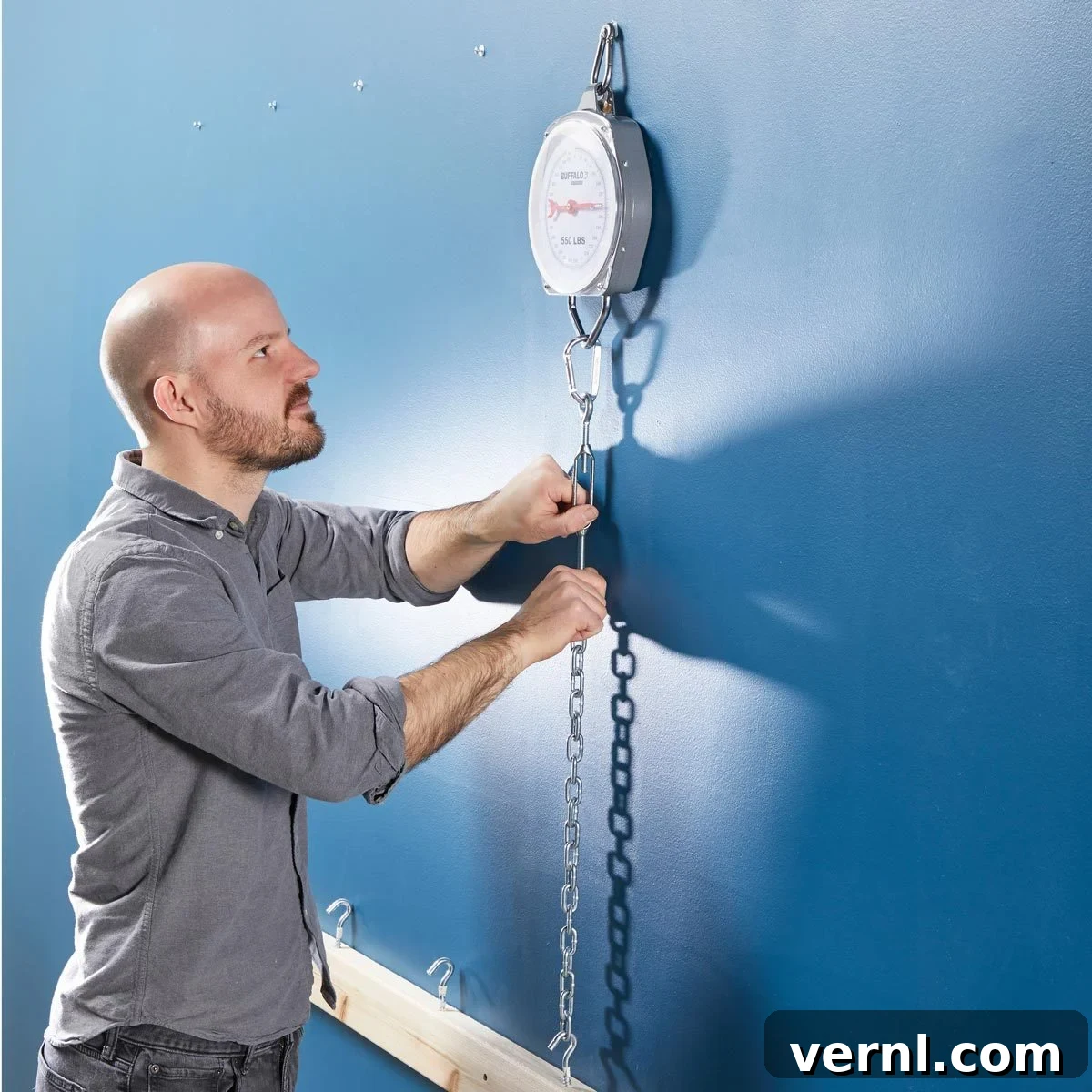
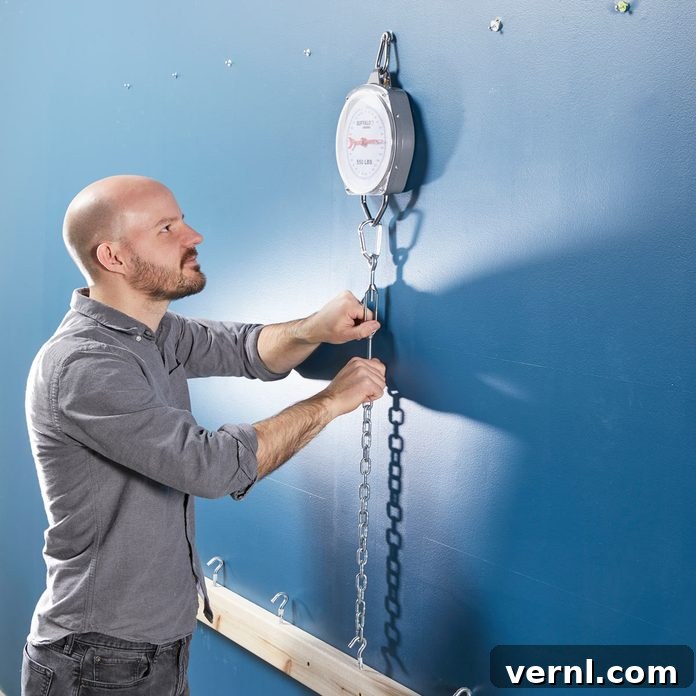
Industrial-Grade Tension Scale: At the heart of our measurement system was a calibrated tension scale, directly attached to the drywall anchor. This precision instrument provided accurate, real-time readings in pounds, allowing us to record the peak force sustained by the anchor just before failure.
-
Heavy-Duty Turnbuckle: A sturdy turnbuckle served as our mechanism for applying gradual and controlled tension. Connected between the tension scale and our immovable hold-down, slowly twisting the turnbuckle enabled us to incrementally increase the load on the anchor. This allowed us to precisely observe the build-up of stress and pinpoint the exact moment an anchor began to fail.
-
Secure 2×4 Hold-Down: To ensure that the opposing force in our test was absolutely steadfast, a robust 2×4 lumber piece was securely screwed into the wall studs. This provided an unyielding anchor point for the turnbuckle, guaranteeing that all measured tension was directly transferred to the drywall anchor being tested, eliminating any external variables.
The testing process involved slowly and steadily twisting the turnbuckle, meticulously monitoring the tension scale. The test was deemed complete and the maximum weight recorded the instant the anchor buckled, pulled out of the drywall, or exhibited any definitive sign of structural failure. This methodical approach allowed us to gather reliable and comparative data on each anchor’s true capabilities.
For more general tips and tricks to make your drywall projects smoother and more efficient, check out this compilation of expert advice for working with drywall.
The Revealing Results: Anchors That Exceed Expectations
Our comprehensive testing revealed a consistently encouraging trend: a vast majority of the drywall anchors we examined not only met their manufacturers’ advertised weight claims but significantly surpassed them. This finding suggests that manufacturers often provide conservative estimates, building in a substantial safety margin for general use. For homeowners, this means that when installed correctly, many common drywall anchors offer far greater reliability than their labels might initially suggest.
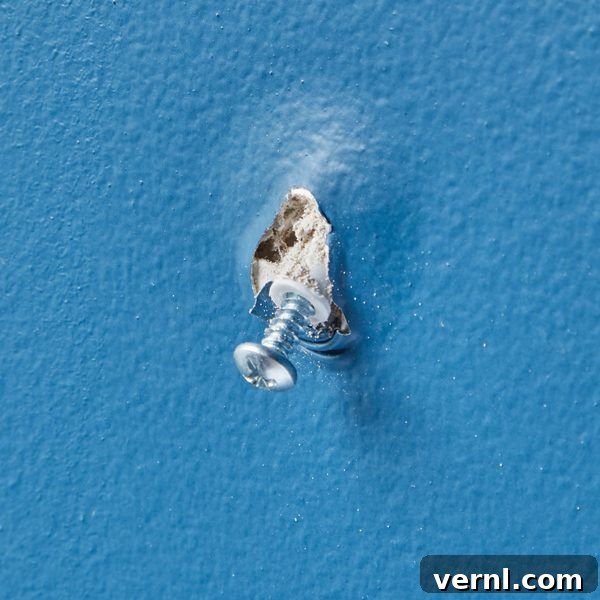
Everbilt Ribbed Drywall Anchors: Surprising Strength for Everyday Needs
- Claimed Weight Capacity: 22 Lbs.
- Actual Tested Holding Power: 80 Lbs.
Often found in multi-packs for general use, Everbilt Ribbed anchors are a common, inexpensive plastic expansion type. With a conservative claimed capacity of just 22 lbs., we approached their test with modest expectations. However, we were genuinely astonished by their performance: these anchors held an impressive 80 lbs. before finally failing. This substantial overperformance, nearly quadrupling their claimed weight, makes them an incredibly effective and often underestimated solution for a wide range of medium-duty applications. Installation is straightforward, typically requiring a pre-drilled hole (usually 3/16 inch) and a light tap with a hammer to set them flush, followed by driving in a screw. They are ideal for hanging picture frames, small mirrors, lightweight wall decor, or even light curtain rods. The Everbilt Ribbed anchor offers fantastic value and surprising robustness for everyday home projects, proving that sometimes, simpler designs can deliver exceptional results.
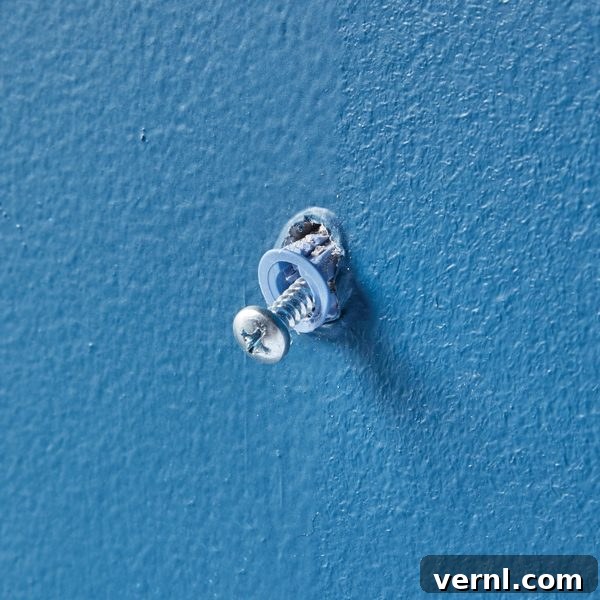
Cobra TripleGrip Drywall Anchors: Reliable Performance with Enhanced Grip
- Claimed Weight Capacity: 45 Lbs.
- Actual Tested Holding Power: 90 Lbs.
The Cobra TripleGrip positions itself as a more advanced expansion anchor, designed with a unique three-part mechanism that creates an enhanced grip inside the drywall. With a claimed weight rating of 45 lbs., it’s marketed towards more substantial loads than basic ribbed anchors. In our rigorous HomeLAB test, the TripleGrip demonstrated consistent strength, holding a solid 90 lbs. – exactly double its advertised capacity. While its ultimate tested weight was comparable to the Everbilt Ribbed, the TripleGrip’s design is engineered for a more secure and consistent expansion, making it a highly reliable choice. Installation involves drilling a pilot hole, inserting the anchor, and then driving the screw, which causes the anchor to expand and ‘snap’ into place behind the drywall. This anchor is an excellent choice for items such as medium-sized artwork, heavier wall clocks, small to medium shelves, or sturdy towel bars, where a dependable, expanding grip is paramount.
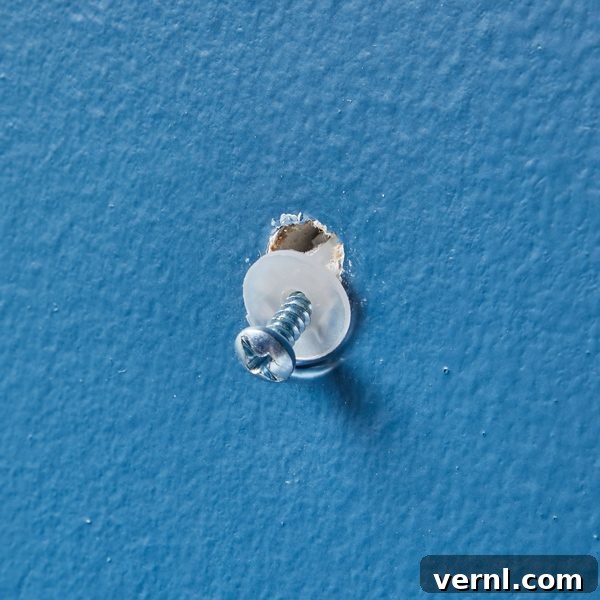
Pop Toggle Drywall Anchors: Harnessing Toggle Power in a Compact Design
- Claimed Weight Capacity: 60 Lbs.
- Actual Tested Holding Power: 130 Lbs.
The Pop Toggle is an innovative anchor that brings the robust principle of a toggle bolt into a more user-friendly form. Its design features a mechanism that clips securely against the back of the drywall, creating a wide, stable bearing surface that significantly enhances its pull-out resistance. Marketed with a claimed capacity of 60 lbs., the Pop Toggle far exceeded expectations in our tests, demonstrating an impressive holding power of 130 lbs. – more than double its official rating. This remarkable performance highlights its effectiveness for heavier loads. Installation typically requires drilling a slightly larger pilot hole than some other anchors (to allow the toggle to pass through), after which the anchor expands and locks into place as the screw is tightened. This makes the Pop Toggle an exceptional choice for demanding applications such as mounting larger wall-mounted shelving units, heavy mirrors, or even lighter flat-screen televisions, where superior strength and a wide load distribution are critical for safety and stability.
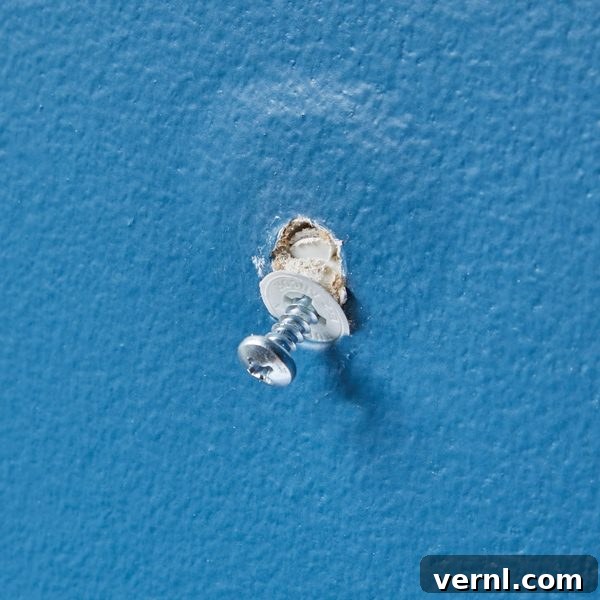
E-Z Ancor Twist-N-Lock Medium Duty: The Best Value for Versatile Projects
- Claimed Weight Capacity: 75 Lbs.
- Actual Tested Holding Power: 100 Lbs.
The E-Z Ancor Twist-N-Lock Medium Duty has long been a favorite among DIYers, and for good reason. These self-drilling anchors, identifiable by their sharp, aggressive threads, are remarkably easy to install: simply screw them directly into the drywall using a Phillips head screwdriver or a drill, completely eliminating the need for a separate pilot hole. With a solid claimed capacity of 75 lbs., the E-Z Ancor performed exceptionally well in our tests, holding a robust 100 lbs. before reaching its limit. This combination of impressive strength, unparalleled ease of installation, and widespread availability makes it our clear choice for “Best Value.” It’s a highly versatile anchor, perfect for a vast array of medium-weight items such as small wall cabinets, heavier picture frames, thermostats, smoke detectors, or even small soundbars. For projects where convenience, cost-effectiveness, and reliable strength are key, the E-Z Ancor Twist-N-Lock is an indispensable tool.
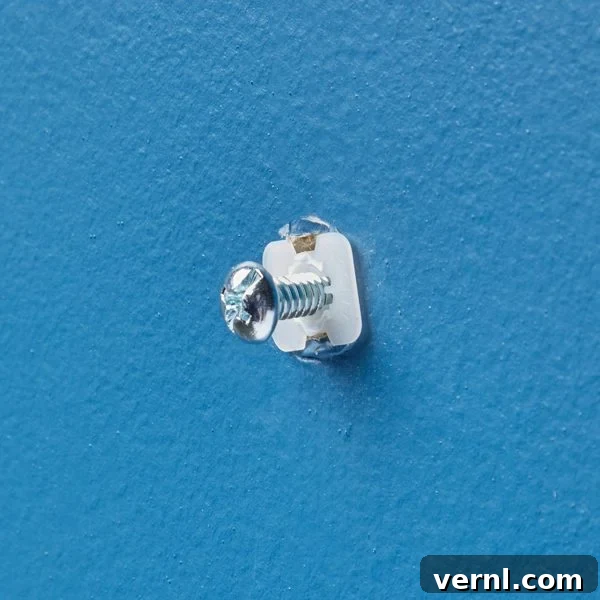
Toggler SNAPTOGGLE: The Undisputed Champion for Maximum Strength (Best Overall)
- Claimed Weight Capacity: 80 Lbs.
- Actual Tested Holding Power: 180 Lbs.
The Toggler SNAPTOGGLE is an engineering marvel designed for the heaviest of loads, and our tests unequivocally confirm its status as the “Best Overall” drywall anchor for sheer strength. While claiming a substantial 80 lbs. capacity, this heavy-duty toggle anchor astounded us by holding an incredible 180 lbs. In fact, we reached the maximum pulling force our sophisticated turnbuckle could generate before the SNAPTOGGLE showed any signs of failure, underscoring its truly superior performance. Its mechanism involves inserting a pre-assembled metal channel through a drilled hole in the drywall; the channel then springs open behind the wall, creating an expansive and incredibly secure bearing surface. When the bolt is tightened, it cinches this channel firmly against the backside of the drywall, forming an unshakeable attachment. While it requires a slightly larger pilot hole than other anchors, the installation process is intuitive, and the resulting strength is unparalleled. For critical applications such as mounting large, heavy flat-screen televisions, substantial shelving units filled with books, weighty cabinets, or even wall-mounted handrails, the Toggler SNAPTOGGLE provides ultimate peace of mind and unwavering security.
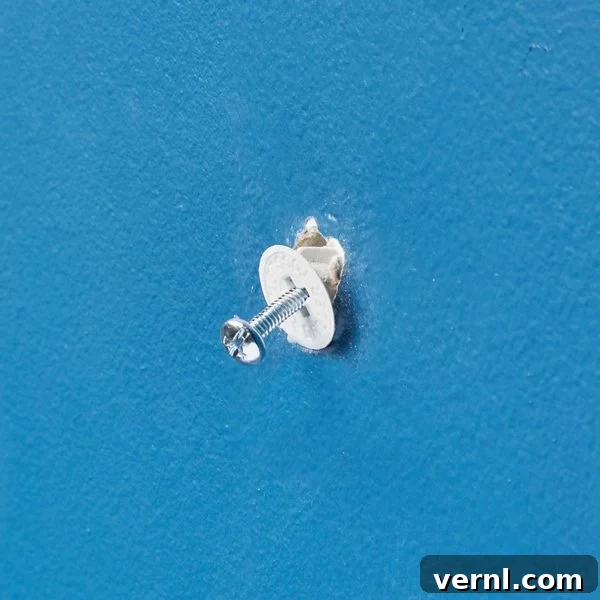
Cobra DrillerToggle Drywall Anchors: Hybrid Convenience and Power
- Claimed Weight Capacity: 90 Lbs.
- Actual Tested Holding Power: 140 Lbs.
The Cobra DrillerToggle represents a clever fusion of ease and strength, combining the self-drilling convenience of a twist-in anchor with the robust mechanics of a toggle-style fastener. Installation is straightforward: the anchor screws directly into the drywall using a standard driver. What sets it apart is its activation mechanism: as the final mounting screw is driven in, a metal arm extends and pivots against the back of the drywall, creating a powerful toggle action. With a robust claimed capacity of 90 lbs., the DrillerToggle impressively held 140 lbs. in our tests, showcasing its advanced hybrid design. This makes it an outstanding choice for projects demanding significant holding power coupled with straightforward installation. It’s particularly well-suited for mounting larger mirrors, sturdy curtain rod brackets, heavier decorative items, or wall-mounted accessories that require a very secure fit without the need for a larger pilot hole or a multi-step toggle mechanism. The Cobra DrillerToggle truly delivers the best of both worlds.
WallClaw Anchors: Tool-Free Installation, But Mind the Limits
- Claimed Weight Capacity: 90 Lbs.
- Actual Tested Holding Power: 90 Lbs.
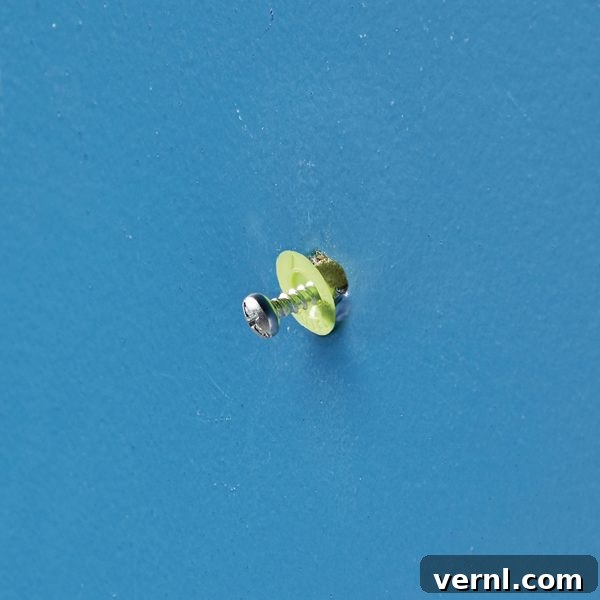
WallClaw Anchors appeal strongly to users seeking maximum installation ease, as they require no drilling – simply tap them into the drywall with a hammer. With a claimed weight rating of 90 lbs., the WallClaw was the only anchor in our extensive lineup to perform exactly to its stated capacity, holding precisely 90 lbs. before failure. While it met its claim, a critical observation was its failure mode: once its limit was exceeded, several WallClaw anchors abruptly pulled out of the drywall, often creating a significantly larger and more challenging-to-repair hole than other anchor types. This characteristic underscores the importance of precise weight estimation when opting for the WallClaw. These anchors are best suited for applications where the weight is known to be safely within their 90 lbs. limit, such as medium-sized framed art, light shelving, or organizational boards, where installation speed and simplicity are the primary drivers. Always err on the side of caution and avoid pushing these anchors to their absolute maximum.
Choosing the Perfect Drywall Anchor for Your Project: An Expert Guide
Selecting the ideal drywall anchor is more than just grabbing the first one you see; it’s about matching the right tool to the job. Our tests clearly highlight the varied strengths and characteristics of different anchor types. Here’s a comprehensive guide to help you make an informed decision:
1. Accurately Assess the Weight of Your Item
This is the paramount consideration. Always calculate the total weight, which includes the item itself (e.g., a mirror, a shelf) plus anything that will be placed on or in it (e.g., books, dishes, coats). Once you have this total, choose an anchor (or multiple anchors for wider items) that offers a substantial safety margin above that weight. For instance, if your item weighs 30 lbs., opting for an anchor rated at 75-90 lbs. provides ample security and reduces the risk of failure.
2. Consider the Type of Item and Its Intended Usage
- Light Items (0-20 lbs.): Perfect for small picture frames, lightweight wall décor, small clocks, or calendars. Simple plastic expansion anchors like the Everbilt Ribbed are often more than sufficient and very cost-effective.
- Medium Items (20-50 lbs.): Ideal for medium-sized mirrors, curtain rods, smaller floating shelves, soundbars, or thermostats. Self-drilling anchors such as the E-Z Ancor Twist-N-Lock or expanding anchors like the Cobra TripleGrip offer a great balance of strength and ease of installation.
- Heavy Items (50-100 lbs.): Suited for larger mirrors, substantial wall art, medium-sized wall cabinets (e.g., medicine cabinets), or sturdy coat racks. Pop Toggles and Cobra DrillerToggles are excellent choices that provide reliable, enhanced holding power.
- Very Heavy & Critical Items (100+ lbs.): Essential for mounting large flat-screen televisions, significant shelving units, heavy full cabinets, or wall-mounted grab bars. The Toggler SNAPTOGGLE is the undisputed choice for maximum security and peace of mind, offering unparalleled strength.
3. Evaluate Drywall Thickness and Condition
Our tests were conducted on standard 1/2-inch drywall. If your home has thicker 5/8-inch drywall, some anchors (especially toggle types) may perform even better due to more material for gripping. Always verify that the anchor you select is compatible with your specific drywall depth. Furthermore, consider the condition of your drywall; old, crumbly, or previously damaged drywall may not provide the same reliable base, even for the strongest anchors, and may warrant repairs before installation.
4. Balance Ease of Installation with Required Holding Power
Some anchors, like the E-Z Ancor or WallClaw, are designed for quick, tool-free or minimal-tool installation, prioritizing convenience. Others, such as the Toggler SNAPTOGGLE, require a slightly larger pilot hole and a bit more precision but deliver vastly superior strength. Assess your comfort level with different installation methods and the specific demands of your project. If you’re new to anchor installation, consider practicing on a scrap piece of drywall first.
Expert Tips for Flawless Drywall Anchor Installation
Even the highest-rated anchor can fail if not installed correctly. Adhering to best practices is crucial for ensuring the security and longevity of your wall-mounted items. Follow these expert tips for a flawless installation every time:
- Always Read the Manufacturer’s Instructions: This cannot be stressed enough. Each anchor type has unique requirements regarding pilot hole size, the type of screw to use, and the specific tightening procedure. Deviating from these instructions can severely compromise the anchor’s performance and lead to premature failure.
- Use the Correct Drill Bit Size: For anchors that require a pilot hole, using the exact recommended drill bit size is paramount. A hole that’s too small can prevent the anchor from seating properly or even crack the drywall, while a hole that’s too large will prevent the anchor from gripping effectively.
- Locate Studs First: Before committing to a drywall anchor, always use a reliable stud finder to check for wall studs. If a wood or metal stud is present at your desired mounting location, a simple screw driven into the stud will always provide a stronger, more reliable, and more permanent fastening point than any drywall anchor. Save anchors for when studs are truly unavailable.
- Avoid Overtightening: While you need a snug, secure fit, overtightening screws into plastic anchors can strip the anchor’s threads or, worse, crush the drywall itself, leading to instability and eventual failure. Tighten until the item is firmly secured, then stop.
- Be Aware of Hidden Obstacles: Before drilling or hammering into your wall, use a wall scanner (or stud finder with wire/pipe detection) to check for electrical wires, plumbing pipes, or HVAC ducts behind the drywall. Striking these can lead to serious hazards and costly repairs.
- Clean the Installation Area: Ensure the drywall surface and the area immediately around your pilot hole are clean and free of dust or debris. This helps the anchor seat properly and prevents any foreign particles from interfering with its grip.
Conclusion: Empowering Your Drywall Mounting Projects with Confidence
Our comprehensive, real-world testing of popular drywall anchors has successfully demystified their true capabilities, offering invaluable insights for both seasoned DIYers and novice homeowners. The most significant takeaway is clear: modern drywall anchors are remarkably robust, with many consistently exceeding their stated weight capacities when installed correctly. This empowering discovery means you can approach your wall-mounting projects with significantly greater confidence, knowing that reliable and strong solutions are readily available.
However, understanding the nuanced differences between anchor types and selecting the appropriate one for your specific project remains paramount. By carefully considering the estimated weight of your item, the type of application, and diligently following best installation practices, you can ensure your cherished belongings and functional fixtures are securely displayed without the anxiety of unexpected failures. Whether your project calls for the surprising strength of a simple ribbed anchor or the ultimate, unyielding security of a heavy-duty toggle bolt, our findings equip you to make informed decisions, transforming your drywall into a versatile and dependable canvas for all your home décor and organizational aspirations.
Frequently Asked Questions About Drywall Anchors
Can I reuse drywall anchors after removal?
Generally, it is not recommended to reuse most types of drywall anchors, particularly those made of plastic or self-drilling varieties. Once they have been installed and removed, their internal structure may be compromised, or they might lose their ability to expand and grip effectively a second time. While some heavy-duty toggle bolts with metal channels might theoretically be reusable if the channel remains undamaged, it is always safer and more reliable to use a brand-new anchor for any critical application to ensure maximum holding power and prevent potential failures.
What is the primary difference between a general drywall anchor and a toggle bolt?
The term “drywall anchor” serves as a broad category encompassing various fastening devices designed for drywall, including plastic expansion anchors, self-drilling anchors, and toggle bolts. A toggle bolt, however, refers to a specific type of anchor that features a spring-loaded wing or a hinged metal channel that expands or flips open behind the drywall. This design creates a much larger bearing surface against the back of the wall, making toggle bolts (like the Toggler SNAPTOGGLE) typically the strongest type of drywall fastener, ideal for very heavy loads. Other drywall anchors, while effective, usually provide less expansive grip and are better suited for lighter to medium-weight applications.
Are drywall anchors a safe option for mounting a flat-screen TV?
Yes, certain high-capacity drywall anchors, especially robust toggle bolts such as the Toggler SNAPTOGGLE or Cobra DrillerToggle, can be a safe and effective solution for mounting flat-screen TVs, particularly those of lighter to medium weight. However, it is absolutely critical to: 1) consult both the TV mount’s specific weight rating and the anchor’s proven holding power, and 2) use multiple anchors to distribute the load evenly. For very large, heavy TVs, or for ultimate peace of mind, always prioritize mounting into wall studs whenever possible. If studs are unavailable, choosing several of the highest-strength toggle bolts and meticulous installation are paramount.
Do all drywall anchors require a pilot hole to be drilled beforehand?
No, not every type of drywall anchor requires a pre-drilled pilot hole. Many modern self-drilling anchors, such as the E-Z Ancor Twist-N-Lock or the Cobra DrillerToggle, are engineered with sharp, threaded tips that allow them to screw directly into the drywall using just a screwdriver or a drill. Other designs, like the WallClaw, are designed to be simply tapped into place with a hammer. Always refer to the specific manufacturer’s instructions for the anchor you intend to use to ensure correct installation procedures.
What’s the best way to remove a drywall anchor without causing excessive damage?
The method for removing a drywall anchor largely depends on its type. For most plastic expansion anchors, after removing the screw, you can often gently pull them out with pliers, though this may leave a slightly enlarged hole. Self-drilling anchors can sometimes be unscrewed if they haven’t stripped the drywall, or their heads can be cut flush with the wall and the body pushed into the wall cavity. Toggle bolts typically require removing the screw and then pushing the metal channel (if it doesn’t detach) into the wall cavity, as the wings are designed to remain behind the drywall. Always be prepared for some minor drywall patching and touch-up painting after anchor removal.