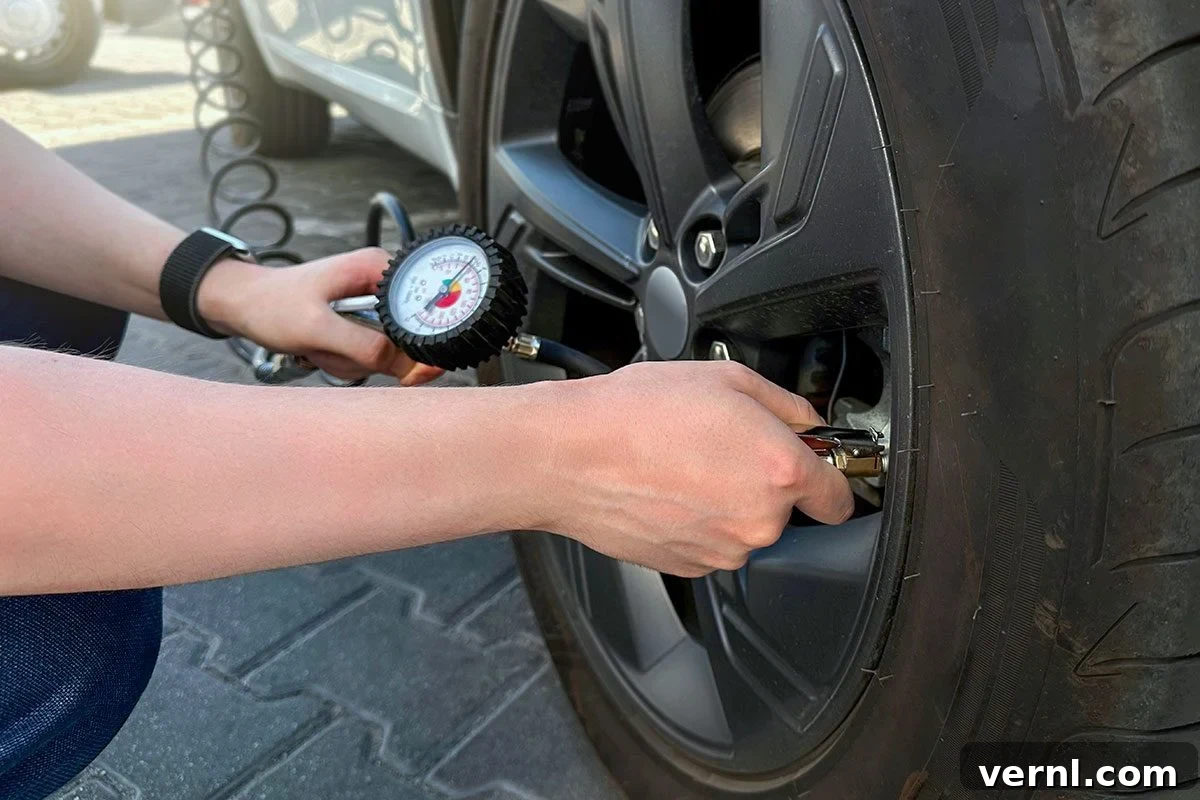
Free Air for Tires: Your Guide to Finding It and Saving Money
Maintaining proper tire pressure is crucial for safety, fuel efficiency, and extending the life of your tires. While many drivers rely on gas station air pumps, paying each time can add up. Fortunately, there are several ways to access free air for your tires and even invest in your own inflation solutions. This comprehensive guide will explore where to find free air, the costs associated with gas station pumps, and the benefits of owning a portable air compressor.
Gas Station Air Pumps: Cost vs. Convenience
When your tire pressure is low, the nearest gas station might seem like the most convenient option. However, not all gas stations offer free air. Many utilize self-service machines that charge a fee, typically ranging from $1.50 to $5.00 for a limited time of three to five minutes. While this might seem like a small amount, frequent use can quickly become expensive. In some areas, laws require gas stations to provide free air to customers, so it’s always worth checking before you pay.
Finding Gas Stations with Free Air: Your Options
Locating gas stations that offer free air can save you money and time. Here are several resources and tips for finding these locations:
- Online Resources: Websites like FreeAirPump.com provide crowdsourced maps of locations offering free air. These platforms rely on user submissions, so the information may not always be entirely up-to-date, but they offer a good starting point.
- National Chains: Certain gas station chains are known for providing free air to their customers. Wawa, Sheetz, Buc-ee’s, Racetrac, and Costco stations are among the most reliable options. Keep an eye out for these chains in your area.
- Local Gas Stations: Don’t overlook local gas stations, particularly those with repair shops. According to automotive expert Chris Pyle, “If the gas station has a shop, most of the time they will air up a low tire for free.” Look for an air hose located on the side of the building.
- Auto Repair Shops and Dealerships: Local mechanics, oil change centers, and car dealerships may offer free air, especially to regular customers. Building a relationship with a local auto shop can provide you with this convenient service.
- Auto Parts Stores: Duane “Doc” Watson from Bosch Mobility Aftermarket suggests contacting auto parts stores. “Some auto parts stores will also check your tire pressure and offer top-offs for free,” he says. “It never hurts to call around and ask!”
Filling Your Tires for Free at Home: The Portable Air Compressor Solution
For ultimate convenience and cost savings, consider investing in your own air compressor. Owning a compressor allows you to check and adjust your tire pressure at home, ensuring your tires are always properly inflated. This not only saves money but also contributes to safer driving and better fuel economy.
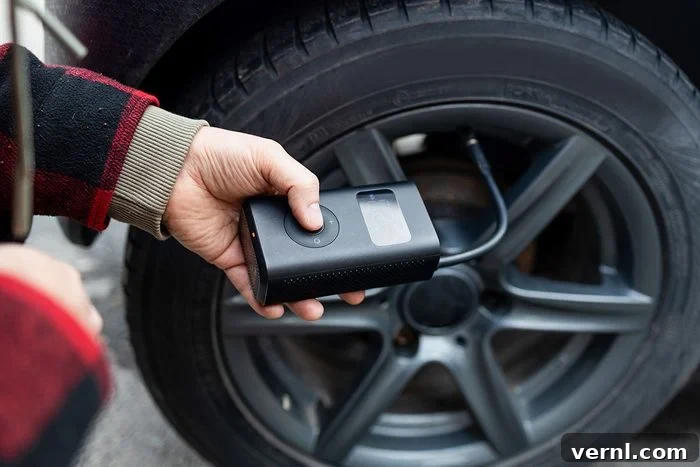
When choosing an air compressor, consider features like portability, digital pressure measurement, and automatic shut-off. These features enhance ease of use and accuracy.
Types of Portable Air Compressors
Several types of portable air compressors are available, each with its own advantages and disadvantages:
12-Volt Air Compressors
These compressors are powered by your car’s 12V power outlet (cigarette lighter) and typically cost between $25 and $60. They are compact, easy to store in your vehicle, and simple to use. Just plug them in and attach them to your tire valve.
Alan Gelfand, owner of German Car Depot, emphasizes the value of these compressors: “These provide excellent value because they pay for themselves during the first year, especially for those who own two vehicles or are heavy drivers.”
Pros Recommendations:
- UUP Tire Inflator
- EPAuto Portable Air Compressor
Pro-Tip: Auto industry expert Melanie Musson advises, “Buy a model with ample cord length. A common problem is the cord barely reaching the tires, or sometimes not at all.”
Rechargeable Cordless Inflators
Lithium-ion battery-powered tire inflators offer extra convenience and portability, as there’s no cord to manage. However, they tend to be more expensive, typically ranging from $50 to $120. The battery can also lose its charge over time if not regularly recharged.
Chris Pyle suggests, “I recommend a plug-in one, since the battery one could be dead when you need it,” if you’re not diligent about maintaining the battery charge.
Pro Recommendations:
- Bosch EasyPump
- Ampbank AT004
- Milwaukee M12 Inflator
- Greenworks 24V Cordless Inflator (with battery and charger)
Wall-Powered Air Compressors
Wall-powered (120V) air compressors are not practical for keeping in your car, as they require a standard household power outlet. However, they are excellent for use in your workshop, where they can serve multiple purposes, such as powering air tools and pressure cleaning various items. They also fill up car tires faster than portable models.
These compressors typically range in price from $140 to $400. You’ll also need a tire chuck and pressure gauge to fill your tires using one.
Pro Recommendation: EcoMax Air Compressor
Bicycle or Manual Foot Pump
You might already have a bike pump in your garage, and while it’s not ideal, it can be used to fill your car tires in a pinch. Expect to spend $30 to $70 on a decent bike pump.
Duane “Doc” Watson notes, “A bike pump can work if your tire pressure is only slightly low, but may be a real pain if you’re trying to refill a significant amount of air pressure. On the positive side, you could skip the gym after this method.”
Is Owning a Portable Air Compressor Worth It?
The decision of whether to invest in a portable air compressor depends on your budget and how actively you manage your car’s maintenance. Generally, keeping a portable air compressor in your car is more about ensuring safety and convenience than solely about saving money.
As Watson explains, “For most drivers, it’s perfectly reasonable to spend a few dollars at a gas station when needed.”
However, Gelfand points out that a compressor can save money in other ways: “It promotes regular tire pressure checks, which enhance fuel efficiency, tire durability, and safety. Your fuel efficiency and tire condition can suffer when your tires operate at even five PSI below the recommended level.” Regularly checking and maintaining optimal tire pressure can lead to significant savings in the long run.
Meet the Experts
- Duane “Doc” Watson is a technical trainer at Bosch Mobility Aftermarket. He brings over 45 years of experience in automotive repair, having trained thousands of technicians and earned numerous industry accolades, including Chevrolet Technician of the Year and Buick Service Master of the Year.
- Alan Gelfand has owned German Car Depot for more than 30 years. His business is a well-regarded independent automotive service center in Hollywood, Florida, specializing in the service and repair of German vehicles.
- Chris Pyle is a master-certified technician with over 20 years of automotive experience. He has also contributed his expertise to JustAnswer.com since 2006.
- Melanie Musson is a recognized auto industry expert with AutoInsurance.org.
Related Articles
- Do You Know What That Little Button on Your Seat Belt Is For?
- What Those Lines on Your Backup Camera Really Tell You
- Here’s What The Small Panel On Your Car’s Front Bumper Is For