Buyer's Guide to Garden Spades
When you're digging, planting, transplanting and dividing, a garden spade is the go-to. Learn all about this essential garden tool.
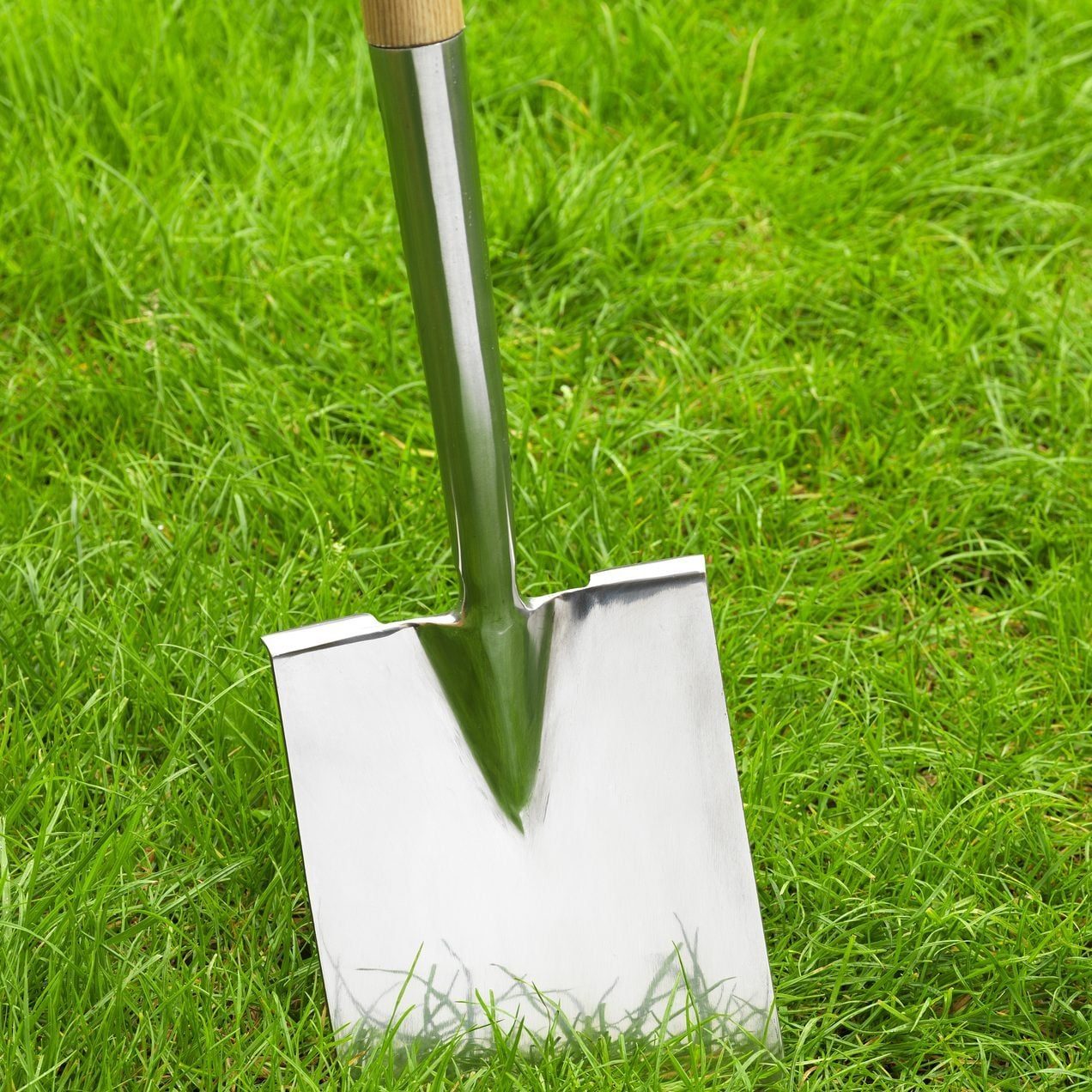
Although similar in appearance and purpose, garden spades and shovels are not the same. Shovels, with their rounded blades, are ideal for digging, scooping, and moving heavy materials such as sand or gravel. They're great for gardening and non-gardening tasks. Garden spades, on the other hand, are almost exclusively used for plants and soil.
What Is a Garden Spade?
A garden spade is usually shorter than a shovel with a straighter, flatter, sharper blade. They’re good for dividing perennials, planting and working soil.
“There are several types of garden spade blades that are designed for cutting sod, digging planting holes, reshaping plant beds, and more,” says Bryan McKenzie, landscape designer and co-founder of Bumper Crop Times.
Anatomy of a Garden Spade
Before we discuss the different types of garden spades and what they’re used for, it’s important to know the different parts. Moving from the bottom of the blade to the top of the handle:
- Blade: The piece of metal that digs into the ground and scoops earth.
- Cutting edge: The front edge of the blade. This sharp part is great for cutting through sod or small roots when dividing perennials.
- Kickplate: Also known as a step, this is a flat piece on the top edge of the blade near the shaft. It's where you place your foot to press the spade into the ground. It lets you put more weight behind the tool. Not all garden spades or shovels have one.
- Socket: The socket, or collar, is “a metal piece that connects the shaft to the blade,” McKenzie says. The socket usually screws onto the shaft.
- Shaft: The long piece between the socket and the handle. Usually wood or fiberglass.
- Handle grip: The handhold at the top of the shaft. A D-handle is common, but you might also see a T-handle or no handle at all.
-
- D-handle: A D-shaped handle, also called a U-handle, is the most common style. McKenzie says it’s “best for maximum leverage and convenience but may feel uncomfortable if you have smaller hands.”
- T-handle: McKenzie says these are “convenient for all hand sizes and lets you apply more force to the spade, similar to the U-shaped handle,” says McKenzie.
- Straight handle: Straight handles have a rounded end to the shaft with no metal or plastic handle attachment. They store easier but provide less grip and leverage.
Types of Garden Spades
Garden spade blades differ. Some are long and narrow, others are more square. Here are four garden spades to know.
- Standard spade: These have rectangular blades. They’re a good general-purpose garden tool and sufficient for most tasks.
- Digging spade: Similar to a standard spade, only wider, McKenzie says. The wider blade moves more earth and is convenient for edging. Digging spades often feature a more rounded cutting edge than standard spades.
- Border spade: These resemble a standard or digging spade but are smaller and lighter. McKenzie recommends this type for tasks that require maneuverability, such as working in a raised garden bed or narrow flower border. The smaller blade can also make holes for small plants.
- Transplanting spade: These feature “an elongated narrow blade that makes it easy to get out the roots of plants,” McKenzie says.
- Pointed spade: These have a pointed cutting edge rather than a flat one. The pointed end has more cutting power to get through tough roots, and rocky or clay soil.
Garden Spade Materials
McKenzie calls stainless steel, hammered steel and carbon the best blade materials. Carbon blades are light and durable. Steel blades are heavier but have a long lifespan. All three need to be sharpened to optimize performance.
Garden spade shafts are usually made of wood or fiberglass. McKenzie recommends treating wood shafts with linseed oil once per year. Fiberglass shafts are lightweight and maintenance-free. However, if the shaft breaks, wood is much easier to replace.
Garden Spade Maintenance
Garden spades are low-maintenance tools. With proper garden tool storage, all they need is regular sharpening. Sharpen by hand and use an angle grinder if it's really dull. Keep it clean and dry to prevent rust, and remove rust when you find it.