
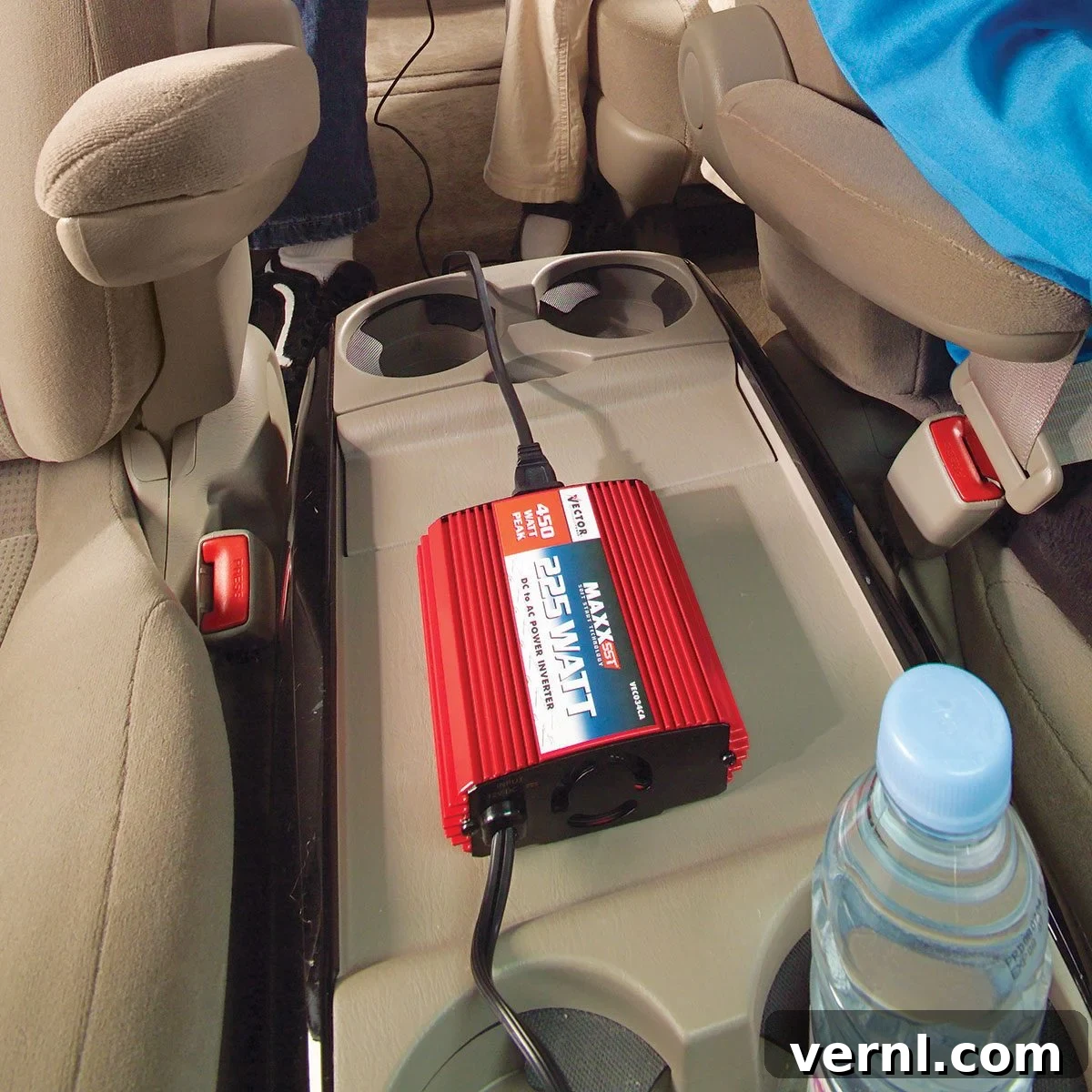
An automobile power inverter is an indispensable electrical device designed to transform your vehicle’s 12-volt direct current (DC) into a standard 120-volt alternating current (AC). This ingenious conversion enables you to power a wide array of small electrical devices, ranging from laptops and phone chargers to small power tools and portable entertainment systems, just as you would by plugging them into a typical home wall receptacle. It effectively turns your car into a mobile power station, offering unparalleled convenience for road trips, camping adventures, remote work, or even emergency situations.
At its core, your vehicle’s electrical system operates on a 12-volt DC supply, primarily drawing power from the battery and supplemented by the alternator when the engine is running. The power inverter serves as a crucial bridge, allowing you to tap into this existing power infrastructure and draw a limited, yet sufficient, amount of energy to operate your 120-volt AC appliances. Modern inverters often come equipped with additional features for enhanced versatility, such as dedicated USB charging ports for DC devices alongside the AC outlets, and some even include specialized plug adapters for use in aircraft receptacles, further broadening their utility.
Unlocking On-the-Go Power: Understanding Power Inverters
The ability to bring the comfort and utility of home appliances into your vehicle has revolutionized travel and mobile living. Whether you’re a digital nomad needing to power your workstation, an outdoor enthusiast looking to charge camera batteries, or simply a family on a long road trip desiring entertainment for children, an automotive power inverter is a game-changer. These devices have evolved significantly, becoming more efficient, safer, and compact, making them a common accessory for almost any vehicle owner.
The fundamental principle behind an inverter is the conversion of direct current (DC), which flows in one direction and is characteristic of batteries, into alternating current (AC), which periodically reverses direction and is the standard for household electricity grids. This transformation involves complex electronic circuitry that rapidly switches the DC voltage, creating a waveform that mimics household AC power. The quality and purity of this generated AC waveform are critical and define the two main types of inverters available on the market.
Choosing the Right Inverter: Modified Sine Wave vs. Pure Sine Wave
The functionality and compatibility of an inverter with your specific devices heavily depend on the type of inverter you purchase. There are primarily two categories of power inverters: “modified sine wave” and “pure sine wave.” Understanding the differences between these two is paramount to making an informed decision and ensuring the safe and effective operation of your electronics.
Modified Sine Wave Inverters: Economical and Widely Applicable
Modified sine wave inverters are generally more affordable and thus more common among general consumers. They produce a stepped or “choppy” approximation of a true sine wave. While this type of inverter works reliably for approximately 90 percent of small, less sensitive devices, it has certain limitations. For instance, modified sine wave inverters may not efficiently charge some rechargeable battery-operated tools or sensitive medical devices. They can also introduce interference patterns on screens of certain computer monitors, televisions, or printers, leading to visual distortions or audible hums.
Despite these potential drawbacks, for many common applications, modified sine wave inverters are perfectly adequate. We’ve conducted tests with several laptop computers using modified sine wave inverters, and they functioned without issue. However, given the significant investment in modern electronics, it is always prudent to consult the device manufacturer’s recommendations before plugging in sensitive and expensive equipment like high-end laptops, sophisticated gaming consoles, or specialized medical equipment to a modified sine wave inverter. Some devices are simply not designed to handle the less-smooth power delivery of a modified sine wave.
Typical devices that work well with modified sine wave inverters include resistive loads like incandescent light bulbs, heating elements (e.g., simple coffee makers), basic phone chargers, and many simple power tools that do not rely on variable speed controls or complex electronics. They are an excellent budget-friendly option for powering essentials on the go.
Pure Sine Wave Inverters: Premium Power for Sensitive Electronics
In contrast, pure sine wave inverters are designed to replicate the same high-quality alternating current electricity that is supplied by your utility company to a standard home receptacle. This means they produce a smooth, continuous, and consistent waveform, which is identical to grid power. This superior output makes pure sine wave inverters compatible with virtually all small appliances and sensitive electronic devices, provided they fall within the wattage capability of your vehicle’s cigarette lighter socket or direct battery connection and the inverter itself.
The higher cost of pure sine wave inverters is justified by their universal compatibility, enhanced efficiency, and the protection they offer to delicate electronics. They eliminate the risk of interference, noise, or potential long-term damage that can sometimes occur with modified sine wave units when powering sensitive equipment.
Inverters for Laptops and Other Sensitive Devices
Most laptop computers, especially newer models, generally operate without problems using inexpensive modified sine wave inverters. However, to guarantee optimal performance and longevity for your valuable devices, especially high-performance or gaming laptops, it’s always best to verify compatibility with the computer manufacturer. For absolute peace of mind and for devices with inductive motors (like refrigerators, blenders) or sensitive electronics, a pure sine wave inverter is the recommended choice.
High-Quality Electricity Inverters: The Pure Sine Wave Advantage
Expensive “pure sine wave” inverters are engineered to supply clean, utility-like electricity. This makes them the ideal choice for powering any small device, especially those with sensitive microprocessors, variable speed motors, or delicate audio/video components. This includes medical equipment, high-fidelity audio systems, modern kitchen appliances, and advanced power tools. Investing in a pure sine wave inverter ensures that your devices receive the cleanest possible power, preventing potential damage, operational glitches, and extending their lifespan.
Determining the Right Size: What AC Device Can Your Inverter Run?
Understanding the power output capabilities of your inverter and your vehicle’s electrical system is crucial to prevent overloading and ensure safe operation. The maximum power output you can draw from an inverter plugged into your car’s power outlet (often referred to as the cigarette lighter socket) is directly limited by the fuse size of that particular socket in your vehicle. Exceeding this limit will simply blow the fuse, interrupting power to the socket and potentially requiring a replacement.
To calculate the approximate wattage capacity, you can use a simple formula based on the fuse rating:
- A 10-amp (10A) fused 12-volt lighter socket will safely power approximately 1 amp of 120-volt AC, which translates to about 120 watts (10A x 12V = 120W, and for AC, 120W / 120V = 1A).
- A 15-amp (15A) socket can power roughly 1.5 amps of 120-volt AC, equating to about 150 to 180 watts. This is the most common fuse rating for lighter sockets in standard passenger vehicles.
- A 20-amp (20A) socket, often found in larger SUVs, trucks, and some newer vehicles, will power approximately 2 amps of 120-volt AC, providing around 200 to 225 watts of continuous power.
It is imperative to consult your vehicle’s owner’s manual to accurately determine the fuse size for your lighter or accessory power socket. Most passenger cars typically feature a 15-amp fuse, while many larger sport utility vehicles (SUVs) and pickup trucks are equipped with more robust 20-amp sockets, offering greater power capabilities.
Generally speaking, with a 200-watt inverter plugged into a lighter socket, the maximum you can realistically expect to run would be a small corded drill, a 13-inch portable television, or perhaps a small portable fan. Attempting to power higher-wattage devices like hair dryers, electric kettles, microwaves, or large power tools from a lighter socket will invariably blow the fuse. For devices requiring more than 200-250 watts, a direct connection to the car battery is necessary, which we will discuss further below.
Formula: Amps x Volts = Watts (for AC devices)
To determine if a specific device can be powered by your inverter, locate its power consumption details on its specification plate or user manual. Most devices list their wattage directly, or their amperage. If only the amperage is listed, you can calculate the wattage by multiplying the device’s amps by 120 (the standard AC voltage). For instance, a device rated at 2 amps will consume approximately 240 watts (2 Amps x 120 Volts = 240 Watts).
Note: The actual wattage delivered will always be slightly lower than calculated due to inherent inefficiencies in both the inverter itself and the devices being powered. Inverters typically have an efficiency rating between 80-95%. Always allow for a buffer when calculating your power needs.
Key Considerations and Safety Measures for Inverter Use
While power inverters offer incredible convenience, there are several important considerations and safety precautions that users must be aware of to ensure optimal performance, protect their devices, and maintain the health of their vehicle’s electrical system.
Heat Generation and Ventilation Requirements
All power inverters generate heat as a byproduct of the DC-to-AC conversion process. This heat must be dissipated efficiently to prevent overheating and potential damage to the inverter or its surroundings. Many inverters are equipped with built-in cooling fans, which, while effective, do consume a small amount of electricity themselves. It is crucial to place your inverter in a well-ventilated area, away from direct sunlight or enclosed spaces, allowing for adequate airflow around the unit. Generally speaking, inverters tend not to perform optimally in ambient temperatures exceeding 90 degrees Fahrenheit (approximately 32 degrees Celsius), which can trigger thermal shutdowns.
Battery Drain and Vehicle Engine Operation
Perhaps the most critical concern when using an inverter is battery drain. An inverter continuously draws power from your vehicle’s 12-volt battery. If your engine is not running, the alternator is not charging the battery, and prolonged use of the inverter can quickly deplete your car battery, leaving you stranded. For this reason, it is strongly recommended to operate your power inverter primarily when the vehicle’s engine is running. This ensures that the battery is being continuously recharged by the alternator, maintaining a stable power supply and preventing excessive discharge.
Most quality inverters incorporate an audible alarm system that activates when they detect a lowered power source (i.e., your car battery voltage drops to a critical level). However, it may be advantageous to invest in a slightly more expensive unit that features an automatic shut-off function. This intelligent feature will automatically power down the inverter when it senses a critically low battery voltage, preventing deep discharge that can permanently damage your vehicle’s battery. As a general guideline, avoid running small devices plugged into your inverter for more than an hour without starting your car and allowing the engine to run for at least 15-20 minutes to recharge the battery.
Direct Battery Connection for Higher Power Needs
For users who need to power devices requiring more than 200-250 watts – such as larger power tools, small refrigerators, or certain kitchen appliances – plugging the inverter into the cigarette lighter socket is insufficient. These higher-wattage inverters, typically rated at 400 watts or more, must be connected directly to your vehicle’s battery using appropriate gauge wiring and proper fusing. This direct connection bypasses the amperage limitations of the lighter socket circuit, allowing the inverter to draw a larger current directly from the battery.
However, using a larger power output inverter directly connected to your vehicle’s battery demands careful consideration. Your vehicle’s battery and charging system (specifically the alternator) must be robust enough to keep up with the heavy power draw. Overloading your alternator can lead to premature wear or failure. If you plan to install and regularly use large inverters (e.g., 1000 watts or more), it is highly advisable to consult an automotive electrical specialist. They can assess your vehicle’s electrical system, recommend the appropriate inverter size and wiring, and ensure a safe and professional installation, which may include adding dedicated circuit breakers or upgrading certain electrical components.
Additional Safety Tips for Inverter Use:
- Proper Grounding: Always ensure your inverter is properly grounded according to the manufacturer’s instructions.
- Avoid Water and Moisture: Keep the inverter away from water, rain, or excessively humid environments to prevent electrical shock or damage.
- Check for Damage: Regularly inspect the inverter, its cables, and plugs for any signs of damage or wear. Do not use a damaged inverter.
- Correct Cable Gauge: When connecting directly to the battery, use the correct gauge cables specified by the inverter manufacturer. Undersized cables can overheat and pose a fire hazard.
- Read the Manual: Always thoroughly read and understand the inverter’s user manual before operation.
By understanding these concerns and adhering to safety guidelines, you can maximize the utility and longevity of your automotive power inverter, ensuring a reliable power source for all your adventures and mobile needs.