
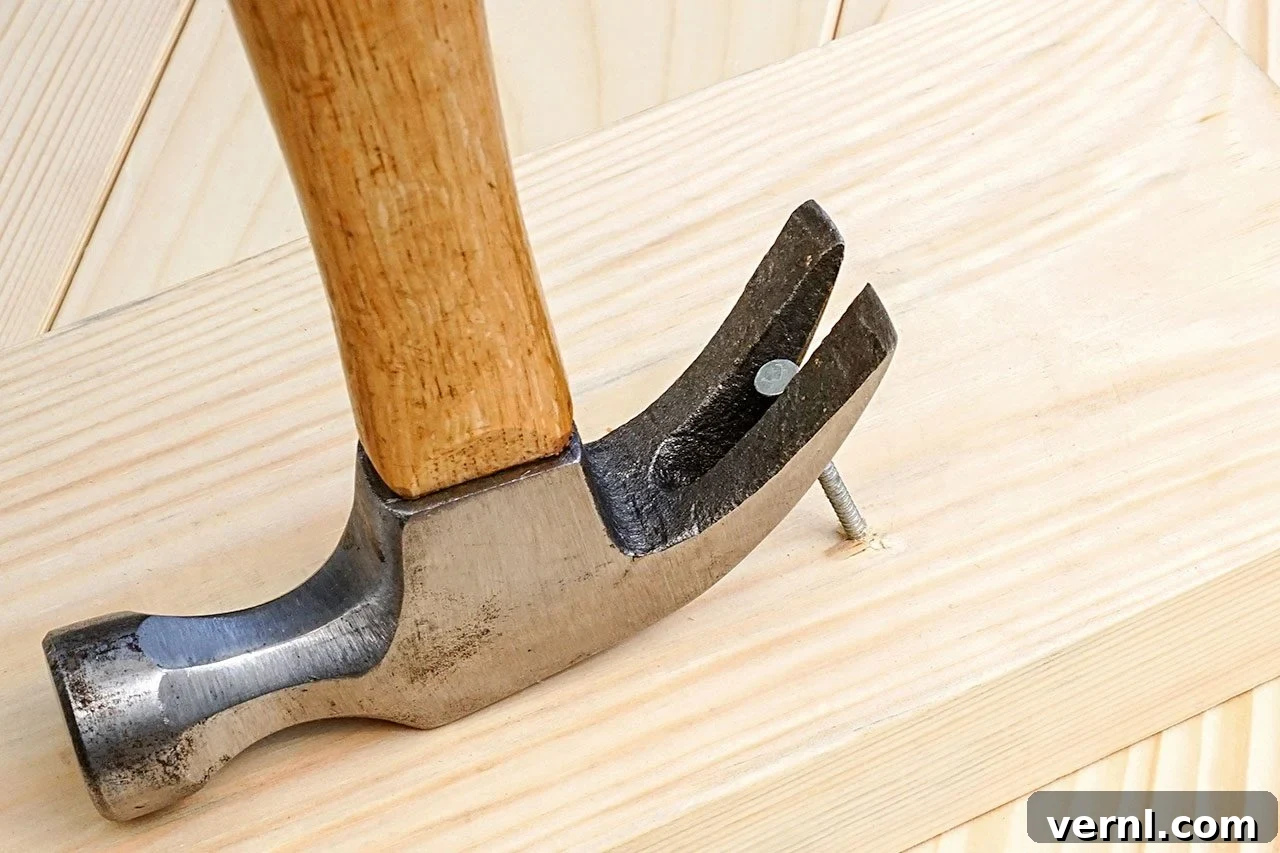
If you’re someone who works with wood, it’s rare to be without a hammer. It does happen, though, and when it does you lose the most common tool for extracting nails. A Japanese-style hammer can double as a cat’s paw, but if you don’t have either, there are still reliable ways to remove nails. A cat’s paw is a small pry bar with pointed ends that sink into wood and grip a nail shank when struck. Along with a flat bar, chisel or screwdriver, and a good set of pliers, you can remove most nails even without a hammer. This article collects practical techniques and expert tips to help you pull nails cleanly and avoid damage.
Common Mistakes to Avoid
One major error people make is trying to pull a nail straight out. That approach tears wood fibers and often damages the surrounding surface. Instead, work the nail back and forth with small rocking motions. Gradual rocking loosens the wood’s grip and allows the nail to come out more smoothly.
Another frequent problem is failing to protect the wood when levering. Always place a piece of scrap wood under your pry tool or pliers before applying leverage. Buffering the tool prevents gouges, dents, and other damage to flooring, trim, or cabinetry, and avoids costly repairs later.
Standard/Locking Pliers (Vise-Grips)
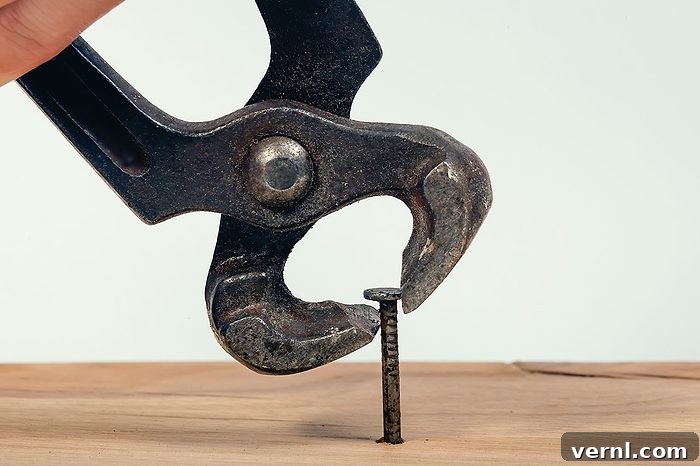
If the nail head is protruding even a little, pliers or locking pliers (Vise-Grips) are often the best option. Locking pliers let you clamp the nail tightly and then lever it using a block of scrap wood for fulcrum. Use a controlled rocking motion to lift the nail a bit at a time, and reposition the pliers lower on the shank as it rises to improve leverage.
Standard or adjustable pliers can work too, but they require more hand strength to maintain grip as you pry. Locking pliers reduce fatigue and hold the nail securely while you work.
Flathead Screwdriver
A flathead screwdriver can be useful even without a hammer. If you can slip the blade behind the piece of wood the nail is holding, you can pry that wood outward slightly and then release it. That small movement usually raises the nail head enough to grab it with pliers or a pry bar. This method is particularly handy for removing nails from trim, baseboards, or molding where you want to minimize visible damage.
Pry Bar
A cat’s paw or flat bar is highly effective for nail extraction, but when the head is flush or buried you typically use a hammer to drive the bar under the head. Without a hammer, you can chisel away surrounding wood to expose the head. That approach will deface exposed wood, so reserve it for structural pieces where appearance doesn’t matter.
For finished trim, use the bar like a large screwdriver to pry wood up gently and lift the nail head far enough to engage it with the bar or pliers. If you can hold the wood piece and see the nail protruding on the opposite end, you can also tap that exposed end against a hard, sacrificial surface (concrete or steel you won’t damage) to cock the nail back up and then finish extracting it with a pry tool.
Non-Traditional Tools
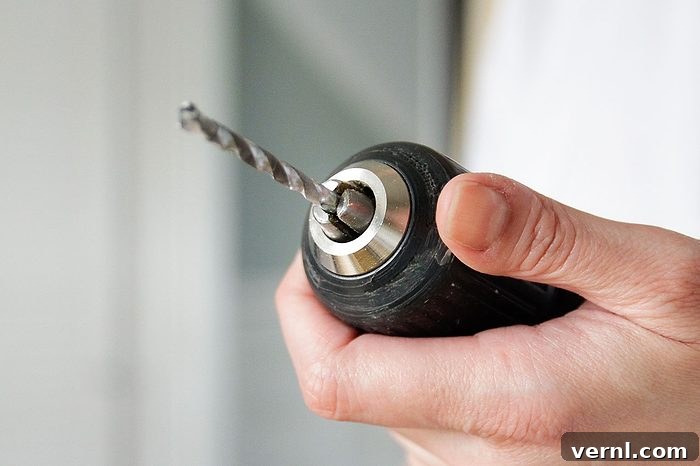
When the head or shaft is exposed, a drill can help. Tighten the chuck around the exposed portion of the nail and slowly reverse the drill while pulling outward. A rotary tool can cut a narrow slot in the nail end, allowing a flathead screwdriver to engage and twist the nail loose. These techniques require steady hands and caution.
Heat can also free a rusted or glued nail. Applying heat with a torch expands the metal and can break the bond, making the nail easier to pull with pliers. For demolition tasks, running a reciprocating saw blade between two pieces of wood and cutting the nail is a quick, practical solution if the pieces can be separated slightly first.
Tips to Avoid Damaging Wood
- Always place a piece of scrap board under your pry tool or pliers to protect the finished surface from dents and gouges.
- Use a rocking motion when pulling nails rather than pulling straight out—this loosens the nail gradually and preserves surrounding wood fibers.
- When removing barbed flooring cleats, prefer pliers over a pry bar and keep movements minimal to avoid breaking the cleat or damaging tongues and grooves.
FAQ
How do you remove a nail with no head?
Nails without heads can be removed by gripping the shank with pliers or a pry bar, prying the wood apart to gain purchase, or using a drill to grab and reverse the nail. A punch-and-drive-through method is also common: drive the nail through to the far side and pull it out there, but that typically requires a hammer.
What safety precautions should you take when removing nails?
Wear eye protection because nails can snap or send small metal fragments flying. Gloves protect your hands from sharp edges and rust. Ensure good lighting, and when working with old painted surfaces that might contain lead, wear a respirator or mask to reduce inhalation risk.
About the Experts
- Rich Lauer — Business owner involved in portable building sales and metal roofing and siding panels.
- Manny Kavouklis — President of a Tampa Bay–based home remodeling company with extensive experience in trim and finish carpentry.
- Nicholas Riley — Owner of a roofing and exterior remodeling company with decades of experience in residential roofing and demolition techniques.