Nick Offerman Talks Shop: The 'Thrilling Epiphany' That Led to His Woodworking Passion
Actor and woodshop proprietor Nick Offerman shares sawdust-laden musings on craftsmanship, creativity and biting off more than he can chew.
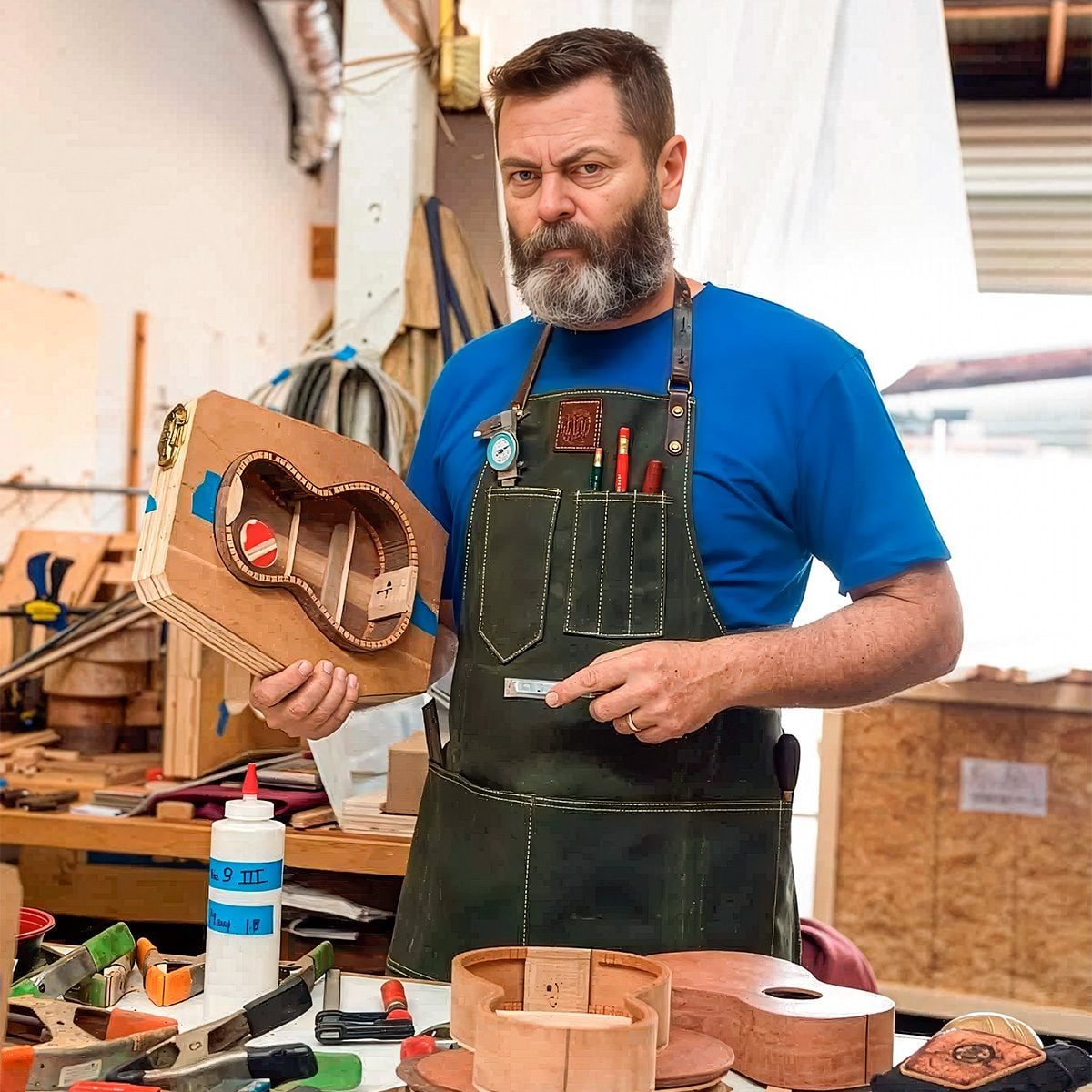
To celebrate Vernl’s 75th anniversary, we stopped by our guest editor’s California woodshop to talk about how he got into fine woodworking— and what’s kept him at it. Who better to mark the occasion than someone who’s spent decades honing his craft and, with his latest book Little Woodchucks, is passing on that know-how to the next generation?
Offerman shares the projects, makers and shop philosophies that have shaped his life and work, from framing houses and crafting canoes to assembling a team of collaborators who keep him sharp. And as with any DIYer worth their chisel, he still has a healthy list of builds to tackle and skills to hone. For woodchucks and handymen alike, the learning is never done. Here’s to 75 years!
Early in your career, you built scenery for theater productions. How did that come about?
I went to the excellent conservatory at the University of Illinois to study acting, and while waiting for my talent to surface, I learned I could earn wages with my carpentry skills in their very nice scene shop. It was a thrilling epiphany: I could make a living as a builder in the theater while working toward my dream to perform as a dancing jackass.
I had previously worked on building homes and barns with my family and spent a teenage summer framing houses, but to see my first proper woodshop, complete with milling machinery and dust collection and run by a benevolent genius woodworker named Ken Egan, was like a superhero origin story. With a properly equipped, neatly maintained shop and the knowledge of how to use it, I discovered, I could build anything out of wood.
Do any carpentry or woodworking principles carry over to acting?
As in any craft, the fundamentals hold: Practice makes perfect, and you need to keep your chisels/ British accents/somersaults honed for best results. But speaking of “perfection,” another lesson that has grown more poignant with age is that mistakes are inevitable, and an appropriate amount of them is actually a sign of a life well lived.
Whether I am trying to fret a handmade ukulele or convincingly play an emotional scene while maintaining eye contact with Michelle Pfeiffer (and eating a chalupa), I strive to put myself in situations with some stakes, to keep me fully engaged and my blood pumping at the risk of catastrophic failure.
Attacking any artwork or life chapter with the understanding that you’re reaching for improvement but hopefully not quite too far out over your skis, I find, applies to the table saw as well as the stage or screen. In the words of the great Wendell Berry, “The mind that is not baffled is not employed. The impeded stream is the one that sings.”
In a funny scene from Parks and Recreation, your character, Ron Swanson, brushes off a home center employee with a matter-of-fact “I know more than you.” Who are some real-life figures you’ve looked to for mentorship?
This is what I love about real-life community and artistic collaboration—and what I dislike about Google and big-box stores. My dad has been the main source of tool and shop knowledge in my life, but so have several uncles, grandparents and neighbors, along with Mel Phillips, who ran our small-town True Value Hardware in Minooka, Illinois (he was the antithesis of that home center doofus on Parks). Mom-and-pop hardware retailers used to have to know the use and application, and subsequent pitfalls, of every last wax ring and wing nut on their shelves, so almost any purchase from them came with a little plumbing or weatherproofing 101, whatever the product.
My shop also thrives on the old adage “Three or four heads are better than one,” and I do my best to curate my choice in collaborators from woodworking disciplines like that of The Krenov School up in Mendocino County. I have had five shopmates who trained there— all women, by the way—because I am smart enough to know who is smarter, and they are the most skilled handcraft woodworkers I have ever known. I surround myself with great woodworkers and then we all pitch ideas for the best way to skin a cat—though I should point out that after some disgruntling from the neighbors, we no longer grill or eat cats at Offerman Woodshop.
What are your earliest memories of building something with your hands? How did your passion for woodworking really take root?
I didn’t catch on to fine woodworking until well into my 20s, but I loved carpentry projects as a kid. I built a small barn with my dad, and I loved shingling a couple of new houses that family and neighbors built. My friend Steve and I also built a really crappy treehouse down at our local creek, which cemented for me the lesson that tool skills can make one’s life much better without needing things to be so attractive that they can grace the cover of Popular Treehouse magazine.
Our little treehouse was cozy and kept out the rain (did I mention my proclivity for shingling?) but it looked like an absolute butthole.
I never would have lasted in theater school (U of Illinois in “Shampoo-Banana”!) if it hadn’t been for my teenage-acquired carpentry skills, which allowed me to earn wages building scenery whilst hanging about trying to get cast/kissed. I worked with a yeoman’s zeal for about a decade, eventually running my own little shop in Chicago. I suppose I had put in well over my necessary “10,000 hours” to achieve mastery on the table saw, so when I first tried joinery in my late 20s, I was already accidentally well trained in shop acumen. I eagerly leapt into building fine furniture and wooden boats and musical instruments, and the pursuit of those projects as well as maintaining the shop itself remain passions for me to this day.
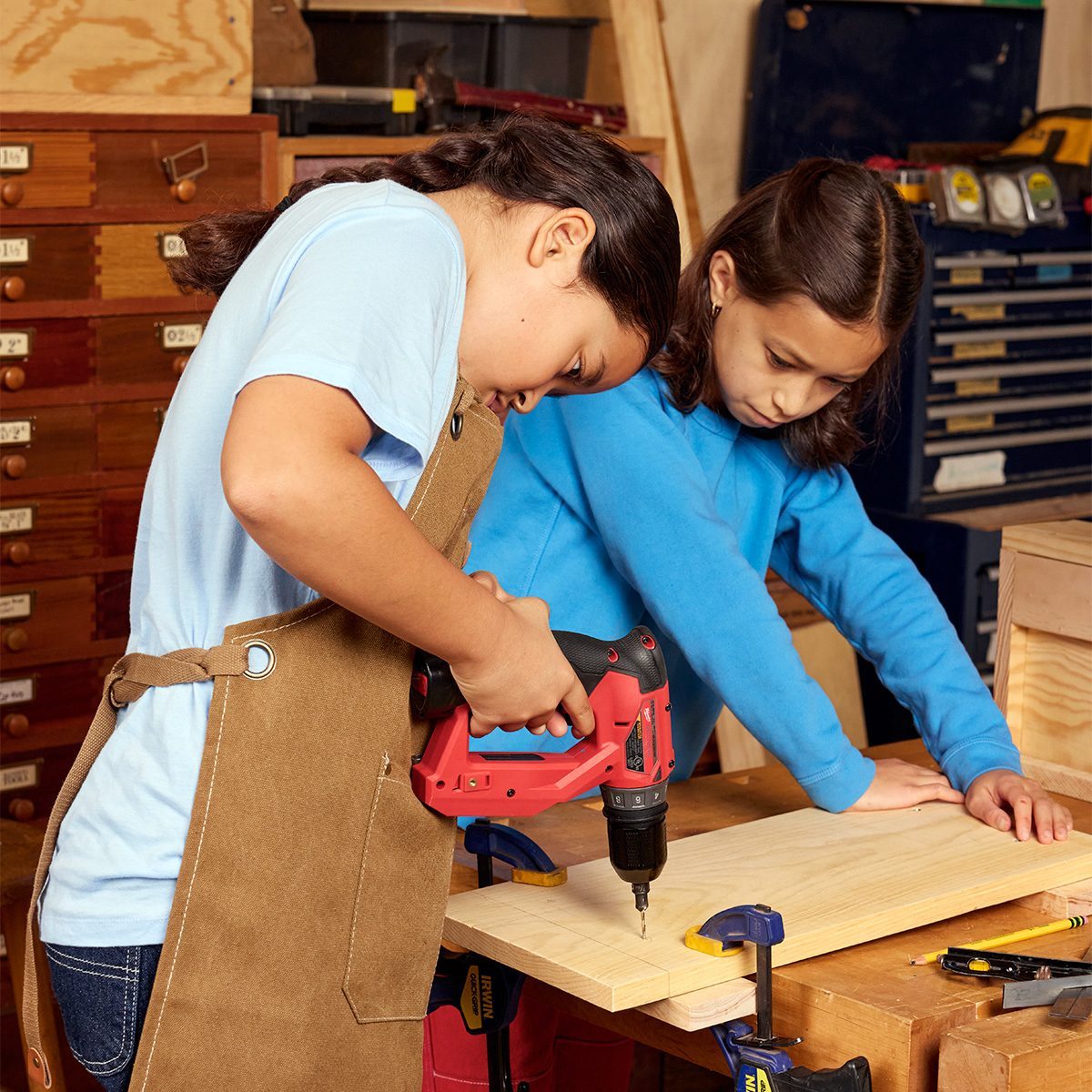
Your latest book, Little Woodchucks, features 12 family-friendly projects for young DIYers. Is there one that you’re especially proud of?
I am so proud of this whole dang book, but this time I will shine my adoring spotlight on the kitchen tongs, of which there are actually two styles you can make. The Toast Tongs are incredibly simple to build but become immediately invaluable for a blister-free breakfast pastry experience. And anyone who loves to cook meat items on a grill or in a pan will understand that the Cowboy Tongs are as powerful as any wizard’s wand when it comes to manipulating your delicious meatstuffs!
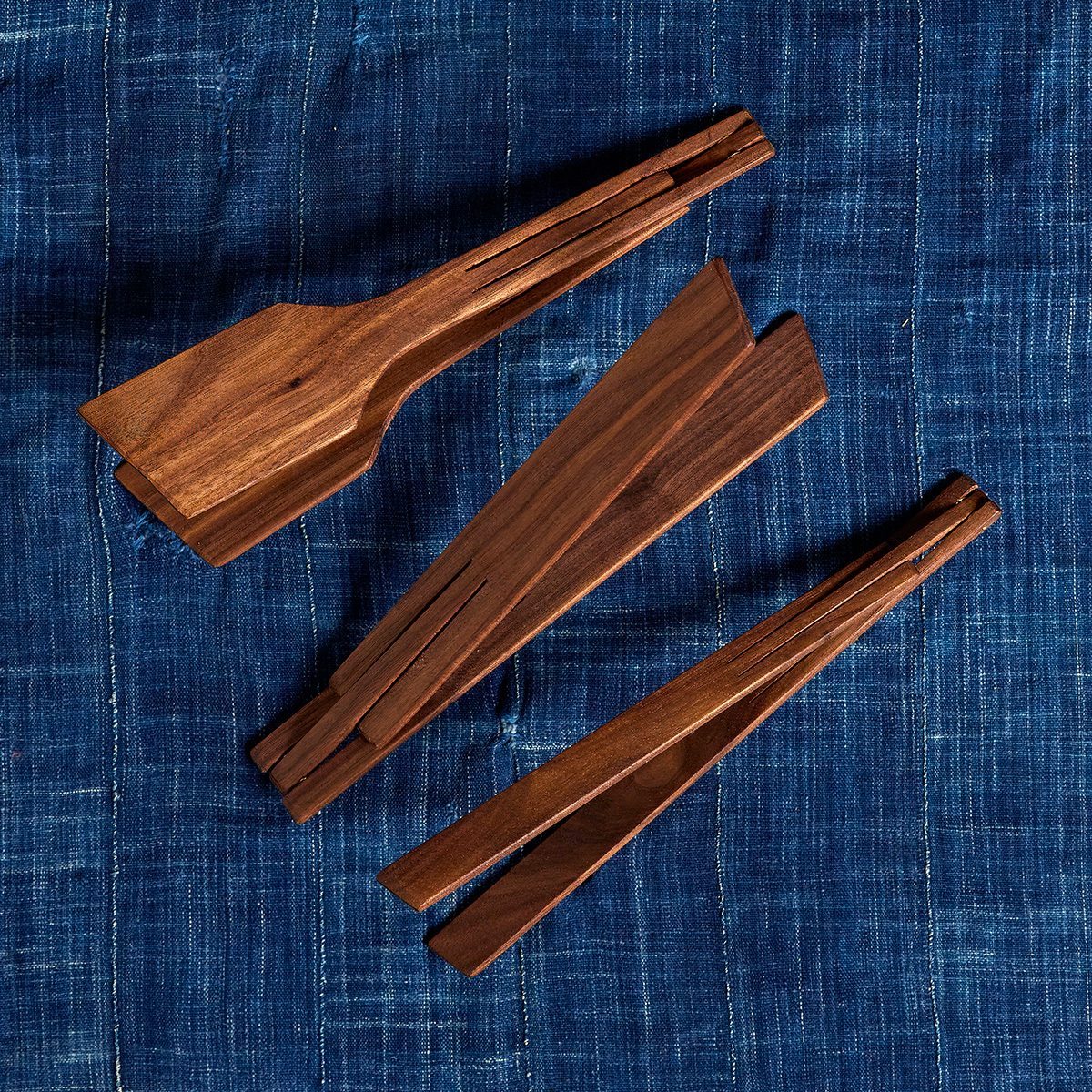
Both versions are very open to interpretation—with a little carving or variation in your saw pattern, your tongs can become a perfect outlet for your personal creativity. If I’m going to make anything out of wood or words or performance, I want to imbue it with my own authentic personality, in the hope that people will respond positively to my offering, and maybe even recognize my voice in the piece—or at least my lack of finesse.
In a hyper-digital world, what can young people gain from working with traditional tools and materials? No matter how fancy our computers and robots and flying vacuum cleaners get, we will always need human ingenuity and affection for the creation of nature to be the foundation of everything we make. We will never escape our reliance on Mother Nature for our virtual existence, even though many people now spend a lot of their lives in a “virtual space,” and perhaps suffer under the misconception that a human community can live a soft and luxurious life curated by corporate, industrial interests, and that that way of life is remotely sustainable. It is not. We will always rely on those of us who can use our hands and tools and woodchuck ingenuity to keep our homes cozy and safe and efficient, our food production sustainable and healthy, our vehicles and band saws working in peak condition, and our human civilization doing its best to be good ancestors for the generations to come.
Can you share a moment when you felt you had finally mastered a skill? Is “mastery” something every DIYer should strive for?
One of my woodworking heroes, Christian Becksvoort, wrote an article about how to hide the mistakes in your hand-cut dovetails, and I took that as my permission to finally try my hand at cutting the pins and tails of that particular joinery. I did some absolute beauties and also of course created some carnage, but using his techniques for filling gaps and generally bandaging unsightly wounds, I was able to make a gorgeous blanket chest for my sister that had several dozen dovetails in it, and no visible flaws! And so I learned that, as has been said before me, “mastery” simply means becoming better at hiding your mistakes.
I feel mastery is in the eye of the beholder, within reason. You can leave flaws in your drywall or your porch steps that signify “this was made by a person and not a freakin’ factory or robot” that can appear very charming, or you can tear it down and try again to make it “flawless.” I find that the less I worry about absolute perfection, the happier and more stress-free my life is.
What’s a technique you are still working to master?
My obsession right now is with string instruments. My ukuleles sound like ukuleles, but I still feel like a beginner when installing frets and tuning knobs. I very much hope to improve my skills in lutherie to the point that I can build an acoustic guitar that will hold its tone and allow me to tour the world and play my songs upon it for an audience. While I know it will never be as good as a Collings or Santa Cruz or Martin, I hope it will be sweet enough that somebody might give me a Cubano sandwich after the show.
Are there any memorable shop mishaps that still stick with you?
Having made it to the ripe old age of 56 with all 10 fingers intact, I am here to shout that any tool use, inside the shop or garage or out, should begin with safety first. The closest I came to irreparable damage was one very late night when I tried to catch a spinning router that was falling off the bench. I took off half a fingertip, and never worked to that point of exhaustion again. Your eyes, ears, lungs and appendages are all worth way more than any project or deadline or wage. The more you respect your tools (keeping the cutting edges sharp and sliding surfaces waxed) and your workspace (keeping it neat, well organized and clean), the better chance you have of keeping your fingers.