
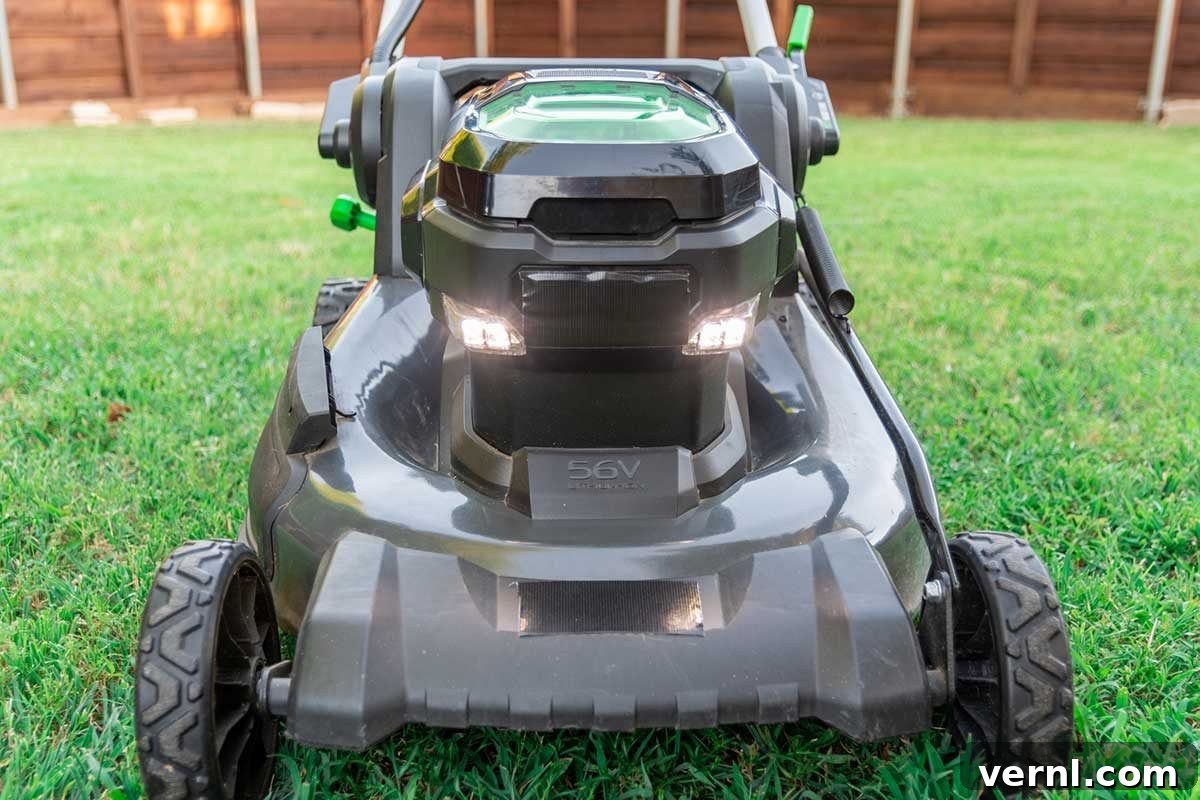
The evolution of lawnmowers has been remarkable since their inception in the 1830s. What began as cumbersome and heavy machinery has transformed into sophisticated, user-friendly devices designed to make lawn care significantly easier. A pivotal moment in this evolution arrived in the 1990s with the widespread availability of self-propelled mowers, fundamentally changing how homeowners approached lawn maintenance. These innovative machines freed users from the strenuous task of pushing, allowing them to simply walk behind and effortlessly guide the mower across their property.
Self-propelled lawnmowers occupy a crucial niche in the residential lawn care market. They are the ideal solution for yards that are too expansive or uneven to be comfortably managed with a traditional push mower, yet not quite large enough to warrant the significant investment and storage requirements of a riding mower. For the majority of homeowners, this sweet spot typically corresponds to a lot size ranging from approximately one-third to one-half acre. If your property falls within this category, a self-propelled model offers the perfect balance of efficiency, power, and maneuverability.
Today’s market boasts an impressive variety of self-propelled mowers, catering to diverse needs and preferences. From robust gas-powered engines designed for heavy-duty tasks to eco-friendly electric models that offer quiet operation and minimal maintenance, there’s a self-propelled mower for nearly every homeowner. These machines come packed with a multitude of features specifically engineered to streamline yard work, transforming a chore into a more enjoyable activity. Naturally, this range of options also translates into a wide price spectrum, with costs spanning from several hundred dollars for basic models to thousands for premium, feature-rich versions. Before committing to a purchase, it’s essential to thoroughly assess whether a self-propelled mower aligns with your specific lawn care requirements and to identify which features truly offer value versus those that might simply add unnecessary cost.
What Exactly is a Self-Propelled Lawnmower?
At its core, a self-propelled lawnmower distinguishes itself by leveraging its engine to power not only its cutting blades but also some or all of its wheels. This ingenious design provides the mower with forward momentum, effectively eliminating the need for the user to exert physical pushing force. Think of it much like an automobile with an automatic transmission; once engaged, the mower gently pulls itself forward. The operator’s role shifts from pushing to simply guiding the machine, controlling its direction and speed. When you release the handle or engage a safety mechanism, the self-propulsion disengages, bringing the mower to a halt. This automatic drive system significantly reduces operator fatigue, especially on larger lawns, uneven terrain, or sloped areas, making the entire mowing process considerably less strenuous and more efficient.
Understanding the Differences: Manual, Push, and Self-Propelled Mowers
The terminology surrounding different types of lawnmowers can often be a source of confusion for homeowners. Clarifying these distinctions is crucial for making an informed purchasing decision tailored to your specific lawn care needs. Each type offers a unique set of benefits and is best suited for different yard sizes and terrain conditions.
Manual (Reel) Mowers
Manual mowers, also known as reel mowers, represent the simplest form of lawnmowing technology. These machines are entirely motor-less, relying solely on human power. As you push a manual mower forward, a series of rotating blades, arranged in a cylindrical reel, shear the grass against a stationary bed knife. This scissor-like cutting action is renowned for providing a very clean, healthy cut for the grass, often superior to rotary mowers. They are exceptionally quiet, produce zero emissions, and require minimal maintenance, typically limited to blade sharpening. However, their primary drawback is the physical effort required. Manual mowers are best suited for very small, flat lawns with softer grass types, where their eco-friendliness and quiet operation can be fully appreciated without excessive exertion from the user.
Push Mowers (Rotary)
A push mower, often referred to as a rotary mower, represents a significant step up in power and capability from a manual mower. These machines feature either a gas or electric motor that is specifically designed to power a horizontal blade (or blades) that spins at high speed, effectively “chopping” the grass. While the motor powers the blades, the mower itself only moves when the user physically pushes or pulls it across the lawn. This type of mower offers more cutting power and is capable of handling taller, thicker grass, as well as uneven terrain, more effectively than a manual mower. They are widely popular for medium-sized yards where the operator doesn’t mind providing the propulsion. Push mowers offer a balance between affordability, power, and maneuverability, making them a common choice for many homeowners.
Self-Propelled Mowers
Self-propelled mowers are essentially an advanced variation of the push mower, designed to alleviate the physical strain of propulsion. As detailed previously, the key differentiator is that the motor in a self-propelled model not only spins the cutting blades but also drives the wheels forward. This means the operator no longer needs to physically push the machine. Instead, they simply walk behind it, guiding its direction and controlling its speed. This feature dramatically reduces fatigue, making self-propelled mowers ideal for larger lawns, properties with inclines, or anyone seeking to minimize the physical effort involved in lawn care. They offer the power and cutting width of a traditional push mower but with added convenience and comfort, positioning them as the perfect bridge between manual push models and much larger riding lawnmowers.
Key Features and Benefits of Self-Propelled Lawnmowers
Self-propelled lawnmowers come equipped with a range of features designed to enhance performance, ease of use, and safety. Understanding these features will help you select a model that perfectly matches your lawn’s specific demands and your personal preferences.
- The Drive Train: Front-Wheel, Rear-Wheel, and All-Wheel Drive
The type of drive system significantly impacts a mower’s maneuverability and traction, especially on challenging terrain.
- Front-Wheel Drive (FWD) mowers are often the most affordable self-propelled option and are a great choice if you primarily need a simple assist for a large, relatively flat yard. The engine powers the front wheels, pulling the mower along. However, a common drawback is that if the mower’s center of balance shifts, particularly when going up a hill or if the grass collection bag is full and heavy, the front wheels can lose their traction, causing them to slip. This reduces the effectiveness of the self-propulsion.
- Rear-Wheel Drive (RWD) mowers are generally preferred for yards with slopes, uneven terrain, or if you regularly bag your clippings. With RWD, the engine powers the rear wheels. When you push down on the handle to lift the front wheels for turns or when the grass bag fills up and adds weight to the rear, the drive wheels gain better traction. This makes them more effective at climbing hills and maintaining consistent propulsion on varied landscapes.
- All-Wheel Drive (AWD) mowers offer the best possible traction and control by powering all four wheels. While typically the most expensive option, AWD systems are ideal for extremely uneven yards, very steep inclines, or properties with challenging obstacles where maximum grip is essential. They distribute power efficiently, ensuring consistent performance regardless of the ground conditions. For most homeowners, RWD strikes an excellent balance of performance and value, but AWD offers unmatched capability for the toughest jobs.
- Variable Speed Control
A highly desirable feature, variable speed control allows you to adjust the mower’s forward pace to match your walking speed, the density of the grass, or the terrain. On most models, the speed is controllable, usually proportional to how much pressure you apply on a handle or lever. This is an invaluable feature, enabling you to maintain a comfortable pace in open areas but also allowing you to slow down for precise maneuvering around obstacles or to provide an extra boost of power for tackling dense patches of grass or ascending hills. This adaptability not only enhances comfort but also improves cutting quality by allowing you to mow at the optimal speed for current conditions.
- Advanced Safety Features
All modern self-propelled mowers are equipped with essential safety features designed to prevent accidents. The most fundamental is the kill switch or operator presence control. This ensures that the self-propulsion and often the blades automatically disengage the moment you release the handle, preventing the mower from running off unsupervised. Beyond this basic but critical feature, some mowers offer additional safety enhancements such as a blade brake clutch, which allows you to disengage the blades without turning off the engine – useful for safely crossing gravel paths or emptying the grass bag. Other advanced features might include anti-vibration systems in the handles to limit stress fatigue in the hands and arms during extended use, and robust deck designs that minimize debris kickback.
- Cutting Deck Options and Versatility
The cutting deck is where the magic happens, and modern self-propelled mowers offer significant versatility. Deck width is a primary consideration: wider decks (e.g., 21-22 inches) cover more ground faster, ideal for larger lawns, while narrower decks (e.g., 19-20 inches) offer greater maneuverability in smaller, more intricate yards. Beyond width, consider the deck material (steel for durability, aluminum for corrosion resistance and lighter weight, composite for impact resistance). Many self-propelled mowers offer 3-in-1 capabilities:
- Mulching: Finely shreds grass clippings and redistributes them back onto the lawn as natural fertilizer. This saves time by eliminating bagging and promotes healthier turf.
- Bagging: Collects clippings in a rear-mounted bag, ideal for a clean finish or when cutting very tall grass.
- Side Discharge: Ejects clippings out the side of the deck, suitable for overgrown areas where mulching or bagging would be impractical.
- Engine Type: Gas vs. Electric (Corded & Cordless)
The power source is a fundamental choice, with significant implications for performance, maintenance, and environmental impact.
- Gas-Powered Mowers: Traditionally the most common type, gas engines offer superior power and unlimited runtime (as long as you have fuel). They excel at tackling tough, thick, or wet grass and are well-suited for larger properties where cordless electric models might struggle with battery life. However, they require more maintenance (oil changes, spark plugs, air filters), produce noise and emissions, and involve fuel storage. Brands like Honda and Toro are renowned for their reliable gas engines, though Honda recently announced it will no longer manufacture new gas-powered lawnmowers.
- Electric Mowers (Corded): Offer instant start-up, quiet operation, and zero emissions. They are lightweight and require minimal maintenance. The main limitation is the need for an extension cord, which restricts range and can be cumbersome, making them best for smaller, flatter yards with easy access to outdoor outlets.
- Electric Mowers (Cordless/Battery-Powered): These represent the fastest-growing segment. Powered by rechargeable lithium-ion batteries, cordless mowers offer the freedom of gas models without the noise, fumes, or maintenance. They are quiet, eco-friendly, and typically lighter. While battery runtime and charging times are key considerations, battery technology has advanced significantly, with many models offering sufficient power and runtime for up to 1/2 acre on a single charge. EGO and Greenworks are leaders in this space, but most major manufacturers now offer robust cordless options. The gap in cost between cordless and gas-powered equivalents has also been shrinking in recent years, making them an increasingly attractive option.
- Additional Convenience Features
Manufacturers continually innovate to make lawn care even easier. Popular convenience features include a hose attachment on the deck, which allows for quick and easy cleaning after use – simply connect a garden hose and run the mower to flush out clippings. An electric starter on gas motors eliminates the need for manual pull-starts, offering push-button convenience. Other useful additions can include LED headlights for early morning or late evening mowing, cup holders, and even USB charging ports for mobile devices. While none of these are strictly required to mow your lawn, they collectively enhance the user experience and can significantly improve comfort and efficiency.
Self-Propelled Mower Cost and Leading Brands
The inclusion of additional components, such as the drive system and often more powerful engines, means that self-propelled mowers inherently cost more than standard push mowers. However, they remain significantly more affordable than a full-sized riding lawnmower, positioning them as an excellent value proposition for many homeowners. You can find affordable lawnmowers within this category that deliver impressive performance without breaking the bank.
Generally, consumers can expect to pay $300 or more for an entry-level self-propelled mower. Prices can ascend to $1,200 or even higher for premium brand-name models that come loaded with advanced features, larger engines, durable construction materials, and longer warranties. For most homeowners, the ideal balance between power, features, and price typically falls within the $350 to $700 range, where you can find robust and reliable machines without overspending.
The market for self-propelled mowers is dominated by mower brands that are highly recognizable to anyone familiar with outdoor power tools. Industry leaders include:
- Honda: Renowned for their incredibly reliable and fuel-efficient engines, Honda mowers are often considered top-tier for performance and longevity, though their recent announcement to cease manufacturing new gas-powered lawnmowers indicates a shift towards other technologies.
- Toro: A popular choice known for innovative features like their SmartStow design (allowing vertical storage) and personal pace self-propel system that automatically adjusts to your walking speed.
- Troy-Bilt: Offers a wide range of affordable and dependable mowers, often found in home improvement stores.
- Craftsman: A long-standing brand in the tool industry, Craftsman offers reliable mowers at competitive price points, including both gas and electric options.
- EGO: A leader in the battery-powered cordless segment, known for powerful motors, long-lasting batteries, and a comprehensive ecosystem of compatible outdoor tools.
- Greenworks: Another prominent brand in the electric mower space, offering a broad selection of cordless models with various battery voltages and features.
While gas-powered models have historically been the benchmark, cordless electric mowers are rapidly gaining ground. They generally cost slightly more upfront than their gas-powered equivalents, primarily due to the advanced battery technology. However, this price gap has been steadily shrinking in recent years as battery production becomes more efficient and demand increases. Many other manufacturers are also rapidly expanding their cordless offerings, providing consumers with more choices than ever before.
How Long Do Self-Propelled Lawnmowers Last?
The longevity of a self-propelled lawnmower is a common concern for potential buyers. With proper care and regular maintenance, a quality self-propelled mower can reliably serve you for eight years or more. This lifespan can vary significantly depending on several factors, including the frequency of use, the size and complexity of your lawn, and the quality of maintenance it receives. Most manufacturers rate their mowers for a set number of service hours, providing a more accurate metric for expected durability.
It’s worth noting that there is no significant difference in the service life between a self-propelled mower versus a standard push model when comparing machines of similar build quality. The added drive system in a self-propelled mower is designed to be durable and generally doesn’t compromise the overall lifespan if maintained correctly.
Naturally, any complex piece of machinery with moving parts and an engine will require ongoing maintenance and occasional repairs. To maximize the lifespan and ensure optimal performance of your self-propelled mower, expect to either take it in for annual tune-ups at a service center or commit to performing some DIY maintenance tasks. This includes essential seasonal preparations, such as getting your mower ready for spring with fresh oil, a clean air filter, and a sharp blade, and then properly putting it away in the fall with fuel stabilizer, battery charging, and thorough cleaning.
For gas mowers, regular oil changes, spark plug replacements, and air filter cleaning are crucial. For electric models, battery care—such as storing batteries at appropriate temperatures and ensuring they are charged correctly—is paramount. Regularly sharpening or replacing blades not only improves cutting performance but also reduces strain on the engine. Addressing minor issues promptly, like belt adjustments or wheel lubrication, can prevent them from escalating into more costly repairs.
Considering the reduced effort, time savings, and enhanced comfort they provide, the benefits of self-propelled mowers generally justify the added initial cost over a traditional push mower. The critical question for any homeowner is whether these specific benefits genuinely align with the demands of your yard and your personal preferences for lawn care.
If your budget is particularly tight, or if you have a small, flat lawn and don’t feel the need for a power assist to mow, then a self-propelled mower might not be worth the extra investment for you. A quality push mower could suffice. However, if you relish the idea of spending less physical effort and time mowing, if your yard falls into that “big enough to be a hassle but not quite big enough to justify a riding mower” category, or if you simply value the convenience and comfort of an easier mowing experience, then a self-propelled mower is undoubtedly a fantastic solution that will make your lawn care routine significantly more enjoyable and less fatiguing.
Frequently Asked Questions About Self-Propelled Lawnmowers
Do I need a self-propelled mower if my lawn is completely flat?
While a self-propelled mower is not strictly necessary for a perfectly flat lawn, it will undeniably make the task easier and less physically demanding. The convenience of simply guiding the mower rather than pushing it can still be a significant benefit, especially on larger flat areas. However, if you’re on a tight budget, the higher cost of a self-propelled model might not be justified if a standard push mower can handle your flat lawn adequately without excessive effort.
Are self-propelled lawnmowers less safe to operate than other types?
No, self-propelled mowers are designed with safety as a top priority and are generally very safe to operate. All modern self-propelled models are equipped with an essential kill switch or operator presence control, which immediately stops the blades and disengages the self-propulsion the moment you release the handle. This prevents the mower from moving or cutting when unattended. Additionally, many models feature variable speed controls, allowing users to operate the mower at a comfortable and safe pace that suits both their stride and the terrain conditions, further enhancing safety during operation.
What type of maintenance is required for a self-propelled mower?
Maintenance largely depends on whether it’s a gas or electric model. Gas self-propelled mowers require regular oil changes, spark plug checks, air filter cleaning/replacement, and fuel system care (especially for winter storage). Electric (cordless) models require less engine maintenance but demand proper battery care, including charging according to manufacturer guidelines and storing batteries in appropriate conditions. For both types, regular blade sharpening, deck cleaning, and checking wheel bearings/belts (if applicable) are essential for optimal performance and longevity.
How do I choose the right cutting deck size for my yard?
The ideal cutting deck size depends primarily on your lawn’s size and complexity. For smaller yards (under 1/4 acre) or those with many obstacles, a narrower deck (19-20 inches) offers better maneuverability. For larger lawns (1/4 to 1/2 acre) where efficiency is key, a wider deck (21-22 inches or more) will reduce mowing time significantly. Consider the balance between cutting speed and agility when making your choice.