For decades, the digital landscape has been a tangled web of cables and connectors, a frustrating testament to the tech industry’s struggle to standardize how computers interact with their numerous “peripherals”—mice, keyboards, printers, scanners, and countless other devices. If you’ve ever found yourself frantically rummaging through a box of old cords, searching for that one specific, oddly shaped plug required by a particular gadget, you know the pain. True universal connectivity often felt more like a distant dream than a tangible reality.
The late 1990s brought a glimmer of hope with the emergence of USB, or Universal Serial Bus. It was introduced as an agreed-upon standard for data transfer between devices and their peripherals, offering a significant step towards simplifying connections. While not truly “universal” in its earliest forms, USB undoubtedly demonstrated remarkable staying power. Many of those forgotten cords in your old box are likely early iterations of USB, marking a crucial chapter in the journey toward streamlined connectivity.
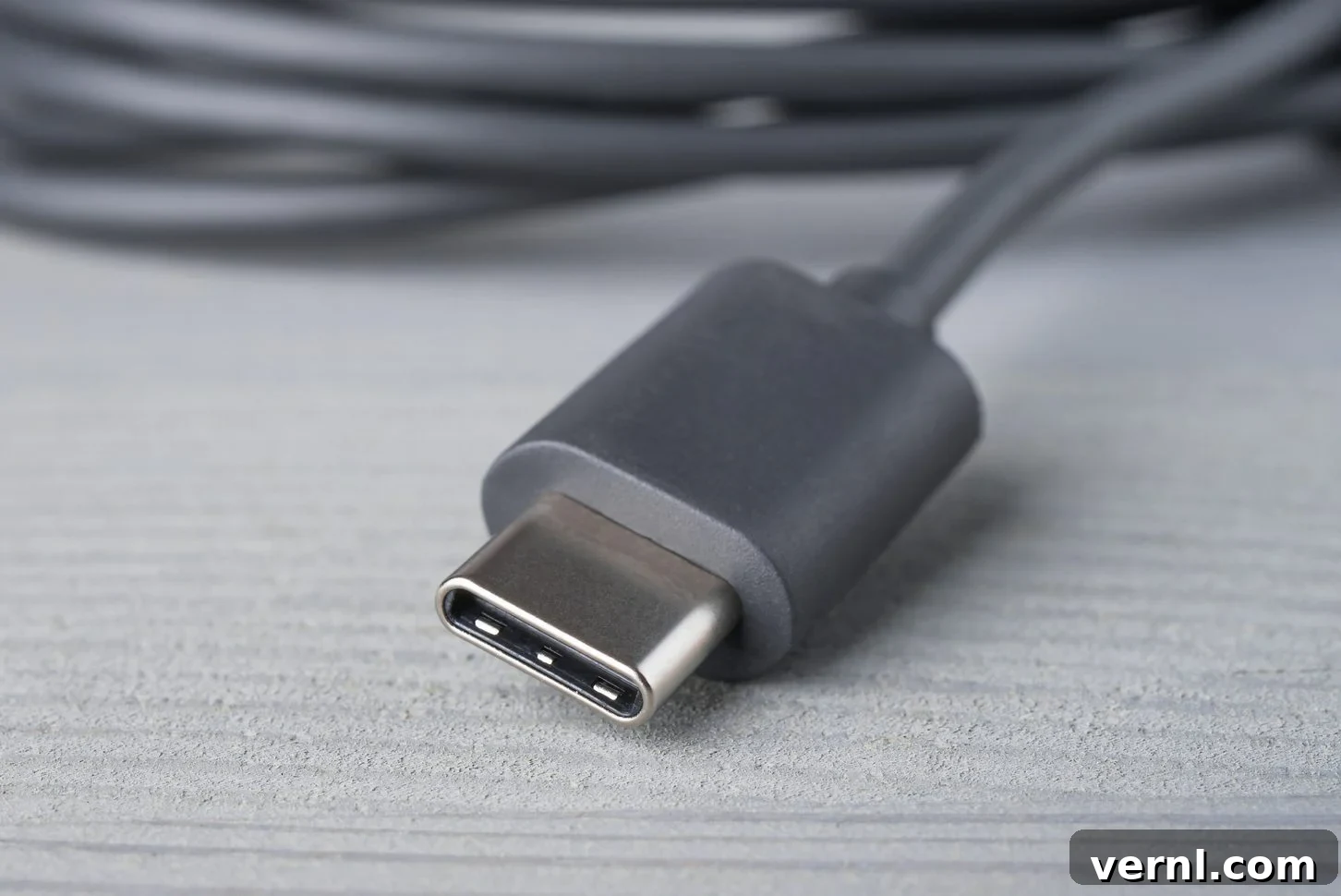
Fast forward to today, and we arrive at the current pinnacle of this evolution: USB-C. If you own a modern laptop, tablet, or Android smartphone, you’re undoubtedly familiar with this ubiquitous, oval-shaped port and plug. USB-C isn’t merely a data conduit; it represents a comprehensive leap forward in connectivity. Modern USB-C technology is designed to deliver not just vast amounts of data at incredible speeds but also substantial power, transforming the way we charge and connect our devices.
With the widespread adoption and enhanced capabilities of USB-C, the promise of finally decluttering our digital lives and retiring those antiquated cords seems closer than ever. The future of a truly universal, highly efficient connection standard is now a tangible reality.
Understanding USB: Types vs. Standards
When most of us consider a USB plug or port, our immediate thought often goes to its physical appearance. This intuitive understanding is precisely the right approach, as USB “types” are indeed categorized by their distinct shapes and physical characteristics. For instance, that familiar, flat, rectangular port that has been a fixture on the back of desktop computers for decades is known as USB-Type A, or simply USB-A. This type has been the cornerstone of USB connectivity for a long time, defining the physical interface for countless devices.
In contrast to physical types, USB “standards” (also referred to as specifications) delve into the underlying technological capabilities that power the USB experience. These standards dictate crucial performance metrics, primarily focusing on data transfer speed and power delivery. The journey began with the foundational USB 1.0 standard, followed by significant advancements like USB 2.0 (High-Speed), then the SuperSpeed family including USB 3.0, USB 3.1, USB 3.2, and culminating in the latest iteration, USB4. Each successive standard has brought exponential improvements in data throughput. Similarly, power delivery has evolved dramatically, with the latest standard being USB Power Delivery (USB-PD) Revision 3.1, enabling vastly more efficient and powerful charging.
It’s crucial to understand that every device, cable, plug, or port leveraging USB technology exists at the intersection of these two aspects: it adheres to a specific physical “type” (such as USB-C) and operates according to specific “standards” (like USB4 for data speed and USB-PD for power delivery). This distinction is key to navigating the diverse world of USB connectivity and ensuring optimal performance for your devices.
What Exactly Is USB-C? The Universal Connector Explained
USB-C is more than just another connector; it’s a paradigm shift designed to truly embody the “universal” aspect of Universal Serial Bus. Its physical design is instantly recognizable: an oblong, symmetrical shape that eliminates the frustration of trying to plug it in “the right way up.” There is no right or wrong orientation; it plugs in effortlessly every single time, a minor convenience that delivers a major user experience upgrade. Furthermore, USB-C cables are inherently bidirectional, meaning it doesn’t matter which end connects to which device. Data and electrical current can flow freely in either direction, simplifying connections and reducing cable clutter.
While this ease of use is a significant perk, the true driving force behind USB-C’s rapid adoption and future dominance lies in its unparalleled performance capabilities. USB-C boasts vastly superior data and power transmission potential compared to all preceding USB types. What truly sets it apart, however, is its incredible versatility. USB-C supports multiple kinds of data beyond traditional USB protocols through what are known as “Alternate Modes” (Alt Modes). This means a single USB-C port can carry not only high-speed USB data but also video signals (like HDMI or DisplayPort), audio, and even Ethernet, effectively replacing a multitude of specialized ports with one elegant solution.
The impact of USB-C is so profound that even devices that have historically resisted adopting the standard—most notably, iPhones—are being compelled to join the USB-C ecosystem, at least in certain regions. The European Union (EU) Parliament has taken a decisive step to reduce electronic waste and simplify consumer lives by enacting legislation that will require USB-C charging capability on virtually all small- and medium-sized portable electronic devices sold within the EU by late 2024. This landmark decision underscores USB-C’s global significance and its role in ushering in an era of truly unified device charging and connectivity.
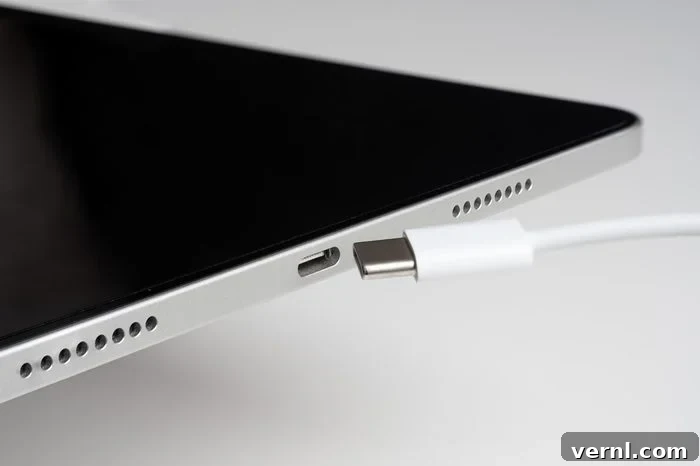
Demystifying USB Power Delivery (USB-PD): The Science of Fast Charging
USB Power Delivery, or USB-PD, is a sophisticated USB charging specification designed to maximize and intelligently manage the power delivered to a connected device. When you hear enthusiastic talk about “fast charging” technology for smartphones, tablets, or laptops, it’s almost invariably USB-PD that’s being referenced. This standard fundamentally transforms how devices draw power, moving beyond simple voltage and amperage to a much more dynamic and efficient system.
The advancements in USB-PD have been nothing short of revolutionary. The initial USB-PD specification significantly boosted power output to 100 watts, a substantial leap from previous USB charging methods. However, the latest USB-PD Revision 3.1 has pushed this boundary even further, capable of delivering an astounding 240 watts (power is, of course, measured in watts) to compatible devices. This immense power output means that a single USB-C charger, when combined with the right cable and device, can efficiently charge everything from a tiny pair of noise-cancelling headphones to a power-hungry gaming laptop or even certain external monitors.
Crucially, USB-PD is not about indiscriminately blasting the maximum available power to any device that happens to be plugged in. Such an approach would be inefficient at best and potentially damaging at worst. A pair of headphones, for example, requires significantly less wattage than a high-performance laptop. This is where the “delivery” aspect of USB-PD truly shines. Before any power transmission occurs, USB-PD facilitates a critical communication handshake between the power source (charger) and the power sink (device). During this negotiation, the devices intelligently communicate their power requirements and capabilities. The charger then delivers only the optimal amount of power needed by the device, preventing overcharging, ensuring safety, and maximizing charging efficiency. This smart communication is the cornerstone of safe, rapid, and versatile power delivery.
The Synergy: USB-C for Optimal Power Delivery
The question often arises: can USB-PD truly run on all USB-C cables? The answer is nuanced but generally, yes, the latest generation of USB-PD is designed to achieve its maximum power output only when seamlessly paired with the most advanced USB-C technology, particularly the cables and ports built to the highest specifications. However, it’s vital to understand that not all USB-C cables and ports are created equal, and therefore, not all can handle the full spectrum of USB-PD capabilities.
This can certainly lead to confusion, but a helpful analogy simplifies it: “A chain is only as strong as its weakest link.” This principle perfectly illustrates how USB-C and USB-PD compatibility works. When the USB Implementers Forum (USB-IF), the governing body responsible for USB standards, releases new specifications, they don’t revoke the functionality of older equipment. Your existing USB-C accessories will still function, but they will be limited by the capabilities they were designed for. An older USB-C cable, for instance, might only be rated for 60W or 100W power delivery, or a lower data transfer speed, regardless of how powerful the charger or advanced the device it’s connected to.
Consider this scenario: if you invest in a cutting-edge USB-PD charger capable of delivering 240 watts, but pair it with an older or less-spec’d USB-C cable that’s only rated for 60 watts, you won’t experience the charger’s maximum output. The system will default to the lowest common denominator—the cable’s limitation. Similarly, if the device you’re attempting to charge isn’t designed to accept 240 watts, it simply won’t draw that much power, regardless of the charger’s capability. The negotiation process ensures that only the power the device can safely handle is delivered. To truly harness the full potential of fast charging and high-speed data transfer, it’s imperative that all components in your charging chain—the charger, the cable, and the device—are compatible with the highest relevant USB-C and USB-PD standards.
Do I Need to Upgrade My Chargers and Cables?
The decision to invest in new USB-C chargers and cables primarily hinges on your specific needs and the capabilities of your current devices. You only truly “need” to upgrade if you desire to leverage the absolute fastest charging speeds and the most advanced power delivery capabilities that modern technology offers. Furthermore, your devices must be compatible with these latest fast-charging standards to benefit from the upgrade. Before making any purchases, it is crucial to verify that your smartphone, tablet, laptop, or other portable electronics support the latest USB-PD specifications. Check your device’s manual or manufacturer’s website for confirmation of USB-PD compatibility and its maximum charging wattage.
However, beyond just “need,” there are significant advantages to embracing the newer USB-C and USB-PD ecosystem. Upgrading can mean:
- Faster Charging: Dramatically reduce the time it takes to power up your devices, especially high-capacity laptops.
- Fewer Chargers: A single, powerful USB-C PD charger can replace multiple proprietary chargers, simplifying your travel setup and decluttering your home or office.
- Increased Versatility: USB-C cables support not only power but also high-speed data, video (via Alt Modes like DisplayPort), and sometimes even Ethernet, reducing the need for multiple specialized cables and adapters.
- Future-Proofing: As more devices adopt USB-C and USB-PD, having compatible accessories ensures you’re ready for future technological advancements and broader device compatibility.
- Environmental Benefits: The push for a common charger, exemplified by the EU mandate, aims to reduce electronic waste by minimizing the number of redundant chargers that end up in landfills.
So, while it might not be a mandatory immediate upgrade for everyone, transitioning to the latest USB-C PD technology offers compelling benefits in terms of convenience, efficiency, and future readiness.
Can USB-C Power Delivery Charge Older Devices? A Look at Backward Compatibility
One of the most user-friendly features of USB Power Delivery chargers is their inherent backward compatibility. This means that, in most cases, a USB-C PD charger will indeed charge older devices, provided that those devices also feature a USB-C connection type. You won’t need to fear damaging older gadgets by plugging them into a powerful new PD charger. The intelligent negotiation process inherent in USB-PD ensures safety and compatibility.
When an older USB-C device is connected to a modern USB-C PD charger, the two devices communicate to establish the most efficient and safe power transfer protocol. The charger will identify the maximum power input that the older device can accept and then deliver only that specific amount. For example, if you connect an older smartphone that can only accept 18 watts of power to a 240-watt USB-PD charger, the charger will not force 240 watts into the phone. Instead, it will supply the phone with precisely 18 watts, charging it at its maximum supported speed without any risk. This intelligent power scaling ensures that your devices are always charged optimally, without over-delivery or under-delivery of power.
Therefore, while you might not achieve the super-fast charging speeds characteristic of the latest USB-PD enabled devices, your older USB-C gadgets will still charge efficiently and safely. This backward compatibility is a significant advantage, allowing users to transition to the USB-C ecosystem without rendering their existing devices obsolete and promoting a more unified charging experience across a wide range of electronics.
The journey towards a truly universal and efficient charging standard has been long and winding, but with USB-C and USB Power Delivery, we are undoubtedly closer than ever. These technologies are not just about faster charging or data transfer; they represent a fundamental shift towards simplicity, versatility, and sustainability in the world of personal electronics. As the industry continues to standardize and innovate, the vision of a single, powerful connector for all our digital needs is rapidly becoming a reality.
[cf]skyword_tracking_tag[/cf]