
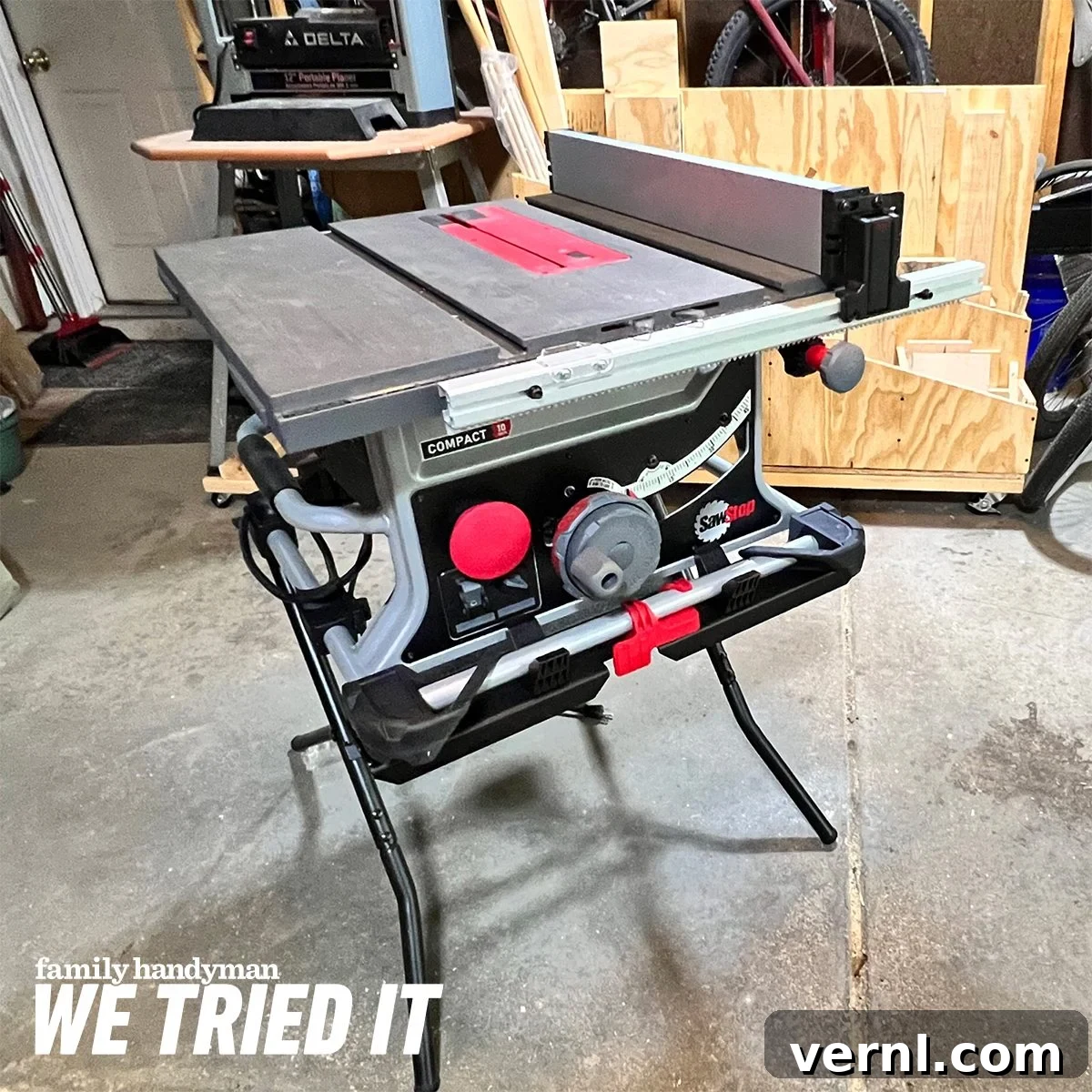
My journey into the rewarding world of woodworking began much like many enthusiasts’—with an eclectic collection of tools. My workshop was a blend of inherited hand-me-downs from my late father and various budget-friendly, often used, items. Among these was a venerable Skil table saw, a relic of a bygone era that notably lacked essential safety components such as a blade guard or a riving knife. Operating that machine was a constant exercise in hyper-vigilance, where the primary focus shifted from the precise cut of the poplar board to the precarious task of keeping my fingers a safe distance from the rapidly rotating blade.
The stark reality of this inherent danger crystallized during a particularly unnerving incident. While cutting a piece of oak, the lumber unexpectedly kicked back with considerable force. This violent reaction was a direct consequence of the missing anti-kickback pawl, a crucial safety mechanism designed to prevent such dangerous occurrences. The immediate jolt of fear and the visceral understanding of how close I had come to a severe injury served as an undeniable wake-up call. It was clear: a significant upgrade was not just desirable, but absolutely essential. My top priority was no longer merely a newer or more powerful tool, but one that offered an unequivocally safer operating experience, allowing me to channel my full attention into the craft itself, rather than the constant apprehension of potential accidents.
With personal safety firmly established as my paramount concern, my extensive research ultimately led me to the SawStop Compact Table Saw. This model promised not just superior cutting performance but, more importantly, a revolutionary approach to injury prevention. Its compact footprint also proved to be an ideal solution for my small garage workspace. After more than a year of rigorous testing, meticulously working on a diverse range of projects—including custom bookshelves, elegant plant stands, intricate small furniture pieces, and modern floor lamps—I am now prepared to offer my comprehensive and unbiased thoughts on its capabilities and performance.
I Tried It: SawStop Compact Table Saw
VIA MERCHANT
Pros:
- Patented safety system instantly stops the spinning blade upon human contact, mitigating severe injury.
- Remarkably easy and intuitive setup process, allowing for quick deployment.
- Delivers highly accurate cuts right out of the box, requiring minimal calibration.
- Features a quick-tilt bevel mechanism for effortless and precise angle adjustments.
- Powered by a robust 15-amp motor and boasts heavy-duty construction for durability and consistent performance.
- Equipped with an integrated carry handle and convenient on-saw storage for essential accessories.
- Utilizes a precise rack and pinion fence system for consistent, repeatable, and square cuts.
- Backed by a CPO 30-day warranty, offering additional assurance.
Cons:
- Commands a higher price point compared to many standard portable table saws.
- The compact version does not accept a dado stack, limiting certain specialized joinery options without alternative methods.
- Offers a smaller rip capacity when compared to some other portable jobsite table saws on the market.
Shop at The Home Depot
What Makes the SawStop Table Saw a Game-Changer for Woodworking Safety?
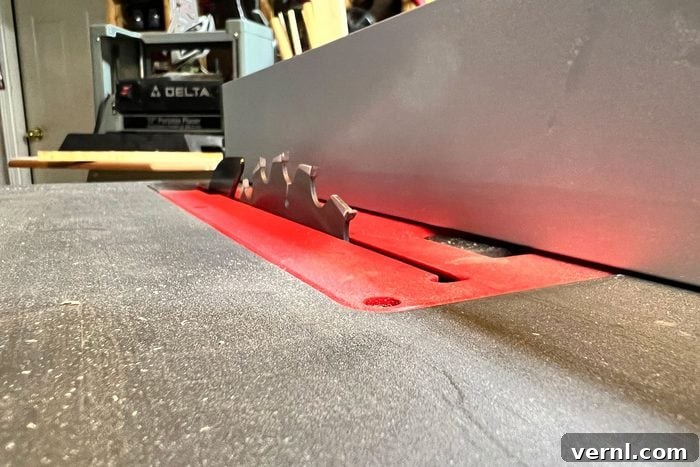
For those unacquainted with the brand, SawStop has firmly established itself as a pioneering force in woodworking safety innovation. The company’s table saws are universally acclaimed for their proprietary Active Injury Mitigation (AIM) technology, a groundbreaking system specifically engineered to prevent catastrophic injuries. This sophisticated technology continuously monitors the electrical capacitance of the saw blade. The instant the blade makes contact with a conductive material, such as human flesh, it registers this change in capacitance, immediately triggering an advanced brake mechanism.
Upon activation, a powerful, spring-loaded aluminum brake cartridge is thrust into the blade, bringing it to an absolute halt within milliseconds—often before the blade can even complete a quarter of a rotation. This astonishing speed is the critical factor that transforms a potentially life-altering amputation into what is typically a minor cut or, in many documented cases, merely a superficial scratch. The global woodworking community, particularly across vibrant online forums and social media platforms, is rich with harrowing yet ultimately triumphant accounts from individuals who, by their own admission, would have undoubtedly lost fingers or suffered severe disfigurement had they been operating any other conventional table saw. Thanks to SawStop’s ingenious design, they walked away from these terrifying incidents with remarkably minimal harm, a powerful testament to the system’s effectiveness and the invaluable peace of mind it now provides to countless craftsmen and enthusiasts alike.
It is crucial to understand the implications of the safety system’s engagement. When the brake is triggered, both the brake cartridge and, in most instances, the saw blade itself will sustain damage and may even crack. While the need for replacement parts might initially seem like a drawback, it pales in comparison to the alternative: a severe, potentially permanent injury. Importantly, both the brake and the blade are designed as replaceable components. A notable aspect of SawStop’s customer service, frequently reported by woodworkers who have experienced a trigger event, is that the company often provides replacement parts free of charge. This gesture not only supports their dedicated customer base but also serves as the most authentic and compelling form of publicity for the brand, powerfully showcasing their unwavering commitment to user safety and their product’s life-saving capabilities.
For specialized cutting tasks, such as processing wet wood or certain types of metal, which may contain sufficient moisture or electrical conductivity to inadvertently trigger the brake, SawStop has thoughtfully integrated a bypass feature. This allows users to temporarily deactivate the safety system when working with materials that might cause false positives. However, it is paramount to exercise extreme caution and maintain absolute awareness of the heightened risks involved when operating the saw with the safety feature disengaged. This option is strictly intended for specific material considerations, not as a general means to circumvent established safety protocols or to operate carelessly.
Detailed Features of the SawStop Compact Table Saw: Built for Performance and Protection
Beyond its groundbreaking safety technology, the SawStop Compact Table Saw truly distinguishes itself as a superbly engineered compact table saw. Its build quality is nothing short of outstanding, exuding a sense of robust durability and precision craftsmanship that instills immediate confidence. Weighing in at approximately 70 pounds, it presents as a substantial “little guy” that might initially seem heavy for a model marketed as compact. However, this considerable weight is a deliberate and distinct advantage, contributing significantly to the saw’s remarkable operational stability. Unlike lighter, more portable saws that can be prone to shifting or vibrating during demanding operations, the SawStop remains firmly planted on the workshop floor, even when executing aggressive cuts on larger materials like partial sheets of plywood. This unwavering stability is absolutely crucial for achieving both superior cutting precision and enhanced user safety, significantly minimizing the risk of kickback, blade deflection, or inaccurate cuts.
Effortless Setup and Immediate Operation
One of the most user-friendly aspects of this table saw is its minimal assembly and adjustment requirements straight out of the box. I was genuinely impressed by how quickly I was able to get it fully operational. The intuitive design means that, practically speaking, you can unpackage this saw, establish it at a job site or within your home garage, and commence making precise cuts in a matter of minutes. This exceptional ease of setup represents a significant time-saver for busy professional contractors requiring rapid deployment and equally for eager hobbyists who wish to dive directly into their projects without the frustration of complex calibration hurdles.
Powerful Performance and Versatile Cutting
At its core, the SawStop Compact Table Saw is driven by a powerful 15-amp motor, propelling its 10-inch blade at an impressive no-load speed of approximately 4,000 RPMs. This robust combination provides more than ample power to effortlessly rip through a wide spectrum of wood types, ranging from soft pines and composite boards to dense, challenging hardwoods, often with the smooth efficiency akin to a hot knife slicing through butter. The 10-inch blade, a standard size, offers a maximum cutting depth of 3 1/8 inches, which is more than sufficient for the vast majority of standard woodworking tasks and sheet good breakdowns. When making cuts at a 45-degree bevel angle, the maximum depth is reduced by approximately an inch, a common and expected characteristic for all table saws.
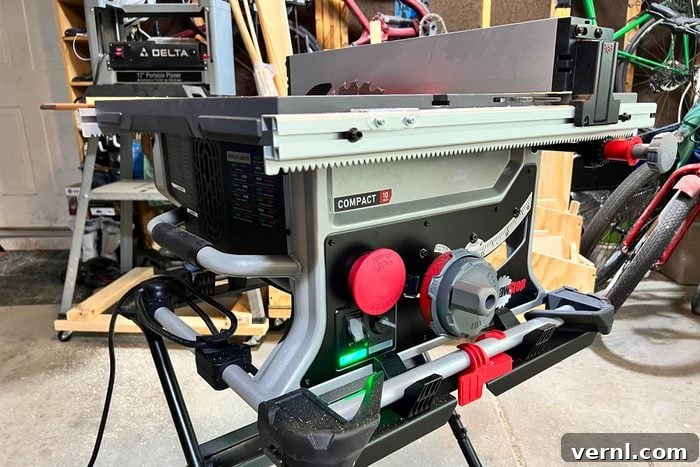
Blade angle adjustments on the SawStop are exceptionally user-friendly and highly precise. A thoughtfully designed and clearly marked angle dial allows for rapid, sweeping changes when transitioning between common angles like 0 or 45 degrees. For the nuanced, micro-adjustments essential to achieving an exact, custom angle—perhaps for intricate joinery or architectural trim—a simple turn of the dial provides the necessary fine-tuning. This intuitive, dual-action adjustment system ensures both swiftness for everyday tasks and meticulous accuracy for the most intricate and demanding cuts.
Precision Fence System and Generous Rip Capacity
The rack-and-pinion fence system is undeniably another standout feature, and remarkably, it arrived perfectly parallel to the blade directly from its factory calibration—a commendable rarity among many new table saws. This inherent accuracy from the outset significantly reduces initial setup time and guarantees consistent, highly reliable cuts without the need for frustrating adjustments. Adjusting the fence itself is incredibly easy and fluid, facilitated by a precisely calibrated dial that permits minute, incremental changes in depth along its track. The telescoping fence rails are ingeniously engineered, extending smoothly to provide a substantial rip-cut capacity of up to 24 1/2 inches when fully deployed. This capacity is more than adequate for accurately breaking down most standard sheet goods (e.g., half-sheets of plywood) or for making precise rip cuts on wider boards frequently utilized in furniture construction. Furthermore, a unique, integrated fence shelf offers valuable additional support at the far edge, a particularly useful feature when working with longer workpieces that might otherwise experience deflection or sag.
Thoughtful Ergonomics and Integrated Storage Solutions
The primary operational dials, controlling both blade angle and fence depth, are generously sized, clearly marked, and provide a satisfying, tactile feedback with each adjustment. Making adjustments is simple and intuitive: one merely pulls out the knob to unlock the mechanism, dials in the desired setting, and then pushes it back in to securely lock it into its new position. This robust locking mechanism is paramount, as it effectively prevents any accidental shifts or vibrations during cutting operations, thereby further enhancing both safety and cutting accuracy.
The saw’s practicality is further extended through its clever integrated storage solutions. All crucial safety attachments, including the blade guard, anti-kickback pawls, and a convenient miter gauge, are neatly and securely housed within a dedicated compartment positioned at the rear of the saw. This is also the designated location for the blade-change wrenches, ensuring that all essential accessories are consistently within easy reach and properly organized. Adjacent to this storage area, a strategically placed 2 1/2-inch vacuum port is integrated, designed to connect effortlessly with a standard-size hose from your shop vacuum or dust collector. Effective dust collection is not merely about maintaining a clean workshop; it is paramount for improving visibility during critical cuts and, crucially, for protecting your respiratory health, making this integrated port a highly valuable and essential feature for any serious woodworker.
My Real-World Experience: Testing the SawStop Compact Table Saw’s Mettle
Over the past year, the SawStop Compact Table Saw has undeniably proven itself as the tireless workhorse of my garage workshop. It has competently handled an extensive and varied range of materials and projects, consistently delivering excellent results without falter. I have rigorously put it through its paces, cutting everything from robust plywood and durable OSB (Oriented Strand Board) to challenging hard walnut and soft, delicate pine, across a multitude of thicknesses. Through all these diverse and demanding tasks, the saw has performed flawlessly, demonstrating zero issues with consistent power delivery or cutting efficiency.
The precision of its cuts has been nothing short of exceptional, a characteristic that genuinely stands out. After sawing through various boards, I developed a habit of meticulously measuring both the primary piece of wood and the resulting off-cut. Almost without exception, both measurements were found to be dead-on accurate, reflecting a remarkable level of consistency. This level of repeatable precision is invaluable for achieving professional-looking results in any woodworking project and significantly minimizes material waste, saving both time and resources. While it is true that the compact version of the SawStop does not accommodate a dado stack—a common and convenient feature for creating grooves and dados in a single, wide pass—I found this to be a relatively minor inconvenience rather than a major limitation. I was easily able to create all the necessary dados and rabbets manually, often by making multiple, precisely aligned passes. While this approach naturally added a little extra time to certain projects, the final results were indistinguishable from those made with a dado stack, and the accuracy remained uncompromised. Furthermore, by cleverly utilizing a simple, custom-built jig, I successfully crafted perfectly tapered legs for several furniture pieces, further showcasing the saw’s adaptability and my ability to achieve complex, specialized cuts with its inherent accuracy and consistent performance.
Why You Can Trust This Comprehensive Review
My perspective on woodworking tools, and specifically my evaluation of the SawStop table saw, is firmly rooted in genuine, hands-on experience and a deeply practical approach to home improvement and craftsmanship. When I’m not traversing the rugged landscapes of Alaska to photograph the majestic grizzly bears or navigating the breathtaking mountain trails of the Rockies, I immerse myself in the gratifying world of hobbyist woodworking and the ongoing, often challenging, demands of maintaining a Hoosier heartland home. As a freelance journalist, every financial decision is carefully weighed, which often necessitates personally tackling the majority of home repairs and renovation projects.
For me, woodworking is more than just a hobby; it is a profound connection to a family legacy. My late father was a truly master carpenter, a craftsman whose unparalleled skill and dedication I continue to admire and strive to emulate. My consistent goal, whenever I step into my garage shop to embark on a new build, is to create work that not only honors his memory but also reflects a steadfast dedication to quality and precision. Consequently, I steadfastly adhere to a strict personal policy: I only endorse a particular tool after extensive, real-world usage—meaning I log multiple hours of personal operation, putting it through a diverse array of demanding applications and materials. This review of the SawStop Compact Table Saw is therefore not based on fleeting impressions, speculative claims, or superficial observations. Instead, it is the product of a full year of intimate, hands-on interaction with the machine, ensuring that its reliability, performance, and, most importantly, its safety features are truly understood, rigorously tested, and authentically conveyed for my readers.
Frequently Asked Questions About the SawStop Table Saw
Can SawStop technology be retrofitted onto any existing table saw?
No, SawStop’s advanced Active Injury Mitigation (AIM) technology is a highly integrated and proprietary design. It cannot be retrofitted or installed onto a table saw manufactured by another company. The entire SawStop table saw, from its motor to its internal electronics and braking system, is meticulously engineered as a cohesive unit around this unique safety mechanism, ensuring its seamless and absolutely reliable operation. Attempting to modify other saws would compromise both safety and functionality.
Is it possible to cut plastic or metal with a SawStop table saw?
Yes, you can generally cut most types of plastic materials safely with the SawStop table saw without triggering the safety brake, as plastics are typically not electrically conductive in a way that would activate the system. However, when it comes to cutting metal, especially those with higher electrical conductivity, a different approach is required. Certain metals might register as human flesh to the AIM system, potentially activating the blade brake. For cutting metal, or if you anticipate that a particular material might trigger the system prematurely, you must temporarily shut off the safety feature using the designated bypass mode. It is critical to exercise heightened caution and be fully aware of the increased risks involved when operating the saw with the safety system intentionally disengaged.
Can wet wood be cut on a SawStop table saw?
Similar to cutting certain conductive metals, attempting to cut wet or very “green” (freshly cut) wood with the SawStop table saw is generally not recommended with the safety feature actively engaged. The high moisture content in the wood can act as an electrical conductor, which the AIM system might interpret as human contact, thereby potentially activating the blade brake prematurely and unnecessarily. To cut wet wood, you will need to deactivate the safety features temporarily using the bypass mode. As always, extreme caution and strict adherence to traditional safety protocols are paramount in such instances, as the primary injury mitigation system will be offline.
What Other Woodworkers Are Saying: Testimonials to SawStop’s Life-Saving Technology
The sheer volume of anecdotal evidence and compelling testimonials supporting SawStop’s life-saving capabilities is both vast and incredibly powerful. Across countless online forums, vibrant social media groups dedicated to woodworking, and direct customer testimonials, woodworkers consistently share gripping stories of terrifying near-misses that, thanks to the AIM technology, were miraculously transformed into minor, non-incident events. One particularly powerful and widely circulated account, shared by an experienced commenter on the official SawStop website, vividly encapsulates the profound impact of this innovative safety feature:
“I was relieved to have one of our four SawStop saws do as it should when a student came in contact with the blade. He was ripping a piece of spruce stock and his support hand came in contact with the blade. The cut was just below the first knuckle of the thumb and, in my opinion, had it been any other saw, he would have lost it. The injury consisted of a slight cut, and stitches were not necessary. [The SawStop] has made our school a safer place to work and learn. In 20 years of using table saws, these saws are the finest operating saws I have used and seen.”
This powerful testimony from an experienced educator not only highlights the crucial individual protection offered by SawStop but also underscores its broader, transformative impact on creating significantly safer learning and working environments, particularly for beginners or those in educational institutions. Such real-world stories unequivocally emphasize the profound difference SawStop makes, consistently turning potential tragedies involving severe injury into mere minor inconveniences, allowing aspiring woodworkers to learn and grow with far greater peace of mind.
SawStop Compact Table Saw vs. The Competition: A Comparative Analysis
When thoroughly evaluating the SawStop Compact Table Saw, it is natural and indeed essential to compare its features and performance against other leading models in the market, especially the highly popular jobsite table saws offered by esteemed brands such as DeWalt, Bosch, and SKIL. While each of these competitors offers its own compelling array of features and benefits, SawStop undeniably carves out its unique niche with its unparalleled and revolutionary safety system.
Top contenders in the portable table saw category, such as the DeWalt DWE7491RS and the Bosch GTS15-10, both featuring standard 10-inch blades, boast significantly larger rip capacities—typically around 32.5 inches and 30 inches, respectively. This extended rip capacity is a distinct and valuable advantage for professional contractors or serious hobbyists who frequently need to break down full sheets of plywood or other very large materials, offering substantially greater versatility for wider cuts compared to the SawStop Compact’s 24 1/2-inch capacity. Furthermore, many of these competitors, including several popular SKIL models, often come equipped with robust, integrated wheeled stands or gravity-rise stands, making them exceptionally easy to transport and set up across diverse job sites – a highly practical feature that I genuinely wish SawStop had incorporated into its compact version for enhanced mobility and convenience.
The SKIL 10-inch table saw, for instance, frequently features a powerful worm drive motor configuration. This design provides superior torque and can often offer a greater depth of cut compared to more common direct-drive motors, making it an excellent choice for heavy-duty applications and tough materials. From a purely performance standpoint—considering critical factors such as motor power, cutting accuracy, stability, and the quality of the fence system—I would confidently place the SawStop right alongside these established industry leaders. Its consistent ability to effortlessly handle various wood types and deliver impeccably precise cuts is undoubtedly on par with the very best of them.
However, the most significant and often debated differentiator is undeniably the price point. These high-performance jobsite table saws from competing brands typically average about a third less than the SawStop, making them more accessible initially. For even more budget-conscious buyers, numerous affordable options exist; less powerful or less feature-packed versions of these saws, or models like the Kobalt 10-inch Portable Jobsite Table Saw, can frequently be found for under $400. From a strict monetary value perspective, the Kobalt might appear to offer the “best bang for your buck” at its attractive ~$349 price point.
Yet, those who express concern or balk at the premium price associated with the SawStop often overlook a crucial and profoundly important calculation: the true, comprehensive cost of a table saw injury. The perceived price difference between a SawStop and a standard table saw becomes negligible, almost irrelevant, when one meticulously considers the potential financial burden of an emergency room visit, extensive hospital bills, protracted rehabilitation, lost income due to inability to work, and the immeasurable personal cost of a life-altering injury. The psychological toll, the physical limitations that could last a lifetime, and the long-term, often permanent, impact on one’s quality of life are far more substantial and devastating than a few hundred extra dollars spent upfront on a safer machine. For me, personally, I will gladly “fork over” the additional cash if it means avoiding the unimaginable pain, the devastating loss of a digit, and the unfortunate, lifelong moniker of “Stumpy.” The profound peace of mind and the absolute assurance of returning home from the workshop with all ten fingers intact are, quite simply, utterly priceless.
Final Verdict: The Unbeatable Combination of Safety and Excellence for Every Woodworker
My initial decision to invest in the SawStop Compact Table Saw was unequivocally driven by its unparalleled and revolutionary safety features—a compelling factor that truly sold me on the brand’s unwavering commitment to protecting woodworkers. However, what genuinely “blew me away” during my extensive year of rigorous use was its exceptional cutting performance. This is not merely a safe saw; it is, in its own right, an incredibly capable, precise, and powerful woodworking machine that holds its own against top-tier competitors.
The SawStop Compact Table Saw stands as an outstanding choice for woodworkers across all skill levels, from absolute beginners to seasoned professionals. However, it holds particular and immense value for those new to the craft. Its intuitive design, combined with its robust and proactive safety net, creates an unparalleled environment where learning, experimentation, and skill development can truly flourish without the constant, underlying fear of severe or life-altering injury. If you are a parent or an educator looking to introduce the incredibly rewarding craft of woodworking to children, young students, or even adult novices, this table saw isn’t just a strong option—it needs to be considered an absolutely mandatory fixture in your workshop. It offers an invaluable and revolutionary layer of protection that no other table saw currently provides, making it the ultimate tool for safe, effective, and confident learning.
Where to Purchase Your SawStop Compact Table Saw and Invest in Peace of Mind
Embrace the ultimate combination of safety and precision in all your woodworking projects. The SawStop Compact Table Saw is a valuable investment that consistently delivers on its promises of both unparalleled protection and superior performance.
VIA MERCHANT
I Tried It: SawStop Compact Table Saw
Expect to pay just under $1,000 for this exceptional SawStop model, which is readily available from trusted national retailers:
- Shop at Walmart
- Shop at The Home Depot
Now, with the SawStop Compact Table Saw firmly established in my workshop, I approach every project with an unparalleled sense of ease, confidence, and unwavering focus on the craft. That invaluable piece of mind—the profound assurance that a momentary lapse or unexpected event won’t result in a life-altering injury—is, unequivocally, priceless. It represents an investment not just in a superior woodworking tool, but more importantly, in your continued passion for woodworking and your personal safety.