
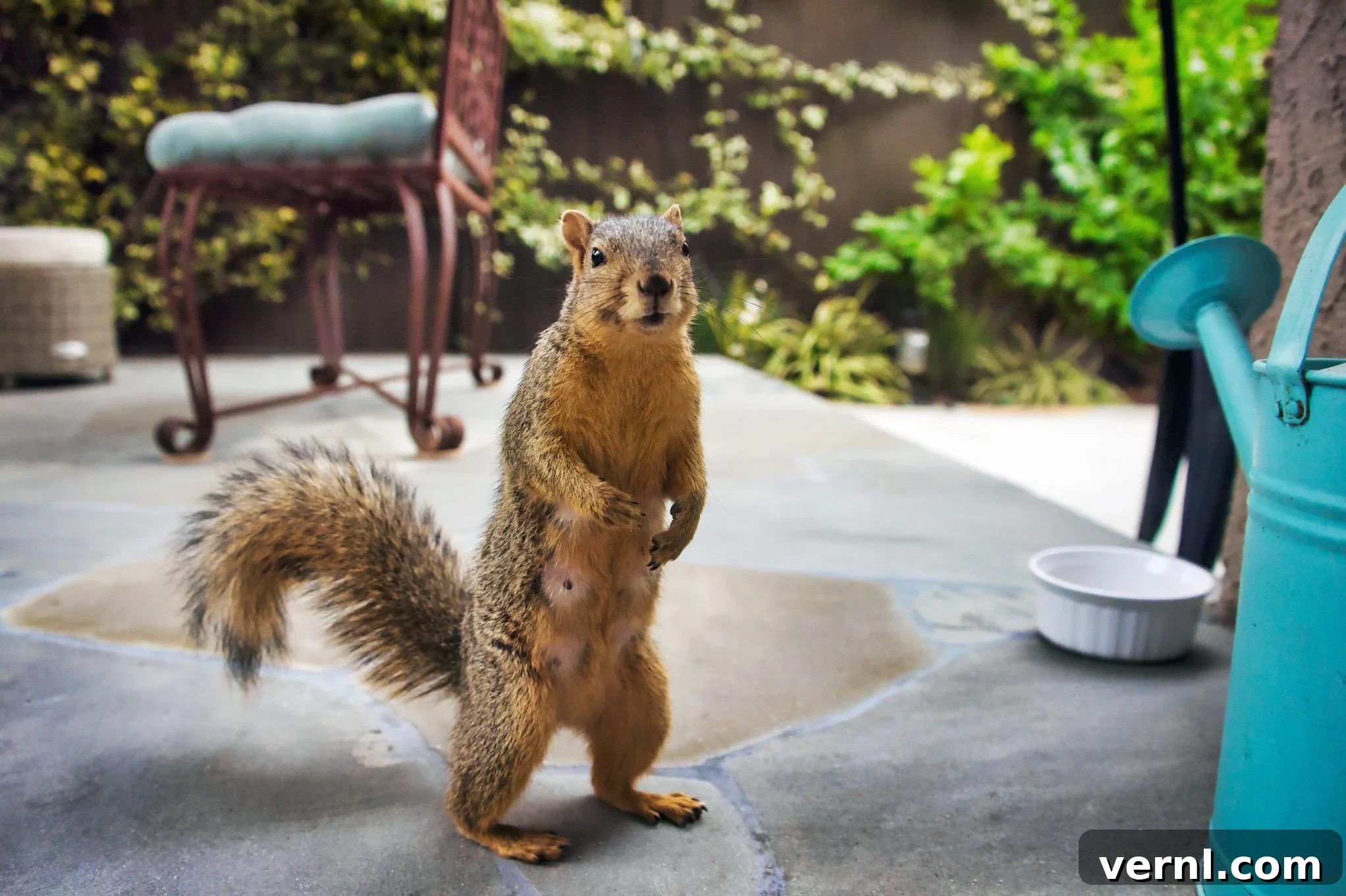
Comprehensive Guide to Managing Urban Squirrels: How to Deter and Protect Your Home & Garden
Today, it’s almost impossible to imagine a bustling city park or a quiet suburban backyard without the lively presence of squirrels. These bushy-tailed creatures have become an integral part of our urban and semi-urban landscapes. However, this wasn’t always the case. Before the mid-1800s, wild squirrels were notably absent from U.S. cities, thriving instead in natural woodlands and forests. Their introduction to urban environments was a deliberate effort, primarily driven by a 19th-century desire to beautify and “civilize” the nation’s rapidly industrializing centers. Visionary mayors and urban planners, particularly in cities like New York and Philadelphia, began introducing squirrels into newly established town squares and parks, aiming to bring a touch of nature and charm to concrete jungles.
These early city dwellers required significant assistance; natural food sources like mature nut-bearing trees were scarce in nascent urban parks. Consequently, city officials and well-meaning citizens often had to provide sustenance for the initial squirrel populations. Once these populations became established and started reproducing, however, there was no stopping their proliferation. Their adaptability, intelligence, and prolific breeding rates quickly turned them into one of the most ubiquitous urban animals imaginable.
While their playful antics can be charming, the pervasive presence of squirrels comes with a downside for many homeowners and gardeners. If you find yourself lamenting the day those first squirrels were released into urban parks, you are certainly not alone. Squirrels are notorious for the damage they inflict: they devastate meticulously cultivated gardens, raid bird feeders, torment pets (especially dogs with their relentless chasing), and can even cause significant property damage. Annually, these persistent pests are responsible for millions of dollars in damages due to electrical fires caused by gnawing on wires, not to mention structural damage to homes and outbuildings. If you’re tired of battling these furry adversaries, this comprehensive guide offers practical and humane ways of deterring squirrels and effectively keeping them out of your yard and home.
Are Squirrels Rodents? Understanding Their Classification
Yes, indeed. The answer might surprise some, but those seemingly cute, chattering squirrels belong to the scientific order Rodentia. This places them in the same family as some of the less adored creatures we often encounter, such as mice, rats, and even porcupines. Rodents constitute an astonishing 40 percent of all known mammal species, making them the largest order of mammals on Earth. Despite their diverse appearances, all rodents share one fundamental biological characteristic: a pair of continuously growing incisors (front teeth) in both their upper and lower jaws. To prevent these teeth from growing too long and becoming unusable, rodents must constantly gnaw on various materials. This incessant gnawing, while essential for their dental health, is precisely what makes squirrels, like their rodent cousins, so destructive to property and gardens.
What Attracts Squirrels to Your Property?
Squirrels are primarily driven by two fundamental needs when seeking a suitable habitat: readily available food sources and secure shelter. If your property inadvertently provides these essentials, squirrels will undoubtedly find it an attractive place to frequent. Understanding what draws them in is the first step toward effective deterrence.
Trees are a double-edged sword when it comes to squirrels. They provide both essential sustenance in the form of nuts, seeds, and fruits, and ideal nesting spots in their branches and hollows. Consequently, if your yard boasts mature trees, especially oak, pecan, walnut, or fruit trees, you can expect squirrels to be regular visitors, if not permanent residents.
Beyond natural tree resources, several other man-made elements commonly found in residential areas act as irresistible magnets for squirrels:
- Bird Feeders: These are essentially all-you-can-eat buffets for squirrels, offering high-energy seeds and nuts.
- Unsecured Trash Cans: Leftover food scraps, discarded fruit, and even pet food in open or poorly sealed trash cans are a major draw.
- Vegetable Gardens & Fruit Trees: A gardener’s pride can quickly become a squirrel’s pantry. Fresh vegetables, ripe fruits, and even newly planted bulbs are prime targets.
- Pet Food Bowls: Outdoor pet food left unattended is an easy meal for opportunistic squirrels.
- Water Sources: While not listed in the original, access to water (pet bowls, bird baths, leaky faucets) is also attractive, especially in dry periods.
- Potential Shelter: Beyond trees, squirrels are opportunistic nesters and will seek shelter in attics, sheds, garages, and even wall voids if access points are available.
Undeniable Signs of Squirrel Infestation
Squirrels are not only persistent but also incredibly destructive. Their foraging habits mean that your lovingly planted garden, fruit trees, and even structural elements of your home are potential targets in their relentless search for food and nesting materials. They have no regard for your horticultural efforts, viewing a patch of newly planted vegetables simply as a promising spot to bury or unearth a hidden nut. Recognizing the signs of their presence early can help you take action before extensive damage occurs. Here are the tell-tale indications that you’ve got squirrels making themselves at home:
- Small Holes Dug in Pots and Gardens: This is one of the most common and frustrating signs. You’ll find numerous small, shallow holes, often the size of a golf ball or slightly larger, dug into garden beds, potted plants, and lawns. These excavations are typically the result of squirrels burying or retrieving nuts and seeds. Often, plants will be uprooted or flung around in the process, leaving your meticulously arranged flora in disarray.
- Half-Eaten Vegetables and Missing Flowers: A sure sign of squirrel activity is discovering partially consumed fruits and vegetables in your garden. Tomatoes, squash, corn, berries, and even the tender leaves of various plants can fall victim. They might also pull up and nibble on flower bulbs or consume entire blossoms, leaving behind tell-tale tooth marks.
- Bark Chewed Off Trees, Sometimes in a Circular Pattern (Girdling): Squirrels gnaw on tree bark for several reasons: to sharpen their teeth, access the tree’s inner cambium layer for moisture and nutrients, or collect nesting material. When they chew a complete ring around the circumference of a tree trunk or branch, it’s called girdling. Girdling severs the pathways for water and nutrients, effectively killing the tree above the damaged section.
- Wrecked Bird Feeders with Seed Scattered Everywhere: If you have a bird feeder, it’s almost guaranteed to be a squirrel hotspot. Squirrels will climb, jump, and hang upside down to access the seeds, often scattering a significant portion on the ground below during their feeding frenzy. They might even chew through plastic or wood components of the feeder itself in their determination to reach the bounty.
- Scampering Sounds in Attics or Walls: If squirrels have found an entry point into your home, you’ll likely hear them. Sounds of scratching, scurrying, and gnawing, especially in the early morning or late afternoon, emanating from your attic, walls, or chimney, are strong indicators of an indoor infestation.
- Chewed Wires or Wood: As rodents, squirrels constantly need to gnaw. This can lead to significant damage to electrical wiring, wooden fascia boards, eaves, and even structural timbers within your home, posing fire hazards and costly repairs.
How To Keep Squirrels Out of Your Yard: Effective Deterrent Strategies
Squirrels are remarkably crafty, agile, and persistent creatures. Keeping them out of your yard and away from your prized plants requires not just effort, but consistent vigilance and often a multi-pronged approach. There’s no single “magic bullet” solution; instead, it’s an ongoing battle that demands your time and sustained interest. Here are several effective strategies to help you manage and deter squirrels from your property.
Install Fencing and Barriers
Standard wooden or chain-link fences offer little to no obstacle for determined squirrels, who can easily scamper over or through them. However, you can effectively protect specific vulnerable areas of your garden, such as raised beds or individual plants, by installing heavy-duty barriers. Chicken wire or hardware cloth are excellent choices for this purpose.
- Enclose Targeted Areas: For vegetable patches, berry bushes, or newly planted saplings, consider creating a complete enclosure using galvanized chicken wire or hardware cloth. This means boxing in the entire area, including the top, to prevent squirrels from climbing over or dropping in.
- Bury the Barrier: Squirrels are adept diggers. To prevent them from tunneling underneath your fence, bury the wire at least 6 to 12 inches deep into the ground, bending the bottom edge outwards in an “L” shape to create an underground apron.
- Consider Height and Gauge: The fence should be at least 30 inches tall, and ideally taller if you have agile jumpers. A smaller mesh size (1/2-inch or 1/4-inch hardware cloth) is more effective than larger chicken wire for keeping out smaller, more determined individuals.
- Include Access: Don’t forget to build in a secure door or access panel for your own convenience in tending to your garden!
Utilize Motion-Activated Sprinklers
Most animals, including squirrels, are startled and deterred by an unexpected blast of chilly water. This natural aversion can be effectively leveraged using motion-activated sprinkler systems. Devices like the Yard Enforcer from Orbit, for instance, easily hook up to a standard garden hose and offer adjustable coverage areas. When a critter trips the sensor, the Enforcer delivers a harmless but startling drenching, effectively teaching the squirrel that your yard is an unpleasant place to be.
However, it’s crucial to consider the caveats. These deterrents spray anything that triggers their sensors, which can include mail carriers, delivery personnel, curious pets, and even yourself. Strategic placement is key to avoiding unintended dousings. You may need several units to achieve optimum coverage for a larger yard without constantly soaking everyone who passes by. While effective, remember they require a water source and may not be ideal in areas with water restrictions or during freezing temperatures.
Employ Scare Tactics and Decoys
Squirrels are prey animals, and their instinctual fear of predators can be exploited as a deterrent. If you have a dog, their natural inclination to chase and harass squirrels is often one of the most effective, albeit sometimes noisy, deterrents. The mere presence and scent of a dog can keep many squirrels at bay. If that’s not quite enough, or if you don’t have a canine companion, consider introducing scare tactics.
- Predator Decoys: Realistic predator decoys, particularly those resembling owls or hawks (common squirrel predators), can be highly effective. The Bird-X Prowler Owl Decoy is an example of a moving decoy that can enhance realism. However, squirrels are intelligent; they will eventually discern that a stationary decoy poses no real threat. To maintain effectiveness, move the decoys around your property periodically, ideally every few days, to keep the illusion fresh.
- Reflective, Moving Objects: Squirrels also tend to avoid strange, unpredictable movements and sounds. Reflective, shimmering objects such as holographic pinwheels or reflective wildlife scare tape can be effective proponents. The flashes of light and the rustling sounds generated by the wind can make squirrels think twice about venturing into your garden. Place these items strategically near vulnerable plants or entry points to maximize their impact.
Pepper Your Plants with Natural Repellents
One of the most effective and natural deterrents leverages squirrels’ dislike for capsaicin, the chemical compound responsible for the heat in chili peppers. Sprinkling cayenne pepper around plants you wish to protect creates an unpleasant, irritating barrier that squirrels will generally avoid. For broader coverage, you can easily make a homemade hot-pepper spray by mixing cayenne pepper (or other hot pepper powders) with water and a drop of dish soap. Douse this solution around the perimeter of your yard, near trees, garden beds, and any other areas where squirrels frequently enter or cause trouble. It won’t harm your plants, and squirrels find the taste and smell incredibly off-putting.
This method is quite cost-effective; a ten-pound bag of bulk cayenne pepper might cost around $40 and last a long time. However, a key consideration is reapplication: you’ll need to reapply the pepper dust or spray after every rain shower or heavy watering, as its effectiveness will diminish. Furthermore, if you have young children or pets, exercise caution. Just like squirrels, humans and domestic animals can experience irritation from capsaicin, so ensure they don’t ingest or get the pepper in their eyes.
Eliminate or Modify Bird Feeders
Bird feeders are perhaps the biggest attractant for squirrels in any yard, often serving as a personal “charcuterie board” of high-energy seeds and nuts. If your primary goal is to completely keep squirrels out of your yard, the most decisive action is to remove bird feeders altogether. No feeder, no temptation.
However, if you’re not ready for such a drastic step and wish to continue feeding birds, there are ways to make your feeders less appealing to squirrels:
- Install Squirrel Baffles: A squirrel baffle is a dome or cone-shaped barrier placed either above or below the feeder to prevent squirrels from climbing up or down to reach the seeds. Ensure it’s wide enough and positioned correctly to prevent squirrels from leaping around it.
- Choose Squirrel-Unfriendly Seeds: While not foolproof, some bird seeds are less palatable to squirrels. Safflower seeds, for example, have a bitter taste that squirrels generally dislike, but many popular bird species (like cardinals, finches, and chickadees) will readily eat them.
- Strategic Placement: Hang feeders at least 8-10 feet away from any jump-off points, such as trees, fences, or your house, to make it harder for squirrels to leap onto them. Ensure they are high enough off the ground to prevent ground access.
- Invest in Squirrel-Proof Feeders: Many commercially available feeders are designed with weight-activated perches or cages that close off access to seeds when a heavier animal like a squirrel lands on them.
Remember, even with baffles and unpopular seeds, persistent critters might still come to your yard to try their luck with spilled seeds or other temptations. To truly remove the incentive for their presence, complete removal of the feeder remains the most effective strategy.
Plant Mint and Other Scent-Based Repellents
Squirrels, like many other animals, have a keen sense of smell and are often deterred by strong, pungent odors that they find unpleasant. Peppermint is a particular scent that squirrels tend to avoid. Planting mint around the perimeter of your property or strategically in garden beds can provide a natural, fragrant barrier that encourages squirrels to seek greener pastures.
A key characteristic of mint, however, is its vigorous and often invasive growth habit. If you’re concerned about mint taking over your garden, consider planting it in pots or containers. These can then be strategically placed near vulnerable plants, entry points to your garden, or around the foundation of your home. You can also use peppermint essential oil, diluted with water, as a spray around your garden, reapplying regularly. Other strong-scented plants like narcissus, hyacinths, and alliums are also often left undisturbed by squirrels, offering both beauty and a degree of deterrence.
Rake Your Yard and Practice Good Sanitation
Habitat modification and source reduction are crucial elements of squirrel control. Squirrels are constantly foraging for food, especially acorns, nuts, and fallen fruits on the ground. By diligently raking under your trees and fruit bushes daily to remove these readily available food sources, you effectively diminish your yard’s appeal, forcing squirrels to look elsewhere for sustenance. While this method significantly reduces the attractiveness of your property, it’s essential to maintain realistic expectations. If your property contains numerous mature trees, squirrels will likely still visit due to the overhead shelter and natural bounty, regardless of how meticulously clean you keep the ground.
Beyond raking, good overall yard sanitation is vital: secure all trash cans with tight-fitting lids, clean up spilled birdseed promptly, and ensure outdoor pet food is not left out for extended periods. Trim tree branches that extend within 6-8 feet of your house, as these can provide easy access points to your roof, attic, and other vulnerable areas of your home.
Build a Greenhouse for Ultimate Garden Protection
For gardeners seeking a more permanent and comprehensive solution to protect their precious plants from squirrels and other pests, building a greenhouse offers an exceptional advantage over temporary measures like chicken wire fencing. A greenhouse provides a fully enclosed, controlled environment that effectively excludes squirrels, groundhogs, deer, and other garden invaders. This approach offers a significant win-win for passionate gardeners.
Beyond pest control, greenhouses extend your growing season, allowing you to cultivate tender plants earlier in spring and later into fall, and even grow certain crops year-round. If you possess a green thumb and some DIY ability, constructing a small or medium-sized greenhouse can be a rewarding project that offers a beautiful, permanent, and highly effective barrier, ensuring squirrels can’t munch on your carefully nurtured garden plants. It’s an investment that pays off not only in pest protection but also in enhanced growing capabilities and garden aesthetics.
Ultimately, managing urban squirrels requires a combination of understanding their behaviors, implementing multiple deterrents, and maintaining consistent effort. By adopting these strategies, you can reclaim your yard and garden from these persistent, bushy-tailed residents.