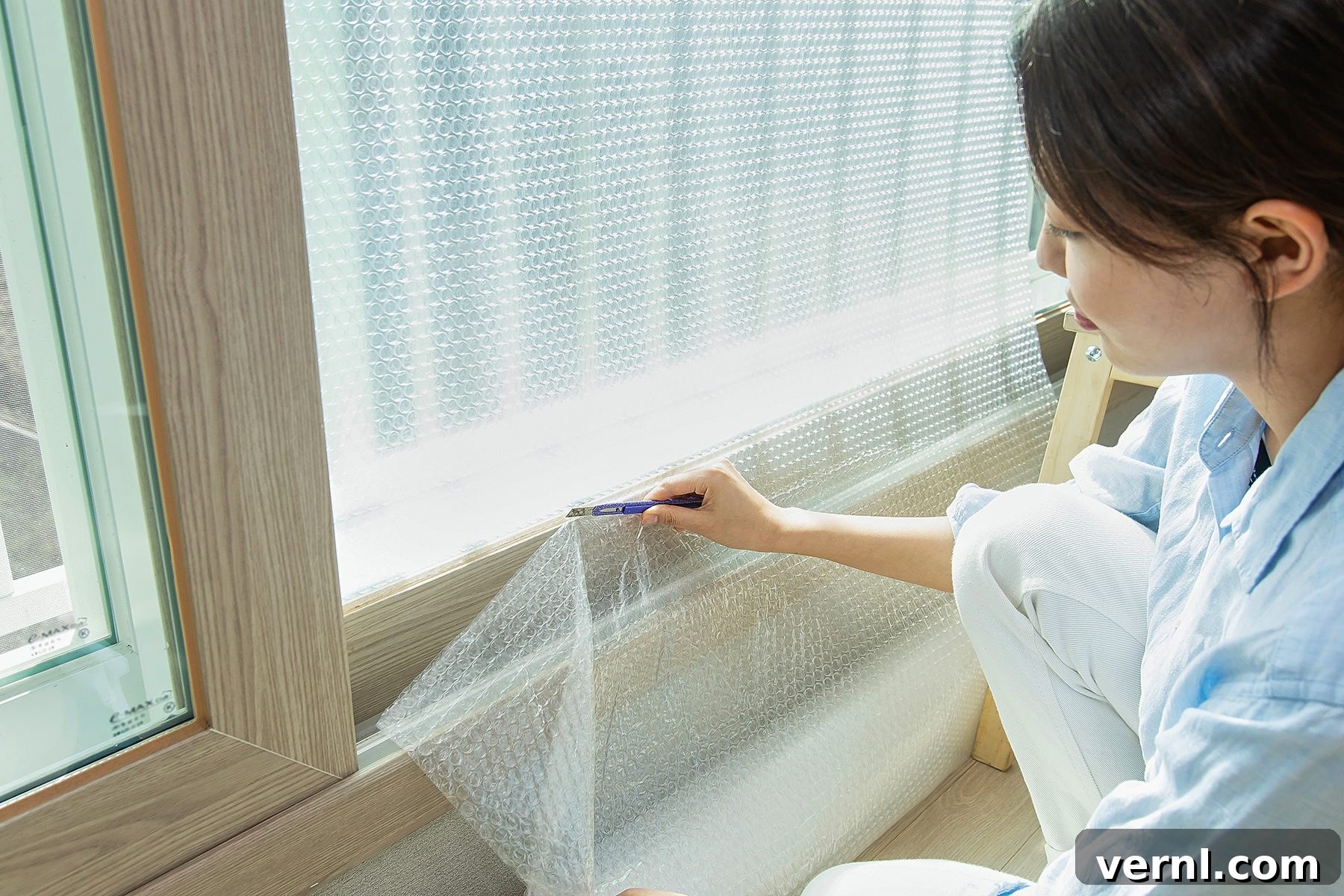
For many homeowners, especially those with older properties or single-pane windows, the struggle with maintaining comfortable indoor temperatures is a year-round challenge. Our windows, while offering views and natural light, are often significant weak points when it comes to energy efficiency, allowing cold air to seep in during winter and precious cooled air to escape in summer. This energy drain not only compromises comfort but also leads to inflated utility bills. In the quest for affordable and effective solutions, a peculiar yet popular DIY hack has emerged: using bubble wrap for window insulation.
This innovative approach has gained traction in various online communities, with many people, like this Reddit user, sharing their experiences and endorsing its simplicity and affordability. One commenter on the Reddit thread enthusiastically noted, “This is what they do in Korea. It doesn’t look great (and it’s not fun not having a window to look through), but it definitely keeps some heat in!”
On the surface, it seems like a remarkably straightforward and frugal answer to a persistent problem. But beyond the anecdotal evidence and initial appeal, a crucial question remains: Does bubble wrap actually work as a reliable form of window insulation? We delve deep into the mechanics, expert opinions, and real-world results to uncover the truth behind this popular energy-saving hack.
The Bubble Wrap Window Insulation Hack: A Simple Solution
The appeal of the bubble wrap insulation hack lies in its extreme simplicity and accessibility. There’s no need for specialized tools or extensive DIY experience. The concept is straightforward: transform ordinary packing material into a thermal barrier for your windows.
The basic steps are incredibly easy to follow. First, measure your window pane and cut a piece of bubble wrap to size. For optimal results, ensure the bubble wrap covers as much of the glass surface as possible. Next, prepare the window surface by cleaning it thoroughly to remove any dust or grime, which could prevent adhesion. The most common method for application involves lightly spraying the window glass with water – a simple mist will suffice. Then, press the bubble wrap onto the wet glass, ensuring the bubbly side faces the glass itself. The surface tension of the water helps the bubble wrap adhere to the window, creating a temporary bond without the need for adhesives that could damage your window frames. For an even more secure hold, especially in high-traffic areas or on windows that might be frequently opened, clear packing tape can be used around the edges, though this may leave residue upon removal.
When selecting your bubble wrap, experts at Glass Doctor recommend opting for bubble wrap with larger bubbles and minimal space between them. The larger air pockets trapped within the bubbles are key to its insulating properties, as still air is a poor conductor of heat.
Beyond its primary function as an insulator, bubble wrap offers a few additional benefits. It diffuses incoming sunlight, creating a softer, more pleasant ambient light within the room, which can be particularly nice on bright, glary days. Moreover, it naturally obscures the view through the window, providing an instant boost in privacy, a welcome bonus for ground-floor rooms or overlooked windows. The main drawback, of course, is that while it lets light through, it significantly hinders clear visibility through the window, meaning you trade a view for insulation and privacy.
Does Bubble Wrap Really Insulate Windows? A Closer Look at the Science
The theoretical basis for bubble wrap as an insulator is sound. Insulation works by trapping air, which is a poor conductor of heat. The small pockets of air encapsulated within the bubble wrap are designed to slow down the transfer of heat (or cold) through the window glass. Adding this layer of trapped air should, in principle, enhance the thermal resistance of your windows.
Indeed, several sources suggest positive results. According to research cited by How To Go Solar, utilizing bubble wrap for window insulation can significantly improve window efficiency. Their findings indicate an impressive 50% or more improvement for single-glazed windows and a notable increase of up to 20% for double-glazed windows. These figures suggest that the impact is more pronounced on less efficient window types, where the existing thermal barrier is minimal. Similarly, Build It Solar also documented promising results in their evaluations of bubble wrap’s performance as a temporary insulation solution. The science points towards a definite potential for improved thermal performance.
Expert Skepticism: The Airtight Seal Conundrum
Despite the theoretical backing and positive anecdotal reports, not all experts are convinced of bubble wrap’s efficacy as a robust insulation solution. Randy Huckstadt, an HVAC Expert with JustAnswer.com, voices significant concerns regarding this hack. His primary contention revolves around the issue of an airtight seal. “The problem with this whole concept is that it is not an airtight seal. Therefore, any air or any temperature making it through the window makes it right around the bubble wrap,” he explains.
Huckstadt’s point is critical because true insulation performance relies heavily on preventing air infiltration and convection. If warm or cold air can simply bypass the bubble wrap by circulating around its edges, its insulating effect is severely diminished. While the bubble wrap itself might slow heat transfer through the glass, it does little to stop drafts or air leakage around the window frame, which are often major culprits for energy loss.
Furthermore, Huckstadt highlights another potential risk, especially pertinent during colder months: the application method. When temperatures outside drop below freezing, spraying water directly onto cold glass, particularly on older or single-pane windows, carries the risk of cracking the glass. He cautions, “because folks are typically doing this because they have poorly rated or single-pane windows,” these windows are inherently more vulnerable to thermal shock caused by sudden temperature changes. This adds a layer of risk that DIY enthusiasts should carefully consider before attempting the hack in extreme cold.
Real-World Experiences and Cultural Adoption
Despite expert skepticism regarding its long-term, comprehensive performance, many individuals globally swear by the bubble wrap trick. It’s not just a fleeting online trend; it’s a deeply embedded practice in some cultures. For instance, in Korea, applying bubble wrap to windows, known locally as ‘air cap,’ is a common winterizing strategy. The Institute for Basic Science in Korea explicitly states on its website: “If you want to make your home warmer in winter, you can cover panes of glass with bubble wrap [which] can be applied to glass if you first make the glass moist with water.” They even advocate for sustainability, recommending the repurposing of bubble wrap from moving or delivery packages.
Testimonials from online communities further bolster the case for its perceived effectiveness. In the same Reddit thread mentioned earlier, numerous users chimed in with their success stories. One user shared, “We do this on some of our windows every year. They are single pane. It definitely helps. You can feel the difference once they’re up. If we’re having guests over we could easily take it down for the day.” This comment highlights the hack’s user-friendliness and temporary nature, making it an appealing option for those who need a quick, reversible solution. The “feeling the difference” is a powerful testament to its impact on immediate comfort, even if it doesn’t meet the stringent standards of professional insulation.
Our Thermal Imaging Test: Putting Bubble Wrap to the Test
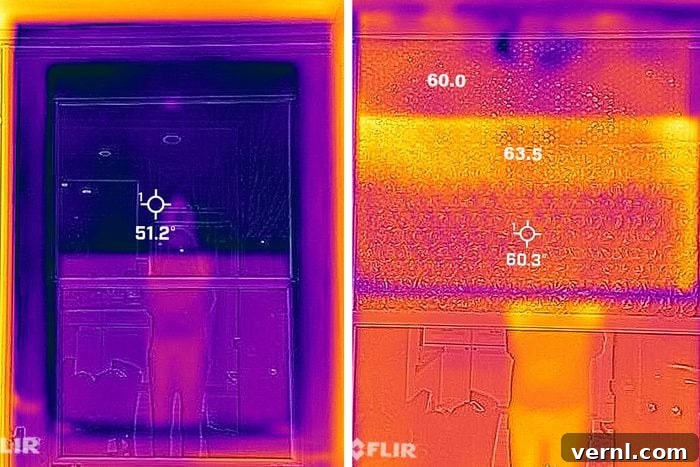
To move beyond anecdotes and theoretical discussions, we conducted a practical, albeit non-scientific, investigation into the effectiveness of bubble wrap. Utilizing a Flir One Edge Pro thermal imaging device coupled with a smartphone, we observed temperature differences on a window under various bubble wrap configurations. Our goal was to visually and quantitatively assess if bubble wrap indeed made a perceptible difference in surface temperature, which directly correlates with heat loss or gain.
The results, even from our rapid trial, presented clear evidence that bubble wrap does influence window surface temperatures:
- The glass on the window with no bubble wrap registered a temperature of 51.2 degrees F. This served as our baseline, representing the uninsulated state.
- When a layer of bubble wrap with large bubbles was applied, the temperature of the glass increased to 60.3 degrees F. This represents a significant improvement of over 9 degrees Fahrenheit, indicating reduced heat transfer.
- Applying bubble wrap with small bubbles yielded a very similar result, with the temperature reaching 60.0 degrees F. This suggests that while bubble size might have a slight influence, both types offer comparable benefits.
- For the most pronounced effect, we applied both layers combined (large and small bubble wrap), and the glass temperature climbed to 63.5 degrees F. This cumulative effect demonstrates that multiple layers or thicker applications can further enhance the insulating properties.
These findings suggest that bubble wrap does make a tangible difference in the surface temperature of window panes. While a non-scientific test, the consistent increase in temperature across different bubble wrap configurations strongly indicates that the trapped air layers are indeed reducing thermal transfer. This translates to a warmer interior surface during cold weather, which can contribute to increased comfort and potentially lower heating costs, validating many of the positive user experiences.
Beyond Bubble Wrap: Effective Window Insulation Alternatives
While bubble wrap offers a cheap and easy temporary fix, it’s not the only solution for improving window insulation. For those seeking more robust or permanent improvements to their home’s energy efficiency, several alternatives are worth considering. These options often provide superior thermal performance, though they may require a greater initial investment or more effort to install.
Window Insulation Kits
One of the most popular and relatively affordable alternatives is a window insulation kit, widely available at hardware stores and building centers. These kits typically consist of a clear plastic film that shrinks taut when heated with a hairdryer, creating an invisible, insulating air pocket between the film and the window pane. Many kits also come with an R-value rating, indicating their thermal resistance. They are particularly effective because they create a sealed air space, addressing the air leakage concern often associated with bubble wrap. Here’s how to install them.
Weatherstripping and Caulk
Before considering any internal solutions, it’s crucial to address the foundational elements of window sealing. Inspecting and maintaining your existing weatherstripping and caulk is paramount. Weatherstripping, found around the operable parts of a window, prevents air from leaking through cracks when the window is closed. Over time, it can dry out, crack, or become compressed, losing its effectiveness. Replacing old or damaged weatherstripping is an inexpensive yet highly effective way to eliminate drafts. Similarly, caulk applied around the exterior and interior frames of your windows seals gaps between the frame and the wall, preventing air and moisture infiltration. Regularly checking for cracks or deterioration in caulk and re-applying as needed can drastically reduce heat loss or gain. These solutions are fundamental because even the best insulation will underperform if air is freely entering or escaping around the window frame.
Interior Storm Windows
For a more permanent and significantly more effective solution, interior storm windows are an excellent investment. These are essentially secondary window panes installed on the inside of your existing windows. They create an additional sealed air pocket, offering superior insulation compared to films or bubble wrap, without altering the exterior aesthetics of your home. While more expensive upfront, interior storm windows can last for decades, providing substantial long-term energy savings and improved comfort. They are custom-fitted and offer a much higher level of thermal resistance and noise reduction.
Whatever method you choose, remember a fundamental principle of effective insulation: it will be far more effective if it creates an airtight seal around the window. Preventing air infiltration is just as important, if not more important, than simply adding a thermal barrier to the glass itself.
Why Prioritize Window Insulation?
Investing time and effort into improving your window insulation, whether with a DIY hack or a professional solution, offers a multitude of benefits that extend beyond simply keeping warm in winter or cool in summer.
- Significant Energy Savings: Windows are notorious for being one of the largest sources of energy loss in a home. By effectively insulating them, you reduce the demand on your heating and cooling systems, leading directly to lower utility bills year-round. Over time, these savings can be substantial.
- Enhanced Indoor Comfort: Drafty windows create uncomfortable cold spots in rooms, forcing your HVAC system to work harder to compensate. Proper insulation eliminates these drafts and helps maintain a more consistent, comfortable temperature throughout your living space, reducing the need for blankets indoors or cranking up the thermostat.
- Reduced Noise Pollution: An often-overlooked benefit of improved window insulation, especially with solutions like interior storm windows or thicker films, is its ability to dampen external noise. This creates a quieter and more peaceful indoor environment, a significant advantage in urban or high-traffic areas.
- Environmental Impact: By consuming less energy for heating and cooling, your household’s carbon footprint decreases. This contributes to broader environmental conservation efforts and supports a more sustainable lifestyle.
- Protection from UV Rays: Some insulation films can also block harmful UV rays, which helps prevent fading of furniture, carpets, and artwork caused by sun exposure.
Prioritizing window insulation is a smart move for any homeowner looking to improve their living environment, save money, and contribute to a healthier planet.
Conclusion: Making an Informed Choice
The bubble wrap window insulation hack, despite its simplicity and budget-friendly nature, offers a fascinating case study in DIY energy efficiency. Our investigation, drawing on scientific theory, expert opinions, anecdotal evidence, and practical thermal imaging tests, reveals a nuanced picture.
In theory, the trapped air within bubble wrap certainly provides an insulating layer, and our thermal test unequivocally showed a noticeable increase in glass surface temperature, suggesting reduced heat transfer. For single-pane windows in particular, the improvement can be quite significant, making a perceptible difference in indoor comfort and potentially trimming energy costs. Its ease of application, low cost, and temporary nature make it an appealing solution for renters or those needing a quick fix during harsh weather conditions. The widespread adoption in places like Korea further solidifies its practical utility.
However, it’s crucial to acknowledge the limitations highlighted by HVAC experts. The primary concern remains the lack of an airtight seal, which means drafts and air leakage around the window frame can still negate some of the benefits. It’s a localized solution for the glass pane itself, not a comprehensive window sealing strategy. Furthermore, the aesthetic compromise and reduced visibility are trade-offs that homeowners must consider.
Ultimately, bubble wrap serves as an effective, low-cost, temporary measure to improve the thermal performance of windows, especially those that are highly inefficient. It’s a viable option for immediate comfort and minor energy savings. For those seeking more substantial, long-term, and comprehensive solutions, investing in window insulation kits, ensuring proper weatherstripping and caulking, or considering interior storm windows will yield superior results in terms of energy efficiency, comfort, and aesthetic integration. The best approach often involves a combination of these methods, starting with sealing obvious drafts and then adding layers of insulation where needed.
About the Expert
- Randy Huckstadt is an HVAC expert with JustAnswer.com and is an authorized mechanic for Haward Service and Warranty Center, bringing extensive practical experience to his insights on home climate control.
Sources
- The Korean Institute for Basic Science, “Living in Korea.”
- The Glass Doctor, “DIY Project Insulate Your Windows with Bubble Wrap.”
- How to Go Solar, “The Truth about Bubble Wrap Window Insulation,” October 13, 2022.
- Build it Solar, blog from Oct. 24, 2005.