
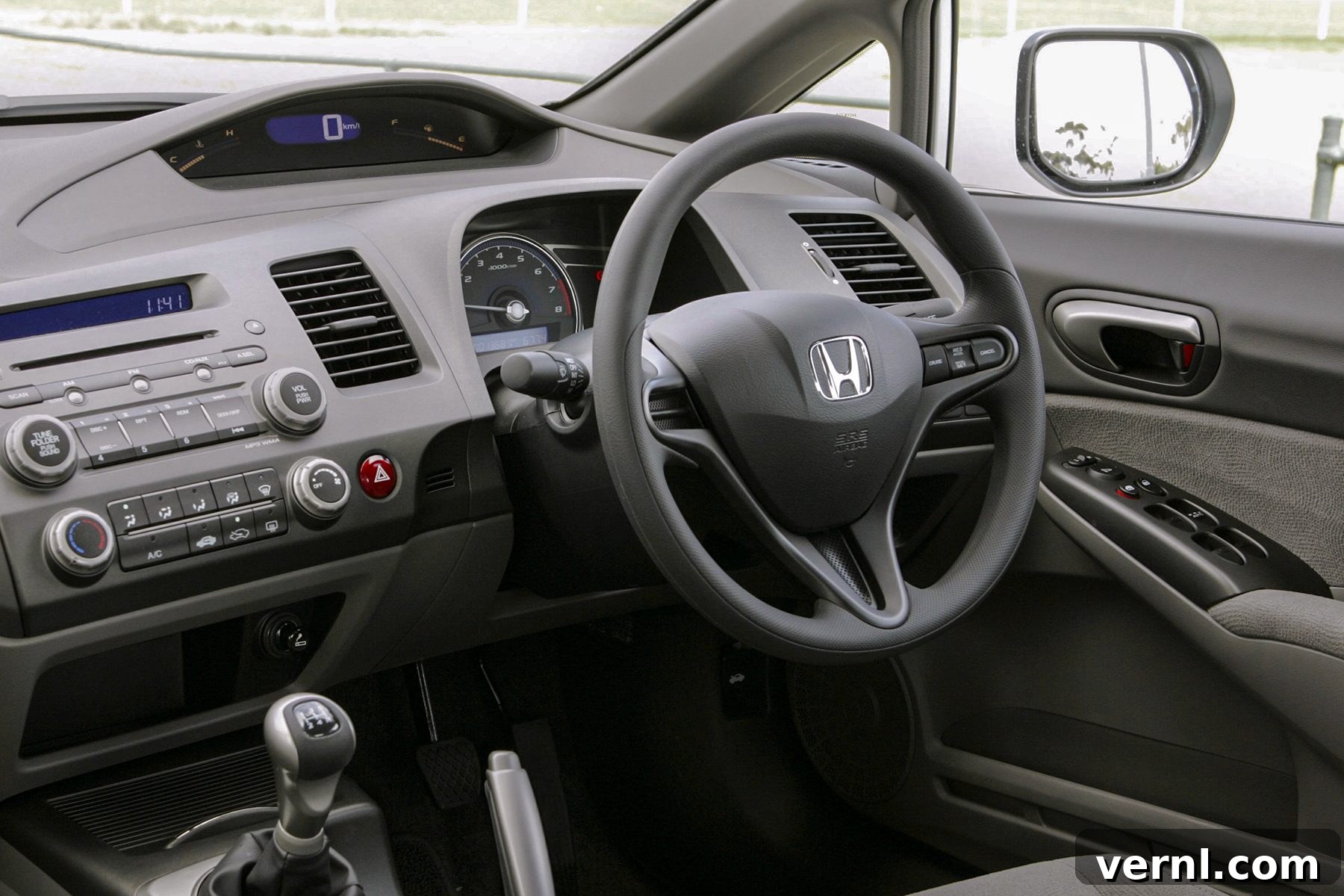
For many drivers, a vehicle represents freedom, reliability, and above all, safety. However, a recent announcement from Honda Motors has placed a spotlight on a critical safety concern, prompting a massive recall that could affect nearly 1.7 million vehicles across the United States. If you’ve purchased a new Honda or Acura model between 2021 and the present, it’s crucial to pay close attention, as your vehicle might be among those impacted by a steering issue that poses a significant risk to driver and passenger safety.
On October 3, the National Highway Traffic Safety Administration (NHTSA) officially announced the extensive recall. The core of the problem lies within the steering system itself, specifically a manufacturing defect that could lead to an abnormal sensation or even a momentary “sticking” feeling when turning the steering wheel. Imagine navigating a sharp curve or making an emergency maneuver only to feel your steering wheel resist or briefly lock up—this alarming scenario is precisely what Honda aims to prevent with this proactive measure. This article provides a comprehensive guide for affected owners, detailing the models involved, the underlying cause of the defect, and the essential steps you must take to ensure your safety and the integrity of your vehicle.
Affected Vehicles: Is Your Honda or Acura Model Part of the Recall?
Understanding whether your specific vehicle falls under this recall is the first and most critical step. Honda’s recall encompasses a wide range of popular models from recent years, indicating a potentially broad manufacturing issue that crossed several product lines. Owners of these vehicles should remain vigilant and proactively check their vehicle identification number (VIN) against official recall databases.
The following Honda and Acura models are specifically named in the extensive recall list:
- 2023-2025 Acura Integra: This sleek, performance-oriented sedan, cherished for its blend of luxury and sportiness, is included in the recall.
- 2024-2025 Acura Integra Type S: The high-performance variant of the Integra, known for its exhilarating driving dynamics, is also affected.
- 2022-2025 Honda Civic Sedan: One of Honda’s most iconic and best-selling models, the Civic Sedan, is widely impacted across several model years.
- 2025 Honda Civic Hybrid Sedan: The environmentally conscious hybrid version of the Civic Sedan also faces the steering gearbox issue.
- 2022-2025 Honda Civic Hatchback: The versatile and popular Civic Hatchback models from recent years are part of the recall.
- 2025 Honda Civic Hybrid Hatchback: The hybrid variant of the Civic Hatchback is similarly affected.
- 2023-2025 Honda Civic Type R: Enthusiasts driving the high-performance Civic Type R, celebrated for its track capabilities, must also check their vehicles.
- 2023-2025 Honda CR-V: Honda’s immensely popular compact SUV, the CR-V, known for its family-friendly utility, is widely included.
- 2023-2025 Honda CR-V Hybrid: The efficient hybrid version of the CR-V is also a part of this recall.
- 2025 Honda CR-V Fuel Cell: Even the innovative fuel cell variant of the CR-V is listed.
- 2023-2025 Honda HR-V: The subcompact HR-V SUV, a popular choice for urban drivers and small families, is also among the recalled vehicles.
Honda is committed to notifying all affected owners directly. Official owner notification letters are scheduled to be dispatched by November 18. These letters will contain crucial information specific to your vehicle and guidance on how to proceed. However, waiting for a letter is not the only option; proactive owners can and should verify their vehicle’s status immediately through the NHTSA website using their VIN.
Understanding the Risk: Why Are These Honda Vehicles Being Recalled?
The core reason behind this extensive recall points to a critical manufacturing flaw within the steering gearbox assembly. In normal operation, the steering gearbox translates the rotational motion of your steering wheel into the lateral motion of your wheels, allowing you to control the direction of your vehicle smoothly and precisely. This intricate system relies on components like the worm gear and its spring to function without hitches.
However, in the recalled Honda and Acura vehicles, there are concerns that the steering gearbox assembly may have been manufactured with incorrect specifications or improper internal alignment. This defect can lead to excessive internal friction within the gearbox. When friction becomes abnormally high, it creates resistance that should not be present in a healthy steering system.
Potential Symptoms and Safety Implications of a Faulty Steering Gearbox:
- Abnormal Noise: Drivers might notice unusual sounds, such as grinding, clunking, or squeaking, emanating from the steering column or under the hood, especially when turning the wheel.
- Momentary “Sticky” Feeling: The most significant symptom is a sensation of the steering wheel momentarily sticking or binding when turned. This isn’t just an inconvenience; it can mean a delay or difficulty in accurately controlling the vehicle’s direction, particularly at critical moments.
- Increased Steering Effort: You might find that it takes more physical effort than usual to turn the steering wheel, indicating internal resistance.
- Loss of Steering Responsiveness: The vehicle may not respond as precisely or immediately to steering inputs as it should, leading to a feeling of loose or disconnected steering.
The potential consequences of such a steering defect are severe. A driver encountering a “sticky” steering wheel could struggle to maintain control of the vehicle, particularly during high-speed maneuvers, sudden lane changes, or emergency braking situations. This increases the risk of losing control, veering off course, or colliding with other vehicles or obstacles. For Honda, a company built on a reputation for quality and safety, addressing this issue promptly and effectively is paramount to protecting its customers and maintaining public trust. The NHTSA’s involvement underscores the serious nature of this defect and the potential for grave outcomes if left unaddressed.
Immediate Steps and Repair Process: What Should I Do If I Have a Recalled Honda Vehicle?
If you own one of the Honda or Acura models listed in this recall, taking immediate action is crucial for your safety and the safety of everyone on the road. Do not ignore a recall notice or any unusual steering symptoms you might experience. Promptly addressing this issue will prevent potential accidents and ensure your vehicle operates as intended.
Here’s a breakdown of the essential steps you should take:
- Verify Your Vehicle’s Status: Even if you haven’t received a letter by the specified date, or if you simply want to be certain, you can easily verify if your specific vehicle is part of the recall. Visit the official NHTSA recall website and enter your 17-digit Vehicle Identification Number (VIN). This is the most accurate way to confirm your vehicle’s recall status. You can typically find your VIN on your dashboard (visible through the windshield) or on a sticker inside your driver’s side door jamb.
- Contact Your Local Honda or Acura Dealer: Once confirmed, the next step is to contact your preferred authorized Honda or Acura dealership. Schedule an appointment for the recall repair. It’s advisable to call ahead to discuss parts availability and repair timelines, as dealerships may experience high demand.
- Understand the Repair: According to the NHTSA and Honda, the necessary repair involves two key actions. Technicians will “replace the worm gear spring and redistribute or add grease as necessary.” The worm gear spring is a vital component within the steering gearbox that helps ensure smooth operation. Replacing it and ensuring proper lubrication (grease redistribution or addition) directly addresses the excessive internal friction causing the “sticky” steering sensation.
- The Repair is Free of Charge: It is critical to remember that all recall-related repairs, including parts and labor, will be performed entirely free of charge to the owner. Vehicle manufacturers are legally obligated to cover the costs associated with safety recalls. Do not agree to pay for this repair.
- Safety Precautions Until Repair: While awaiting your appointment, exercise extreme caution when driving. If you experience any of the symptoms mentioned earlier (abnormal noise, sticky steering, increased effort), drive cautiously and consider limiting your driving until the repair is completed. Report any immediate, severe steering issues to your dealership or a trusted mechanic immediately.
Further Assistance and Contact Information
If you have any lingering questions or require further clarification regarding this specific recall, Honda Customer Service is available to assist you. You can reach them directly at 1-888-234-2138. Additionally, the NHTSA website remains a vital resource for all recall-related information and to check for other potential safety campaigns affecting your vehicle.
Prioritizing this recall repair is not merely a recommendation; it’s a responsibility every vehicle owner has for their own safety and the safety of others sharing the road. By acting promptly, you ensure your Honda or Acura returns to its intended state of reliability and safety.
Source
For detailed official information regarding this recall, please refer to:
NHTSA.gov: “Difficulty Steering from Steering Gearbox Damage” (2024)