
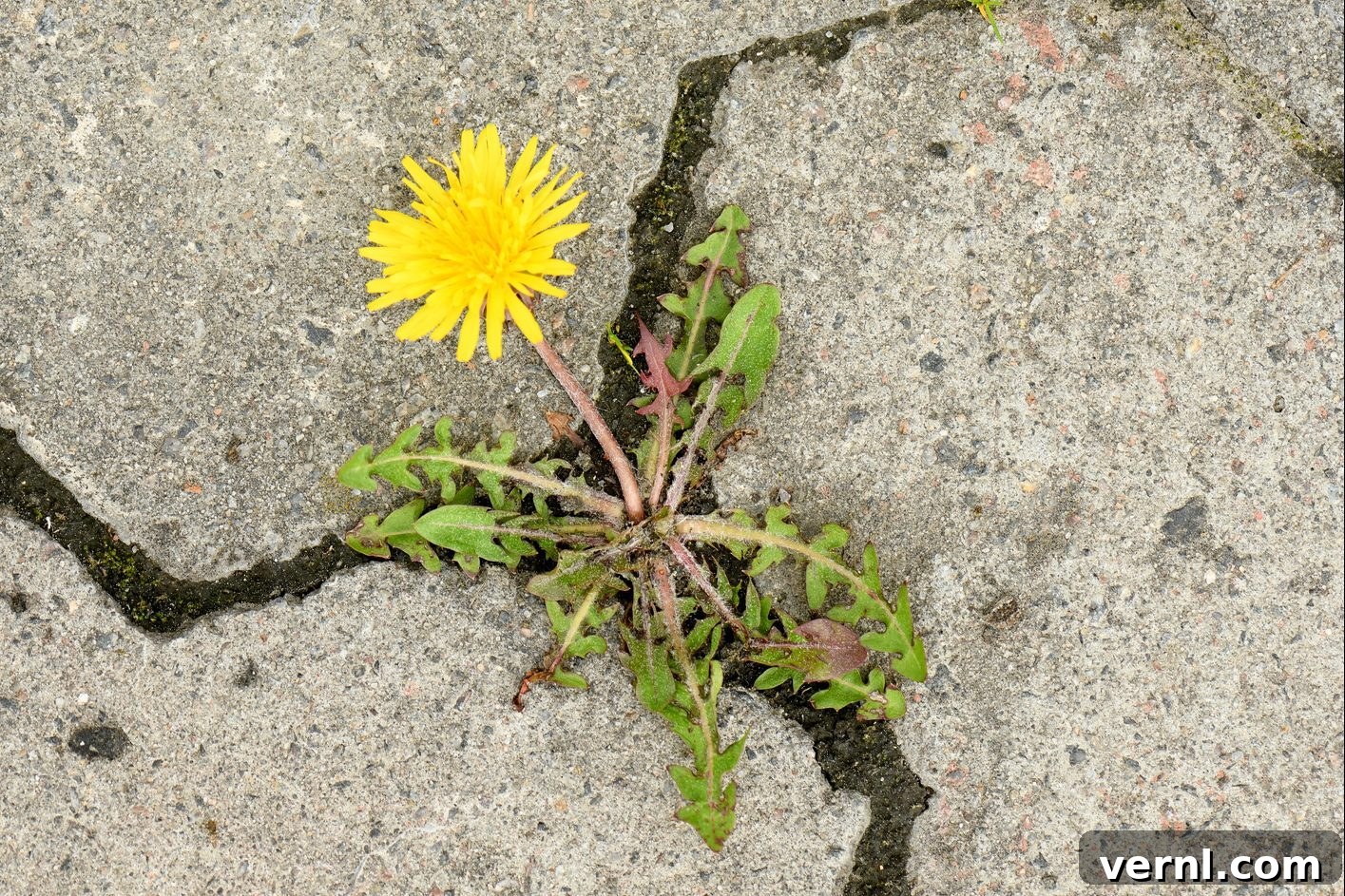
Every homeowner and gardener understands the relentless battle against weeds. These unwelcome invaders can quickly overrun a pristine garden, emerge between the neat rows of a vegetable patch, or stubbornly sprout from the smallest cracks in your paved surfaces. The frustration is universal, leading many to search for that elusive, magical solution – something easy, effective, and preferably natural to eliminate weeds and prevent their stubborn return. Weeds are particularly challenging when they take root in the seemingly impenetrable spaces between cracks in driveways, patios, and sidewalks, where conventional gardening tools struggle to reach.
In our modern age, the internet often serves as the first port of call for such dilemmas, promising a wealth of DIY solutions. One highly popular suggestion frequently encountered online is the use of a simple, homemade concoction: grab a jug of ordinary white vinegar from under your kitchen sink, mix it with a little dish soap and salt, pour the mixture into a spray bottle, and then simply spritz away your weed worries. The appeal is undeniable – a common household item, seemingly eco-friendly, and a quick fix. But is this vinegar-based remedy truly the easy, effective, and magical answer for weed control that everyone is desperately seeking, or is it merely another garden myth?
Does Household Vinegar Really Kill Weeds Effectively?
A quick search online will indeed yield countless recipes for creating your own vinegar-based organic weed killer. The vast majority of these DIY formulas typically feature white vinegar, which usually contains about five percent acetic acid, alongside common table salt and liquid dish soap as the primary ingredients. The instructions are straightforward: combine these components, transfer the solution to a sprayer, and then apply it generously to your weeds. For best results, most guides recommend spraying on a bright, sunny day when the plant’s foliage is dry. Many users report the initial satisfaction of watching the sprayed weeds quickly turn brown and appear to die off within hours.
This rapid browning effect often leads people to believe that the problem is solved, and their weed woes are over. However, this is where the popular perception diverges from reality. The truth is, the household vinegar that most of us readily have on hand is simply too weak to deliver a lasting blow to most weeds, even if applied repeatedly. While it may indeed cause the foliage to wither and brown on the surface, its five percent acetic acid concentration is generally insufficient to penetrate deep enough to kill the weed’s root system. The inclusion of salt in the mixture does act as a desiccant, drawing moisture out of the leaves and accelerating the browning, but it too rarely reaches the critical underground parts of the plant.
The core issue lies in vinegar’s mode of action. It operates as a contact herbicide, meaning it only affects the parts of the plant it directly touches. For annual weeds, which complete their life cycle within one growing season and have shallower root systems, this contact action might be enough to kill the entire plant if the application is thorough and the weed is young. However, for the majority of weeds that plague our gardens and driveways, especially perennial weeds, which have extensive and robust root systems designed to survive multiple seasons, household vinegar merely serves as a superficial defoliant. Within a matter of days or weeks, those seemingly dead weeds will almost inevitably sprout new foliage, emerging just as stubbornly as before, proving that the roots were very much alive and simply biding their time.
Can You Use Stronger Vinegar to Achieve Better Weed Control?
Given the limitations of common household vinegar, it’s natural to wonder if a more potent version might offer a more permanent solution. And indeed, there are significantly stronger vinegar-based weed killers available on the market. These specialized products, often referred to as horticultural vinegar, boast much higher concentrations of acetic acid, typically around 20 percent, and sometimes even higher. This dramatically increased acidity makes them considerably more effective at burning back plant tissue upon contact.
As Denise Schreiber, a certified pesticide applicator and author of Eat Your Roses, points out, “There are horticultural vinegars that are 20 percent acetic acid and higher. These require eye protection in case of an accident. They will kill grasses in cracks and a few other annual weeds.” The elevated acetic acid level in these products is indeed powerful enough to cause severe damage to plant cells, leading to a much more thorough destruction of the foliage compared to household vinegar. For young, annual weeds or small patches of grass, these stronger solutions can be quite effective at killing the entire plant, as their root systems are often less extensive and more vulnerable.
However, Schreiber also provides a critical caveat: these high-concentration vinegar herbicides still primarily act as contact killers and do not typically kill perennial weeds, which are often the most problematic and persistent invaders in gardens and paved areas. Perennial weeds, such as dandelions, plantain, or clover, possess deep and resilient root systems, rhizomes, or tubers that allow them to store energy and regrow even after their top growth is completely destroyed. Since horticultural vinegar only kills the foliage it touches and does not translocate systemically throughout the plant to attack the roots, these tough perennial weeds will, yet again, simply sprout new foliage from their undamaged underground structures. While stronger vinegar offers a more potent immediate kill of surface growth, it still falls short of providing a long-term solution for deeply rooted or persistent perennial weeds, meaning the cycle of regrowth and reapplication will continue.
Potential Problems and Risks with Using Vinegar as a Weed Killer
While the allure of a natural, seemingly harmless weed killer is strong, employing vinegar, especially stronger horticultural grades, comes with several significant potential problems and risks that warrant serious consideration.
- Severe Safety Hazards: Horticultural vinegar, with its 20 percent or higher acetic acid concentration, is not a benign substance. It is a potent acid that can cause chemical burns to skin and irreversible damage to eyes, potentially leading to permanent blindness, upon contact. This level of acidity is comparable to industrial cleaning agents and must be handled with extreme caution. When applying it, you must wear comprehensive personal protective equipment, including wrap-around safety glasses or goggles, chemical-resistant gloves, long pants, long-sleeved shirts, and closed-toe shoes. Treating it with the same respect and careful handling you would afford any dangerous chemical is paramount, and always meticulously follow the instructions and safety warnings provided on the product label. It’s also crucial to remember that if you purchase horticultural vinegar that is not explicitly labeled and registered as a weed killer, using it for that purpose may be illegal, as product usage is often regulated by its intended labeling.
- Non-Selective Destruction: Unlike some selective herbicides that target specific weed types while leaving desirable plants unharmed, vinegar is entirely non-selective. It will indiscriminately burn and kill the foliage of any plant it touches. This means that if you’re attempting to remove weeds growing close to your prize-winning flowers, valuable shrubs, or edible garden plants, even a slight drift of the vinegar spray can cause significant and irreparable damage to your beloved vegetation. To mitigate this risk, you must carefully shield any plants you wish to protect. Furthermore, never apply any weed killer, including vinegar, on a windy day, as even a gentle breeze can carry the acidic mist to unintended targets, leading to collateral damage in your garden or even affecting neighboring properties.
- Damage to Paved Surfaces and Soil: The high acidity of horticultural vinegar can also pose a risk to various types of hardscaping materials. Strong vinegar may discolor, etch, or even damage certain types of patio material, including natural stone (like limestone or marble), concrete, asphalt, and pavers. Over time, repeated applications could compromise the aesthetic appearance or even the structural integrity of these surfaces. Beyond hardscaping, frequent use of highly acidic vinegar can also alter the pH of your garden soil. While a slight, temporary change might be negligible, repeated drenching with a strong acid can make the soil more acidic, potentially harming beneficial soil microbes and making it unsuitable for plants that prefer neutral or alkaline conditions.
- Environmental Considerations: Although vinegar is often touted as “natural,” using it as a herbicide is not without environmental considerations. While it breaks down quickly, its non-selective nature means it could harm beneficial insects if sprayed indiscriminately. The potential for runoff into storm drains or waterways, even if the primary chemical is benign, is always a factor to consider in responsible landscape management.
Effective and Safer Alternatives for Removing Weeds in Patio Cracks and Paved Areas
Given the limited efficacy and potential risks associated with using vinegar as a weed killer, especially for stubborn weeds in cracks and crevices, it’s wise to explore more reliable and safer methods. Personally, I rely on a combination of proven techniques to keep my patio cracks weed-free, none of which involve vinegar.
- Manual Removal: The Time-Honored Method: This remains one of the most effective, environmentally friendly, and satisfying ways to remove weeds, particularly from paved surfaces.
- Hand-Pulling: For many weeds, especially after a good, soaking rain, they come out quite easily by hand. The moist soil or sand in the cracks allows their roots to be extracted with minimal effort. This method ensures the entire root system is removed, preventing immediate regrowth.
- Specialized Tools: For stubborn weeds embedded deeply in pavement cracks or between pavers, a dedicated tool can make a significant difference. I highly recommend a patio knife, crack weeder, or a specialized dandelion tool. These instruments are designed with narrow, strong blades that can penetrate tight spaces and pry out taproots effectively, minimizing the need for bending and kneeling.
- Boiling Water: A Simple and Non-Toxic Solution: For weeds growing in cracks, a kettle of boiling water can be remarkably effective. Carefully pour the boiling water directly onto the weeds. The intense heat instantly scalds the plant cells, including those in the shallow root system, causing them to wilt and die within hours. This method is completely non-toxic and leaves no residue, making it ideal for areas where pets or children play. Be cautious to avoid splashing yourself with the hot water and ensure no desirable plants are nearby.
- Weed Torch: Thermal Eradication: For larger areas of cracked pavement or gravel where weeds are abundant, a weed torch (a propane-fueled device that uses intense heat to kill plants) can be an efficient option. The flame quickly heats the plant cells to a point where they burst, causing the foliage to wither. This method is most effective on young weeds and requires extreme caution due to the open flame. Always keep a water source nearby, use it away from flammable materials (like dry leaves, wooden structures, or gas lines), and wear appropriate protective gear. It’s often enough to “singe” the weeds until they change color, not necessarily burn them to ash, as the goal is to rupture the cell walls.
- String Trimmer/Weed Whacker: For Overgrown Areas: If weeds in cracks have gotten out of control, a string trimmer can be a quick way to cut back the visible growth. While this method doesn’t kill the roots, it provides an immediate aesthetic improvement and makes it easier to follow up with manual removal or other treatments. When using a string trimmer around hard surfaces, always wear long pants, sturdy shoes, and eye protection, as debris can be kicked up. Also, be mindful of damaging the trimmer line on concrete or stone.
- Commercial Organic Weed Killers: Advanced Formulations: If you prefer a spray-on solution but want to avoid synthetic chemicals, several commercial organic weed killers are available. These products often contain active ingredients like pelargonic acid, fatty acids, or concentrated acetic acid (specifically formulated for herbicide use). They are typically more effective than DIY household vinegar solutions and are designed to provide better contact kill while being biodegradable. Always read labels carefully to ensure they are suitable for your specific needs and follow all safety instructions.
Preventative Measures for Long-Term Weed Control
Beyond active removal, the most sustainable approach to weed control involves prevention. By taking proactive steps, you can significantly reduce the incidence of weeds in your paved areas and garden:
- Seal Cracks and Joints: One of the most effective preventative measures for weeds in driveways, patios, and sidewalks is to seal any cracks or expansion joints. Using appropriate crack fillers and sealants prevents weed seeds from settling into these fertile pockets of debris and moisture. Regularly inspecting and re-sealing these areas can drastically reduce weed germination.
- Regular Cleaning: Sweeping or blowing paved surfaces regularly removes soil, dust, and organic debris where weed seeds can land and germinate. A clean surface offers fewer opportunities for weeds to establish.
- Improve Drainage: Standing water or consistently damp areas create an inviting environment for weeds. Ensure proper drainage around your paved surfaces to keep them drier and less conducive to weed growth.
- Use Weed Barriers: When constructing new patios or pathways, incorporating a high-quality landscape fabric or geotextile barrier beneath the pavers or gravel can act as a physical impediment to weed growth from below.
- Proper Planting and Mulching in Adjacent Beds: Healthy, dense plantings and a thick layer of mulch in adjacent garden beds will naturally outcompete weeds, preventing them from spreading into your paved areas.
In conclusion, while the internet’s suggestion of using household vinegar as a magical weed killer is tempting due to its simplicity and perceived natural appeal, the reality is far less enchanting. Ordinary white vinegar is generally too weak to provide a lasting solution for most weeds, especially stubborn perennials. Stronger horticultural vinegar offers a more potent contact kill but still fails to address the root of the problem for many common weeds and, crucially, poses significant safety risks. For truly effective, sustainable, and safe weed control in your driveways, patios, and sidewalks, it is far more prudent to rely on proven methods such as manual removal, targeted thermal treatments, boiling water, or commercial organic alternatives, coupled with vigilant preventative measures. By understanding the limitations of certain DIY solutions and embracing effective gardening practices, you can achieve a truly weed-free outdoor space without resorting to potentially harmful or ineffective remedies.