
Extending the Life of Your Real Christmas Tree: A Comprehensive Care Guide
There’s nothing quite like the enchanting scent and natural beauty of a real Christmas tree to bring the holiday spirit into your home. The soft glow of lights, the shimmer of ornaments, and that distinct pine fragrance create an unforgettable festive atmosphere. However, to fully enjoy your tree throughout the entire holiday season, it’s crucial to understand how to keep it fresh, hydrated, and vibrant. This comprehensive guide will walk you through every step, from selecting the perfect tree to its responsible disposal, ensuring your cherished centerpiece remains as magnificent as the day you brought it home.
Choosing and Preparing Your Christmas Tree for Lasting Freshness
The journey to a long-lasting Christmas tree begins even before it enters your home. Making informed choices and performing essential preparation steps will set the foundation for a healthy, happy tree.
Selecting the Perfect Fresh Tree
When choosing your real Christmas tree, freshness is paramount. Look for a tree with bright green needles that are supple and difficult to pull off the branches. Perform a simple “drop test”: gently bounce the tree a few times on its stump. If a significant number of green needles fall off, the tree is likely too dry. A few inner brown needles are normal, but excessive needle drop indicates poor hydration. Feel the branches; they should be flexible, not brittle. Pay attention to the overall color and vigor of the tree to ensure you’re taking home a healthy specimen.
The Critical First Steps: Acclimatization and a Fresh Cut
Once you’ve found your ideal tree, bringing it home requires a few crucial steps before it takes its place in your living room. First, always measure your ceiling height before leaving for the tree farm to ensure it will fit comfortably under your ceiling. If you need to trim the top, it’s best to do so outdoors to keep sawdust out of your home. Likewise, if the trunk requires shortening, make this cut outside.
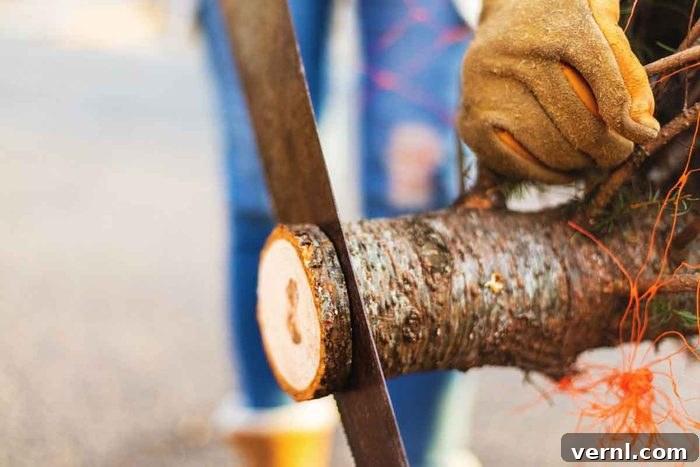
The most important initial step for any cut Christmas tree is to make a fresh cut across the base of the trunk. Your tree likely had its original cut days or even weeks ago, allowing sap to seal the wood pores. A fresh cut, about an inch or so from the bottom, exposes new, unblocked wood that can readily absorb water. This is vital for the tree’s hydration system. If you delay placing the tree in water, the new cut can dry and seal again, so aim to get it into water within an hour of making the fresh cut.
Before bringing your tree inside, especially if your home is significantly warmer than the outdoor temperature, consider a period of acclimatization. Place your tree in a cool, sheltered area like a garage or unheated porch for a day or two. This gradual transition helps prevent a sudden shock from the change in temperature, which can stress the tree and accelerate needle drop. During this time, you can also test-fit your tree stand.
Ensuring a Perfect Fit with Your Tree Stand
Before you bring the tree into your main living area, check the trunk diameter against your Christmas tree stand. The stand should comfortably accommodate the trunk without requiring excessive whittling, which can remove the crucial outer layers of wood responsible for water uptake. If the trunk is too wide, you’ll either need a larger stand or carefully trim small amounts from the trunk’s circumference, being careful not to remove too much of the sapwood. You may also need to use a tree lopper to trim any lower branches that interfere with the stand or prevent the tree from sitting flush.
Essential Care Tips for a Vibrant Christmas Tree All Season Long
Once your tree is inside and standing proudly, ongoing care is vital to maintain its freshness and minimize needle loss. Following these expert Christmas tree care tips will ensure your tree remains a beautiful, fragrant centerpiece throughout the entire holiday season.
The Lifeline: Consistent and Ample Watering
The single most critical factor in keeping your Christmas tree alive is consistent and ample watering. A cut Christmas tree is still “alive” in the sense that it continues to absorb water to keep its needles hydrated and prevent them from drying out and falling off. Without sufficient water, the tree’s pores will seal, and it will quickly become brittle and a significant fire hazard.
The National Christmas Tree Association recommends that your tree stand in at least 1 quart (approximately 1 liter) of water per inch of its trunk diameter. This means a tree with a 4-inch diameter trunk needs at least 4 quarts of water daily! During the first few days, your tree may drink even more, so check the water level frequently, even multiple times a day. Never let the water level drop below the base of the trunk, as this will allow the cut surface to dry and seal, preventing further water absorption.
Using warm water initially can sometimes help the tree absorb water more quickly, though room temperature water is generally sufficient for ongoing hydration. To make watering easier, especially for larger trees or those with many lower branches, consider purchasing a specialized watering device or installing a simple funnel system. These tools allow you to water your Christmas tree effectively without having to crawl under the branches or disturb decorations.
Choosing the Right Tree Stand: A Foundation for Freshness
Your Christmas tree stand is more than just a base; it’s a vital part of your tree’s hydration system. Ensure you use a traditional reservoir stand capable of holding a substantial amount of water. Stands vary widely in capacity, so opt for one that can hold at least a gallon of water, if not more, to reduce the frequency of refills. A sturdy stand also provides essential stability, preventing your tree from tipping over, which could lead to water spills or damage to decorations.
To protect your floors from potential water damage, always place a waterproof snow saucer or tray underneath the stand. For added security, a decorative rug placed beneath the saucer can catch any condensation or minor spills. These protective layers are easily concealed by a festive Christmas tree collar or skirt, maintaining the aesthetic appeal while offering practical benefits.
Optimizing Your Tree’s Environment: Temperature, Humidity, and Placement
Remember that your pine tree thrives in colder temperatures. While you can’t turn your home into a winter wonderland, you can take steps to create an optimal indoor environment. Place your tree away from direct heat sources such as fireplaces, radiators, heating vents, and even direct sunlight through a window. These heat sources will accelerate water evaporation and dry out your tree more quickly, leading to premature needle drop and increased fire risk.
Consider using a humidifier near your tree to increase the ambient humidity, which can help slow down the drying process of the needles. Maintaining a cooler room temperature, if comfortable, can also contribute to a longer-lasting tree. After the initial acclimatization period in a garage or porch, aim for a consistent, cooler spot in your home that is not subject to extreme temperature fluctuations.
Decorating Wisely: Limiting Weight and Managing Heat
While a heavily decorated tree can be stunning, consider the impact of excessive weight on your tree’s branches. Overloading branches with heavy ornaments can cause them to sag or even break, detracting from the tree’s natural beauty and potentially damaging your precious decorations. Distribute ornaments evenly and use lighter, less bulky decorations where possible. If you want your branches to look lush and vibrant all the way through Christmas Day, avoid putting too much strain on them.
The type of Christmas tree lights you choose also plays a significant role. Traditional incandescent bulbs generate a considerable amount of heat, which can effectively “cook” the needles and surfaces of your tree, speeding up dehydration and increasing fire risk. Tiny LED light strands, on the other hand, produce very little heat, making them a safer and more tree-friendly option. LED lights are also more energy-efficient and last longer, making them a smart choice for both your tree’s health and your energy bill.
Considering Tree Food: Additives and Their Effectiveness
The question of “feeding” a Christmas tree with special additives is a topic of ongoing debate among experts. While some people believe that adding certain substances to the water can prolong a tree’s life, others argue that plain fresh water is all a cut tree truly needs, provided it’s consistently replenished. The primary goal for a cut tree is hydration, not nutrition, as photosynthesis largely ceases once the tree is separated from its roots.
However, some enthusiasts have found success in preserving their tree by adding simple household ingredients to the water. Common recommendations include mixing a tablespoon of corn syrup or sugar into the basin of water. The theory behind this is that the sugar provides some carbohydrates, while corn syrup might act as a mild preservative. Commercial Christmas tree preservatives are also available, often containing mild fungicides or growth hormones. If you choose to use an additive, always follow the product instructions carefully. Regardless of whether you use an additive, fresh water remains the undisputed most important ingredient for tree longevity.
Ensuring Safety: Preventing Hazards with Your Christmas Tree
While real Christmas trees bring immense joy, it’s crucial to be aware of and mitigate potential safety hazards, particularly fire risks. A dry tree can ignite very quickly, leading to devastating consequences. Fire safety should be a top priority throughout the holiday season.
- Consistent Watering: As emphasized, a well-hydrated tree is much less flammable than a dry one. Check the water level daily, and never let the reservoir run dry.
- Inspect Lights: Before stringing lights, inspect them for frayed wires, broken sockets, or loose connections. Replace any damaged light strands. Use lights labeled for indoor use and that are certified by a recognized testing laboratory (e.g., UL listed).
- Avoid Overloading Outlets: Do not plug too many light strands into one extension cord or outlet, as this can overheat the circuit and pose a fire risk.
- Turn Off Lights: Always turn off your Christmas tree lights when leaving the house or going to bed. Using a timer can be a convenient way to manage this.
- Keep Clear of Heat Sources: Ensure your tree is placed at least three feet away from any heat source, including fireplaces, radiators, space heaters, and candles.
- Smoke Detectors: Ensure your home’s smoke detectors are in good working order and have fresh batteries.
Responsible Disposal: Eco-Friendly Ways to Say Goodbye
Once the holiday season concludes and your beautiful tree has served its purpose, knowing when is the right time to take down a Christmas tree and how to dispose of it responsibly is the final step in your tree care journey. Simply tossing it in the trash is not the most eco-friendly option. Instead, consider these environmentally conscious methods:
- Curbside Collection: Many local garbage collection companies offer special pickups for Christmas trees during a designated period after the holidays. Contact your specific waste management provider to inquire about their schedule and any preparation requirements (e.g., removing all decorations, cutting the tree into sections).
- Local Yard Waste Management: Check with your municipal yard waste department or recycling centers. They often accept Christmas trees for chipping and mulching. This process transforms your tree into valuable compost or mulch, which can then be used in parks, gardens, or even made available to residents.
- Tree Collecting Organizations/Events: Look for local “treecycling” events or tree collecting organizations. These groups often collect trees for various purposes, such as creating fish habitats in lakes, providing erosion control, or generating biomass energy.
- Backyard Mulching: If you have a wood chipper, you can chip your tree yourself and use the mulch in your garden beds. The pine needles and wood chips make an excellent natural weed suppressant and soil amendment.
The ‘Live’ Christmas Tree Option: A Guide to Planting After the Holidays
For those looking for an even more sustainable option, a ‘live’ Christmas tree with its root ball intact offers the unique opportunity to plant it outdoors after the holidays. While incredibly rewarding, this is an ambitious task that requires careful planning and execution.
Is a Live Tree Right for Your Home and Climate?
The practicality and success of planting a live Christmas tree largely depend on a few key factors:
- Your Climate: Live trees are highly sensitive to extreme environmental changes. If you live in a moderate climate where winter temperatures aren’t severely cold and ground remains workable, a live tree is more feasible. In colder climates, where the ground freezes solid for extended periods, it’s very difficult for a tree to survive the transition outdoors.
- Your Budget: Expect to pay significantly more for a live Christmas tree compared to a cut one. These trees, often balled and burlapped or potted, require more care from the nursery and during transport.
- Your Strength and Resources: Live trees, especially typical-sized ones, are incredibly heavy due to the weight of the root ball and soil. Moving a six-foot tree with its container can easily weigh 250 pounds or more, making placement and transport a considerable physical challenge.
Caring for Your Live Christmas Tree Indoors
If you choose a live tree, its time indoors should be kept as short as possible – ideally no more than 7-10 days. During this period, keep it in the coolest part of your home, away from heat sources, and ensure it receives adequate water daily. Treat it gently, as sudden changes in environment can trigger it to break dormancy. If the tree enters a “growing stage” indoors due to warmth, it will be highly vulnerable to freezing temperatures when placed back outside, significantly reducing its chances of survival.
For colder climates, keeping a live tree dormant indoors is extremely challenging. You might need to leave it on an enclosed screen porch or deck for its entire “Christmas” period to maintain dormancy, which might not be ideal for displaying your Christmas ornaments.
Transitioning and Planting Your Tree Outdoors
Once the Christmas season is over, gradually reintroduce your tree to the outdoors. Store it in a garage, unheated shed, or three-season porch for several days to a week. This acclimatization period helps it adjust to colder temperatures without immediate shock. The crucial step is to wait until the time for heavy frost has passed and the ground is no longer frozen before you plant it.
When you’re ready to plant, choose a location with well-drained soil and where the tree will receive full sun. Dig a hole that is at least twice as wide as the root ball and just as deep. Carefully remove any burlap or wire cage from the root ball, ensuring the roots are spread out. Water thoroughly after planting and continue to provide regular water, especially during its first year, to help it establish. A successfully planted live tree can become a cherished, growing reminder of your holiday seasons for years to come.
Cost and Practicality of Live Trees
Live trees are generally more expensive than cut trees. You can expect to pay two to three times more for a live tree, largely due to the effort involved in maintaining its root system. These trees are typically sold either in a pot or with their root ball “balled and burlapped.” If your tree comes balled and burlapped, you’ll need to purchase a sturdy, heavy-duty pot to serve as both its indoor stand and container during its time indoors. The combined weight of the tree, soil, and pot for even a moderately sized tree can be substantial, making moving it comparable to “hefting a piano,” especially after you add water.
Conclusion: Cherish Your Fresh Christmas Tree All Season Long
A real Christmas tree is more than just a decoration; it’s a living symbol of the holiday season, filling your home with joy, beauty, and that unforgettable natural fragrance. By following these detailed tips for selection, preparation, consistent care, and responsible disposal, you can significantly extend the life and vibrancy of your Christmas tree. Whether you opt for a traditional cut tree or embark on the rewarding journey of a live, replantable tree, a little knowledge and effort will ensure your festive centerpiece remains fresh, safe, and truly magical from the moment you bring it home until the holiday season concludes. Cherish these simple practices, and your tree will reward you with a magnificent display of holiday cheer.