
Ultimate Guide: How to Stop Dogs from Marking Your Yard and Save Your Lawn
Whether you’re a proud dog owner or simply enjoy a pristine garden, the unwelcome sight of dog pee can quickly turn your lush green lawn into a patchwork of brown spots. Dog urine is a potent cocktail, primarily composed of lactic acid and urea. While urea is a prized component in many fertilizers, celebrated for its high nitrogen content, herein lies the problem: an excessive concentration of nitrogen acts as a powerful herbicide, effectively “frying” your delicate grass blades to a crisp.
“I have two female dogs, so I have firsthand experience [with burnt grass] in my own yard,” shares Jim Baird, Ph.D., a distinguished turfgrass specialist at the University of California, Riverside. He understands the frustration of seeing the same spots repeatedly succumb to the damage.
Theoretically, Dr. Baird suggests that opting for certain grass species that utilize rhizomes (underground stems) and stolons (above-ground runners or lateral stems) could offer a quicker recovery from urine spraying. These resilient grasses, such as Kentucky bluegrass or Bermuda grass, have a natural ability to spread and repair damaged areas. However, for those like Dr. Baird, whose furry companions seem to favor and mark the exact same spot time and again, more proactive and strategic interventions are required. This comprehensive guide will delve into why dogs mark their territory and provide actionable, expert-backed strategies to prevent them from doing so in your yard, preserving your beautiful landscape.
Understanding Canine Communication: Why Are Dogs Marking in My Yard?
The act of marking territory is far more than just urination; it’s a fundamental and natural form of communication for dogs, irrespective of their gender. “Marking is natural behavior and a form of communication for both male and female dogs,” explains Dr. Annette Louviere, data and veterinary genetics manager at Wisdom Panel. It’s their way of leaving a message for other canines in the vicinity, a sort of aromatic calling card.
While both marking and regular peeing involve urinating, their intentions differ significantly. Regular urination is typically about relieving a full bladder. Marking, on the other hand, is a deliberate act where dogs deposit small amounts of urine “as a way to let others know they are present and to demonstrate ownership,” according to Dr. Louviere. It’s akin to a dog’s personal social media post, signaling their presence, status, and even their reproductive availability. Dogs are often drawn to mark where another dog has previously urinated, creating a continuous “message board” of scents in shared outdoor spaces.
The propensity for marking behavior is often linked to a dog’s hormonal status. Intact dogs (those not spayed or neutered) are generally more likely to mark than their spayed or neutered counterparts, driven by stronger hormonal urges and instincts related to mating and dominance. However, it’s important to note that if a pup developed marking habits prior to being fixed, they might continue this learned behavior even after sterilization, requiring further behavioral training to curb the habit.
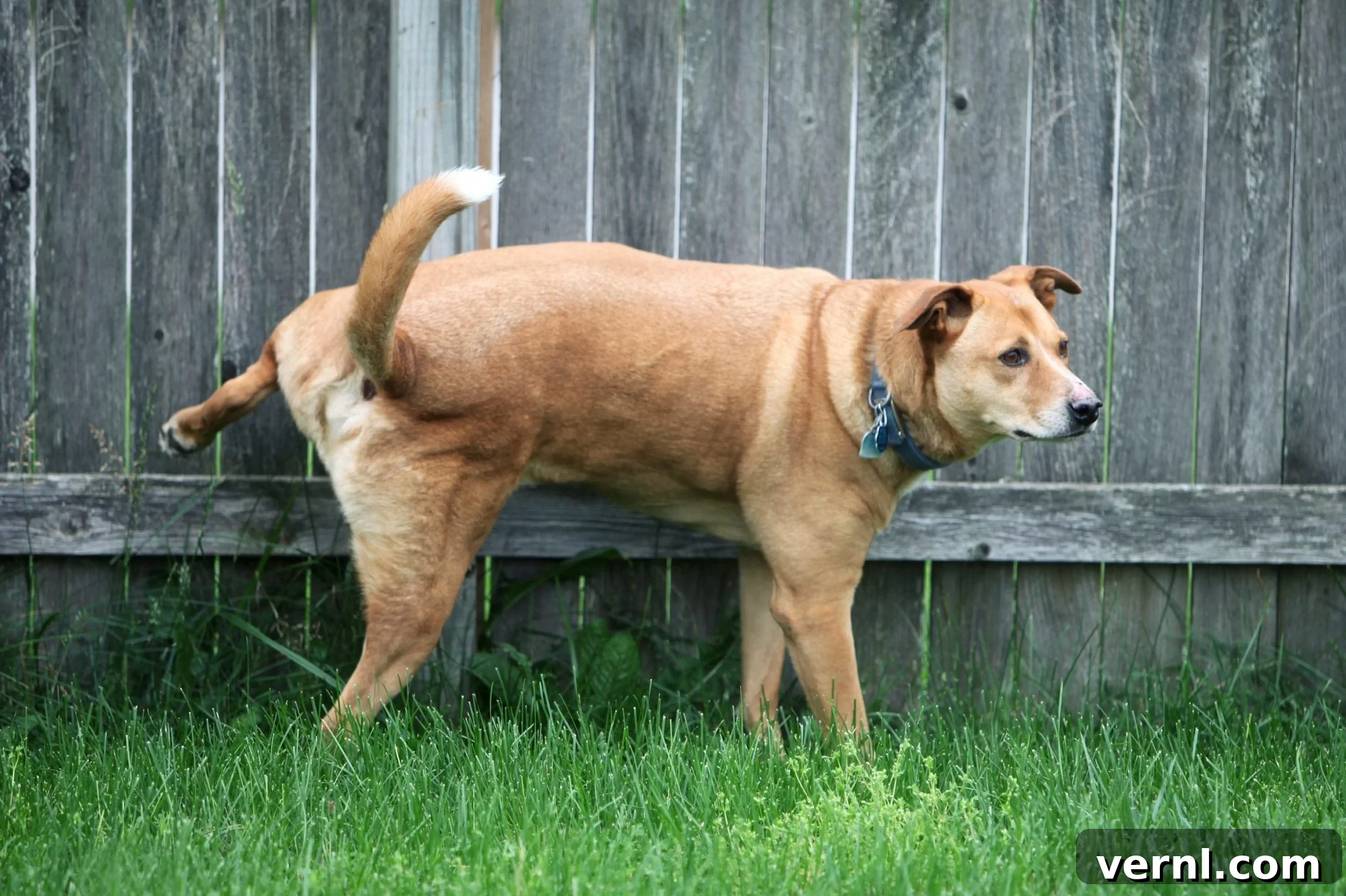
Distinguishing between marking and simply relieving oneself can sometimes be tricky, but there are typical indicators. Usually, you’ll recognize a dog is marking if they are targeting a vertical surface, such as a tree trunk, fence post, or bush, often with a raised leg, particularly males. However, this isn’t an absolute rule; dogs can sometimes mark on horizontal surfaces and may or may not lift their leg, as Dr. Louviere points out. The key characteristic of marking is usually the small quantity of urine deposited at multiple locations, rather than a single, larger stream.
If you observe a dog marking in your yard, it’s likely in small, repeated quantities that, over time, accumulate to cause significant lawn damage. The good news is that there are numerous effective and humane ways to discourage this behavior without creating friction with your neighbors or resorting to extreme measures.
How To Stop a Dog from Marking in Your Yard: Seven Effective Actions
Addressing dog marking requires a multi-faceted approach. Here are seven practical actions you can implement to stop dogs from turning your yard into their personal bulletin board and save your beloved lawn:
1. Restrict Access with Thoughtful Barriers
One of the most direct ways to prevent marking is to physically deter dogs from entering specific areas. Installing a decorative fence can serve as an elegant and effective barrier. For fences bordering areas where marking is common, consider lining the immediate perimeter with gravel or mulch instead of vegetation. This not only makes the area less appealing for marking (dogs prefer to mark on vertical objects or plant life) but also provides an easy-to-clean surface if any marking does occur.
For a temporary or more budget-friendly solution, especially around particularly vulnerable areas like new plantings or recently repaired lawn spots, try installing a DIY fence. These can be simple, low-height barriers that signal to dogs that the area is off-limits. Beyond traditional fencing, consider natural dog barriers. Incorporate prickly plants from a local nursery, or create a thorny barrier using clippings from rose bushes, hawthorn, or blackberry plants. The uncomfortable texture and sharp thorns act as an organic deterrent, discouraging dogs from getting close enough to mark. Motion-activated sprinklers are another innovative option; they deliver a harmless but startling burst of water when a dog approaches, teaching them to avoid the area.
2. Re-evaluate Your Fertilizers for Canine Appeal
The scent of certain fertilizers can be incredibly enticing to dogs, drawing them directly to your lawn. If you’re currently using an animal-based fertilizer, which often contains ingredients like bone meal, blood meal, or fish emulsion, consider swapping it for a plant-based fertilizer. These organic alternatives typically derive their nutrients from sources like corn gluten meal, seaweed extract, or compost tea, which lack the strong, animalistic odors that attract curious canines.
Bone meal fertilizer, while popular with gardeners for promoting vibrant blossoms and strong root development, is made from ground-up animal bones. Its distinctive scent, along with that of other animal-derived components commonly found in all-purpose organic fertilizers, can be irresistible to dogs. Their keen sense of smell can detect these attractants from a distance, prompting them to investigate and, often, mark their territory. Switching to plant-based options not only reduces the allure for dogs but can also contribute to a healthier, chemical-free lawn environment.
3. Thoroughly Clean the Marked Area to Eliminate Scent Trails
Dogs are creatures of habit and scent. Where one dog marks, others are highly likely to follow suit. This behavior stems from the “message board” concept Dr. Louviere mentioned: “urine marking is a form of messaging. The dog may be communicating with other dogs that may have urinated or marked in the yard.” The residual scent acts as an open invitation for subsequent marking.
According to Dr. Baird, immediately spraying down a newly marked spot with a hose can help. This action dilutes the high concentrations of acids, salts, and nitrogen, lessening the severity of potential brown spots. However, simply hosing down the area will likely not eliminate the scent entirely, which means it won’t effectively discourage other dogs from marking in the same location, as Dr. Louviere confirms. For long-term deterrence, a more robust cleaning solution is necessary. When feasible, treat the affected area or objects with an enzymatic cleaner. These specialized cleaners contain enzymes that break down the organic molecules in urine, thoroughly neutralizing the odor-causing compounds rather than just masking them. This complete scent elimination is crucial to remove the “message” and break the marking cycle.
4. Employ Dog Repellents with Caution
Various dog repellents are available, ranging from DIY concoctions to commercial products and high-tech gadgets. Homemade repellents for dogs often utilize ingredients like spicy peppers, vinegar, or citrus solutions. While these can be budget-friendly and easy to apply, they come with significant downsides. Their effectiveness is often temporary, requiring frequent reapplication. Furthermore, some ingredients might inadvertently attract other pests or even harm the very lawn you’re trying to protect. For instance, strong vinegar solutions can burn plants, and certain essential oils might be toxic to pets if ingested in large quantities.
On the commercial front, you’ll find various dog repellents designed to create an unpleasant scent or taste that deters canines. Some advanced options include high-tech gadgets dispensing ultrasonic sounds, aiming to keep pups and other pests away without chemical intervention. However, many commercial repellents and ultrasonic devices receive mediocre or poor user reviews, suggesting inconsistent effectiveness. It’s essential to research products thoroughly, prioritize humane options, and consider their potential impact on your lawn, pets, and local wildlife before widespread application.
5. Avoid Placing New and Novel Items in Your Yard
Dogs are naturally curious creatures, and anything new or unusual in their environment can trigger their instinct to investigate and, subsequently, mark. New items left lying in your yard—whether it’s a recently delivered package, gardening tools, children’s toys, or temporary decor—are prime attractants for neighborhood pups. The fresh scent and unfamiliar presence of these objects act as an irresistible invitation for a dog to stop, sniff, and claim them as part of their perceived territory.
To effectively deter neighborhood dogs from stopping and marking, cultivate a habit of keeping your yard free of clutter and novel objects. Store gardening equipment in a shed, bring in packages promptly, and tidy up toys after use. A clean, uncluttered yard presents fewer points of interest and fewer opportunities for a dog to feel the urge to leave their mark, contributing to a more serene and marking-free outdoor space.
6. Open a Dialogue with Your Neighbors
Sometimes, the most direct approach is the most effective. Engaging in a friendly, constructive conversation with your neighbors about your concerns regarding their dog’s marking habits can yield positive results. Many pet owners may not realize the cumulative impact their pup has on your lawn, or the considerable effort and resources you invest in maintaining your lawn’s health and appearance.
Approach the conversation with understanding, focusing on solutions rather than blame. You might share information about the types of fertilizers, pesticides, or insecticides you use, emphasizing if they are not pet-friendly. This highlights a potential safety concern for their dog, which can be a strong motivator for them to encourage their pet to relieve itself elsewhere. Additionally, inform them if you have plants that are toxic to dogs in your yard. If a gentle verbal reminder isn’t sufficient, strategically placed and aesthetically pleasing yard signs can serve as a subtle, polite, and continuous message to keep dogs off the grass, reinforcing your wishes without further direct confrontation.
7. Consider Replacing Grass with Low-Maintenance Alternatives
Despite all efforts, there may come a point where completely stopping all dog marking behaviors in outdoor, shared spaces proves impractical. As Dr. Louviere aptly puts it, “Remember that marking is a natural behavior for dogs. As with all things when dealing with our pets, it’s necessary to set appropriate expectations for ourselves. And in the great outdoors, it’s not practical to think you can stop all dogs’ marking behaviors.”
If persistent marking continues to damage your lawn beyond repair, or if you simply wish to eliminate the ongoing struggle, a long-term solution might be to remove the accessible grass in problem areas and replace it with a more resilient lawn alternative. Popular choices include mulch, gravel, or artificial grass. Mulch, such as shredded bark or wood chips, offers good drainage and suppresses weeds, while gravel provides excellent drainage and an aesthetically pleasing, low-maintenance surface. Artificial grass, though a higher initial investment, offers a consistently green appearance without the worries of urine burn, requires minimal upkeep, and is easy to clean. These alternatives can create durable, attractive landscapes that are far more resistant to dog urine damage and significantly reduce your maintenance burden.
When It’s Your Own Dog Marking in the Yard: Understanding and Training
If the culprit behind the brown spots and marked objects is your own beloved canine companion, the approach shifts from deterrence to training and health assessment. First and foremost, it’s crucial to determine whether your dog is intentionally marking territory or if they are experiencing a medical issue causing frequent urination. While marking is a behavioral trait, an increased frequency of urination could signal underlying health problems that warrant immediate veterinary attention.
“If your dog urinates more than once per outing and cannot hold it for more than two hours, a complete urinalysis is recommended,” advises Kristyn Echterling-Savage, Ph.D., owner and CEO of Beyond the Dog. Conditions like urinary tract infections (UTIs), kidney disease, diabetes, or even bladder stones can lead to increased urination and accidents. “Most dogs with a medical concern related to urinating also struggle with house soiling,” she adds, providing another key indicator that a vet visit is in order before addressing the behavior as purely marking.
1. Interrupt and Redirect the Marking Behavior
Once medical issues have been ruled out, you can begin to address the marking behavior through training. The key is timely intervention and positive reinforcement. When you spot your dog in the act of marking – perhaps lifting their leg on a fence post or sniffing intensely before a squat – gently interrupt them. This interruption should be mild and non-punitive, such as a soft clap, a quick call of their name, or a familiar training cue like “leave it.” The goal is to momentarily distract them from the undesirable behavior without causing fear or anxiety.
Immediately after the interruption, redirect your dog to a spot you prefer for urination, such as a designated patch of grass in your yard or during a walk to a public “potty” area. As soon as they urinate in the approved spot, reward them generously with a favorite toy, a high-value treat, or enthusiastic verbal praise. This positive reinforcement teaches them that urinating in the correct location yields desirable outcomes. Echterling-Savage stresses the importance of avoiding punishment for marking behaviors. Punishing your dog can lead to confusion about where they are allowed to urinate outdoors, or it could exacerbate potty-time stress, making the problem worse rather than better.
2. Spay or Neuter Your Dog for Behavioral and Health Benefits
The hormonal drive is a significant factor in marking behavior, particularly in intact dogs. Intact male dogs are much more likely to mark their territory, especially if they detect the scent of a female dog in heat nearby. Similarly, female dogs, particularly when they are in heat, may also exhibit increased marking behavior to signal their reproductive availability.
For these reasons, spaying or neutering your dog is often recommended as one of the most effective solutions for reducing or eliminating marking behavior, especially if the procedure is performed before the behavior becomes a deeply ingrained habit. By removing the hormonal influences, the instinct to mark territory significantly diminishes. While spaying or neutering can dramatically reduce the likelihood and frequency of marking, it’s important to understand that established habits can sometimes persist even after surgery. In such cases, continued positive reinforcement training, as outlined above, will be necessary to fully modify the behavior. Beyond marking, spaying and neutering offer numerous health and behavioral benefits, including reducing the risk of certain cancers, curbing aggression, and helping to control pet overpopulation.