
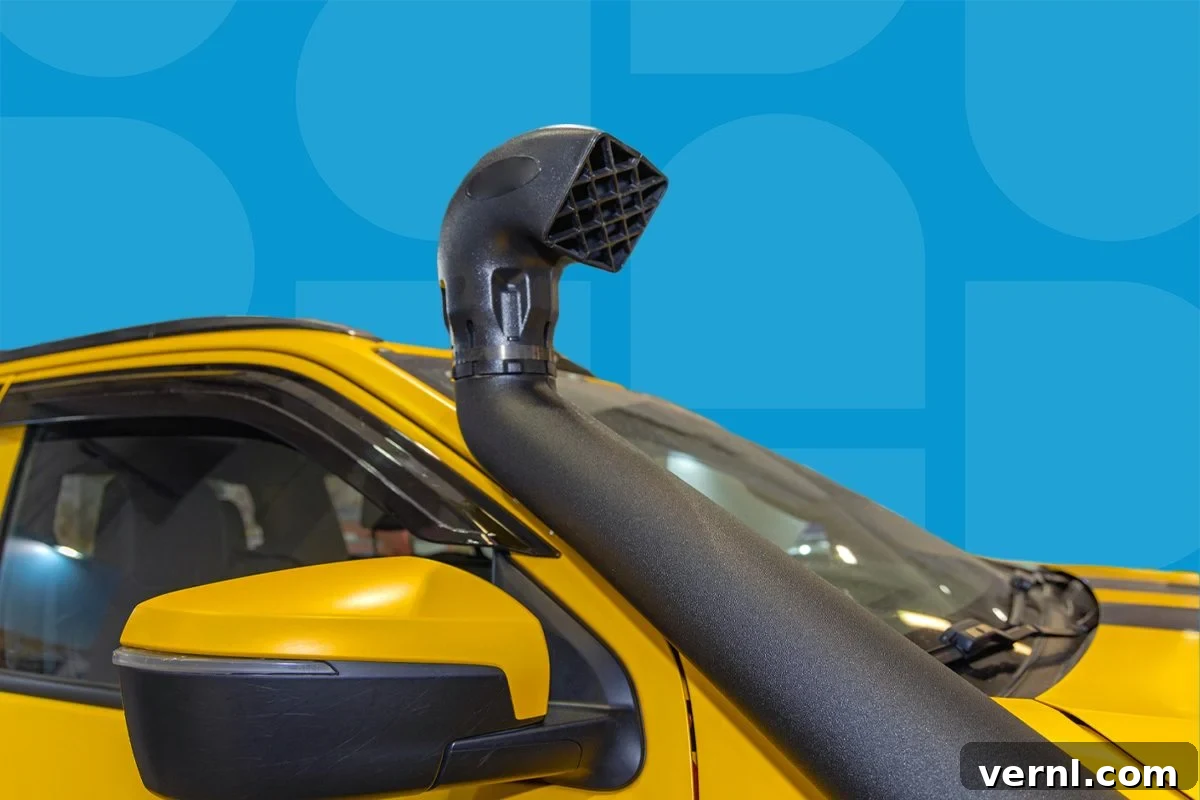
If you’ve ever spotted a distinctive tall pipe extending from the hood or fender of a truck or SUV, you’ve likely found yourself wondering, “What is that car snorkel for, and why would someone need one?” This eye-catching modification stands out from typical vehicle accessories, often sparking curiosity and sometimes misconceptions. While some might assume it’s purely for aesthetic appeal, others correctly deduce its profound connection to demanding driving conditions, particularly off-road driving and adverse environments.
Far from being just a cosmetic addition, a car snorkel is a highly functional piece of equipment designed to enhance a vehicle’s capability and longevity when traversing challenging terrains. Its primary role is to safeguard the engine, the heart of your vehicle, from critical damage caused by water and airborne contaminants. Understanding its purpose and function is key to appreciating its value for serious adventurers and professionals alike.
What Does A Car Snorkel Do? Essential Engine Protection

At its core, a car snorkel, frequently referred to as a raised air intake, serves a critical function: to supply the engine with cleaner, safer air. This seemingly simple task becomes paramount when a vehicle ventures beyond the paved road, where environmental hazards are common.
The Vulnerability of Standard Air Intakes
A vehicle engine is a complex machine that requires a constant supply of clean air for the combustion process to occur efficiently. Normally, this air is drawn in through an intake located low under the hood, often nestled near the wheel well, bumper, or within the inner fender. This placement is perfectly adequate for everyday driving on paved surfaces, where the air is relatively clean and dry. However, this design becomes a significant liability when the vehicle encounters challenging terrain or adverse weather conditions:
- Dusty Trails: Following other vehicles on unpaved roads can quickly envelop your car in a thick cloud of dust. A low-lying intake will inevitably ingest this dust, rapidly clogging air filters and potentially allowing fine abrasive particles to enter the engine. This leads to accelerated wear on internal components, reducing engine lifespan and efficiency.
- Water Crossings: Driving through deep puddles, streams, creeks, or flooded areas is a common scenario for off-road enthusiasts and those in flood-prone regions. If the water level rises above the standard air intake, the engine will start to suck in water instead of air, leading to catastrophic damage.
- Mud and Debris: Similar to dust and water, mud, sand, leaves, and other trail debris can easily be drawn into a low intake. These can clog the air filter, restrict airflow, or introduce foreign objects into the engine system.
- Snow and Ice: In severe winter conditions, a low intake can become packed with snow, restricting airflow, or ingest melted snow and slush, posing similar risks to water ingress.
How a Snorkel Solves the Problem: Redefining Airflow
A snorkel dramatically mitigates these risks by relocating the engine’s air intake to a much higher position, typically extending along the A-pillar (the front pillar supporting the windshield) and sometimes reaching roof level. By drawing air from above the car, the snorkel effectively bypasses the hazardous zones where contaminants are most prevalent. Air travels through the robust snorkel piping, into the existing air filter box, and then into the combustion system, just as it would without the attachment. The crucial difference is that the source of the air is now significantly higher and inherently safer, away from splashes, dust clouds, and rising water.
Protection Against Hydrolock: The Ultimate Safeguard
For drivers who frequently navigate challenging environments, especially those involving water, the snorkel’s most vital role is preventing a catastrophic event known as hydrolock. Hydrolock occurs when water enters the engine’s cylinders, usually through the air intake. Unlike air, water is incompressible. When a piston attempts to compress water during the compression stroke, it creates immense hydraulic pressure that can bend connecting rods, crack cylinder heads, or even shatter the engine block. This type of damage is often irreversible and incredibly costly, essentially rendering the engine scrap metal and requiring a complete engine replacement.
A well-installed and properly sealed snorkel acts as the primary defense against hydrolock during water crossings. By ensuring the air intake remains safely above the water line, it prevents water from ever reaching the engine’s delicate internal components. This provides invaluable peace of mind for anyone exploring creeks, rivers, or flood-prone tracks, allowing them to traverse water obstacles with significantly reduced risk.
Beyond Water: Enhancing Engine Longevity and Performance
While often associated with water crossings, the benefits of a raised air intake extend far beyond preventing hydrolock. The constant ingestion of dust, sand, and fine particulate matter found on unpaved roads can severely impact engine health over time. These abrasive particles accelerate wear on internal engine components, reduce the lifespan of air filters, and can lead to decreased engine efficiency and performance. By drawing cleaner, often cooler, air from above the turbulent zone near the wheels, a snorkel helps:
- Extend Air Filter Life: Less dust and debris mean your air filter stays cleaner for longer, maintaining optimal airflow and reducing replacement frequency, saving you time and money.
- Reduce Engine Wear: Cleaner air entering the combustion chamber minimizes the introduction of abrasive particles, significantly extending the life of pistons, rings, cylinder walls, and other critical engine components. This contributes directly to the overall lifespan of your vehicle.
- Maintain Performance and Fuel Economy: A clean engine that breathes easily operates more efficiently. Optimal airflow ensures proper air-fuel mixture, delivering consistent power, better throttle response, and maintaining fuel economy, which can degrade with a clogged air filter.
- Improved Air Quality for Combustion: Drawing air from a higher point can sometimes mean slightly cooler air, especially in hot environments where engine bay temperatures can be very high. Cooler air is denser, leading to more oxygen per intake stroke, which can result in minor performance improvements.
In essence, a snorkel is not just an accessory; it’s a crucial piece of equipment that safeguards your vehicle’s most vital component, ensuring it can perform reliably in the harshest environments. For an avid explorer, an overlander, or anyone regularly venturing onto challenging terrain, it’s less about style and entirely about keeping the car running reliably and efficiently for years to come.
Types of Snorkel Heads for Various Conditions
Snorkels come with various head designs, each optimized for different environmental conditions, allowing users to select the best option for their typical driving needs:
- Ram Head (Mushroom Top): This is the most common type, characterized by its forward-facing, scoop-like design. It’s engineered to scoop air forward, taking advantage of the vehicle’s motion to slightly pressurize the intake. It’s effective in most conditions but can ingest rain or heavy snow in severe weather if not correctly oriented or if a pre-filter is not used.
- Cyclone/Pre-Cleaner Head: Featuring internal vanes that create a cyclonic effect, these heads are excellent at separating heavier dust, sand, and debris from the incoming air before it reaches the main air filter. They are particularly popular in extremely dusty environments like deserts, mining operations, or agricultural settings, significantly extending the life of the primary air filter.
- Reversible Heads: Some ram heads are designed to be easily reversed, allowing the intake opening to face backward. This configuration can be beneficial during heavy rain or snow to minimize the amount of moisture directly entering the intake.
Do Snorkels Help In Daily Driving and Other Practical Scenarios?
For the vast majority of drivers, those who stick to city streets and highways, the direct functional benefits of a car snorkel are minimal. In such urban and suburban environments, the engine’s standard air intake typically receives sufficiently clean and dry air, making a snorkel an largely unnecessary addition. While a snorkel might theoretically draw slightly cooler and cleaner air from above the hood, this difference is generally negligible and unnoticeable to the average motorist in daily use. Therefore, for most commuters, a snorkel often serves more as a visual statement.
However, there are practical scenarios outside of dedicated off-roading where a snorkel can prove incredibly useful, providing genuine functional benefits:
- Long Dirt or Gravel Roads: Individuals living on or frequently traveling long stretches of unpaved roads will experience constant dust. A snorkel significantly reduces the amount of particulate matter entering the engine, extending filter life and safeguarding engine health.
- Flood-Prone Areas: Drivers residing in regions susceptible to flash floods or seasonal inundation can benefit immensely from the added protection a snorkel offers. Even relatively shallow floodwaters can quickly become deep enough to submerge a standard air intake, leading to potential hydrolock.
- Heavy Seasonal Dust or Sandstorms: In areas experiencing prolonged dry spells, strong winds, or frequent sandstorms, a snorkel, especially one equipped with a pre-cleaner head, can be invaluable for maintaining engine cleanliness and preventing filter clogs.
- Agricultural, Industrial, or Remote Utility Use: Vehicles used in farming, construction, mining operations, or for accessing remote utility sites often operate in incredibly dirty, dusty, and sometimes wet conditions. Snorkels are commonplace on such workhorses to ensure reliable engine performance and reduce maintenance downtime.
- Peace of Mind: Even if challenging conditions are infrequent, knowing your engine is protected provides a significant psychological benefit, especially when unexpected weather or road conditions arise.
For individuals not facing these specific challenges, a snorkel is often more about cultivating a rugged visual aesthetic or an aspiration for adventure, even if the vehicle rarely leaves asphalt. It projects an image of capability and readiness for the unknown.
What To Know Before Adding A Snorkel: Installation and Key Considerations
Installing a snorkel on your vehicle is a significant modification that goes beyond simply bolting on an accessory. It typically involves permanent alterations to your vehicle’s bodywork and air intake system, requiring careful planning, precise execution, and an understanding of its implications.
The Installation Process: A Permanent Commitment
Unlike many aftermarket accessories, a snorkel installation is generally not reversible without noticeable and potentially costly cosmetic repairs. The process typically involves:
- Fender Cutting: A large, precise hole must be cut into the vehicle’s fender to allow the snorkel’s main pipe to pass through and connect to the existing airbox. This is often the most daunting and irreversible step, requiring careful measurement and execution to avoid damaging underlying components or the aesthetic integrity of the vehicle.
- A-Pillar Drilling: Smaller holes are typically drilled into the A-pillar (the front pillar supporting the windshield) to securely mount the snorkel’s external piping and head. These mounting points ensure stability, especially at highway speeds or on bumpy terrain.
- Airbox Modification and Sealing: The vehicle’s existing airbox needs to be modified or adapted to create a sealed, airtight connection with the snorkel piping. This is critical to ensure that all incoming air passes exclusively through the snorkel and that no un-filtered air or water can enter the engine.
- Watertight Sealing: Every connection point, especially where the snorkel passes through the bodywork and connects to the airbox, must be meticulously sealed using high-quality automotive-grade sealants. A sloppy or incomplete sealing job can compromise the snorkel’s primary function, potentially allowing water or dust to bypass the snorkel and enter the intake, or even causing water leaks into the cabin.
DIY vs. Professional Installation: Weighing Your Options
While snorkel kits are available for confident and skilled DIYers, this is by no means a beginner’s project. The precision required for cutting body panels, ensuring airtight and watertight seals, and correctly routing the piping means that mistakes can be costly and detrimental to your vehicle’s integrity and function. Many enthusiasts, even experienced ones, opt to have snorkels professionally installed by experienced off-road shops or mechanics specializing in vehicle modifications. A professional installation ensures:
- Correct Fitment and Alignment: The snorkel is perfectly aligned, securely mounted, and aesthetically integrated with the vehicle.
- Guaranteed Watertight Seals: All critical connection points are properly sealed, providing the intended robust protection against water and dust.
- Preservation of Vehicle Integrity: Body cuts are clean, precisely measured, and properly finished to prevent future issues like rust or structural compromise.
- Expertise in Problem Solving: Professionals can handle unexpected challenges or unique vehicle configurations that might arise during installation.
- Potential for Warranty Mitigation: While extensive modifications often void certain warranties regardless, professional installation might help mitigate some concerns with vehicle manufacturers by ensuring best practices are followed.
Pre-Installation Considerations: Making an Informed Decision
Before making the significant commitment to add a snorkel, take time to consider several important factors that extend beyond the installation process:
- Your Actual Driving Habits: Honestly assess how you truly use your car. If it primarily handles city streets and paved roads, the functional benefits of a snorkel will likely be minimal, making it largely a cosmetic upgrade rather than a necessity.
- Vehicle Compatibility: Ensure there’s a specific, reputable snorkel kit designed for your exact make, model, and year. Universal kits often require extensive custom fabrication, which increases complexity and potential for issues.
- Total Cost: Factor in not only the price of the snorkel kit itself but also the potential professional installation fees, which can add significantly to the overall expense. Budgeting for quality sealant and any necessary tools is also wise.
- Aesthetics: A snorkel fundamentally changes your vehicle’s appearance. While many off-roaders appreciate the rugged, purposeful look, ensure you are genuinely comfortable with this permanent aesthetic alteration.
- Resale Value Impact: This is a crucial point. While a snorkel can be a significant selling point for a niche market of dedicated off-road enthusiasts and overlanders, it can be a deterrent for the broader market of potential buyers who might view it as an unnecessary, permanent modification that alters the vehicle’s original lines. It could potentially lower the resale value for non-specialized buyers.
- Vehicle Warranty: Be aware that cutting into the body and modifying the air intake system can potentially void certain aspects of your vehicle’s manufacturer warranty. It’s advisable to consult your dealer if this is a concern before proceeding.
- Local Regulations: In some regions, certain vehicle modifications, including external fixtures like snorkels, might have specific regulations or require inspection. Always check local laws and emissions requirements to ensure compliance.
- Minor Operational Impacts: A snorkel might introduce a slight increase in wind noise, particularly at higher speeds, or marginal aerodynamic drag. While typically negligible for most vehicles, these are worth noting.
Ultimately, a car snorkel is an invaluable tool for adventurers, overlanders, and professionals who push their vehicles into demanding environments where engine protection from water, dust, and other contaminants is paramount. It’s a purposeful upgrade designed for reliability, longevity, and enhanced capability in the face of nature’s most challenging conditions. For others, it remains a statement piece, a symbol of potential adventure, or a prudent safeguard against rare but potentially impactful occurrences, transforming a standard vehicle into a more robust and resilient exploration machine.