
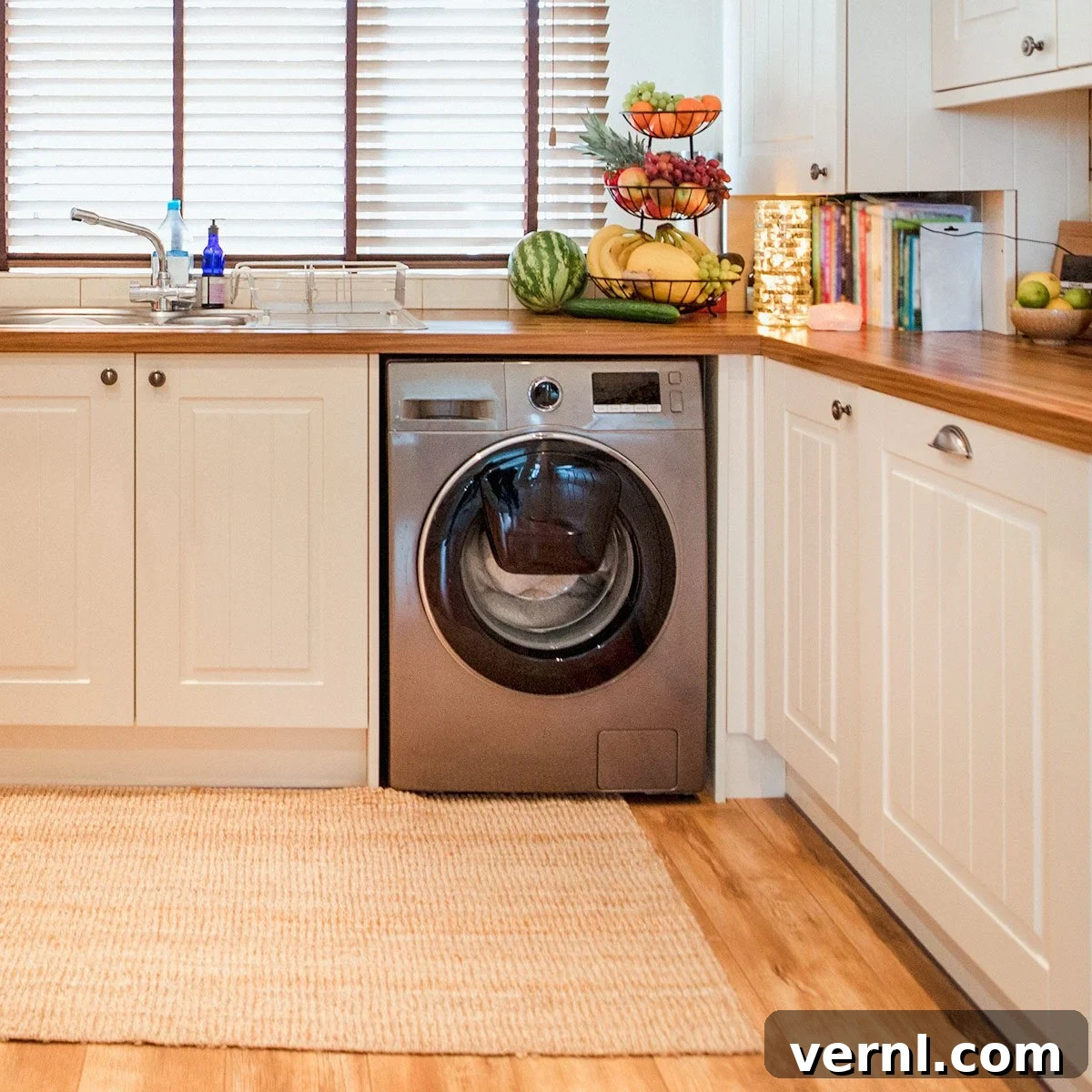
If you’ve spent any time immersing yourself in British culture, whether through visiting a home across the pond or simply watching UK television, you might have encountered a peculiar sight: the washing machine often resides in the kitchen. For many accustomed to dedicated laundry rooms or utility spaces, particularly in North America, this arrangement can appear distinctly unconventional. However, in the United Kingdom and much of continental Europe, integrating the washing machine into the kitchen is not just common practice but an ingrained aspect of domestic design. This unique configuration is not merely a quirky design choice; it’s a practical solution born from a compelling blend of historical architectural constraints, evolving cultural habits, stringent safety regulations, and a pragmatic approach to space utilization.
Limited Space and Historical Infrastructure in UK Homes
The fundamental reason behind the washing machine’s placement in British kitchens can be traced back to the very fabric of UK housing. Compared to their American counterparts, many UK homes—especially the older, more characterful properties that dominate the landscape—are inherently smaller and designed without the expansive floor plans that often accommodate dedicated laundry areas. Terraced and semi-detached houses, along with flats (apartments), represent a significant portion of the country’s housing stock. These types of properties typically lack basements, which are a common feature in many US homes offering ample utility space, or purpose-built utility rooms that could house major appliances.
Historically, when these homes were constructed, the concept of an automated washing machine was either non-existent or a futuristic dream. Consequently, the original designs did not incorporate multiple water access points or dedicated plumbing and electrical outlets for such appliances beyond the kitchen and bathroom. As washing machines began to gain popularity and become household staples in the mid-20th century, homeowners and builders faced a logistical challenge. The kitchen, already equipped with essential plumbing for the sink and dishwashers, along with the necessary electrical supply for various appliances, emerged as the most logical and cost-effective location for a washing machine. Retrofitting other rooms with the required water inlets, drainage, and high-capacity electrical circuits would have been, and often still is, a complex and expensive undertaking.
Furthermore, bathrooms, which might seem like a natural alternative given their existing water supply, are frequently off-limits for major appliances in the UK. This is due to particularly strict electrical safety regulations, known as ‘Part P’ of the Building Regulations, which govern electrical installations in ‘special locations’ like bathrooms. These regulations mandate specific safety zones and IP (Ingress Protection) ratings for electrical appliances to prevent accidents in damp environments. Placing a high-powered appliance like a washing machine, which combines water and electricity, within these zones is often impractical, requires specialist installation, or is simply prohibited. This leaves the kitchen as the undisputed primary candidate for its installation, cementing its role as the de facto utility hub of the British home.
Kitchen Layouts and Evolving Design Norms
The practice of housing washing machines in kitchens has become so deeply embedded in British home design that it has influenced contemporary architectural and interior planning. Modern UK kitchens are often designed with specific under-counter spaces allocated for washing machines, mirroring the integration of dishwashers. These appliances are frequently ‘integrated,’ meaning they are concealed behind cupboard doors, blending seamlessly with the surrounding cabinetry and maintaining a sleek, uninterrupted aesthetic. This design philosophy emphasizes maximizing every inch of available space and achieving a clean, uncluttered look, which is particularly valued in smaller living environments.
Crucially, unlike some other countries, UK building codes do not typically mandate the inclusion of a separate laundry room in residential properties. This absence of regulation gives developers and homeowners greater flexibility in space allocation. Given the premium on living space, many homeowners and builders prioritize other amenities over a dedicated laundry area. The choice often comes down to allocating precious square footage to an additional bedroom, a larger living room, or an extra bathroom, all of which tend to add more value and appeal to a property than a separate utility room. Consequently, even in newly built homes, developers often follow traditional layouts, integrating the washing machine into the kitchen to maximize overall living space efficiency and manage construction costs effectively, catering to established market expectations.
This design norm also reflects a broader cultural acceptance. For generations, British households have adapted to this arrangement, developing routines and kitchen layouts that accommodate both food preparation and laundry tasks. The proximity of the washing machine to the kitchen sink simplifies plumbing, while the robust electrical circuits installed for other kitchen appliances easily handle the power demands of a washing machine. This integration of function within a single space optimizes resources and minimizes the need for costly and space-consuming additional infrastructure.
Environmental Awareness and Drying Habits in Europe

Another significant factor differentiating UK and European laundry practices from countries like the US is the prevailing approach to drying clothes. While tumble dryers are ubiquitous in many parts of North America, their presence is considerably less common across the UK and much of Europe. Instead, a strong emphasis is placed on more environmentally friendly and energy-efficient methods, reflecting a broader cultural inclination towards sustainability and resource conservation. Households frequently rely on traditional techniques such as clotheslines, portable drying racks positioned indoors or outdoors, or airing cupboards (a warm, often slatted cupboard designed to air clothes). Outdoor drying, weather permitting, is a cherished cultural norm, particularly during warmer months, and significantly contributes to reducing household energy consumption and carbon emissions.
This widespread environmental consciousness means there’s often less practical need for a large, dedicated laundry room packed with multiple machines. Since tumble dryers are not a universal staple, the necessity for a space solely designed to house and operate them diminishes. Many European households find smaller, washer-only units perfectly adequate. Furthermore, combination washer-dryers, which perform both washing and drying functions in a single drum, are gaining considerable popularity, especially in compact living spaces. These innovative appliances offer an ideal space-saving solution, as they eliminate the need for two separate machines, further justifying the integration of laundry facilities into the existing kitchen footprint. While they may take longer to dry a load compared to conventional tumble dryers, their dual functionality and minimal footprint align perfectly with the space-efficient and environmentally conscious ethos prevalent in European homes.
These sustainable practices are not isolated incidents but are deeply interwoven with broader European efforts to live more sustainably. High energy costs across the continent also play a pivotal role, making air drying an economically sensible choice in addition to its environmental benefits. From stringent energy efficiency standards for appliances to widespread recycling initiatives and a general cultural emphasis on reducing one’s carbon footprint, the decision to air dry clothes and minimize reliance on energy-intensive appliances like tumble dryers is a conscious one. This holistic approach to sustainability continues to profoundly shape home design, appliance choices, and daily routines across the continent, making the kitchen-integrated washing machine a logical and enduring feature of European domestic life.
The Enduring Logic of Kitchen Laundry in the UK
In conclusion, the distinctive placement of washing machines in British and European kitchens is far from an arbitrary choice. It is a logical and pragmatic adaptation shaped by a complex interplay of historical, architectural, regulatory, and cultural factors. The inherent spatial limitations of traditional housing, coupled with the legacy of infrastructure development, naturally directed laundry facilities to the only readily available and appropriately serviced room: the kitchen. This has, in turn, fostered design norms where integrated appliances are commonplace, maximizing functionality within a constrained footprint.
Moreover, a prevailing commitment to environmental sustainability and a cultural preference for air-drying clothes mitigate the need for extensive, dedicated laundry spaces. The rise of efficient combination washer-dryers further reinforces this model, offering compact solutions for modern living. What might appear as an unusual quirk to outsiders is, in fact, a deeply rational and efficient solution that perfectly reflects the unique circumstances and values of British and European households. This enduring practice underscores how cultural habits, economic realities, and historical context seamlessly converge to define the very architecture and functionality of our homes.