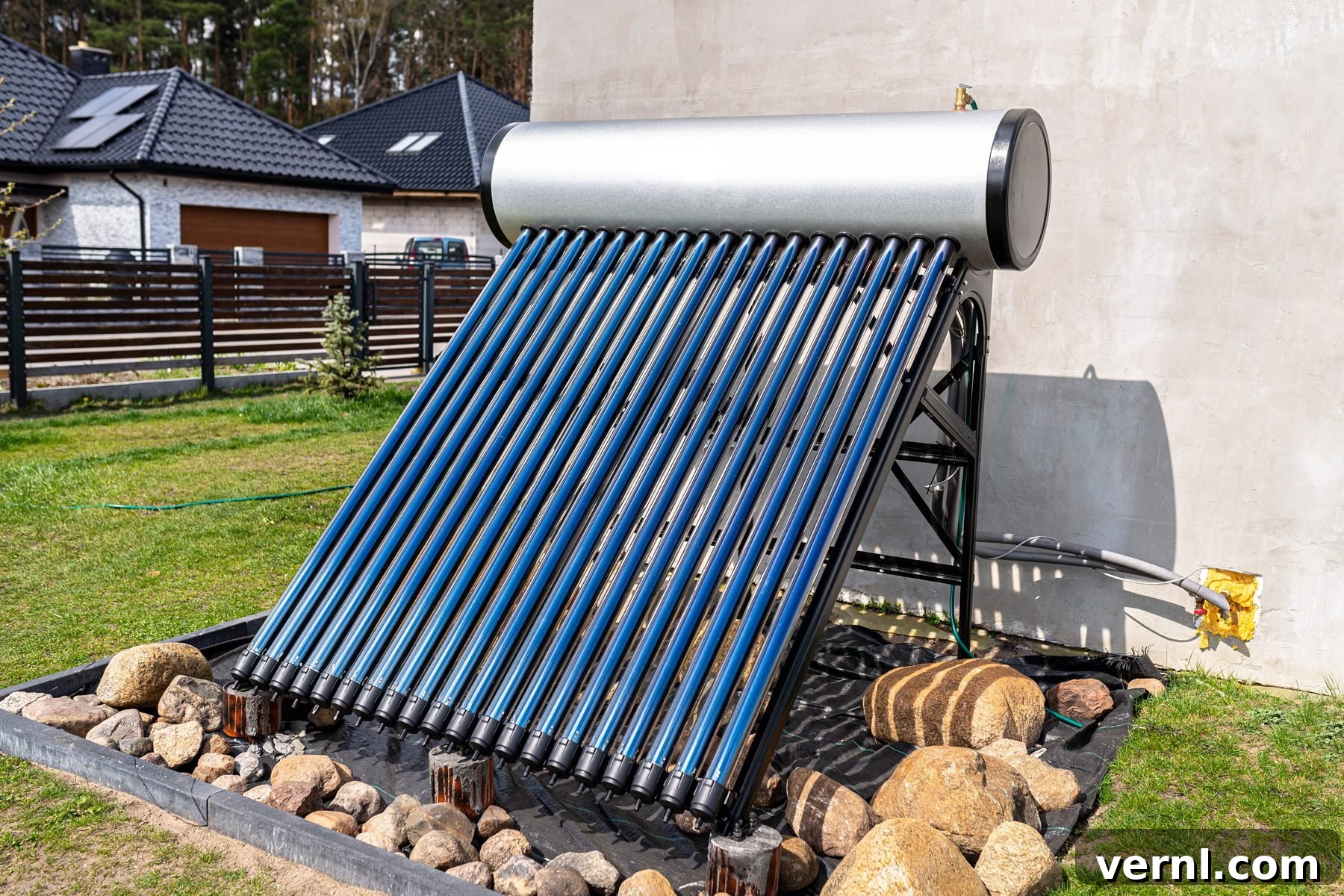
Harnessing the Sun: A Comprehensive Guide to Solar Water Heaters for Sustainable Homes
The quest for a more sustainable and cost-effective home often leads homeowners to explore renewable energy solutions. Among the most impactful is the solar water heater, a system designed to harness the sun’s abundant energy to heat your household water. Heating water typically accounts for a significant portion of a home’s energy consumption – estimates from the U.S. Department of Energy suggest around 18 percent of a typical home’s energy usage is dedicated to this task. By leveraging solar power for hot water, you can unlock substantial savings on your monthly energy bill while simultaneously reducing your environmental footprint.
While often mistaken for photovoltaic (PV) panels due to their rooftop placement, solar water heaters (also known as solar thermal systems) operate on a different principle and are generally simpler to construct and install. Despite their clear advantages, adoption rates vary significantly across the globe. For instance, observations from countries like Japan in the 1990s revealed a widespread presence of solar hot water systems on residential rooftops, indicating a greater mainstream acceptance than in many Western nations, particularly the United States.
This disparity is a point of contention for many renewable energy advocates. Al Ruggie of Phoenix-based ASAP Restoration, for example, expresses frustration: “We’ve never installed a solar hot water heater for a client. The primary reason is the lack of a single, widely recognized manufacturer offering a comprehensive warranty, making it challenging for us to provide service assurance. It’s truly regrettable, especially living in Phoenix, a city blessed with year-round sunshine, that these energy-efficient systems are so rarely seen on local properties.”
My own experience highlights both the potential and the pitfalls of solar water heating. My off-grid property in California, though currently undergoing grid connection efforts, came equipped with a large, homemade solar water heating panel alongside its PV array. Unfortunately, its cumbersome size and unwieldy design made it impractical to hoist onto the roof, rendering it unused. This serves as a crucial reminder for anyone considering a DIY solar water heater project: don’t underestimate the practicalities. Your overall plan must meticulously account for the entire installation process, including safely hoisting the unit onto the roof, securely fastening it to withstand high winds, and properly connecting it to your existing hot water supply. Overlooking these critical steps can turn a promising energy-saving endeavor into a frustrating and abandoned project.
What Is a Solar Water Heater?
At its core, a solar water heater is a renewable energy system designed to absorb thermal energy from the sun and transfer it directly into your household’s water supply. This heated water is then circulated throughout your home, providing hot water for bathing, washing, and other domestic needs. The fundamental component of most solar water heater systems is a solar collector panel, typically mounted on a roof or in a sunny ground location. Within this collector lies an intricate network of tubing or channels through which water or a heat-transfer fluid circulates.
The process is straightforward: cold water or fluid enters one end of the collector. As it flows through the tubing, the collector’s dark, heat-absorbing surface, often covered with a transparent glazing, efficiently captures solar radiation. This absorbed energy heats the circulating fluid, which then exits the collector significantly warmer at the other end. This heated fluid then either directly supplies the home’s hot water or transfers its heat to a storage tank via a heat exchanger.
Historically, early solar hot water systems faced challenges with reliability, often being prone to leaks, operational failures, and limited efficiency – much like the bulky, handmade panel on my property. However, the solar thermal industry has matured considerably. Today, consumers can choose from a wide array of sophisticated, super-efficient, and professionally installed collectors that boast advanced materials and engineering. Alternatively, for the budget-conscious or hands-on homeowner, there are now numerous DIY-friendly solar hot water heater systems and kits available, offering a more accessible entry point into renewable water heating.
How Does a Solar Water Heater Work? Understanding the Mechanisms
All solar water heaters share a common objective: to effectively capture solar thermal energy and convert it into usable heat for your water. However, the methods by which they store and circulate this heated water can vary significantly. These systems are broadly categorized into passive and active designs, each with distinct operational principles and suitability for different applications.
Passive Solar Water Heating Systems: Simplicity and Reliability
Passive systems are renowned for their simplicity and rely on natural physical phenomena rather than mechanical pumps to circulate water. The most common type of passive system leverages the thermosyphon effect – the principle that hot water is less dense than cold water and naturally rises above it. In these configurations, the holding tank is strategically positioned above the solar collector.
Here’s how it works: on a sunny day, water within the collector heats up. As it warms, it becomes lighter and naturally rises into the elevated storage tank. Concurrently, cooler, denser water from the bottom of the tank flows down into the collector to be heated, creating a continuous, natural circulation loop. This is the ingenious design I frequently observed on Japanese rooftops. Once heated in the tank, gravity then assists in feeding the hot water into the building’s plumbing system as needed. Passive systems offer inherent reliability due to fewer moving parts, making them durable and requiring minimal maintenance, though their efficiency can be lower than active systems, and they might be more susceptible to freezing in colder climates unless specifically designed with freeze protection.
Active Solar Water Heating Systems: Enhanced Performance and Flexibility
Active systems, by contrast, utilize mechanical pumps to circulate water or a heat-transfer fluid, offering greater control over performance and placement flexibility for the storage tank. There are two primary types of active systems:
- A Direct System (Open-Loop System) circulates potable household water directly through the solar collector and then into a holding tank within the building. This tank is often a standard tank-style water heater, which may also have an electric or gas backup heating element. Direct systems are generally simpler and more efficient in warmer climates because the water is heated directly without an intermediary fluid. However, they are susceptible to freezing in cold weather, which can cause significant damage to the collector and pipes. They also face potential issues with mineral buildup in hard water areas, which can reduce efficiency over time.
- An Indirect System (Closed-Loop System) is designed for colder climates and for enhanced system longevity. Instead of household water, it circulates a specialized heat-transfer fluid – such as propylene glycol (a non-toxic antifreeze commonly used in food processing) or less commonly, ethylene glycol (a more common automotive antifreeze, but toxic) – through the solar collector. This heated fluid then passes through a heat exchanger, which is typically a system of coils or a jacket wrapped around the water heater tank. Here, the fluid transfers its heat to the potable water in the tank without direct mixing, thus preventing water contamination. This ingenious design offers superior freeze protection and corrosion resistance, making it an ideal choice for regions experiencing freezing temperatures. Drain-back systems are a variation of indirect systems where water is used as the heat-transfer fluid, but it automatically drains from the collectors and exposed piping into a storage tank when the pump shuts off, eliminating freeze concerns.
Will a Solar Water Heater Work for Your Home? Key Considerations
Determining the feasibility of a solar water heater for your specific property involves evaluating several critical factors, primarily centered around solar access and your home’s unique characteristics. As with all solar technologies, the paramount prerequisite for a solar water heater is ample direct sunlight.
Solar Access and Placement
You need a suitable location on your roof or property that receives unobstructed sunlight for the majority of the day, especially during peak sun hours. Ideal conditions involve a south-facing orientation (in the Northern Hemisphere) with an appropriate tilt angle to maximize solar exposure throughout the year. While rooftops are common for collectors, ground-mounted systems are also viable if you have sufficient sunny space. A preliminary site assessment is crucial to identify potential shading from trees, adjacent buildings, or other structures that could significantly diminish system performance.
Climate Considerations
Even if you live in a cold climate, a solar water heater can be a highly effective solution. Modern systems offer robust solutions for freezing temperatures. You can opt for a freeze-proof indirect heat-exchange system utilizing antifreeze fluids, as described above. Alternatively, drain-back systems are an excellent option, automatically draining water from the collector panels and external pipes when the pump is off or temperatures drop below freezing. Proper insulation of all pipes and the storage tank is also paramount to prevent heat loss and protect against freezing.
Integration with Existing Systems
A solar water heater doesn’t necessarily replace your existing water heater; it often works in conjunction with it. The solar-heated water can pre-heat the water entering your conventional water heater, dramatically reducing the energy it needs to consume. In some setups, particularly passive ones, the solar hot water may even feed directly into your plumbing from a rooftop tank. Understanding your current hot water demands and the layout of your plumbing system is essential for seamless integration and optimal efficiency.
How Much Does a Solar Water Heater Cost? Investment and Incentives
The cost of installing a solar water heater can vary widely, influenced by the system type, complexity, capacity, and whether you opt for a DIY approach or professional installation. While the initial investment might seem higher than a conventional water heater, the long-term energy savings and available incentives often make it a compelling financial decision.
Cost Breakdown:
- DIY System: If you’re handy and committed to building your own collector and integrating it with your existing water heater, the material costs could be remarkably low, potentially starting from as little as $1,000, depending on the materials you source and your ability to reuse components. This is the most budget-friendly option, but requires significant time, skill, and careful planning.
- DIY Kit / Pre-fabricated Components: For those who prefer a balance between cost savings and convenience, purchasing pre-fabricated solar water heater kits or individual components falls in the range of $1,500 to $6,000. These kits often include the collector, storage tank, and necessary plumbing components, simplifying the assembly process.
- Professionally Installed System: A complete, professionally designed and installed solar water heating system will naturally incur higher costs. Adding professional installation services typically ranges from $3,000 to $5,000 or more on top of component costs, bringing the total cost for a residential system to anywhere from $5,000 to $12,000 or even higher for larger, more complex setups. While more expensive upfront, professional installation ensures optimal system design, correct sizing, adherence to local building codes, and often comes with warranties for both parts and labor.
Financial Incentives and Return on Investment:
To mitigate the upfront costs, significant financial incentives are often available. Solar water heaters qualify for the federal Renewable Energy Tax Credit (also known as the Investment Tax Credit, or ITC), which currently offers a reimbursement of 30 percent of the cost of purchase and installation for systems placed in service by a certain date. This substantial credit can dramatically reduce your net outlay.
Beyond federal programs, many states, local municipalities, and even utility companies offer additional incentives, such as rebates, grants, or property tax exemptions, further enhancing the affordability of solar water heaters. To qualify for federal tax credits and many local incentives, the system must typically be rated by the Solar Rating and Certification Corporation (SRCC) or a comparable certification entity. It’s important to verify that even commercial DIY kits carry such certifications if you intend to claim incentives. Factoring in these incentives, combined with the substantial savings on your monthly energy bills, leads to a favorable payback period and an excellent long-term return on investment, often making solar water heating a wise financial decision over the lifespan of the system.
How To Make a DIY Solar Water Heater: A Basic Guide
For the avid do-it-yourselfer, constructing a solar water heater can be a rewarding project, offering significant cost savings and a deep understanding of renewable energy principles. As previously mentioned, the most common DIY solar water heater design centers around a collector panel, a coil network for water circulation, and clear inlet/outlet connections. This basic outline provides a foundational understanding of the procedure, but always prioritize safety, consult local building codes, and conduct thorough research before beginning.
- Construct the Collector Box: Begin by building the main enclosure for your collector. For the base, lightweight plywood (1/4 to 3/8 inches thick) is a good choice, offering a sturdy yet manageable foundation. For the frame, consider using 1-by-4-inch cedar boards, known for their natural resistance to moisture and insects. Ensure all joints are tight and securely fastened. Once constructed, seal all internal and external joints thoroughly with high-quality, weather-resistant silicone caulk to prevent any water intrusion and maintain internal insulation integrity.
- Insulate the Interior: Effective insulation is paramount to prevent heat loss from your collector. Line the interior of the box with 1-inch foil-backed foam insulation. It’s crucial to install this with the foil facing outward (towards the sun/glass cover) to reflect any escaping heat back into the collector and maximize heat retention. Cut the insulation snugly to fit all sides and the bottom of the box, ensuring there are no gaps.
- Construct the Coil Network: The heart of your collector is the coil network, where the actual water heating takes place. Use 3/4-inch copper tubing for its excellent thermal conductivity and corrosion resistance. Carefully bend the tubing to create a tightly wound coil or serpentine pattern that fits snugly within the collector box. The goal is to maximize the length of the water’s path through the collector, thereby increasing the amount of time it spends absorbing heat from the sun. Utilize appropriate copper elbow fittings for turns, and solder all connections securely to prevent leaks.
- Create Inlets and Outlets: Extend one end of the copper coil through a pre-drilled hole in a bottom corner of the collector box; this will serve as your cold water inlet. Extend the other end of the coil through a diagonally opposite top corner for the hot water outlet. Solder a suitable adapter (e.g., a male hose barb or a plumbing pipe adapter) onto each protruding end of the copper tubing. This will allow for easy and secure connection to standard garden hoses or your home’s plumbing pipes.
- Cover and Seal the Collector Box: To trap solar energy and protect the internal components, cover the entire collector box with a sheet of glass (tempered glass is recommended for safety and durability) or a UV-resistant polycarbonate sheet. Ensure a tight, weather-proof seal by generously applying silicone caulk around all the edges where the glass meets the frame. This step is critical to keep out rain, moisture, and debris, preserving the collector’s efficiency and lifespan.
- Mount the Collector: Proper mounting is vital for performance and safety. Mount the collector securely on your roof or on a ground-mounted stand. In the Northern Hemisphere, it should face in a southerly direction to maximize solar exposure throughout the day and year. The tilt angle should generally match your geographical latitude for year-round efficiency, or be adjusted for seasonal optimization (steeper for winter, shallower for summer). Ensure the mounting system is robust enough to withstand high winds and other weather conditions.
- Connect the Plumbing: Finally, connect a cold water hose or supply pipe to the inlet adapter on the collector. Connect a hot water hose or pipe to the outlet adapter. Run this hot water supply to your holding tank, which could be located in your house (often as a pre-heater for an existing water heater) or positioned on the roof (for passive thermosyphon systems). The specific plumbing connections will vary considerably depending on your chosen system configuration (e.g., direct vs. indirect, passive vs. active) and your existing hot water infrastructure. Always include shut-off valves and, for active systems, a properly sized pump.
Pros and Cons of Solar Water Heaters: A Balanced Perspective
Adopting a solar water heating system comes with a distinct set of advantages and disadvantages. Understanding these can help homeowners make an informed decision about whether this renewable energy solution is the right fit for their property and lifestyle.
Pros of Solar Water Heaters:
- Significant Energy Savings: This is arguably the most compelling benefit. By using the sun’s free energy, you can offset a substantial portion of your water heating costs, potentially saving 50-80% on your monthly energy bills dedicated to hot water. Whether you’re drawing directly from a rooftop tank or pre-heating water for your conventional heater, these savings accumulate rapidly over the system’s lifespan.
- Reduced Carbon Footprint: By relying less on electricity generated from fossil fuels or natural gas, a solar water heater effectively reduces your home’s greenhouse gas emissions. This makes it an incredibly eco-friendly choice, contributing to a cleaner environment and reducing your dependence on finite resources.
- Low Operating Costs: Once installed, the “fuel” for your solar water heater – sunlight – is entirely free. Aside from the minimal electricity required for an active system’s circulation pump (which can often be powered by a small PV panel) or occasional fluid replacement in indirect systems, operating costs are remarkably low compared to conventional heating methods.
- Low Maintenance Requirements: Modern solar water heaters are designed for durability and longevity. Once the system is properly installed and commissioned, they generally require very little hands-on maintenance. Periodic checks for leaks, cleaning of the collector surface, and, for indirect systems, occasional monitoring or replacement of the heat-transfer fluid are typically all that’s needed.
- Increased Home Value: Installing a solar water heater can be considered a significant home improvement that adds value to your property. Buyers are increasingly interested in energy-efficient and sustainable homes, making solar thermal systems an attractive feature.
- Longevity and Durability: Professionally installed solar water heating systems are built to last, with many components designed for 15-25 years or more of reliable operation, often outlasting conventional water heaters.
Cons of Solar Water Heaters:
- High Upfront Cost: Even with incentives, the initial purchase and installation cost of a solar water heater is generally significantly higher than that of a conventional electric or gas water heater. This can be a barrier for some homeowners, requiring a longer payback period.
- Dependence on Weather and Sunlight: Solar water heaters, by their nature, are reliant on the sun. On cloudy or rainy days, during prolonged periods of low sunlight, or at night, the system’s ability to heat water will be reduced. Well-insulated storage tanks help mitigate this by retaining heat for longer, but a conventional backup heating system (electric or gas) is often necessary to ensure a consistent supply of hot water.
- Winterization Challenges: For homes in regions with freezing temperatures, careful consideration of winterization is essential. This typically involves either using an indirect system with a freeze-resistant heat-transfer fluid or implementing a drain-back system that automatically empties the collectors to prevent pipe bursts. For simpler DIY systems, manually draining and shutting down the system in winter might be required, adding a seasonal chore.
- Installation Complexity: While conceptually simple, proper installation of a solar water heater, especially an active system integrated with existing plumbing, can be complex. It often requires specialized knowledge in plumbing, roofing, and solar technology, making professional installation advisable for many homeowners.
- Aesthetics and Space Requirements: Collector panels can be large and prominent, and their appearance on a roof might not appeal to everyone. Additionally, the system requires sufficient unshaded space for the collectors and potentially for an additional storage tank.
Frequently Asked Questions (FAQ) About Solar Water Heaters
How long does a solar water heater keep water warm?
In a properly sized and well-insulated storage tank, water heated by a solar water heater during the day should remain hot overnight and often well into the next day. The exact duration depends on several factors, including the quality and thickness of the tank’s insulation, the ambient temperature, the volume of water heated, and your household’s hot water consumption during that period. Many modern tanks can retain heat for 24-48 hours with minimal temperature drop.
How much solar power do I need to run a solar water heater?
Solar water heaters don’t consume electricity in the same way electrical appliances do; they harness thermal energy. The “power” they need is sufficient sunlight. The amount of solar energy required depends on your household’s hot water usage, the local solar insolation levels (how much sunlight your area receives), and the efficiency and size of your collector panel. As a general rule of thumb for sizing, plan on approximately 10 to 15 square feet of collector panel space for each person in the household to meet a significant portion of their hot water needs.
What’s the lifespan of solar water heaters?
The lifespan of a solar water heater can range significantly, typically from 10 to 25 years, and often longer for well-maintained systems. This longevity is influenced by several factors: the quality of the components used (e.g., copper vs. lesser metals, collector type), the harshness of the local climate (extreme temperatures, hail, high winds), the specific configuration of the system (passive vs. active, direct vs. indirect), and the regularity of maintenance. Professional installation and using high-quality, SRCC-certified components generally lead to a longer operational life.
Do solar water heaters need a pump?
It depends on the type of system. Passive solar water heaters, which rely on the thermosyphon effect, do not need a pump. In these systems, the storage tank is mounted above the collector, allowing heated water to naturally rise into the tank as cooler water flows down into the collector. However, active solar water heaters do require a pump to circulate water or the heat-transfer fluid between the collector and the storage tank. If you choose a solar-powered pump, it won’t consume any extra energy from your household’s electrical grid. If you plug a standard circulation pump into your electrical system, it will consume a modest amount of power, typically ranging from 25 to 150 watts, whenever it is actively running to move the fluid.
Is a backup heating system necessary with a solar water heater?
For most households, yes, a backup heating system is highly recommended, if not essential. While a solar water heater can provide a significant portion of your hot water, its performance is subject to weather conditions and sunlight availability. A conventional electric, gas, or tankless water heater often serves as a backup, ensuring you have a continuous supply of hot water during cloudy periods, at night, or when demand exceeds the solar system’s capacity. The solar system will pre-heat the water, and the backup heater will only kick in to bring it to the desired temperature, if necessary, minimizing its energy consumption.