
That initial dock installation job is, admittedly, a substantial undertaking, yet it’s an absolutely essential step in preparing your waterfront cabin for the season. While the convenience of hiring a professional service is undeniable, tackling the installation yourself can yield significant savings, freeing up funds for exciting new water toys or other valuable cabin improvements. This comprehensive guide aims to equip you with the knowledge and practical advice needed to ensure your dock installation project proceeds smoothly and efficiently, allowing you to maximize your enjoyment of your waterside retreat. From selecting the right materials to employing proper anchoring techniques, we’ll cover key considerations for various types of docks, ensuring a secure and long-lasting structure.
When embarking on a dock installation project, understanding the different types of docks available is crucial. Each design, be it a floating dock, crib dock, pile dock, pipe dock, or lift dock, presents unique challenges and benefits, making the choice dependent on your specific shoreline characteristics, water depth, and personal preferences. This guide will delve into specific tips tailored to each type, helping you navigate the complexities of your chosen dock design. By planning meticulously and implementing these expert tips, you’ll transform what might seem like a daunting task into a rewarding DIY accomplishment, enhancing your access to the water and overall cabin experience. The goal is to build a safe, sturdy, and aesthetically pleasing dock that serves as the perfect gateway to your aquatic adventures. Once your dock is firmly in place and ready for summer fun, you’ll also find valuable insights on how to prepare your boat dock for winter, protecting your investment for years to come.
Choose the Right Decking Material for Longevity and Style
If you’re embarking on the ambitious journey of building your dock from scratch rather than opting for a prefabricated kit, the choice of decking material is paramount. This decision isn’t merely aesthetic; it significantly impacts the dock’s durability, maintenance requirements, and overall lifespan. Regardless of the specific dock type or style you select, the top surface of your dock will face relentless exposure to the elements. UV rays, constant wind, abrasive waves, shifting sand, and continuous foot traffic will all contribute to its gradual wear and tear over the years. Therefore, prioritizing a material that offers exceptional wear and rot resistance is not just advisable, it’s absolutely vital for the longevity of your investment in a functional and attractive waterfront amenity.
For those who envision a classic wooden dock, certain species stand out for their inherent resilience and natural beauty. Cedar boards, for instance, are often considered the best choice due to their unique properties. The natural oils present in cedar provide remarkable resistance to rot, decay, and insect infestation, making it an ideal candidate for high-moisture environments such as lakefronts and marine settings. Its dimensional stability, resistance to warping, and attractive appearance are added bonuses that contribute to a premium finish. If cedar is not readily available or proves to be outside your budget, pressure-treated pine or spruce can be a viable and more economical alternative. However, it’s imperative to verify that your local municipality permits the use of treated lumber in aquatic environments, as some regions have stringent regulations concerning chemicals leaching into the water. Ensure you understand these local guidelines and secure any necessary permits before making your purchase to avoid future complications and ensure environmental compliance.
Alternatively, you might consider bypassing traditional wood entirely in favor of composite decking. This innovative material, typically manufactured from a blend of recycled wood fibers and plastic, offers a host of advantages that address many of the drawbacks of natural wood. Composite decking is inherently immune to rot, mildew, and insect damage, eliminating many of the common problems associated with wood in a wet environment. Furthermore, it requires virtually no finishing – no staining, sealing, or painting is necessary for its lifespan – significantly reducing long-term maintenance time and costs. Composites are also exceptionally wear-resistant, maintaining their appearance, color, and structural integrity even under heavy use and harsh weather conditions, including prolonged sun exposure. While the initial upfront cost of composite decking may be slightly higher than some traditional wood options, the reduced ongoing maintenance, extended lifespan, and consistent aesthetic appeal often make it a more cost-effective and convenient solution in the long run, offering a durable, low-maintenance, and attractive surface for your dock that enhances your waterfront experience.
Precision Pays Off: Mark for Your Dock Fasteners
As a dedicated, productivity-minded DIYer, you likely prioritize efficiency in all your building projects. And rightly so; effective planning and execution save valuable time, effort, and resources. However, efficiency can sometimes be misinterpreted as an excuse to cut corners, which, unfortunately, often leads to sloppier, less professional, and potentially less durable results. This pitfall is common across various construction endeavors, and dock installation is certainly no exception. Achieving a professional finish that you’ll be proud of requires attention to detail, even in seemingly minor steps, as these often contribute significantly to both aesthetics and structural integrity.
One of the most frequently overlooked details, and a common area where builders attempt to save time, is the precise marking for fasteners. The notion of meticulously measuring along each board of your dock, then carefully drawing pencil lines or using a chalk line to guide the exact placement of every nail or screw, might initially strike you as excessive. It could feel like an unnecessary additional step that slows down the process, especially when eagerness to complete the project is high. However, the visual impact and overall quality difference this simple act makes are truly immense. Even with the keenest eyesight and steadiest hand, it is virtually impossible to drive all fasteners – whether nails, screws, or bolts – at a consistent distance from the edges and ends of boards, with perfectly equal spacing between them, without the aid of prior measurement and marking. This lack of uniformity can detract significantly from the finished appearance of your dock, making it look less polished and more “homemade.”
Investing a small amount of extra time upfront with essential tools like a reliable tape measure, a carpenter’s pencil, and perhaps a speed square or string line, will yield significant dividends in the final appearance of your dock. By taking a moment to mark each fastener’s location, you ensure they are laser straight, perfectly aligned, and evenly spaced. This level of precision elevates the entire aesthetic of your dock, giving it a much neater, more professional, and custom-built appearance. This attention to detail isn’t just about looks; uniform fastener placement can also contribute to the structural integrity and even distribution of stress across the decking, minimizing points of weakness. Every time you step onto your dock or tie up your boat, you’ll feel a distinct sense of pride in the craftsmanship and meticulous effort you invested, knowing that even the smallest details were handled with care. It’s the subtle difference between a merely functional structure and a beautifully finished waterfront amenity that truly enhances your property and enjoyment.
Crucial Choice: Use Galvanized Dock Fasteners for Marine Environments
Unless your dock building project exclusively involves a prefabricated floating unit constructed solely from foam, plastic, or other inherently non-corrosive materials, it is almost certain to incorporate a significant number of metallic fasteners. These critical components might range from framing nails and robust deck screws to heavy-duty lag bolts or threaded rods, their specific type dictated by your dock’s design, the materials being joined, and the structural loads they need to withstand. Given the challenging marine environment, characterized by constant exposure to moisture, humidity, and varying temperatures, the choice of these fasteners is not merely a matter of convenience but a fundamental aspect of your dock’s long-term durability, safety, and structural integrity.
Regardless of the specific fastener type required for your dock’s construction, opting for hot-dipped galvanized fasteners is not just recommended; it is an absolute necessity for any outdoor, especially waterfront, application. The reasons for this are straightforward and critical. Regular, non-coated nails, screws, and bolts, while appearing sturdy and robust at first glance, are utterly unprepared for the constant exposure to water and humidity. As soon as they encounter moisture, even intermittently from splashes or condensation, they will begin to rust rapidly and aggressively. This process of oxidation, or corrosion, quickly compromises their structural integrity, leading to a weakening of the connection they are designed to provide.
Leaving non-galvanized fasteners in place for too long will inevitably lead to a dangerous situation where they shed enough metal to become critically weak. This degradation means they can no longer reliably hold the dock’s components together, potentially putting your entire dock structure, and anyone on it, at significant risk. Corrosion can manifest as unsightly stains on your decking, but more importantly, it can lead to loose boards, unstable connections, and ultimately, catastrophic failure, especially under stress from waves, wind, or heavy use. Such failures can be incredibly costly to repair and pose serious safety hazards.
Hot-dipped galvanized fasteners, on the other hand, are specifically designed to resist this pervasive threat of corrosion. The hot-dipping process applies a thick, durable, and uniform coating of zinc to the steel. Zinc acts as a sacrificial layer, corroding electrochemically before the underlying steel, thereby protecting the fastener from rust for many years, even when continuously exposed to the harsh elements of a marine environment. This superior corrosion resistance extends the lifespan of your dock, drastically reduces the need for frequent repairs or replacements due to fastener failure, and provides crucial peace of mind regarding its safety and stability. Investing in high-quality galvanized fasteners is a small additional cost at the outset that delivers immense long-term value and protection for your dock. When considering any structural component that will be submerged or regularly splashed, always prioritize hot-dipped galvanized options over plain or electro-galvanized alternatives for maximum longevity and performance.
Rent the Right Equipment for Efficient and Safe Dock Installation
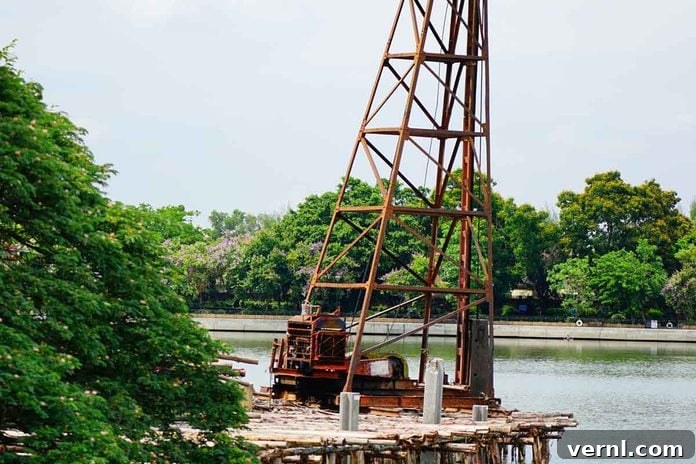
The scale and complexity of your dock installation project will largely dictate the type and amount of equipment you’ll need. Depending on the size, unique shape, and specific design of your chosen dock, you might find yourself needing to engage with heavy machinery like an excavator or a specialized piledriver to achieve proper installation. While these machines certainly represent a significant rental expense, for larger, more intricate dock installations, they may not just be helpful – they could very well be your only practical, efficient, and safe option. Attempting to manage extremely heavy or unwieldy components without the right tools can be dangerous, inefficient, and potentially damaging to both your materials and the surrounding environment.
Consider, for example, the construction of crib docks, a design known for its exceptional stability and permanence. The wooden cribs that form the foundational support for these docks are inherently massive and extremely heavy, even before they are filled with stones or concrete to provide ballast. While a team of strong friends might be able to manually maneuver smaller cribs into the water, the sheer weight, awkwardness, and submerged nature of larger cribs make manual installation highly improbable, if not outright dangerous. This is where an excavator becomes an invaluable asset. With its powerful hydraulic arm and precise controls, an excavator can dramatically simplify and expedite the crib installation process. Strategically placed chains or lifting slings and the skillful operation of an experienced heavy equipment operator can meticulously position even the largest cribs into their designated spots in the water in a fraction of the time and with far greater safety and accuracy than manual methods.
For pile docks, where stout pilings are driven deep into the lakebed or riverbed to provide primary structural support, a specialized piledriver is almost invariably a necessity. A piledriver is a heavy piece of equipment designed to vertically drive piles into the ground or submerged substrate with immense, controlled force. Manually attempting to pound large, often 8-inch or 10-inch diameter, pilings into a lakebed is an extremely arduous, time-consuming, and often ineffective task, especially in challenging soil conditions. A rented piledriver ensures that the pilings are driven to the correct depth and alignment, providing the robust and stable foundation essential for the integrity and longevity of a pile dock. This precision prevents future shifting and maintains the dock’s levelness. Before you commit to a specific dock design, thoroughly assess the potential need for such heavy machinery, factor rental costs into your budget, and consider whether you possess the necessary operating skills or if hiring a skilled, licensed operator is a more prudent choice for safety and efficiency. Proper equipment ensures not only installation efficiency but also the crucial structural soundness and long-term safety of your finished dock.
Secure Your Freedom: Anchor Your Floating Dock Properly
For certain waterfront conditions, a floating dock emerges as the optimal choice, offering unparalleled versatility and adaptability where other dock types might falter. This is particularly true in deep lakes where fixed pilings are impractical or cost-prohibitive, in areas with soft, muddy, or silty bottoms where rigid supports would sink or destabilize, or in lakes that experience significant water depth fluctuations – more than a foot or so – over the course of a year. The inherent ability of a floating dock to rise and fall seamlessly with the water level makes it an incredibly low-maintenance and robust solution in such dynamic environments, preventing the dock from becoming submerged or stranded. However, the key to its success and long-term stability lies entirely in its anchoring system.
When installing your floating dock, meticulous attention to its anchoring system is paramount to ensure stability, safety, and longevity. The most common and often easiest option involves the use of concrete block anchors. These heavy, dense, submerged blocks provide the necessary weight to counteract the buoyancy of the dock and resist formidable forces from wind, waves, and currents. If your prefabricated dock kit does not include anchors, they are relatively straightforward and economical to make yourself using readily available concrete forms and basic materials, allowing for customization of size and weight to suit your specific needs.
Whether you opt for pre-made, commercially available anchors or choose to pour your own custom blocks, a critical consideration is the number and individual weight of these anchors. You will almost certainly need at least four robust anchors to secure your dock sufficiently, preventing it from spinning erratically, drifting away, or being tossed around in windy conditions or when subjected to strong waves. As a general guideline, aim for an individual anchor weight of at least 250 lbs. (approximately 113 kg) or more. For larger floating docks, or those exposed to particularly turbulent or open-water conditions, even heavier and more numerous anchors might be necessary to ensure maximum stability and prevent any unwanted movement. It’s always better to over-anchor than under-anchor.
Proper placement and connection of these anchors are equally important. Securely fasten one concrete anchor to each corner of your floating dock using thick, heavy-duty galvanized chains. A highly effective method for enhanced stability is to crisscross the chains, so that each anchor is connected not just to its adjacent corner, but also diagonally across to the opposite corner, or at least fastened such that the anchor exerts pull from a more central point rather than just directly down from the corner. This crisscross or diagonal configuration distributes the tension and resistance more effectively, minimizing rotational movement and lateral drift, thus making for a significantly stronger and more resistant installation against various environmental forces.
Finally, ensure that the anchor chains are fastened to the dock using heavy-duty, openable chain links or robust shackle fasteners. This practical design choice offers a crucial advantage for seasonal waterfront property owners: it allows for easy removal of the dock from its anchors when it’s time to close your cabin for winter. Disconnecting the dock from its anchors simplifies the process of lifting it out of the water, dismantling sections, or moving it to a protected area, thereby protecting it from potential ice damage, extreme storms, and severe winter weather. Then, come spring, you can effortlessly replace and reconnect it for another season of enjoyment, extending the life of both your dock and its anchoring system, and ensuring it remains a safe and functional asset for years to come.
Build to Last: Don’t Skimp On Crib Dock Timbers
Crib docks are renowned for their exceptional solidity and permanence, representing one of the most robust, stable, and low-maintenance dock designs once they are properly installed in the water. This traditional and incredibly durable type of dock is constructed by sinking large, open-sided timber crates, commonly known as “cribs,” into the water, then filling them with heavy stones, gravel, or concrete to provide immense stability, ballast, and resistance to natural forces. Once these foundational cribs are meticulously placed and secured on the lakebed, the dock structure itself – typically a wooden frame and decking – is built on top. Crib-style docks are a favored choice for serious anglers and boat owners who seek an incredibly secure, unyielding, and long-lasting mooring solution for their vessels, often built to withstand decades of use. However, despite their inherent strength, it’s remarkably easy to compromise their longevity and structural integrity by improperly constructing the all-important underwater cribs, which can lead to premature structural failure, costly repairs, and significant future problems.
To avoid this critical pitfall and ensure your crib dock stands the test of time, enduring seasons of harsh weather and heavy use, it is absolutely essential to use thick, pressure-treated beams for the entire underwater portion of your crib structure. These timbers will be constantly submerged or exposed to high moisture, making inherent resistance to rot, decay, insect damage, and fungal growth paramount. Skimping on the dimensions of these crucial timbers is a false economy that will undoubtedly lead to costly repairs and structural issues down the line. We strongly recommend using timbers that are at least 6×6 inches in cross-section. Larger dimensions, such as 8×8 or even 10×10 inches, offer even greater structural integrity, weight, and longevity, particularly for larger or more exposed docks that will face significant wave action or currents. The initial investment in higher quality, larger timbers will pay dividends in reduced maintenance and extended lifespan.
Another vital, yet frequently overlooked, step in crib dock construction is adequately covering the bottoms of the cribs with additional lumber, such as heavy-gauge pressure-treated planks. This seemingly small detail serves a crucial purpose: it prevents the heavy rocks, gravel, or concrete fill material from slowly sinking into a soft or silty lake bottom over time. Without a solid, continuous base, the concentrated weight of the fill, combined with natural lakebed movement and water dynamics, can cause the crib to gradually settle unevenly, compromising the dock’s levelness, stability, and overall structural integrity. A robust timber bottom acts as a snowshoe effect, distributing the immense weight over a much larger surface area and providing a stable, uniform foundation that resists settling into soft sediment. This prevents the “hourglass” effect where fill material slowly escapes or compresses under the crib.
Before you even begin the construction process, a crucial regulatory check is required. Double-check with your local community, environmental agencies (such as the EPA or state-level departments of environmental quality), or waterfront authorities to confirm that they do not prohibit the use of pressure-treated lumber in local lakes, rivers, or waterways. Some jurisdictions have strict regulations regarding the chemicals used in certain types of treated lumber (e.g., CCA-treated wood) and their potential impact on aquatic ecosystems and wildlife. Ignoring these regulations can lead to significant fines, mandatory removal of your dock, and lengthy delays in your project. Ensuring compliance from the outset by selecting approved materials and securing any necessary permits is a critical planning step for any crib dock project. By adhering to these guidelines – using substantial, appropriately treated timbers, reinforcing the crib bottoms, and verifying local environmental regulations – you’ll lay the groundwork for a crib dock that offers decades of dependable service, robust stability, and peace of mind.
Location, Location, Location: Choosing the Right Spot for Your Pipe Dock
Pipe docks are highly favored for their relative simplicity in both installation and ongoing maintenance, making them an attractive and often cost-effective option for many waterfront property owners. Their straightforward design typically involves a decking surface supported by a robust framework that rests on sturdy aluminum or galvanized steel legs, commonly referred to as “pipes,” extending directly to the lake or river bottom. However, for a pipe dock to function effectively, reliably, and safely, it requires a very specific set of environmental conditions. Essentially, choosing the right location along your shoreline is not just important; it’s absolutely critical for the long-term success, stability, and usability of this particular dock style.
The primary requirement for a pipe dock is relatively shallow water with a consistently firm and stable lake or river bottom. Since the aluminum or steel legs are designed to make direct, solid contact with the submerged substrate, the depth of the water is a significant limiting factor. You will encounter considerable difficulty, if not outright impossibility, when attempting to install a pipe dock if the water depth regularly exceeds six to seven feet. Beyond this depth, the length of the pipes becomes unwieldy, making installation cumbersome, unstable, and prone to flexing. Very long pipes can be difficult to set evenly, prone to bending or vibrating excessively in currents or waves, and the leverage forces on the dock structure significantly increase, potentially compromising overall stability and safety. Shorter pipes in shallower water inherently provide greater stability.
Equally important as water depth is the nature and composition of the lake or river bottom. If you are working with an extremely soft, silty, mucky, or very sandy lake bottom, there is a very high probability that the pipe legs will gradually sink over time. This gradual sinking, exacerbated by the constant movement of water, boat traffic, and the weight of the dock itself (along with any foot traffic or stored items), can slowly press the pipes deeper and deeper into the soft sediment. This unchecked settling can result in the dock becoming uneven, unstable, difficult and unsafe to use, and eventually submerged at undesirable angles, rendering it ineffective and requiring extensive re-installation or repair.
Fortunately, there’s an effective and widely adopted workaround for waterfronts with softer bottom conditions that still wish to utilize the benefits of a pipe dock. By adding flat, wide aluminum or heavy-duty plastic plates, commonly referred to as “pipe feet” or “mud plates,” to the ends of your pipe legs, you can dramatically improve their stability and prevent sinking. These pipe feet function much like snowshoes, distributing the weight of the dock over a much larger surface area than the narrow pipe end alone. This wider footprint significantly reduces the pressure per square inch on the lake bottom, thereby preventing the pipes from sinking into soft mud, silt, or loose sand. When selecting or constructing your pipe dock, always thoroughly assess your specific water depth and bottom composition, and plan accordingly to include these crucial pipe feet if soft bottom conditions are present, to ensure a stable, level, and long-lasting structure. Careful site selection and appropriate modifications are the foundation of a successful pipe dock installation.
Anchoring with Precision: Mount Your Lift Dock Solidly
Lift docks, also widely known as hinged docks or seasonal docks, offer a highly practical and innovative solution for waterfront property owners, particularly those residing in regions characterized by harsh winters, significant ice formation, or fluctuating water levels. Their key operational advantage lies in their unique ability to be tilted or entirely lifted out of the water during the off-season, thus effectively protecting them from potential ice damage, severe winter weather conditions, and prolonged submersion. This ingenious design significantly extends the lifespan of the dock, minimizes wear and tear, and drastically reduces annual maintenance and repair costs. However, the functionality, stability, and safety of a lift dock hinge entirely on the strength and reliability of its hinge plate anchoring system. Proper, robust installation of this critical component is not merely important; it is absolutely vital to ensure the dock swings up and docks correctly, securely, and without undue strain when connected to a winch or other lifting mechanism.
The hinge plate, which serves as the fundamental pivot point for the entire dock structure as it moves between its in-water and out-of-water positions, must be bolted to an anchor that is flat, exceptionally heavy, and immensely strong. This robust foundation is necessary to withstand the considerable dynamic forces exerted during the lifting and lowering operations, as well as the constant static and dynamic stresses from waves, wind, currents, and general use when the dock is in the water. Without a rock-solid, immovable anchor point, the hinge plate could shift, loosen, or even catastrophically fail, leading to significant damage to the dock, the lifting mechanism, or, worse, serious safety hazards for individuals using or operating the dock. The integrity of this anchor is paramount to the entire system.
If your particular section of shoreline boasts an ideal natural feature – a flat, expansive, and unbroken outcrop of bedrock or large boulders – you are exceptionally fortunate. This natural rock formation provides the perfect, immovable, and inherently stable base for your hinge plate. With the appropriate specialized tools, such as a powerful rock drill (hammer drill with carbide bits) and sturdy masonry anchor bolts or heavy-duty wedge anchors designed for extreme loads and marine environments, you can directly fasten the hinge plate securely to the rock face. This method offers unparalleled stability and permanence, often requiring minimal additional construction and providing the most durable foundation possible.
However, for most homeowners, such an ideal natural rock shoreline is unfortunately not the reality. In these more common scenarios, where natural bedrock is absent or unsuitable, you will need to create a suitable artificial anchor point. One highly effective and durable solution is to pour a large, thick, reinforced concrete pad directly at the desired hinge location. The exact dimensions, thickness, and reinforcement (e.g., rebar) of this concrete slab will vary significantly based on the size and weight of your lift dock, the anticipated loads, and the specific soil conditions. It’s crucial to consult engineering guidelines or experienced marine contractors to determine the appropriate specifications for your particular project, ensuring the pad is sufficiently robust and stable to handle the anticipated forces. A well-designed and properly poured concrete pad provides an incredibly stable and durable base for the hinge plate, mimicking the stability of natural rock.
Alternatively, if pouring concrete is not feasible, desirable, or permitted in your area, another robust option is to construct a heavy crib – similar in concept to those used for permanent crib docks – and fill it with heavy stones, gravel, or even concrete rubble. This constructed crib, once filled and settled, creates an artificial bedrock-like mass that offers a solid and unyielding backing for your lift dock’s hinge plate. Both the substantial concrete pad and the stone-filled crib provide the necessary mass, resistance to uplift, and stability to securely anchor the hinge plate, ensuring smooth, reliable, and safe operation of your lift dock for many years to come. Investing the time, effort, and resources to create this unshakeable foundation is the key to truly enjoying the benefits and convenience that a well-installed lift dock offers for your waterfront property.