Embracing Autumn: Beyond the Rake – Your Guide to Managing Fall Leaves
Autumn paints the landscape with a breathtaking palette of reds, oranges, and golds, bringing with it a myriad of beloved traditions. From the crisp joy of apple picking in orchards to the creative fun of pumpkin carving and the vibrant spectacle of gorgeous fall flowers gracing our gardens, there’s an undeniable charm to this season. Yet, as the spectacular changing autumn leaves flutter gracefully from the branches, they signal the arrival of a less-than-charming annual chore: raking. For many homeowners, the sight of a lawn blanketed in fallen leaves sparks an age-old question: Should I rake leaves or just leave them?
While traditional raking remains a common practice, a growing number of experts and environmental advocates are encouraging a different approach. The conventional wisdom of meticulously clearing every single leaf is being challenged by more sustainable and beneficial methods that not only save you time and effort but also contribute significantly to the health of your lawn and local ecosystem. Let’s delve into the various perspectives and discover a smarter way to handle nature’s autumn bounty.
The Ecological Argument: Why Leaving Leaves Matters
Conservationists, such as David Mizejewski of the esteemed National Wildlife Federation, strongly advocate for a less aggressive approach to fall cleanup. He suggests that homeowners “shouldn’t feel obligated to get rid of every last fallen leaf in your yard this fall.” This advice stems from a profound understanding of the critical role fallen leaves play in supporting local biodiversity and enriching the soil. A natural layer of leaves, far from being mere clutter, forms a vibrant ecosystem that becomes a sanctuary for countless wildlife species throughout the colder months.
Consider the delicate life cycles of butterflies and moths, many of which overwinter as pupae or eggs tucked safely within leaf litter. Toads, salamanders, and various beneficial insects find shelter, moisture, and hunting grounds beneath this protective blanket. Small mammals like chipmunks, shrews, and voles utilize leaf layers for nesting material and camouflage. By removing all leaves, we inadvertently destroy these vital habitats, disrupting the natural balance of our local environment. Furthermore, as these leaves naturally decompose, they return essential nutrients to the soil, mimicking the processes found in healthy forests. This organic matter improves soil structure, increases water retention, and provides a sustainable food source for soil microorganisms and earthworms, laying the groundwork for a healthier, more resilient garden and lawn come spring.
Beyond the Rake: The Smart Solution of Mulching Leaves
While the ecological benefits of leaving leaves are compelling, many lawn owners understandably worry about the aesthetic impact or the potential for a thick layer of leaves to smother their prized turfgrass. A heavy, matted layer of unmulched leaves can indeed block sunlight and air circulation, leading to patches of yellowed or dead grass. However, there’s a powerful and practical middle ground that allows you to reap many of the benefits of leaf decomposition without sacrificing the health or appearance of your lawn: mulching your leaves.
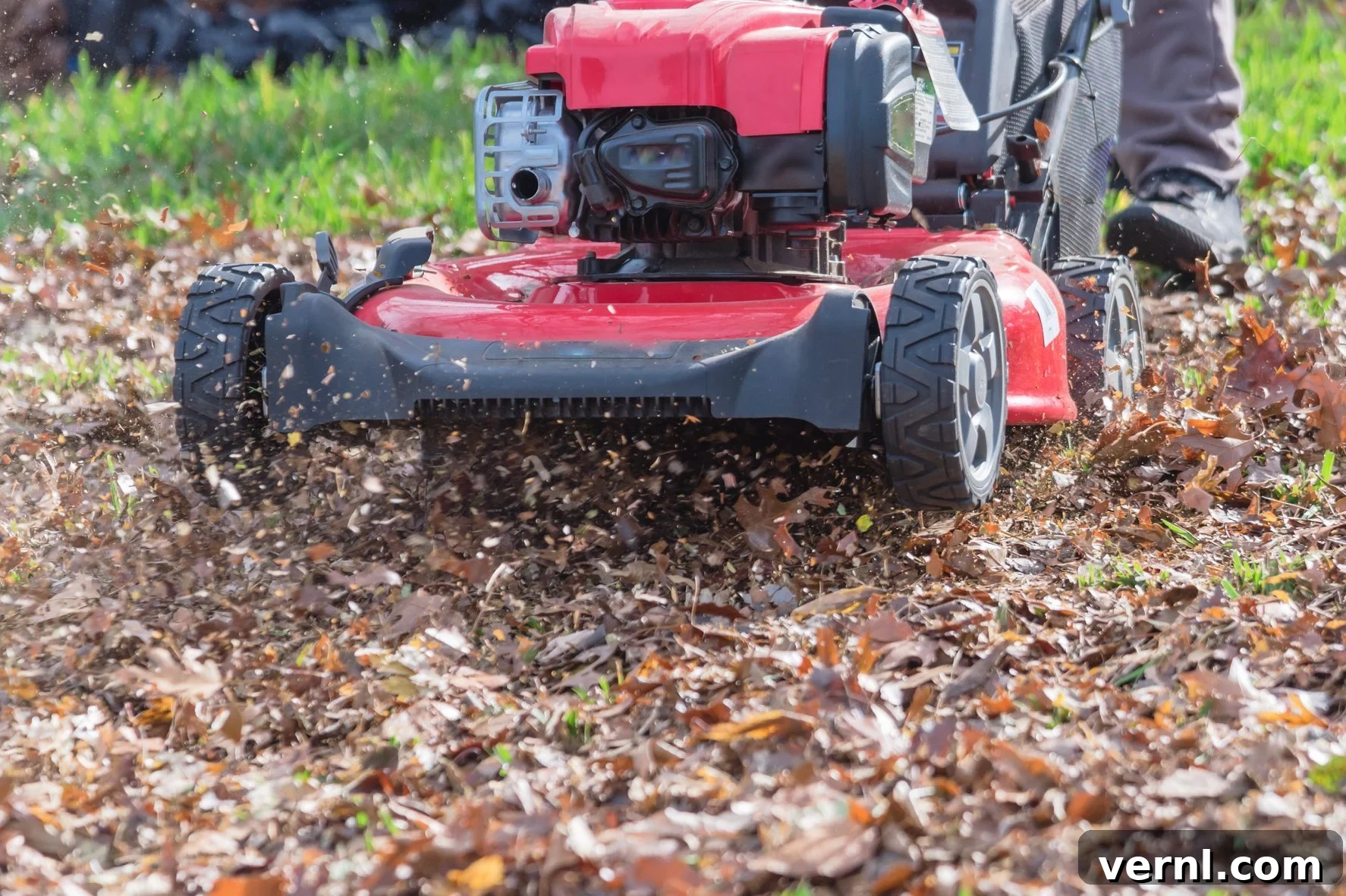
Mulching transforms whole leaves into finely shredded pieces, often described as “nature’s free fertilizer.” This process, typically achieved with a standard lawn mower, effectively breaks down the leaves into small, manageable fragments that can either be left on the lawn to naturally enrich the soil or collected and repurposed. Mulching leaves offers a multifaceted approach to fall lawn prep, allowing you to easily integrate organic matter back into your landscape. You can collect these minced leaves to repurpose them as a nutrient-rich mulch for garden beds, around trees and shrubs, or incorporate them into your composting efforts. This simple act not only improves your lawn’s health but also significantly reduces the effort, time, and expense typically associated with traditional raking and disposal.
How to Effectively Mulch Leaves with Your Mower
One of the greatest advantages of mulching leaves is its accessibility. You don’t need specialized equipment; most standard rotary lawn mowers are perfectly capable of the job. The process is straightforward and can be completed in just a few passes across your lawn. To ensure optimal mulching and prevent your mower from getting bogged down, aim to mulch when the leaves are relatively dry. Damp leaves can clump together, making them harder to chop finely and potentially clogging your mower.
Here’s a step-by-step guide to mulching leaves effectively:
- Prepare Your Mower: Begin by setting your mower’s cutting height to its highest setting. This allows the blades to hover above the grass, primarily focusing on shredding the leaves. If your mower has a mulching setting or a mulching blade, engage it for even better results.
- Remove the Grass Catcher (Optional): According to experts like Scotts, if your goal is to leave the mulched leaves on your lawn as fertilizer, remove the grass catcher. This allows the finely shredded leaves to be evenly distributed back onto the turf.
- Mow Over the Leaves: Drive your mower over the leaf-covered areas of your lawn. Depending on the density of the leaves, you may need to make multiple passes. Aim to reduce your leaf clutter to very small, dime-size or confetti-like pieces. The finer the pieces, the quicker they will decompose and the less likely they are to smother your grass.
- Check for Completion: You’ll know you’re done mowing leaves when about half an inch of grass can be seen through the mulched leaf layer. This indicates that the leaves have been adequately shredded and distributed.
- Collecting Mulched Leaves (Alternative): If you prefer to collect the mulched leaves for use in garden beds, for composting, or to bag them for disposal, simply keep your grass catcher on your mower. The finely chopped leaves will collect easily, making them much more compact and manageable than whole leaves. These collected leaf bits are excellent for composting or creating nutrient-rich leaf mold.
For best results, avoid letting leaf piles become excessively thick before mulching. A moderate layer is easier for your mower to handle, reduces strain on the engine, and results in more consistent shredding. If you have a very heavy accumulation, consider raking some into smaller piles first or making several passes over the same area.
The Myriad Benefits of Mulching Leaves with Your Mower
The act of mulching leaves with your mower is more than just a convenient chore-reducer; it’s a powerful strategy that yields a multitude of benefits for your lawn, your wallet, and the environment. This simple shift in fall cleanup practices can transform your yard from a burden into a thriving, self-sustaining ecosystem.
1. Unparalleled Nutrient Return and Soil Enrichment
One of the most significant advantages of mulching leaves directly into your lawn is the natural return of essential nutrients to the soil. As the finely shredded leaf particles decompose, they release nitrogen, phosphorus, potassium, and vital micronutrients back into the soil, essentially providing your grass with a slow-release, organic fertilizer. This continuous feeding helps maintain optimal soil fertility, promoting robust root growth and a vibrant, green lawn. The organic matter also improves soil structure, increasing aeration and its capacity to retain water, which means less watering for you, especially during drier periods.
2. Superior Weed Suppression
Mulched leaves act as an effective natural barrier against unwanted weeds. By covering bare spots between turf plants, the leaf mulch shades out weed seeds, preventing them from germinating and competing with your grass for resources. Studies conducted by turfgrass specialists at Michigan State University have provided compelling evidence of this benefit. Their research demonstrated a nearly 100 percent decrease in stubborn weeds like dandelions and crabgrass after mulching leaves into the lawn for just three consecutive years. Imagine a lawn virtually free of these common nuisances, achieved simply by recycling your leaves!
3. Significant Time, Effort, and Cost Savings
Raking leaves is notoriously laborious and time-consuming. Mulching eliminates the back-breaking effort of raking, bagging, and hauling heavy leaf piles. By simply mowing over your leaves, you save countless hours and spare your back the strain, allowing you more time to enjoy the autumn season. Beyond the physical savings, mulching also translates into financial benefits. You’ll save money on expensive garbage or lawn bags, and potentially on municipal leaf collection fees, which can add up significantly over time. It’s a win-win for your schedule and your budget.
4. Enhanced Environmental Stewardship
The environmental benefits of mulching are profound. Traditional leaf disposal often involves trucking leaves to landfills, where they contribute to methane gas emissions as they decompose without oxygen. If you burn leaves, you release harmful particulate matter and carbon into the atmosphere, contributing to air pollution and climate change. Mulching, conversely, keeps natural resources within your own yard, closing the nutrient loop and reducing your carbon footprint. It’s an eco-conscious choice that actively supports local ecosystems and reduces waste.
5. Supports Beneficial Microbes and Wildlife
Once the finely mulched leaf bits settle onto your lawn, they become a feast for an unseen army of beneficial microbes and earthworms. These tiny workers break down the organic matter further, aerating the soil, improving drainage, and making nutrients available to your grass roots. This rich, active soil biome is the foundation of a healthy lawn, fostering an environment where grass can thrive. Moreover, by retaining some of the organic matter, you continue to support a micro-habitat that benefits insects and small organisms vital to the larger ecosystem.
Repurposing Mulched Leaves: More Than Just Lawn Food
While leaving mulched leaves on your lawn is highly beneficial, you’re not limited to this single use. Collected mulched leaves are an incredibly versatile resource for your entire garden:
- Garden Bed Mulch: Apply a layer of mulched leaves (about 2-4 inches thick) around your perennial plants, shrubs, and trees. This acts as an excellent insulating mulch, suppressing weeds, retaining soil moisture, and regulating soil temperature.
- Compost Booster: Add mulched leaves to your compost pile. They are a fantastic source of “brown” carbon-rich material, balancing out “green” nitrogen-rich kitchen scraps and garden waste. The small size of mulched leaves means they break down much faster than whole leaves.
- Leaf Mold: For the ultimate soil conditioner, create a separate pile of solely mulched leaves. Over 1-2 years, these will break down into “leaf mold,” a rich, crumbly, dark brown material renowned for its incredible ability to improve soil structure and water retention. It’s often called “black gold” by gardeners.
- Winter Protection: Use mulched leaves as a protective layer over delicate plants and bulbs to insulate them from harsh winter temperatures.
Mowing and Mulching: The Smart, Sustainable Choice for Your Yard
In conclusion, the annual dilemma of fall leaves presents an opportunity to embrace a more sustainable and beneficial approach to lawn care. While the traditional image of raking piles of leaves is deeply ingrained, the evidence overwhelmingly points towards mulching as a superior alternative. It saves you invaluable time, spares your muscles, and significantly reduces costs associated with yard waste disposal. More importantly, it transforms what many consider a nuisance into a valuable resource, enriching your soil, suppressing weeds, and fostering a healthier, more resilient lawn.
By opting for mulching, you’re not just maintaining your yard; you’re actively contributing to a healthier environment. You divert organic waste from landfills, reduce pollution, and support the natural ecological cycles that benefit local wildlife. This season, put away the rake, fire up your mower, and join the growing movement of homeowners who are discovering that the best way to deal with fallen leaves isn’t to get rid of them, but to recycle them right back into their landscape. Your lawn, your wallet, and the environment will thank you for it.