
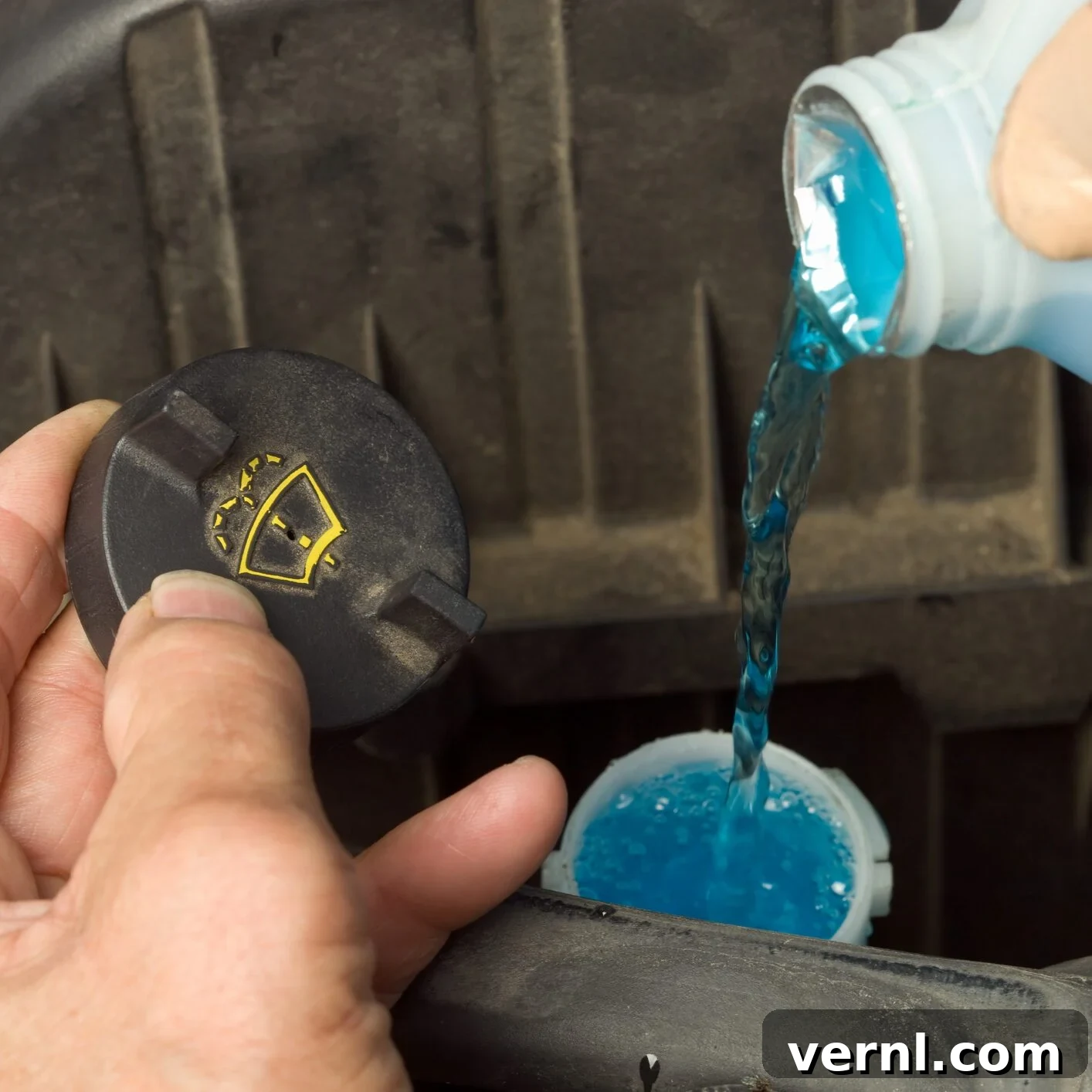
The Ultimate Guide to DIY Windshield Wiper Fluid: Save Money, Enhance Safety
With over five decades of driving experience and a career deeply rooted in the auto repair industry as an ASE and General Motors Master Technician, I keenly understand the critical importance of clear visibility on the road. This understanding is amplified when navigating through challenging weather conditions like ice and snow. However, it’s crucial to recognize that not all windshield wiper fluids are created equal. Their formulations vary significantly, offering different freezing points, specialized cleaning capabilities for dust and road grime, or powerful bug-splatter removal for those long summer journeys.
While a standard gallon of “blue stuff,” typically rated for temperatures above 32°F, can still be found for around $4 at most supermarkets or auto parts stores, what happens when you can’t readily access these supplies? The good news is that you can easily craft your own effective windshield wiper fluid using common household items, many of which are likely already in your cleaning cabinet. This comprehensive guide, enriched by the insights of an ASE-certified body shop manager and a certified K-12 chemistry teacher, will walk you through the process. By the end, you’ll be equipped to prepare a homemade solution that not only enhances visibility but also contributes to your overall driving safety and comfort, regardless of the season.
Can You Make Your Own Windshield Wiper Fluid? An Expert Perspective
The straightforward answer is yes – creating your own windshield wiper fluid is neither difficult nor overly complex. It presents an economical and often more environmentally friendly alternative to many commercial brands. However, this simplicity comes with a vital caveat: using improper ingredients or incorrect dilution ratios can potentially lead to damage or staining on your car’s delicate finish. Therefore, precision and understanding the chemistry behind your concoction are paramount.
According to Eric Heigold, an ASE Master Technician and seasoned body shop manager, the key lies in selecting “the proper ingredients in the correct dilution [ratio of ingredients to water].” Heigold emphasizes the importance of this balance, noting a specific example: “One part 70 percent isopropyl alcohol mixed with four parts distilled water is used to remove wax and other contaminates from paint [before repainting or waxing], so at the right strength, it’s safe to use [to make washer fluid].” This expert insight highlights that with the right knowledge, household items can indeed be safely repurposed for automotive care.
Advantages of Crafting Your Own Wiper Fluid
- Quick and Easy Preparation: Most DIY recipes require minimal time and effort, using ingredients you might already have on hand, making it a convenient solution for unexpected low fluid warnings.
- Eco-Friendly Choice: By reusing a gallon jug and selecting biodegradable ingredients, you significantly reduce plastic waste and exposure to harsh chemicals found in some commercial formulations, contributing to a greener planet.
- Superior Winter Performance: Homemade fluids can be precisely tweaked to offer enhanced freezing protection, making them exceptionally effective in harsh winter weather. You can adjust the alcohol content to suit the specific climate you live in.
- Tailored Solutions: The ability to customize ingredients allows you to address specific cleaning needs. Add more bug-cutting agents for summer, or increase alcohol for colder conditions, ensuring optimal performance for your particular driving environment.
Potential Pitfalls and How to Avoid Them
- The Peril of Tap Water: Using ordinary tap water can lead to serious issues. As science and chemistry teacher Greg Feliz explains, “Tap water can cause the wiper fluid nozzles to clog; think of mineral deposits clogging a steam iron.” These deposits can accumulate over time, blocking sprayers and potentially damaging your washer pump. Always opt for distilled water to prevent this.
- Vinegar’s Double Edge: Feliz notes that vinegar is a “weak acid.” While distilled white vinegar is generally safe, using other types of vinegar (e.g., apple cider vinegar) or excessive concentrations can potentially stain your car’s paint or windshield, leaving unsightly marks. Stick to distilled white vinegar in recommended ratios.
- Alcohol Concentration: While vital for freeze protection, using too much alcohol—especially methanol or denatured alcohol—can be detrimental. High concentrations can strip waxes, damage paint finishes, and even corrode certain rubber and plastic components over time. Always adhere to recommended dilution ratios.
- Flammability Warnings: Greg Feliz underscores a critical safety concern: “All alcohols are flammable and must be stored safely.” When preparing or storing homemade wiper fluid containing alcohol, ensure adequate ventilation, keep it away from open flames, and store it in a cool, dark place out of reach of children and pets.
A Crucial Cautionary Tale: The Dangers of Incorrect Ingredients
My own experience serves as a stark reminder of the importance of precise ingredient selection and dilution. It was a snowy winter evening, and my washer reservoir was critically low. Working at a dealership, I found that we were entirely out of commercial washer fluid. With a long drive home ahead, I urgently needed a solution. Someone in the body shop suggested using alcohol, advising a simple 50/50 mix with water – “It’ll be fine,” they assured me. Trusting the advice, I grabbed what I thought was suitable alcohol. Unfortunately, what I actually picked up was full-strength, denatured alcohol, not the gentler isopropyl variety, and certainly not at a safe dilution.
The consequences became painfully clear the following week. The highly concentrated denatured alcohol mixture had completely stained the paint on both the roof and hood of my vehicle. The once pristine finish was marred by milky, irreversible marks, necessitating an extensive and expensive paint job to rectify the damage. This costly mistake indelibly taught me that while homemade solutions can be incredibly effective, understanding the specific properties and correct ratios of each ingredient is not just a recommendation but a critical safety and financial imperative. Always double-check your ingredients and follow proven recipes.
Step-by-Step: How to Craft Your Own Windshield Wiper Fluid at Home
DIY windshield wiper fluid recipes are widely accessible, offering a practical and cost-effective solution for maintaining clear visibility. Having personally tested and relied on the following recipe, I can attest to its effectiveness, matching the performance of many ready-made fluids. This recipe is simple, efficient, and uses readily available household items.
Essential Ingredients You’ll Need
- 32 ounces White Distilled Vinegar: This acts as a primary cleaning agent, effectively cutting through grime, road salt, and light oils without leaving streaks. Its mild acidic nature also helps in dissolving hard water spots and minor mineral deposits. Ensure it’s distilled white vinegar to avoid unwanted color or residue.
- 96 ounces Distilled Water: This is arguably the most crucial ingredient. Distilled water is free of minerals and impurities that are present in tap water, which can otherwise lead to clogging of your windshield washer nozzles and pump over time. It ensures a clear spray and protects your system.
- Three to Four Drops of Dawn Dish Detergent or a Tablespoon of Car Wash/Shampoo: A small amount of soap drastically improves the fluid’s ability to break down dirt, grease, and bug splatter. Dish detergent, especially brands like Dawn, are highly effective surfactants. Alternatively, a dedicated car wash shampoo is formulated to be gentle on automotive finishes, providing a streak-free clean. Avoid using too much, as excessive suds can be problematic.
- Clean One-Gallon Jug: This will be your mixing and storage container. An empty milk jug or a previously used commercial wiper fluid container works perfectly. Ensure it’s thoroughly cleaned to prevent contamination.
- Blue Food Coloring (Optional): Adding a few drops of blue food coloring isn’t essential for performance but serves a practical purpose. It makes your homemade fluid visually distinct, resembling commercial products, and helps prevent accidental ingestion if stored improperly. It also makes it easier to identify in your reservoir.
Simple Mixing Instructions
- Combine Ingredients Carefully: In your clean one-gallon jug, pour in the 96 ounces of distilled water first. Then, add the 32 ounces of white distilled vinegar. Finally, add the three to four drops of Dawn dish detergent (or one tablespoon of car wash shampoo) and the optional blue food coloring. Close the jug tightly and gently shake or swirl to ensure all ingredients are thoroughly mixed. Avoid vigorous shaking if using dish soap to prevent excessive foaming.
- Test the Solution: Before pouring the mixture into your car’s reservoir, always perform a patch test. Apply a small amount of the solution to an inconspicuous area of your car’s paintwork (such as under the hood, inside the trunk lid, or a small section of the bumper that isn’t easily visible). Let it sit for a few minutes, then wipe it off. Check for any signs of discoloration, staining, or damage. This crucial step ensures the solution is safe for your vehicle’s finish.
- Fill the Reservoir: Once you’ve confirmed its safety, carefully pour the freshly mixed homemade fluid into your vehicle’s windshield washer fluid reservoir. Use a funnel to prevent spills and ensure precise filling.
- Importance of Rinsing: As Eric Heigold advises, “Rinsing off your car, no matter what type of washer fluid you use, will help protect the finish.” After using your homemade wiper fluid, especially if you’ve been cleaning stubborn grime, a quick rinse with plain water can help remove any remaining residue and further protect your car’s paint.
Customizing Your Fluid for Extreme Weather Conditions
- Boosting Freeze Protection for Colder Climates (Isopropyl Alcohol): If you live in an area where temperatures frequently drop below freezing, you’ll need to enhance your fluid’s frost resistance. For protection down to approximately 20°F (-6°C), modify the basic recipe: cut the distilled white vinegar to 16 ounces and replace it with 16 ounces of 70 percent or higher isopropyl alcohol. This adjustment significantly lowers the freezing point without being overly aggressive on your car’s finish.
- Advanced Winter Protection (Methanol – with Strong Safety Warnings): For extreme cold, where temperatures plunge below -10°F (-23°C), Greg Feliz notes that “Through the magic of chemistry, 40 percent methanol will prevent washer fluid from freezing.” However, he adds, “Although the dilution ratio is relatively low, methanol is a strong solvent [and] proper dilution is important to decrease harming the finish.” Methanol is highly flammable and toxic; handling it requires extreme caution, including proper ventilation, gloves, and eye protection. Due to its hazardous nature, many prefer to use commercial winter formulations rather than attempting methanol-based DIY solutions.
Safety Best Practices When Preparing Homemade Fluids
While making your own wiper fluid is generally safe, it’s essential to follow some basic safety guidelines, especially when dealing with alcohol or other chemicals. Always work in a well-ventilated area to avoid inhaling fumes. Wear protective gloves and eye protection to prevent skin contact or splashes. Keep all ingredients and the finished product out of reach of children and pets. Clearly label your homemade fluid, indicating its contents, and store it in a cool, dry place away from direct sunlight and heat sources.
An Innovative Alternative: Windshield Wiper Tablets
For those seeking a convenient middle-ground between buying commercial fluid and mixing everything from scratch, windshield wiper tablets offer an excellent alternative. These compact tablets are small, making them incredibly easy to store in your glove compartment or garage without taking up much space. Their ease of use—simply drop one into water—adds to their appeal, especially for busy individuals.
The Benefits of Wiper Tablets
Wiper tablets are not only a space-saving solution but also prove to be highly cost-effective and environmentally friendly. Typically, one tablet dissolves to produce one gallon of windshield wiper fluid, significantly reducing the volume of plastic waste compared to buying pre-filled gallons. Beyond cleaning dirty windshields, their effervescent qualities mean they can also double as effective household cleaners, making them a versatile product. They dissolve quickly, leaving no residue, and are designed to be safe for automotive finishes.
Considerations for Using Tablets
While highly convenient, it’s important to note that you will still need to use distilled water with wiper tablets to prevent mineral buildup and clogs in your system. For winter driving, especially in freezing conditions, adding isopropyl alcohol to the solution is necessary to provide adequate freeze protection, similar to fully homemade fluids. Always check the tablet’s instructions for specific dilution recommendations and safety guidelines for optimal performance.
Maximizing Visibility: Beyond the Fluid
While the right windshield wiper fluid is crucial, it’s only one part of maintaining optimal visibility. The best fluid in the world won’t compensate for worn or damaged equipment. My experience has shown that the windshield washer fluid reservoir and wiper blades are among the most overlooked maintenance items in our vehicles. Regular inspection and timely replacement of these components are just as vital as the fluid itself.
The Critical Role of Wiper Blades
Your wiper blades are the first line of defense against rain, snow, and road grime. Over time, the rubber squeegees can harden, crack, or tear, leading to streaks, chattering, or ineffective clearing of the windshield. A general rule of thumb is to replace your wiper blades every six to twelve months, or as soon as you notice any degradation in their performance. Signs of worn blades include streaking, skipping, squeaking, or sections of your windshield remaining wet after a swipe. Investing in high-quality blades, appropriate for your climate, can dramatically improve visibility and safety.
Maintaining Your Washer Fluid Reservoir
The washer fluid reservoir is often forgotten until it’s empty, but its condition is paramount to the system’s function. Over time, scum, muck, or even rust can build up inside the reservoir, especially if tap water or improper fluids have been used. This buildup can clog the washer fluid pump or the nozzles, leading to poor spray or complete system failure. Regularly inspect your reservoir for any signs of contamination. If you find significant buildup, it’s advisable to drain and flush the system, or in severe cases, replace the reservoir and pump to prevent future clogs and ensure a consistent, powerful spray.
Meet Our Automotive & Chemical Expertise
- Greg Feliz, M.S., brings a wealth of knowledge with over 15 years in industry and an additional 20 years in the classroom. He is a Pennsylvania Department of Education certified K-12 chemistry, science, and mathematics teacher, currently sharing his expertise at Lansdale Catholic High School in Lansdale, PA.
- Eric Heigold is an ASE and General Motors master technician, boasting over 40 years of experience in the automotive repair industry. His career spans roles as a technician, shop foreman, and service manager, and he currently manages Faulkner Collision Center in Philadelphia, PA.
Further Resources for Informed Driving
- Car Fluid Guide: “What Chemicals Are in Windshield Washer Fluid and Their Impact on Safety and Performance” (Oct 2024)
- Mighty Auto Parts: “Prestone All Season 3-1 Windshield Washer Fluid; Safety Data Sheet” (Jan 2019)
- John Stella, ASE certified technician and senior bodyshop estimator for Faulkner Collision in Phila., PA.; e-mail interview, Jan. 24, 2025.