
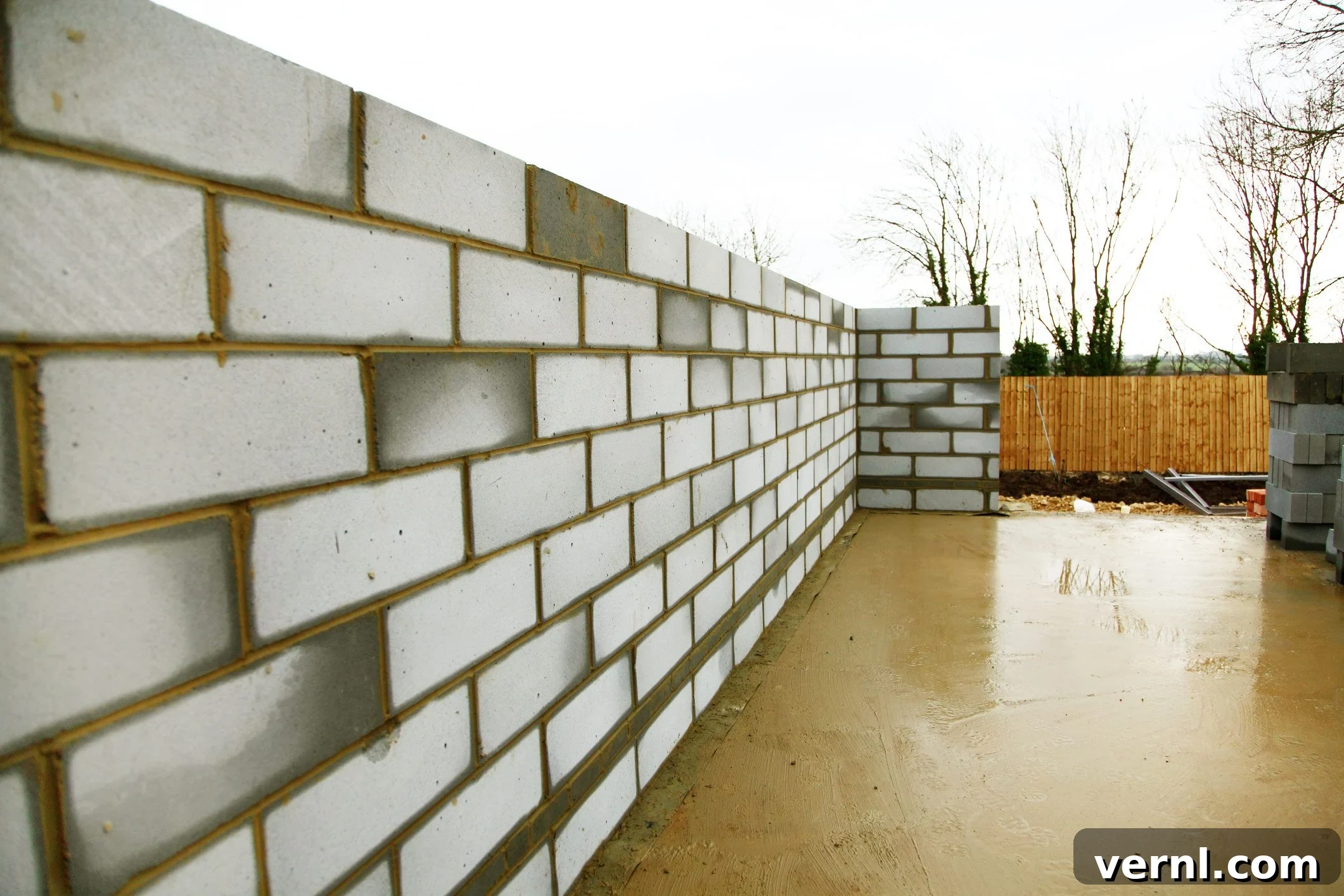
In the vast landscape of building materials, few items possess a lineage as intriguing and transformative as the humble cinder block. True cinder blocks are a fascinating vestige from a bygone industrial era, born from a time when coal burning was a less efficient process, leaving behind an abundance of waste cinders. These lightweight, porous aggregates would eventually revolutionize construction for their unique properties.
The innovation that propelled cinder blocks into the mainstream began in 1913, thanks to Francis Straub, a brilliant brick mason from Pittsburgh. Straub ingeniously perfected a method to combine these waste cinders with cement, creating building blocks that were significantly lighter and offered superior insulation compared to the dense blocks made from traditional concrete. His patented design wasn’t just a technological leap; it was a strategic advantage. Straub’s cinder blocks were so distinctive in their porosity that you could actually drive a nail through them. This unique characteristic became his ingenious method for identifying patent infringements among competitors. He would frequently visit construction sites, attempt to pound a nail through a competitor’s block, and if successful, he would then pursue legal action for royalties.
While Straub’s invention marked a pivotal moment, the mass production of true coal ash cinder blocks largely ceased many years ago. Modern building practices and environmental regulations led to a significant shift in aggregate materials. Today, the blocks commonly referred to as “cinder blocks” are typically manufactured using Portland cement combined with lightweight aggregates such as volcanic pumice, expanded shale, clay, or slate. This evolution ensures continued benefits in weight and insulation, albeit with some differences in strength and composition from their coal-based predecessors.
These contemporary lightweight blocks are not as structurally robust as solid concrete blocks, making them less suitable for heavy load-bearing applications in larger structures. However, their reduced weight makes them considerably easier to handle and ideal for a variety of projects where extreme structural strength isn’t the primary concern. They are particularly popular for garden features, decorative low walls, and yard fences that do not exceed moderate heights. Their ease of manipulation makes them a favorite among DIY enthusiasts and landscapers alike.
Despite their utility, these modern lightweight blocks are not as universally available as standard concrete blocks. If you’re envisioning a substantial block fence project, you might find yourself opting for the more readily accessible and often slightly less expensive standard concrete blocks. When budgeting for such a project, whether it’s a garden divider or a perimeter fence, expect to pay approximately $9 to $12 per square foot for materials and installation. To put this into perspective, a six-foot-high fence could cost anywhere from $54 to $72 per linear foot, depending on the block type, terrain, and labor rates in your specific area.
Cinder Block Fence Cost Factors: A Comprehensive Breakdown
Constructing a cinder block or concrete block fence involves a range of costs, much like any other type of fencing project. Understanding these contributing factors is crucial for accurate budgeting and project planning. From preliminary groundwork to the final touches, each element plays a role in the overall expense. Here’s a detailed look at the key cost drivers:
Preliminary and Site-Specific Cost Considerations
- Mapping Property Lines: Essential for Legal Compliance and Neighborly Relations
If your fence is planned along the perimeter of your land, accurately knowing where your property lines are is paramount. This prevents inadvertent encroachment onto your neighbor’s property, which can lead to costly disputes and legal issues down the line. Hiring a professional land surveyor is a wise investment that can save you significant headaches. The cost for a land survey typically ranges between $300 and $700, providing peace of mind and legally sound boundaries for your project. This upfront cost is minor compared to the potential expenses of moving an incorrectly placed fence. - Obtaining Building Permits: Navigating Local Regulations
Many communities have specific regulations regarding fence construction, especially concerning height, material, and proximity to property lines or easements. Consequently, a building permit may be required before you can commence construction. Permits ensure that your fence meets local zoning laws and safety standards. The cost for a building permit can vary widely but generally falls within the $75 to $200 range. Failing to obtain a necessary permit can result in fines, project delays, or even the mandatory demolition of your newly built fence. Always check with your local municipal planning department before beginning any significant construction. - Demolition of Existing Fence or Structure: Clearing the Way
If your project involves replacing an old fence or removing an existing structure to make way for your new block wall, demolition costs will need to be factored in. For professional demolition services, expect to pay approximately $1 to $2 per linear foot. This cost can fluctuate based on the type of material being removed, its condition, and ease of access. While some homeowners opt for DIY demolition to save money, it’s important to consider the time, effort, and disposal requirements involved. Professionals have the right tools and expertise to safely and efficiently clear your site.
Specific Costs for Cinder and Concrete Block Construction
Beyond the preliminary costs, the actual construction of your block fence involves specific material and labor expenses that are unique to masonry projects:
- Choosing Your Blocks: Cinder, Concrete, and Decorative Options
The type of block you select will significantly influence your material costs. Standard cinder blocks, which are hollow and typically measure 8-in. by 8-in. by 16-in., usually cost between $2.50 to $3 per block. Comparable standard concrete blocks are often slightly less expensive, ranging from $2 to $2.50 each, primarily due to their more common aggregate composition and higher demand. For homeowners looking to add aesthetic appeal and character, split-faced blocks or other decorative concrete masonry units (CMUs) are available. These offer a textured, natural stone appearance and typically run from $2.50 to $3.50 each, reflecting their specialized manufacturing process and visual enhancement. The choice between these options depends on your budget, desired strength, and aesthetic goals. - Foundation and Footing Requirements: The Base of Stability
Every sturdy block wall requires a solid foundation. Standard concrete footing typically rises to ground level, providing a stable, level base for your blocks. This is a critical structural component that prevents settling and cracking. However, if you desire something more decorative or robust, such as a raised footing with an integrated stone veneer or a deeper, reinforced footing for higher walls, the costs will increase. The depth and width of the footing, along with the need for rebar reinforcement, are determined by the wall’s height, local building codes, and soil conditions. Skimping on the footing can compromise the entire wall’s integrity. - Impact of Terrain and Site Preparation: The Groundwork Challenge
The nature of your building site can dramatically affect project costs. Constructing a cinder block fence on rough, uneven, or sloped terrain is inherently more challenging and time-consuming than building on flat, level ground. Uneven terrain requires extensive site preparation, including grading, excavation, and potentially the construction of stepped foundations or retaining elements, all of which add to labor and material expenses. Difficult terrain may also necessitate specialized equipment, further increasing costs. Proper site preparation is essential to ensure the wall is plumb and stable. - Labor and Professional Installation Costs: The Skill of the Mason
Labor is often one of the most significant cost components in any masonry project. The hourly rate for skilled masons usually runs between $30 to $50 per hour, though this can vary considerably based on geographical location, experience, and demand. Labor costs tend to be higher in large metropolitan areas, particularly on the coasts, where the cost of living and specialized labor demand are elevated. While DIY construction can save on labor, complex projects benefit immensely from the experience and efficiency of professional masons who can ensure structural integrity, proper mortar application, and an aesthetically pleasing finish.
Cinder Blocks vs. Concrete Blocks: A Detailed Comparison for Informed Decisions
The terms “cinder block” and “concrete block” are often used interchangeably in everyday language, leading to confusion. However, understanding their distinctions is crucial for selecting the appropriate material for your construction project. Both are fundamental components in masonry, primarily made with Portland cement, but their defining difference lies in the type of aggregate used. This variation in composition leads to significant differences in their properties, applications, and performance.
Concrete blocks, the more common and structurally robust option, typically use a dense aggregate mixture of sand and gravel. This composition provides them with superior compressive strength, making them ideal for load-bearing walls and foundations. Cinder blocks, on the other hand, incorporate lightweight aggregates such as volcanic pumice, expanded shale, clay, or the original coal cinders. This makes them lighter and gives them different performance characteristics.
Key Distinctions in Performance and Application:
- Cost Differences: Cinder blocks, due to their specialized lightweight aggregates and often lower production volume compared to standard concrete blocks, can sometimes be slightly more expensive per unit. However, the cost difference is often marginal and can be offset by reduced labor costs due to their lighter weight and easier handling. Market availability also plays a role, with concrete blocks generally being more widely stocked.
- Structural Strength and Building Codes: This is perhaps the most critical distinction. Concrete blocks possess significantly higher structural strength and compressive resistance. They are the preferred choice, and often mandated by building codes, for load-bearing walls, foundations, and any structure requiring substantial structural integrity. Cinder blocks do not have as much structural strength, and some building codes specifically prohibit their use for major structural applications. If you’re building a retaining wall or any wall more than seven feet high, or one that will bear significant weight, it is unequivocally safer and often required to use concrete blocks with appropriate reinforcement.
- Weight, Handling, and Installation Ease: Here, cinder blocks hold a distinct advantage. Their lightweight composition makes them much easier to carry, lift, and place during construction. This is a considerable benefit for workers, reducing fatigue and potentially speeding up the construction process, particularly for DIY enthusiasts or projects with extensive runs of wall. Concrete blocks, being heavier, require more physical effort and can slow down manual installation.
- Insulation Properties: The porous nature of the lightweight aggregates in cinder blocks provides better insulating properties compared to the denser concrete blocks. This characteristic, which was a key innovation of Francis Straub’s original design, means that walls built with cinder blocks can offer improved thermal resistance, making them a good choice for garden structures or non-insulated outbuildings where some temperature moderation is desired.
- Aesthetic and Finish Options: Both block types can be finished in various ways, including stucco, paint, or stone veneer. However, the slightly rougher, more porous texture of cinder blocks can sometimes lend itself well to certain finishes. Concrete blocks offer a consistent surface that is excellent for smooth coatings or veneers.
Understanding these differences allows builders and homeowners to make informed decisions. It is also possible to combine cinder and concrete blocks within the same structure, strategically utilizing the qualities of both types. For instance, a concrete block foundation might support a lighter cinder block wall above ground, balancing strength and weight.
Poured Concrete Wall vs. Block Wall: Which is More Cost-Effective?
When planning a significant wall structure, particularly for a building foundation or a large retaining wall, homeowners often weigh the options between a poured concrete wall and a block wall. Each method has its advantages in terms of cost, strength, and installation complexity.
For a structural wall intended for a building foundation, a block wall constructed with concrete blocks generally costs about 20 percent more than a poured concrete wall. This increased cost for block walls primarily stems from the labor-intensive nature of laying individual blocks and the intricate process of reinforcing and filling their cores. However, if a concrete block wall is properly reinforced with steel rebar that extends through the hollow cores from the footing to the top, and these cores are completely filled with concrete (typically including pea-sized aggregate, also known as grout), it can often achieve a much greater structural strength than a standard poured concrete wall. This superior strength and durability make reinforced concrete block walls a preferred choice for basements, storm shelters, and retaining walls that need to withstand significant lateral pressures.
The cost dynamic shifts considerably when discussing smaller, non-structural projects. When you’re building a small garden fence, a low divider, or a simple raised planter, the extensive reinforcement requirements for structural integrity are generally not necessary. In these scenarios, the cost difference between pouring a small concrete wall and constructing a block wall (using either cinder or concrete blocks) isn’t as great. In fact, for simple, low walls, the costs could even be roughly the same. Poured concrete might involve formwork expenses, while block walls require mortar and more precise placement. The choice often comes down to personal preference, available skills, and the specific aesthetic desired for the garden space.
DIY Block Fence Construction vs. Hiring Professionals: Making the Right Choice
Deciding whether to tackle a block fence project yourself or hire professionals is a critical decision influenced by the project’s scope, your skill level, and your budget. Both approaches offer distinct advantages and challenges.
When to Embrace the DIY Challenge:
Building a cinder block or concrete block fence can be a highly rewarding DIY-friendly project, especially for smaller-scale endeavors. If you’re planning a modest two- or three-foot fence around your garden, or constructing a simple raised garden bed, and you possess basic masonry skills, there’s often no need to hire a professional. DIY is ideal for those who enjoy hands-on work, have the time, and are comfortable with precise measurements, mixing mortar, and laying blocks. Essential tools include a level, string line, trowel, hammer, safety gear, and access to a wheelbarrow for mixing. The satisfaction of building something with your own hands, combined with significant cost savings on labor, makes DIY an attractive option for appropriate projects.
Advantages of Professional Installation:
However, for larger, more complex, or structurally demanding block wall projects, considering professional installation is highly recommended. Here’s why:
- Expertise in Complex Terrain: If your project involves a long or high fence, particularly on uneven or sloped terrain, professionals possess the equipment and expertise for proper grading and site preparation. They understand how to establish level footings on challenging landscapes, ensuring the stability and longevity of your wall.
- Structural Integrity and Reinforcement: Professional masons have the knowledge and experience to correctly assess structural requirements. This includes determining the appropriate type and depth of footing, the necessity and placement of steel rebar reinforcement, and the correct application of grout to fill hollow block cores. For load-bearing walls or those subject to significant environmental pressures, proper reinforcement is non-negotiable for safety and durability.
- Advanced Drainage Solutions: Water management is paramount for any outdoor masonry structure. A pro understands which drainage methods to use, such as weep holes, gravel backfills, and French drains, to prevent hydrostatic pressure buildup behind retaining walls, which can lead to cracking, bulging, or even collapse over time.
- Adherence to Building Codes: Professionals are well-versed in local building codes and regulations. They ensure that your fence or wall meets all necessary standards, helping you avoid costly fines, rework, or legal issues down the line.
- Efficiency and Quality Finish: With their specialized tools, experience, and crew, professionals can complete projects more efficiently and deliver a higher quality, more aesthetically pleasing finish. They can achieve perfectly plumb and level walls with consistent mortar joints, ensuring a professional look that lasts.
- Warranty and Long-Term Durability: Many professional contractors offer warranties on their workmanship, providing peace of mind. Their expertise contributes significantly to the long-term durability and stability of your wall, protecting your investment.
Ultimately, the decision hinges on balancing your budget with the demands of the project and your own capabilities. For simple decorative walls, DIY is a viable and rewarding path. For anything requiring significant structural integrity, intricate design, or dealing with challenging site conditions, the investment in professional expertise is often well worth it.
Maintaining Your Block Wall for Lasting Durability
Once your cinder or concrete block wall is constructed, proper maintenance is key to ensuring its longevity and preserving its aesthetic appeal. While block walls are known for their robustness, a little care can significantly extend their lifespan and prevent costly repairs down the road.
Regular cleaning is one of the simplest maintenance tasks. Over time, block walls can accumulate dirt, mildew, moss, and other environmental debris. A good scrub with a stiff brush, warm water, and a mild detergent can restore its fresh appearance. For more stubborn stains, a pressure washer can be used with caution, ensuring the pressure is not so high that it damages the mortar joints or the block surface. Always test a small, inconspicuous area first.
Inspecting your wall periodically for cracks or signs of deterioration in the mortar joints is also important. Small cracks can be repaired using a masonry caulk or patching compound. For larger cracks or crumbling mortar, repointing (removing old, damaged mortar and replacing it with new) may be necessary. Addressing these issues promptly prevents water penetration, which can lead to more extensive damage, especially in climates with freeze-thaw cycles.
Consider applying a clear masonry sealer to your block wall. Sealers create a protective barrier that helps repel water, prevent efflorescence (a white powdery deposit), and make the wall easier to clean. This is particularly beneficial for walls in damp environments or those exposed to harsh weather conditions.
Finally, continue to monitor drainage around your block wall, especially for retaining walls. Ensure that drainage systems (like weep holes or gravel backfills) remain clear and functional. Proper drainage is crucial to prevent water from accumulating behind the wall, which can exert immense pressure and compromise its structural integrity over time.
Conclusion: Building with Confidence and Knowledge
From their humble origins born from coal cinders to their modern incarnations using lightweight aggregates, cinder and concrete blocks have proven to be versatile and durable building materials. Understanding the distinct properties of each, along with the various factors influencing project costs and construction methods, empowers homeowners and builders to make informed decisions.
Whether you’re planning a simple garden fence, a robust retaining wall, or a foundational structure, carefully considering the type of block, the necessity of permits and surveys, the impact of terrain, and the choice between DIY and professional installation will lead to a successful and lasting project. By prioritizing proper planning, execution, and ongoing maintenance, your block wall will stand as a testament to thoughtful construction, serving its purpose effectively and enhancing your property for years to come.