
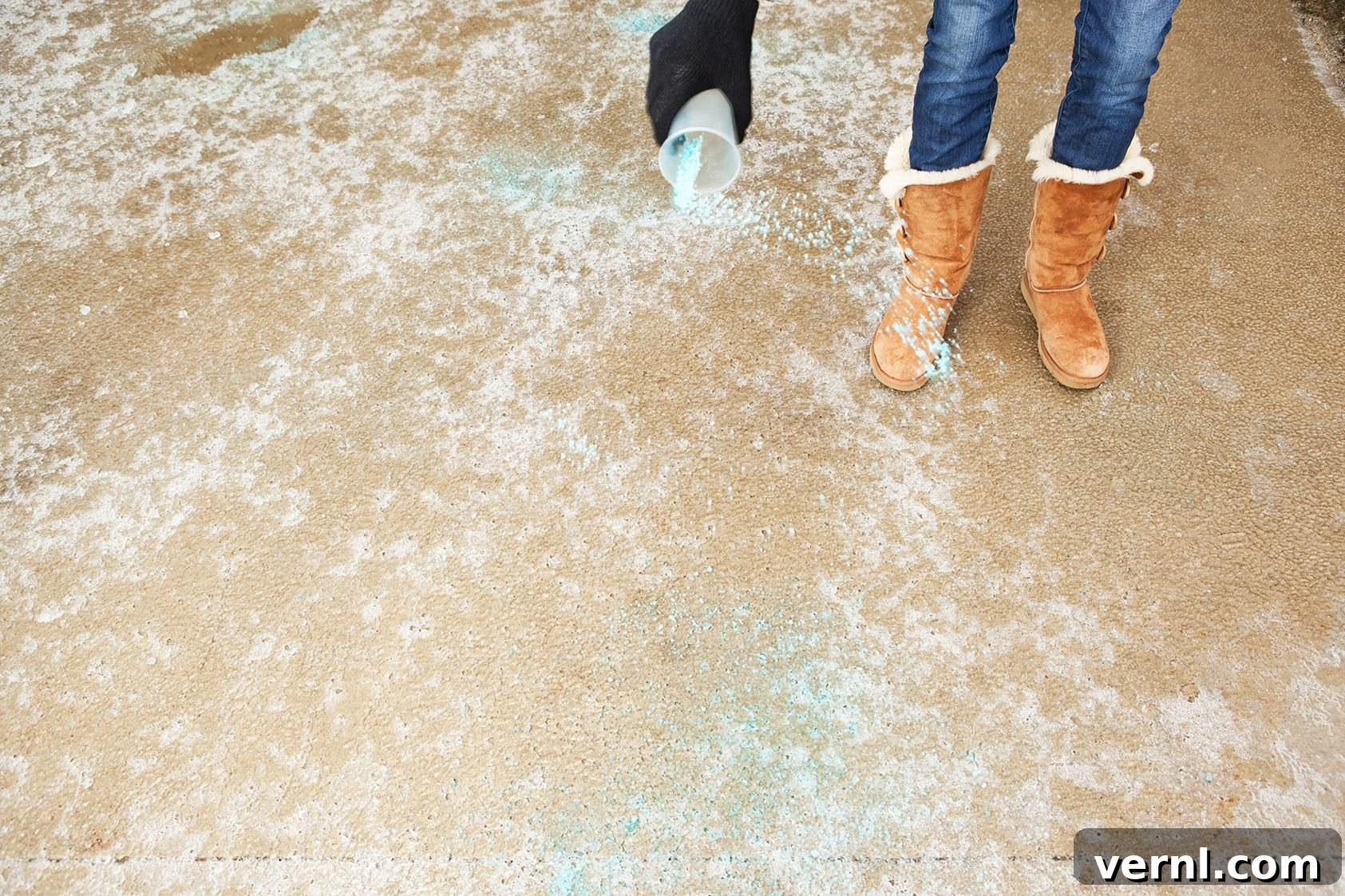
Ice Melt vs. Rock Salt: A Comprehensive Guide to Winter De-Icing
As winter’s chill begins to set in, many homeowners and property managers start contemplating their strategy for combating snow and ice. The challenge of maintaining safe, slip-resistant driveways, sidewalks, and pathways is a significant one. While ice melt and rock salt are popular choices for de-icing, understanding their differences, mechanisms, and impacts is crucial for making an informed decision. This guide will delve into the science behind these products, their pros and cons, and best practices for their use, ensuring your property remains safe throughout the colder months.
Understanding the Science of De-Icing
At the heart of both ice melt and rock salt lies a fundamental scientific principle: freezing point depression. Water normally freezes at 32°F (0°C). When a soluble substance, like salt, is added to water, it interferes with the ability of water molecules to form a stable crystalline structure (ice). This disruption effectively lowers the temperature at which the water will freeze. The more dissolved particles there are in the water, the lower its freezing point becomes.
However, this process isn’t limitless. Each type of salt has a eutectic temperature – the lowest temperature at which it can effectively melt ice. Below this point, the salt can no longer dissolve in the available water to create a brine solution, rendering it ineffective. Understanding this temperature threshold is key to choosing the right de-icer for your specific climate.
Rock Salt: The Traditional Choice
Rock salt, chemically known as sodium chloride (NaCl), is the most common and often the most affordable de-icing agent available. It is essentially the same chemical compound as table salt but in larger, unrefined crystalline chunks. Mined directly from underground deposits, rock salt is a naturally occurring mineral (halite).
How Rock Salt Works
When sprinkled on ice or snow, rock salt first dissolves into a liquid brine solution. This solution then mixes with the ice, lowering its freezing point. The ice then melts, and new ice takes longer to form. Rock salt is effective in temperatures down to approximately 5°F (-15°C). Below this temperature, its ability to dissolve and depress the freezing point significantly diminishes, making it less effective or even inert.
Pros of Rock Salt
- Cost-Effective: It is generally the least expensive option, making it a popular choice for large areas.
- Widely Available: Easily found in most hardware stores, supermarkets, and big-box retailers.
- Simple to Use: Requires no special application techniques beyond even spreading.
Cons of Rock Salt
- Temperature Limitations: Its effectiveness drops off significantly below 5°F (-15°C).
- Environmental Impact: High sodium content can be detrimental to plants, lawns, and shrubs. When it washes into waterways, it can harm aquatic life and contaminate drinking water sources.
- Damage to Property: The repeated freeze-thaw cycles exacerbated by rock salt can accelerate damage to concrete, asphalt, and masonry. It can also corrode metal (vehicles, railings) and leave white salt residue on surfaces and footwear.
- Pet Irritation: The rough crystals and chemical composition can irritate or burn pets’ paws and can be harmful if ingested.
Ice Melt: Advanced De-Icing Solutions
The term “ice melt” typically refers to de-icing products that are blends of various chemicals, often including sodium chloride, but supplemented with other compounds like calcium chloride, magnesium chloride, potassium chloride, or even urea. These blends are engineered to offer superior performance, especially in colder temperatures, and often claim to mitigate some of the drawbacks of pure rock salt.
Common Ice Melt Ingredients and Their Properties
- Calcium Chloride (CaCl₂): Known for its ability to melt ice rapidly and effectively down to temperatures as low as -25°F (-32°C). It is hygroscopic, meaning it attracts moisture from the air, which helps kickstart the melting process. It also generates heat (exothermic reaction) as it dissolves, further accelerating melting.
- Magnesium Chloride (MgCl₂): Effective down to about -15°F (-26°C), magnesium chloride is considered less corrosive to concrete and metals and less irritating to plants and pets than sodium or calcium chloride. It is also somewhat hygroscopic.
- Potassium Chloride (KCl): Effective down to approximately 12°F (-11°C), potassium chloride is generally considered safer for plants and pets than sodium chloride. However, it is not as fast-acting or effective at very low temperatures as calcium or magnesium chloride.
- Urea (Carbamide): A nitrogen-based compound often used in fertilizers, urea can melt ice down to about 15°F (-9°C). It is less corrosive and generally safer for plants and pets, but it is less effective at lower temperatures and can contribute to water pollution through nutrient runoff.
- Calcium Magnesium Acetate (CMA): Often marketed as a “green” or “environmentally friendly” de-icer, CMA is derived from dolomite and acetic acid. It works by reducing the adhesion of ice to surfaces rather than significantly lowering the freezing point. CMA is biodegradable, non-corrosive, and much safer for concrete, vegetation, and pets. Its main drawback is its higher cost and slower action compared to chloride-based products.
Pros of Ice Melt Blends
- Superior Performance in Cold: Many ice melt blends are effective at significantly lower temperatures than rock salt, often down to -10°F (-23°C) or even colder with high calcium chloride content.
- Faster Action: Ingredients like calcium chloride create an exothermic reaction, generating heat and melting ice more quickly.
- Reduced Damage (in some formulations): Certain blends, especially those with higher magnesium chloride or CMA content, are formulated to be less corrosive to concrete and metals and less harmful to plants and pets.
Cons of Ice Melt Blends
- Higher Cost: Generally more expensive per bag than pure rock salt, especially for premium formulations.
- Varied Effectiveness: The performance can vary widely between brands and formulations, depending on the chemical ratios.
- Still Corrosive: While some blends are less corrosive, most still contain chloride salts that can cause corrosion to concrete and metal, particularly with overuse.
- Potential for Pet Irritation: Despite “pet-friendly” claims, many blends can still irritate pets’ paws if they contain high concentrations of sodium or calcium chloride.
Comparative Analysis: Rock Salt vs. Ice Melt
When choosing between rock salt and ice melt, consider several factors that go beyond just melting capability.
Effectiveness and Speed
Ice melt typically melts ice faster than rock salt and remains effective at much lower temperatures. This is primarily due to the inclusion of chemicals like calcium chloride, which not only lowers the freezing point more significantly but also releases heat upon contact with moisture, accelerating the melting process. For areas routinely experiencing extreme cold (below 5°F), ice melt is the clear winner.
Cost-Effectiveness
Rock salt often boasts a lower upfront cost. However, for regions with severe winters, the need for more frequent application or the risk of ineffective melting at low temperatures might negate its cost advantage. Ice melt, while pricier per bag, might offer better value in terms of performance and potentially reduced property damage in the long run, depending on the formulation and careful use.
Environmental Impact
Both products, being salts, can have environmental consequences. Sodium chloride (rock salt) can lead to significant salinization of soil and waterways, harming vegetation and aquatic ecosystems. Ice melt blends, particularly those rich in calcium or magnesium chloride, can be less detrimental but are not entirely benign. Urea can contribute to nutrient runoff. For maximum environmental protection, consider products with a high proportion of Calcium Magnesium Acetate (CMA) or use any de-icer sparingly.
Impact on Property
All chloride-based de-icers can cause damage to concrete, asphalt, and metal. The primary mechanism is not just chemical corrosion but also the exacerbation of the freeze-thaw cycle. By allowing water to penetrate pores and then refreeze, expanding within the material, de-icers can lead to spalling, cracking, and deterioration of surfaces. Rock salt, with its larger, harder crystals, can also be physically abrasive. While some ice melts are formulated to be less damaging, responsible application is key to mitigating these effects. Always sweep up residual de-icer after the ice has melted.
Pet Safety
The welfare of our furry friends is a common concern. Both rock salt and many ice melt products can cause irritation, burns, or dryness to pets’ paws. Ingestion of de-icers, particularly those containing calcium chloride, can lead to gastrointestinal issues or more severe health problems. Some ice melt products claim to be “pet-friendly” due to a coating of calcium magnesium acetate or a specific blend of ingredients. However, it’s crucial to read labels carefully. Many coatings wear off quickly, leaving the core chemicals exposed. The safest approach is to wipe or wash your pet’s paws thoroughly after they come inside. Consider using pet booties for walks on treated surfaces. You might also explore specific best pet-safe ice melts known for their non-toxic compositions.
When and How to Use Ice Melt or Rock Salt Effectively
Choosing the right product is only half the battle; proper application is equally critical for safety, effectiveness, and minimizing negative impacts.
- Consider Local Temperatures: If your temperatures routinely drop below 5°F (-15°C), opt for ice melt with a high proportion of calcium chloride or magnesium chloride. For areas where temperatures rarely fall below 5°F, simple rock salt can be sufficient and more economical.
- Apply Sparingly: More is not always better. Over-application wastes product, increases costs, and amplifies environmental and property damage. Use a spreader for even distribution and adhere to manufacturer recommendations (typically a handful per square yard). A thin, even layer is usually sufficient.
- Pre-Treating Surfaces: Applying a de-icer before a snowfall or ice storm can prevent ice from bonding to surfaces, making subsequent shoveling or removal much easier.
- Mix with Abrasives: For added traction, especially on slopes, consider mixing your chosen de-icer with sand, sawdust, or non-clumping cat litter. This reduces the amount of salt needed while immediately improving grip.
- Clear Snow First: Always remove as much snow as possible before applying de-icer. This allows the product to work directly on the ice, making it more effective and requiring less product.
- Post-Application Cleanup: Once the ice has melted, sweep up any remaining de-icer residue to prevent it from washing into lawns or waterways, and to reduce tracking indoors. Rinse concrete surfaces thoroughly in the spring to remove accumulated salt.
- Proper Storage: Store de-icing products in a cool, dry place in airtight containers to prevent moisture absorption and clumping, which can render them ineffective.
Exploring Alternative Ice Removal Methods
While de-icers are convenient, they are not the only solution. Combining methods often yields the best results.
- Manual Removal: Shoveling, plowing, or using an ice scraper is the most fundamental and environmentally friendly method. Removing snow promptly prevents it from compacting and turning into stubborn ice.
- Abrasives for Traction: Sand, wood ash, or non-clumping cat litter can provide immediate traction on slippery surfaces without melting the ice. They are environmentally benign and safe for pets, though they can be messy.
- Heated Mats and Cables: For a more permanent and labor-free solution, heated mats or underground radiant heating cables can be installed in driveways and walkways. While the initial investment is higher, they offer excellent ice prevention and require no chemicals.
- Natural Solutions: In some very mild situations, sprinkling warm water mixed with dish soap can temporarily melt thin layers of ice, but this solution carries a significant risk of refreezing into a larger, more dangerous ice patch. Use with extreme caution and only when temperatures are expected to rise quickly.
- Beet Juice Solutions: Some commercial and municipal de-icers incorporate beet juice, which acts as a corrosion inhibitor and helps the de-icers stick to surfaces, reducing runoff.
Making the Right Choice for Your Winter Safety
The decision between rock salt and ice melt, or a combination of strategies, hinges on several factors:
- Your Climate: Regularly below 5°F? Ice melt is essential. Milder winters? Rock salt might suffice.
- Your Budget: Rock salt is cheaper initially, but ice melt might offer better value in challenging conditions.
- The Surfaces You’re Treating: Newer concrete, decorative pavers, or wood decks require gentler solutions (e.g., magnesium chloride, CMA). Older, robust concrete or asphalt might tolerate rock salt better.
- Proximity to Plants and Pets: If you have valuable landscaping or pets, prioritize products with lower environmental and pet-toxicity profiles.
- Environmental Concerns: For the most eco-conscious approach, minimize usage, use abrasives, or invest in CMA-based products.
Ultimately, a proactive approach combined with thoughtful product selection and responsible application is your best defense against winter’s icy grip. By understanding the tools at your disposal, you can ensure your property remains safe and accessible, protecting both people and the environment.