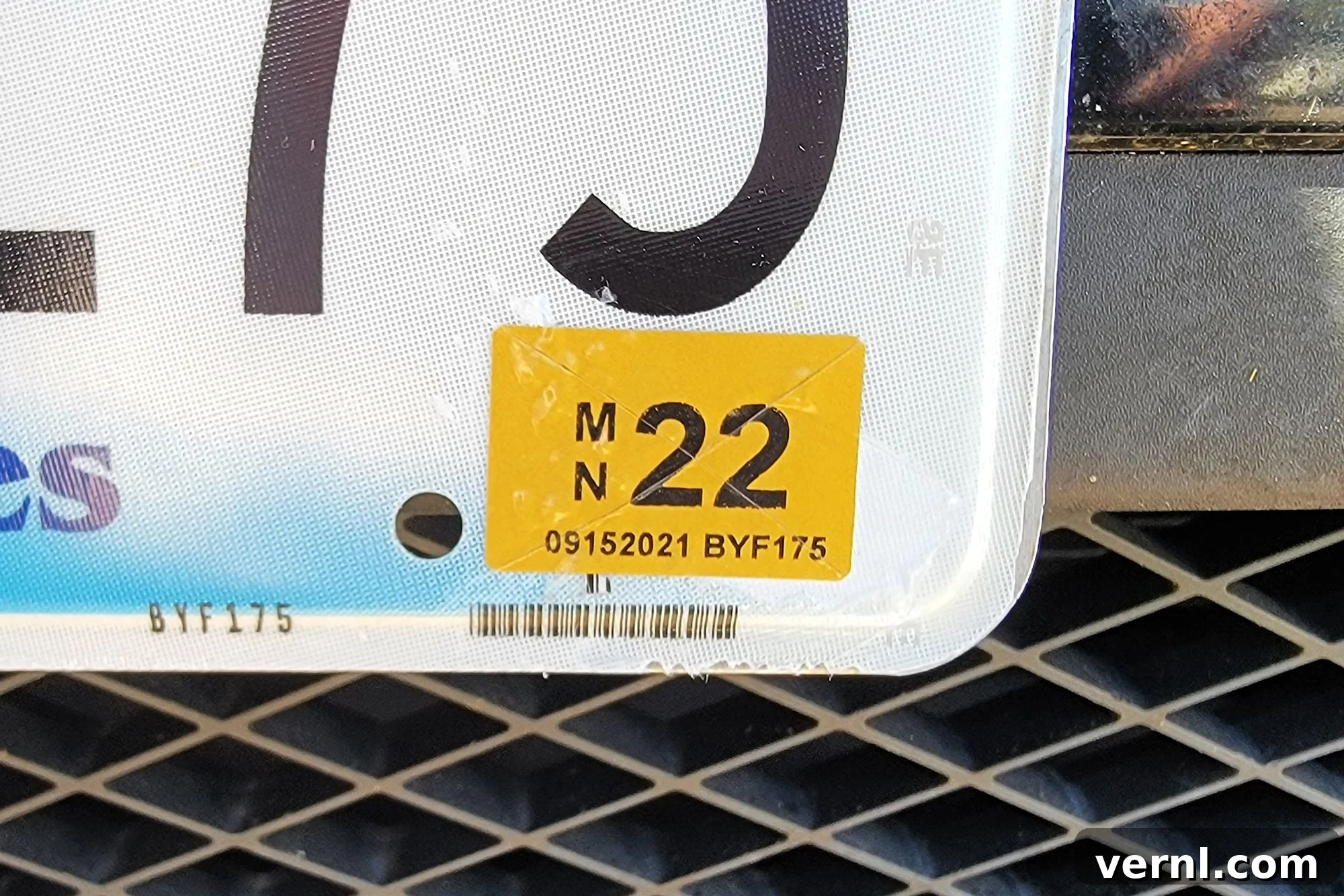
License plate stickers are often overlooked, yet they represent a significant investment for vehicle owners and an attractive target for thieves. Depending on your state’s regulations, renewing these small adhesive tags can incur costs ranging from dozens to hundreds of dollars. Beyond the financial burden, the inconvenience of discovering a missing sticker – often only after being pulled over or issued a ticket – and the subsequent visit to the Department of Motor Vehicles (DMV) to replace it, can be incredibly frustrating.
States with high registration fees, stringent emissions testing requirements, or complex renewal processes are particularly susceptible to sticker theft. The motives behind such thefts are varied but often boil down to avoiding personal renewal fees, or more nefariously, making a stolen vehicle appear legitimate to evade law enforcement.
“Thieves are adept at stripping a sticker from a vehicle’s plate in mere seconds,” explains Timur Gizzatov, owner of Gleamworks. “They then use it to bypass their own renewal fees or to give a stolen car the facade of legality. This crime is particularly vexing because most vehicle owners remain oblivious to the theft until they’re either stopped by an officer or find a citation on their windshield.”
Fortunately, there’s a remarkably simple, yet highly effective, trick that can help safeguard your vehicle’s registration tags from these opportunistic criminals. This method doesn’t prevent a thief from attempting to remove your sticker, but it ensures that even if they succeed, the sticker will be rendered useless, eliminating its value to them and acting as a powerful deterrent.
The Essential Guide to Protecting Your License Plate Sticker: The “Scoring” Method
This ingenious trick, often referred to as “scoring” your sticker, dramatically reduces its desirability to thieves. It’s a quick and easy process that anyone can perform when applying their new registration tag. Here’s a detailed, step-by-step guide to implement this effective security measure:
Step 1: Thorough Preparation – Remove Old Stickers and Clean the Surface
The foundation of a secure new sticker begins with proper preparation of your license plate. First and foremost, you must completely remove any old, expired stickers from the plate. It’s a common mistake to simply stack new stickers on top of existing ones, but this practice significantly undermines the effectiveness of the scoring method, and indeed, the sticker’s own adhesion. Layering stickers creates an uneven surface, making it easier for a thief to peel off multiple layers at once and compromising the bond of the new sticker.
Once the old sticker is removed, it’s crucial to thoroughly clean the area where the new sticker will be placed. Any residual adhesive, dirt, grime, or wax can prevent the new sticker from adhering properly. Use an alcohol-based cleaner, glass cleaner, or a mild automotive cleaner and a clean cloth to wipe the surface. Ensure the area is completely dry before proceeding to the next step. A clean, smooth, and dry surface ensures maximum adhesion, which is critical for the scoring method to work as intended.
Step 2: Apply the New Sticker with Precision
With a clean and dry license plate, carefully peel the backing from your new registration sticker. Position the sticker precisely in the designated area on your license plate. Once it’s in place, gently press it down, starting from the center and working your way outwards. Use your fingers, a credit card, or a squeegee to firmly smooth out any air bubbles that might be trapped underneath. Air bubbles can weaken the sticker’s bond and create points of vulnerability that thieves might exploit. Ensuring a perfectly smooth application enhances the sticker’s adherence, making it more difficult to remove in one piece.
Step 3: The Scoring Technique – The Ultimate Deterrent
This is the critical step that transforms your sticker from an easy target into a worthless scrap. Once the new sticker is firmly and smoothly applied, take a sharp tool such as a box cutter, utility knife, or even a razor blade. Carefully and deliberately cut an “X” pattern directly across the sticker. Start from one corner and cut diagonally to the opposite corner, then repeat from the other two corners, creating a clear “X” shape that divides the sticker into four quadrants.
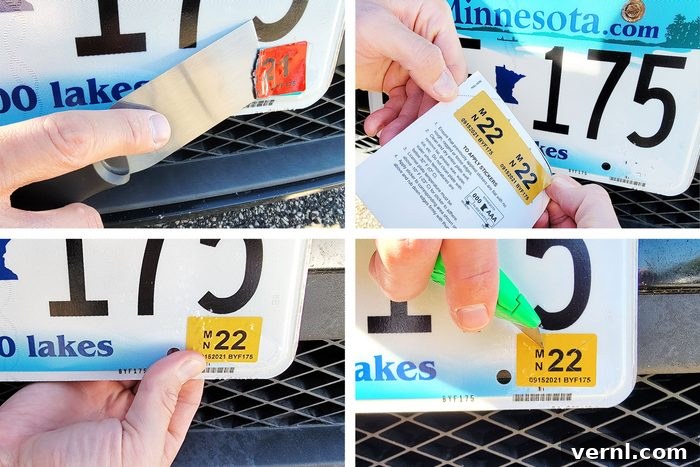
While an “X” pattern is highly effective due to its structural compromise, other patterns, such as multiple parallel lines or a grid, can also work. However, the “X” is often recommended for its simplicity and efficiency in creating multiple tear points. The key here is not to cut so deeply that you damage the license plate itself, but to apply enough pressure to cleanly slice through the sticker’s adhesive layers.
The genius of “scoring” the sticker lies in its effect on attempted removal. If a thief tries to peel off a scored sticker, it won’t come off in one intact piece. Instead, the cuts will cause it to tear into several smaller, unusable fragments. A thief is looking for a whole, undamaged sticker to repurpose. When confronted with a sticker that instantly disintegrates into multiple pieces, it loses all its value to them. This alone is often enough of a deterrent to make them move on to an easier target, thereby keeping your sticker safe and intact on your vehicle.
Beyond Stickers: Comprehensive License Plate Security
While protecting your registration sticker is vital, it’s also important to consider the security of your entire license plate. The theft of whole license plates is another common issue, often perpetrated to conceal stolen vehicles, avoid tolls, or commit other crimes. Fortunately, several simple measures can help prevent this too.
Security Screws and Anti-Theft Frames
One popular solution is the use of security screws. These specialized screws often feature unique heads that require a specific tool or wrench for removal, making it significantly harder for a thief to unbolt your plate with standard tools. While effective, it’s worth noting that you, the owner, will also need that special tool for future plate removal. Alternatively, tamper-resistant bolts paired with nylon lock washers on the backside can also serve as an excellent deterrent. Chris “Moose” Pyle, an automotive expert with JustAnswer, suggests this approach: “The added time and effort it takes to remove a bolt with a nylon lock washer acts as a strong theft deterrent.”
Anti-theft license plate frames are another option. These frames often encase the plate in a way that makes it harder to pry off or feature locking mechanisms. Some owners also opt for clear plastic covers over their plates, which provide an additional physical barrier. However, it’s crucial to exercise caution with plate covers. Timur Gizzatov advises, “It is best to check local laws with regard to this as some areas do restrict their usage due to visibility concerns or camera interference.” Always verify local regulations before installing any type of plate cover.
Smart Parking Strategies
Where and how you park your vehicle can play a significant role in its overall security. Whenever possible, park your car in a locked garage or a secure, well-monitored parking area. If street parking is your only option, be strategic. Melanie Musson, an auto industry expert with CarInsurance.org, recommends, “If you park in the street, try to park near a street light so that it’s harder for someone to hide when trying to steal.” Well-lit areas increase visibility and decrease the cover a thief might rely on, making your vehicle a less attractive target. Parking in high-traffic areas or spots visible to security cameras can also add an extra layer of protection.
FAQ: Addressing Your Top Vehicle Security Concerns
How can I prevent my entire license plate from being stolen?
Preventing the theft of your entire license plate involves several layers of defense. As mentioned, security screws that require a special tool for removal are highly effective. These specialized fasteners significantly increase the time and effort a thief would need, often prompting them to abandon the attempt. Alternatively, consider using bolts instead of screws, coupled with a nylon lock washer on the backside. This setup makes the plate much harder to remove quickly, acting as a deterrent. Anti-theft license plate frames, which securely enclose the plate, can also add a physical barrier. Some people also use clear plastic covers, but it’s imperative to check your local laws as their use is restricted in some regions due to potential obstruction of plate visibility or automated systems. Lastly, prioritizing secure parking spots, such as a garage or well-lit, visible areas, can dramatically reduce the risk.
What should I do if my license plate sticker or entire plate is stolen?
If you discover that your license plate sticker or entire license plate has been stolen, prompt action is essential. First, contact your local police department to file a report. This report will be crucial for your records and for dealing with the DMV. Second, notify your state’s Department of Motor Vehicles (DMV) or equivalent agency immediately. They will guide you through the process of obtaining replacement stickers or plates, which may involve filling out specific forms and paying a replacement fee. Having a police report can sometimes expedite this process or waive certain fees. It’s important to replace them quickly to avoid potential fines for expired registration or, worse, being implicated in crimes committed using your stolen plate.
Are there any legal restrictions on license plate covers or modifications?
Yes, many jurisdictions have specific laws regarding license plate covers, frames, and any modifications that might obscure the plate’s visibility. The primary concern for law enforcement is that these items could interfere with automatic license plate readers, red light cameras, or simply make it difficult for an officer to read the plate. Some states prohibit any cover that makes the plate less reflective, alters its color, or obscures any part of the registration information, including the state name, plate number, or sticker. Before installing any cover or making modifications, it is crucial to consult your local Department of Motor Vehicles (DMV) or state traffic laws to ensure compliance and avoid potential fines or legal issues.
What other car parts are thieves targeting?
Modern vehicles contain numerous valuable components that can be quickly and easily removed, making them prime targets for thieves. The list extends far beyond stickers and plates, driven by the resale value of parts in the black market. Common items include:
- Catalytic Converters: Highly sought after for the precious metals (platinum, palladium, rhodium) they contain, which fetch a high price. Thieves can remove them in minutes.
- Wheels (Rims and Tires): Especially high-end or aftermarket sets, which can be quickly removed and resold for a significant profit.
- Tailgates: Particularly from pickup trucks, as they are often interchangeable and expensive to replace, making them a target for thieves looking to replace damaged parts or sell for profit.
- Exterior Lamps and Headlights: Advanced LED or Xenon headlight units, especially from luxury vehicles, can be very costly and are therefore targeted for resale.
- Spare Tires: Often easily accessible from underneath the vehicle or within the trunk, they provide a quick, usable replacement tire.
- Radios and GPS/Navigation Devices: While built-in systems are harder to remove, older or portable units are still targets.
- Airbags: Believe it or not, airbags are stolen for their resale value, especially following accidents where replacements are needed.
- Door/Window Trim and Side Mirrors: As Timur Gizzatov points out, “Some will even steal the whole side mirrors, especially those luxury vehicles that have very expensive sensors built in.” These specialized parts can be very expensive to replace.
Beyond these specific components, any valuable item left in plain sight inside a car is an invitation for theft. Chris “Moose” Pyle warns, “A thief will break a window for a cup holder full of change.” Always ensure valuables are out of sight, preferably in the trunk, or taken with you when you leave your vehicle.
About the Experts
- Melanie Musson is a recognized authority in the auto industry, having served as an expert with CarInsurance.org for nearly a decade. Her insights cover a wide range of automotive topics, offering valuable advice to drivers.
- Chris “Moose” Pyle brings over 20 years of hands-on automotive experience as a master-certified technician. Since 2006, he has been an expert contributor to JustAnswer, an expert on-demand platform, providing invaluable automotive guidance.
- Timur Gizzatov is the proud owner of Gleamworks Paint Protection Film & Ceramic Coating Centre, located in Vancouver, BC. With a career spanning since 2007, he is a seasoned automotive expert specializing in vehicle protection and maintenance.
By taking these simple, proactive steps, you can significantly enhance the security of your vehicle’s license plate and stickers, saving yourself from potential headaches, financial loss, and the frustrations associated with automotive theft.