
Will an Automatic Car Wash Truly Harm Your Car’s Finish?
The question of whether an automatic car wash can inflict damage on your vehicle’s pristine paint finish is a common concern for car owners. While the convenience of these automated systems is undeniable, the potential for harm is, unfortunately, a reality. The truth is, any method of cleaning your car, even meticulous hand washing, introduces elements like abrasives and chemicals to the paint surface. This inherently carries a risk of creating unsightly swirl marks and fine scratches.
However, there’s good news too. With careful consideration and informed choices, you can significantly minimize the potential degradation of your car’s aesthetic appeal. Modern car manufacturing processes often include highly durable clear coat finishes, designed to withstand daily wear and tear for a decade or even longer. These protective layers act as a barrier against environmental elements and mild abrasion, offering a degree of resilience.
It’s also crucial to understand that the effectiveness and safety of a car wash facility can vary dramatically. Factors such as the specific car model, the type of wash technology employed, and even the cleanliness and maintenance of the car wash itself play a significant role. Therefore, exercising your best judgment when selecting a car wash is paramount. Weigh the convenience against the potential risks to your vehicle’s finish and decide what level of risk you are comfortable taking.
Understanding Your Car’s Paint Layers: The Foundation of Protection
Before delving into the various car wash methods, it’s helpful to understand what you’re protecting. A car’s paint finish isn’t just a single layer of color; it’s a sophisticated system composed of several coats, each serving a specific purpose. At the very bottom, adhering to the metal body, is the primer. This layer provides corrosion resistance and a smooth surface for subsequent layers. Next comes the base coat, which is the color you see. Finally, and most critically, is the clear coat. This transparent, hard layer protects the base coat from UV rays, environmental contaminants, and most minor scratches. When we talk about “car wash damage,” we are primarily referring to damage to this clear coat, which, once compromised, dulls the paint and exposes the color beneath.
Decoding Different Automatic Car Wash Technologies
Automatic car washes offer a spectrum of cleaning experiences, each with its own set of characteristics and potential impacts on your vehicle’s finish. Understanding these differences is key to making an informed choice for your car.
Tunnel Car Washes with Rotating Brushes: The Traditional Approach
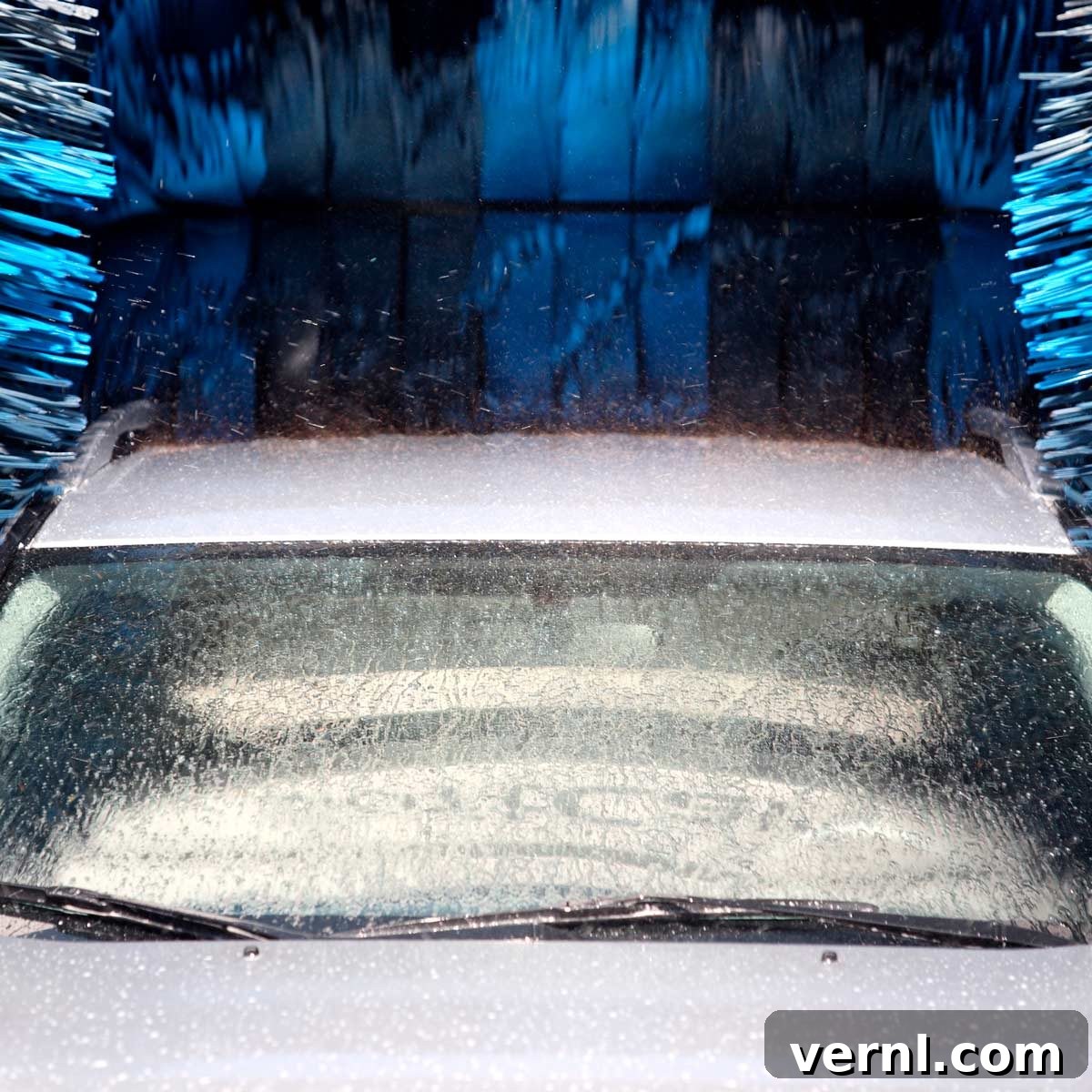
Often considered the “old school” method, tunnel car washes featuring rotating bristle brushes have, for a long time, been viewed with skepticism due to concerns about paint damage. Many newer technologies are marketed as “gentler.” However, some head-to-head comparisons suggest that these traditional brush washes might, surprisingly, cause less damage than some of their newer counterparts. The rationale is that stiff bristles are less prone to holding onto abrasive grit and dirt from previous vehicles compared to soft cloth scrubbers, which can embed and drag particles across your paint. If the brushes are well-maintained and clean, this method can be quite effective at removing tough dirt. Still, inspect the facility: look for well-maintained equipment and clear, clean water being used.
Soft-Cloth Car Washes: The Seemingly Gentle Option
Soft-cloth car washes employ large, dangling strips or flaps of fabric that gently massage your car clean. These often appear less aggressive than stiff brushes and are frequently perceived as a safer alternative. While they might feel softer to the touch, they carry a significant risk: the potential to retain abrasive particles. These soft cloths can pick up and hold onto dirt, sand, and grit from every vehicle that passes through the wash before yours. These embedded abrasives then act like sandpaper on your car’s finish, potentially causing more widespread swirl marks and scratches than even older brush systems. The critical factor here is the car wash’s maintenance; if the cloths are not frequently rinsed and replaced, the risk dramatically increases.
Touchless Car Washes: The “Laser Wash” Experience
Touchless car washes, often advertised as “laser washes,” rely solely on high-pressure water jets and powerful cleaning chemicals to clean your vehicle, completely avoiding any physical contact with the car’s surface. This lack of direct abrasion is their primary advantage, virtually eliminating the risk of mechanical scratches and swirl marks caused by brushes or cloths. However, this benefit comes with a significant trade-off. Without any scrubbing action, touchless washes often struggle to dislodge stubborn dirt, grime, and road film, leading to a less thorough clean. To compensate for the lack of physical contact, these washes typically employ more caustic and aggressive detergents. While effective at dissolving dirt, regular exposure to these harsh chemicals can strip away protective waxes or sealants, and over time, potentially degrade your car’s clear coat, leaving it dull and unprotected. A touchless wash might be a suitable option for a quick rinse or when your car is only lightly soiled, but it’s not ideal for deep cleaning or as a regular, long-term solution.
Hand Washing: The Gold Standard (with Caveats)
For many automotive enthusiasts and professional detailers, hand washing remains the undisputed “gold standard” for achieving a flawless finish. This method offers the most control and allows for meticulous attention to detail, minimizing the risk of damage. However, even hand washing is not entirely without its perils. The most common mistake that introduces abrasives into the cleaning process is cross-contamination—using the same sponge or wash mitt for both the car’s painted surfaces and dirtier areas like tires, wheels, and wheel wells. These latter areas are often laden with brake dust, road grime, and sharp particles that can easily scratch paint. To truly protect your finish, it’s essential to segregate your cleaning tools. Use separate wash mitts for the body and the wheels, rinse your mitts frequently, and employ the two-bucket method (one bucket for soapy water, one for rinsing your mitt) to keep your wash water clean. Always use high-quality microfiber towels for drying, ensuring they are clean and soft.
Effective Strategies for Minimizing Car Wash Risks
Regardless of the method you choose, there are proactive steps you can take to protect your car’s paint finish and ensure a safer, more effective clean.
Evaluating Automatic Car Wash Facilities
Before entering any automatic car wash, take a moment for a quick visual inspection. If you’re waiting in line and the vehicle ahead of you looks like it just completed an off-road adventure, caked in thick mud and debris, consider returning another time. While car washes do have self-cleaning mechanisms, it takes several cycles of rinsing to effectively clear excessive grit from brushes or soft cloths. Entering immediately after a heavily soiled vehicle increases the risk of those abrasive particles scratching your paint. Additionally, observe the general condition of the facility. A clean, well-maintained exterior often indicates that the operators also prioritize the upkeep of the internal washing components, which directly interact with your vehicle.
Understanding Car Wash “Extras”
Automatic car washes frequently offer various “extras” at an additional cost, such as “triple foam polish,” “wheel cleaning,” “underbody rust protection,” or “spray-on wax.” Many of these add-ons, particularly the spray-on waxes, offer a temporary aesthetic benefit, providing a nice sheen that typically fades within a few days or after the next rain. They are generally not a substitute for a proper hand-applied wax or sealant. However, the undercarriage cleaning option can be valuable, especially if you live in an area where roads are salted in winter or if you frequently drive on dusty or muddy roads. Opting for an undercarriage wash a couple of times a year can help prevent corrosion and keep your vehicle’s underside cleaner. Prioritize what truly protects and benefits your car over fleeting cosmetic enhancements.
Beyond the Wash: Long-Term Paint Care
The journey to maintaining a beautiful car finish doesn’t end with the wash. Long-term paint care involves regular protective measures and diligent attention. Applying a quality wax, sealant, or ceramic coating every few months (depending on the product) creates a sacrificial barrier that shields your clear coat from UV radiation, environmental fallout, and minor abrasions. Promptly removing bird droppings, tree sap, and bug splatter is also crucial, as these substances are acidic and can etch into your paint if left for too long. Parking in shaded areas whenever possible helps mitigate the damaging effects of prolonged sun exposure. For truly pristine results, consider professional detailing services periodically. Detailers can expertly correct swirl marks, deep clean the paint, and apply long-lasting protection, restoring your car’s finish to its showroom shine.
Conclusion: Making Informed Choices for Your Car’s Finish
In conclusion, the decision of how to wash your car involves weighing convenience against the potential risks to its paint finish. While automatic car washes offer speed and ease, they are not without their drawbacks, particularly concerning the risk of swirl marks and scratches. Different types of automatic washes present unique challenges, from the potential for grit retention in brush and soft-cloth systems to the harsh chemicals used in touchless washes. Hand washing, while offering superior control, still demands meticulous technique to avoid self-inflicted damage.
Ultimately, the key lies in making informed choices. Prioritize well-maintained facilities, understand the pros and cons of each wash type, and implement best practices, whether you’re using an automatic system or washing by hand. By combining smart washing habits with regular paint protection, you can ensure your car maintains its stunning appearance for years to come, preserving both its beauty and its value.