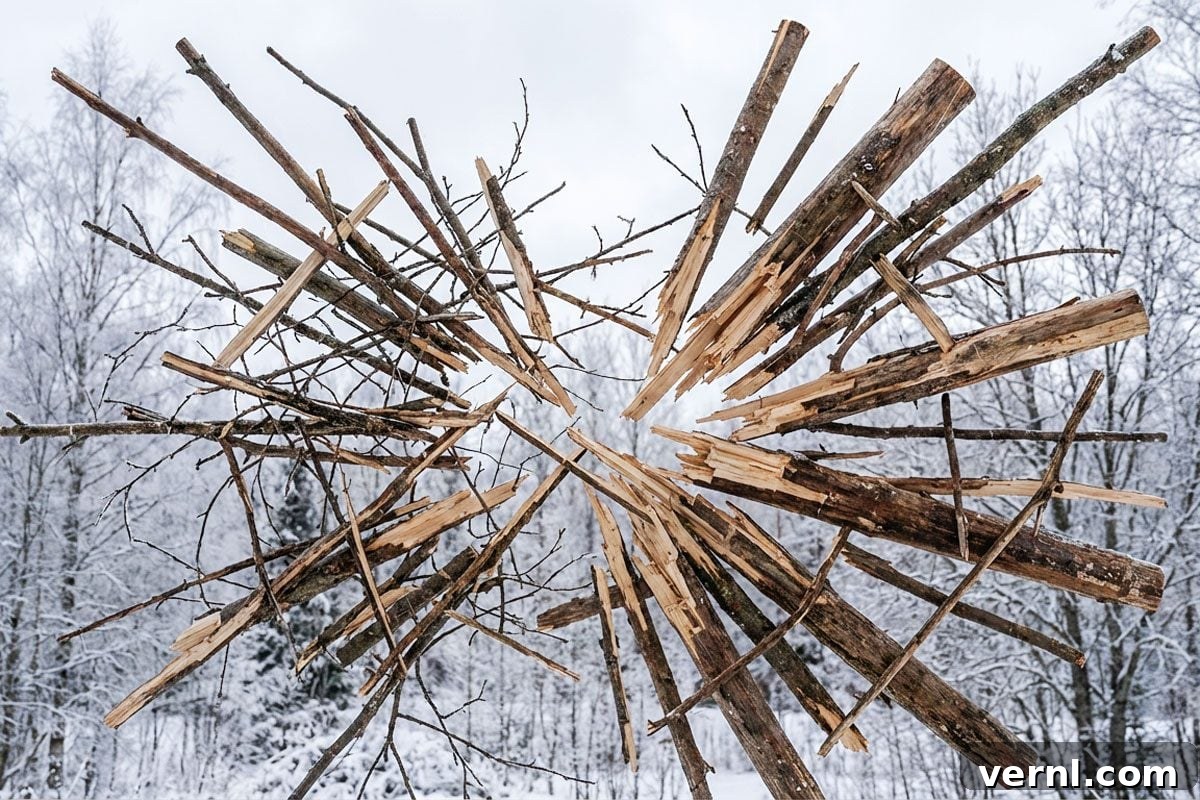
Do Trees Really Explode in Extreme Cold? Debunking the Myth and Understanding Frost Crack
As winter’s icy grip tightens, social media often buzzes with alarming claims, one of which is the notion of trees spontaneously exploding in extreme cold. The idea might sound like something out of a disaster movie, triggering immediate concern. However, it’s crucial to separate fact from fiction, especially when dealing with information circulating online. While the term “exploding trees” is dramatic, the reality is far less sensational. This article aims to clarify what truly happens to trees during frigid temperatures, exploring the phenomenon known as frost crack and providing practical tips for protecting your trees from winter’s harsh effects.
To delve deeper into this topic, we consulted with a seasoned arborist to shed light on the “exploding trees” phenomenon and offer valuable insights into preparing your trees for the challenges of winter.
Understanding the “Exploding” Trees Myth
The short answer is no, trees don’t actually explode in extremely cold weather. While severe cold can indeed cause noticeable damage to trees, the term “exploding” is a misleading exaggeration. According to Ryan Torcicollo, an experienced arborist and a brand ambassador for Husqvarna’s H team, “While extreme cold can cause visible damage to trees, there is no true explosive event occurring. The term is informal and misleading, and it exaggerates what is actually a physical stress response within the tree.”
The Science Behind Frost Crack: What Really Happens to Trees in the Cold
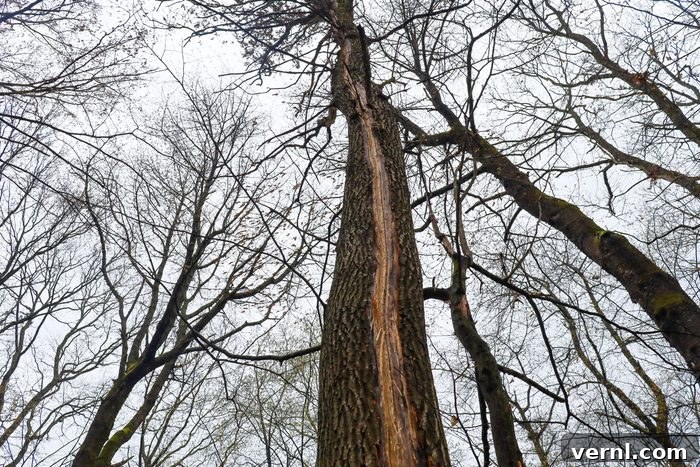
Frost crack on a tree trunk.
The phenomenon popularly referred to as “exploding trees” is actually frost crack, a natural process that occurs when trees are subjected to sudden and drastic temperature drops. Here’s a breakdown of what happens:
- Sap Freezing and Expansion: Trees contain a significant amount of sap, which is essentially water, within their tissues. When temperatures plummet rapidly, this internal moisture freezes. As water freezes, it expands.
- Stress on Tree Structure: The expansion of freezing sap puts considerable pressure on the tree’s internal structure, particularly the bark and outer wood.
- Formation of Frost Cracks: This pressure can cause the bark and outer wood to contract and split, resulting in a frost crack. The rapid splitting can sometimes produce a sharp cracking sound, which is often mistaken for an explosion.
Torcicollo explains, “Trees contain a significant amount of sap within their tissues, and when temperatures drop rapidly, that internal moisture can freeze, expand and place stress on the tree’s structure. Frost cracks occur when the bark and outer wood contract or split due to rapid temperature changes, sometimes producing a sharp cracking sound.”
While the cracking sound can be startling and sound like an explosion, it’s important to remember that it’s not dangerous to people nearby. “It’s the result of physical stress and structural weakness, not an actual explosion,” Torcicollo emphasizes.
These cracks typically appear on the south or southwest side of the tree trunk, where temperature fluctuations are most pronounced. They often run vertically along the trunk, extending towards the lower and middle sections where moisture content is highest. In some cases, frost cracks can even extend to the branches. Certain tree species are more vulnerable to frost crack than others. Trees like maple, birch, elm, and sycamore are particularly susceptible, while oak and chestnut trees tend to be more resilient to severe temperature changes, according to the Nashville Tree Conservation Corps.
Protecting Your Trees from Frost Crack: Proactive Care is Key
Once a tree has developed frost cracks, there’s not much you can do to reverse the damage. The best approach is to focus on proactive care to minimize the risk of frost crack in the first place. Here are some essential tips to protect your trees from harsh winter weather:
Maintain Overall Tree Health
Healthy, well-maintained trees are better equipped to withstand the stresses of winter. This includes ensuring adequate watering during dry periods, proper fertilization, and protection from pests and diseases.
Proper Pruning Techniques
Regular pruning is crucial for maintaining tree health and structural integrity. Torcicollo advises that “proper trimming, removing deadwood, and reducing overextended limbs can significantly lower the likelihood of failure during snow, ice, or wind events.” Removing dead or weakened branches reduces the risk of them breaking under the weight of snow or ice, preventing potential damage to the tree and surrounding property. Strategic pruning also improves air circulation and sunlight penetration, further enhancing tree health.
This is particularly important for trees located near homes, power lines, and high-traffic areas to prevent potential hazards.
Consider Tree Bracing and Cabling
For trees with structural weaknesses or those in exposed locations, consider installing a cabling and bracing system. According to Torcicollo, “in some cases, structural support systems such as cables can help mitigate known defects and extend the life of otherwise healthy trees.” These systems provide additional support to the tree, reducing the risk of branch failure during heavy snow or strong winds. Consult with a certified arborist to determine if bracing and cabling are appropriate for your trees.
Wrapping Tree Trunks (For Young Trees)
Wrapping the trunks of young, thin-barked trees with burlap or tree wrap can help insulate them from extreme temperature fluctuations and reduce the risk of frost crack. This is particularly beneficial for newly planted trees or those growing in exposed locations.
Mulching Around the Base of the Tree
Apply a layer of mulch around the base of the tree, keeping it a few inches away from the trunk. Mulch helps insulate the soil, preventing rapid temperature changes and retaining moisture. This can help protect the roots from freezing and thawing cycles, which can also contribute to tree stress.
Watering Before a Freeze (If Soil is Dry)
If the soil is dry before a hard freeze, give your trees a deep watering. This helps hydrate the tree and prevents it from drying out during the winter months. Hydrated trees are generally more resilient to cold weather stress.
About The Expert
- Ryan Torcicollo is a highly experienced arborist with 17 years in the tree care industry. He is an International Society of Arboriculture (ISA) certified arborist and a brand ambassador/member of Husqvarna’s H team.
Sources
- Nashville Tree Conservation Corps. “What Is Frost Cracking, and How Can You Prevent It in Your Trees?” 2025.
By understanding the science behind frost crack and implementing proactive tree care practices, you can help protect your trees from the damaging effects of extreme cold and ensure their long-term health and vitality.