The quest for a lush, vibrant lawn often leads homeowners down various paths, sometimes even to surprisingly simple solutions like spiked shoes. My own journey into the world of spiked footwear began not on a golf course, but rather as a curious teenager attempting to “soften” the rock-hard front lawn of my childhood home. Armed with my dad’s quarter-inch golf spikes, I imagined I was performing some kind of ground-breaking magic. It was, of course, a futile exercise. The parched earth was impenetrable, and the short spikes barely scratched the surface, let alone alleviated what felt like concrete beneath my feet.
Fast forward a few decades, and the concept of spiked shoes for ground treatment has resurfaced, albeit with a more defined purpose: lawn aeration. However, as we delve deeper, we’ll uncover whether these modern iterations truly deliver on their promise of revitalizing your lawn or if they are just another well-marketed, yet ineffective, yard tool.
Understanding Lawn Aerator Shoes: Do These Spiked Sandals Deliver?
Lawn aerator shoes are typically designed as sandals or platforms fitted with numerous sturdy spikes, generally ranging from 1 to 2 inches in length. These are strapped over your existing shoes or boots, transforming your ordinary walk across the yard into an alleged aeration session. The premise is straightforward: as you mow, water, or simply stroll around your property, the spikes are meant to penetrate the soil, thereby relieving compaction and allowing vital elements to reach your grass roots. They are often marketed as a convenient, low-effort alternative to more traditional aeration methods.
The appeal is understandable; the thought of simultaneously performing essential lawn maintenance while simply going about your regular yard work is highly attractive to busy homeowners. However, the scientific consensus regarding their effectiveness is a critical point to consider before investing in these spiked footwear solutions. While they may seem like a clever innovation, their actual impact on soil health requires a closer look, especially when compared to methods that truly address the root causes of compacted soil.
The Critical Importance of Alleviating Soil Compaction for a Healthy Lawn
Why should you even concern yourself with soil compaction? The answer lies at the very heart of a thriving lawn. Soil compaction occurs when soil particles are pressed together, reducing the pore space between them. This reduction in open channels drastically impedes the movement of essential elements like water, air, and nutrients, which are crucial for healthy grass roots. A lawn struggling with compaction often exhibits a sparse, weedy appearance, as turfgrass struggles to establish deep, robust roots.
Beyond nutrient deprivation, compaction also contributes to the buildup of thatch – a dense layer of dead and living plant material (stems, roots, and leaves) that accumulates between the soil surface and the green grass blades. A thick thatch layer acts as a barrier, preventing water and nutrients from reaching the soil and roots, and can create an ideal environment for pests and diseases. Aeration plays a pivotal role in breaking up this thatch, fostering healthier growth and improving the overall resilience of your lawn.
Understanding Different Soil Types and Their Compaction Tendencies
The susceptibility of your lawn to compaction often depends on your soil type:
- Clay Soils: Characterized by very fine particles, clay soils naturally have less space between soil particles. This makes them highly prone to compaction. When clay soil becomes compacted, it struggles to absorb moisture, leading to poor drainage and water runoff. Common culprits for compaction in clay soils include heavy lawn equipment, consistent foot traffic from people and pets, children’s play, and even the natural settling of the soil over time. Regular aeration is often a necessity for maintaining healthy turf in clay-heavy regions.
- Sandy Soils: In contrast, sandy soils have much larger particles, creating ample pore space. They are typically very porous and rarely suffer from severe compaction unless significant organic matter, like certain types of compost, is introduced in a way that binds the soil particles. If you’re adding organic amendments to sandy soil, a light aeration followed by top-dressing with well-sifted compost can help integrate the new material without causing compaction. However, traditional core aeration for sandy soils is generally less frequent compared to clay soils.
Regardless of soil type, understanding your lawn’s specific needs and susceptibility to compaction is the first step toward effective lawn care and achieving that desired lush green landscape.
Detecting Soil Compaction: Simple Tests and Visual Cues
Identifying soil compaction is crucial for knowing when your lawn needs aeration. Often, the signs are right before your eyes. Compacted ground feels noticeably hard and unyielding underfoot, sometimes likened to walking on concrete. After rainfall, you might observe persistent puddles that take an unusually long time to drain, indicating poor water penetration into the soil. Visually, watch for areas where grass growth is sparse, stunted, or where weeds seem to thrive, as weeds often tolerate poorer soil conditions than turfgrass.
Compaction is particularly common in high-traffic zones. Look for it along well-worn pathways, near gates, at the edges of driveways and sidewalks, and along fence lines where pets frequently run. These areas experience constant pressure, making them prime candidates for soil density issues.
To accurately gauge the level of compaction, try this practical tip from Clemson University: on a day when the soil is moist (after irrigation or a light rain, but not waterlogged), attempt to push a screwdriver into the ground. If the screwdriver penetrates the soil easily with minimal resistance, your soil is likely in good condition and probably doesn’t require immediate aeration. However, if you encounter significant difficulty inserting the screwdriver, the soil is most likely compacted and would greatly benefit from a thorough lawn aeration treatment. This simple test provides a reliable indicator of your lawn’s health beneath the surface.
The Verdict: Do Lawn Aerator Shoes Really Work? Unmasking Their Effectiveness
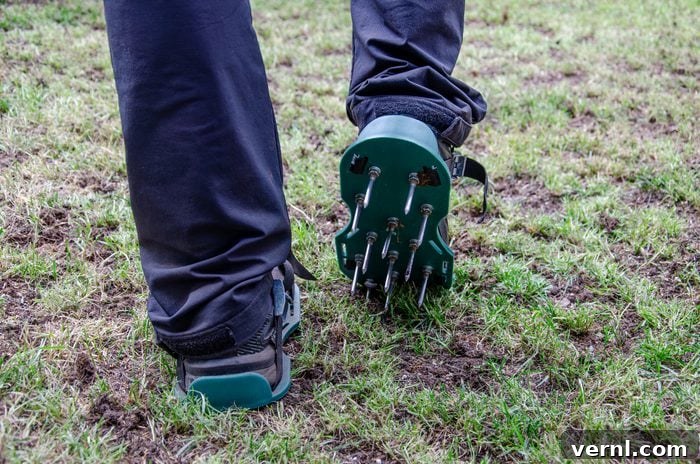
Despite their appealing simplicity and marketing, the general consensus among turfgrass experts and university extensions is that lawn aerator shoes are largely ineffective for proper soil aeration, and in some cases, can even be detrimental. The fundamental flaw lies in their design: the spikes on these shoes are solid, not hollow.
When these solid spikes penetrate the lawn, they don’t remove a plug of soil. Instead, they merely push the existing soil sideways and downwards. This action, particularly in heavy clay and silt-laden soils, actually increases the density and compaction of the soil around the spike holes, rather than alleviating it. According to the University of Nebraska, this pushing action can lead to further compaction, especially in the very soil types that need aeration the most.
“To do aeration properly you should pull a core of soil out,” explains Tom Perron of Boyden and Perron, an outdoor power equipment retailer with extensive experience in lawn care machinery. “I can’t see how lawn aerator shoes could be that effective. They fail to create the necessary air and water channels that truly relieve compaction and encourage deeper root growth.” Without the removal of soil cores, the tiny, compacted holes created by aerator shoes quickly collapse, offering negligible long-term benefits for your lawn’s health. For genuine and lasting relief from compaction, a method that extracts soil plugs is essential.
Optimal Timing: When to Aerate Your Lawn for Maximum Benefit
Aeration is a stress-inducing process for your lawn, so timing is paramount to ensure quick recovery and maximize benefits. The best time to aerate aligns with your grass’s peak growing season, allowing it to rapidly fill in the newly created spaces.
Cool-Season Grasses (Northern Climates)
For cool-season grasses, which are common in northern climates (e.g., Kentucky bluegrass, fescues, perennial ryegrass), the optimum times for aeration are:
- Early Spring: As the grass begins to emerge from dormancy and actively grow, typically between March and May. This timing helps the lawn recover quickly before the stresses of summer heat.
- Early Fall: This is often considered the best window, typically from late August through October. Fall aeration effectively relieves compaction accumulated from summer activities, heavy foot traffic, and dry weather. It allows the grass to strengthen its root system before winter dormancy, providing a strong foundation for the following spring. Just be sure to aerate early enough in the fall to allow the turf at least a few weeks (usually 2-4) to recover before it goes dormant for the winter. This also creates ideal conditions for overseeding, as the seeds can fall directly into the newly aerated holes for better soil contact and germination.
Warm-Season Grasses (Southern Climates)
For warm-season grasses, prevalent in southern climates (e.g., Bermuda grass, Zoysia grass, St. Augustine grass), the best time to aerate is when they are actively growing in warmer temperatures:
- Late Spring to Early Summer: Generally from April through June. According to Pennington Seeds, performing aeration during active growth ensures that grasses recover quickly. The vigorous growth during this period allows the turf to rapidly fill in the areas where soil was exposed, minimizing the risk of weed invasion and promoting overall lawn density.
Aerating during the wrong season, such as during extreme heat or drought, can put undue stress on your lawn and hinder its ability to recover, potentially causing more harm than good.
The Most Effective Methods: Choosing the Right Core Aerator for Your Lawn
When it comes to effective lawn aeration, the undisputed champion is the core aerator. Unlike solid-tine aerators or spiked shoes, core aerators feature hollow tines that penetrate the soil and extract small plugs or “cores” of earth. This process genuinely reduces compaction, creating open channels that allow water, air, and essential nutrients to deeply penetrate the root zone. The extracted plugs are left on the lawn surface, where they eventually break down, returning valuable organic matter and microorganisms to the soil.
Options for Core Aeration:
- Manual Foot-Press Aerators: For homeowners with small areas of compaction or who prefer a more targeted approach, a manual foot-press aerator is an excellent choice. These devices operate similarly to a spade; you press them into the soil with your foot. When selecting one, look for models with three or four hollow cores. These will aerate more effectively than devices with just two cores, providing greater coverage and more significant compaction relief with each push. They are ideal for trouble spots like compacted pathways or around trees where larger machines might struggle to maneuver.
- Mechanized Core Aerators (Rental or Purchase): For larger lawns, renting a mechanized core aerator is the most efficient and recommended option. These powerful machines are available from garden equipment rental companies, hardware stores, and large home improvement centers. They cover substantial ground in a relatively short period, making them indispensable for properties with widespread compaction.
Mechanized core aerators come in various forms:
- Walk-Behind Aerators: These resemble push mowers and are excellent for average-sized residential lawns. They are self-propelled or push-operated, making them relatively easy to maneuver.
- Tow-Behind Aerators: Designed to be pulled by a lawn tractor or ATV, these are perfect for very large properties or rural acreages. They offer broad coverage and significantly reduce the time required for aeration.
Be aware that mechanized aerators are heavy. If you choose to rent one, ensure you have a suitable vehicle for transport and ideally some assistance with loading and unloading. While an initial investment of time and effort, using a core aerator provides superior, long-lasting results compared to superficial aeration methods.
Step-by-Step Guide: How to Properly Aerate Your Lawn
Performing aeration correctly ensures optimal results and avoids potential damage to your property. Follow these steps for a successful aeration process:
- Mark Underground Obstacles: Before you begin, thoroughly mark the locations of any sprinkler heads, shallow utility lines, invisible pet fences, or septic system components. This critical step prevents costly damage to your infrastructure and the aerator itself.
- Moist, Not Soaking Wet, Soil Conditions: Aerate when the ground is moist. This allows the tines of the aerator to penetrate the soil easily and to a greater depth, extracting cleaner plugs. The ideal time is typically 1-2 days after a significant rainfall or after you’ve watered your lawn for about an inch (around 30 minutes for most sprinkler systems). Avoid aerating when the soil is bone dry, as the tines will struggle to penetrate, or when it’s waterlogged, as this can lead to mud accumulation and further compaction.
- Aeration Pattern and Intensity:
- For lightly compacted soil, a single pass over your entire lawn with the aerator is usually sufficient.
- For seriously compacted soil, or areas that receive heavy foot traffic, go over the lawn twice. For best results, make the second pass perpendicular to the first, creating a crosshatch pattern. This ensures maximum coverage and compaction relief. Pay particular attention to heavily trafficked areas, around playground equipment, and along pathways.
- Post-Aeration Care: Leave the soil plugs on the lawn surface. As they dry, they will break down naturally, returning valuable organic matter and beneficial microorganisms to the soil. You can speed up this process by breaking them apart with a garden rake or simply by mowing over them after a day or two. After aeration, it’s an excellent time to overseed your lawn, as the seeds will fall directly into the newly created holes, ensuring better soil contact and germination rates. Follow up with a light application of fertilizer and ensure your lawn receives adequate watering to aid in recovery and new growth.
By following these guidelines, you’ll provide your lawn with the best possible conditions for robust growth and a healthier appearance.
Frequently Asked Questions About Lawn Aeration
How important is aerating a lawn for its overall health and appearance?
The importance of aerating a lawn varies significantly with soil type and usage, but for many, it’s a cornerstone of healthy turf maintenance. If you have heavy clay soil, annual aeration is often highly beneficial and sometimes essential due to its natural tendency to compact. Sandy soils, conversely, are typically more porous and may rarely need aeration. As Osmar Castillero of Blades Landscaping states, “Aerating your lawn is important to do at least once a season for most lawns. It’s a great way to ensure air, water, and nutrients efficiently reach the root systems, leading to a much healthier and more resilient lawn.” It dramatically improves the soil’s ability to support vigorous grass growth, enhances nutrient uptake, and reduces thatch buildup.
What is the most efficient and effective way to aerate your lawn?
The most efficient and unequivocally effective way to aerate a lawn is by using a core aerator. This type of aerator removes small plugs of soil, creating thousands of tiny channels that allow air, water, and nutrients to penetrate deeply into the root zone. These removed plugs are then deposited on the surface of the lawn, where they eventually break down and reintegrate with the existing ground, further enriching the soil. While walk-behind or tow-behind mechanized core aerators are ideal for larger areas, even a manual core aerator is vastly superior to spiked shoes for targeted compaction relief.
When should you absolutely avoid aerating your lawn?
There are specific times when aerating your lawn can cause more harm than good. You should always avoid aerating during a drought or extremely hot, sunny summer weather. Aeration exposes the soil to the elements, and performing it under these conditions can lead to rapid soil drying, further stressing your lawn and potentially causing it to burn or go dormant. Similarly, do not aerate when your lawn is dormant, as it won’t be able to recover effectively from the stress. Always aim to aerate during your grass’s peak growing season to ensure quick and healthy recovery.
About Our Expert Contributors
- Tom Perron is a highly respected second-generation owner of Boyden and Perron, a prominent outdoor power equipment retailer located in Amherst, Massachusetts. His extensive experience provides invaluable insights into the functionality and effectiveness of various lawn care tools.
- Osmar Castillero is the proud owner of Blades Landscaping Services, a comprehensive lawn care and maintenance company based in Lowell, Massachusetts. With over a decade of hands-on experience in the industry, Osmar offers practical, expert advice on achieving and maintaining a beautiful lawn.
[cf]skyword_tracking_tag[/cf]