Humidity can be a silent enemy in our homes, leading to a host of problems from musty odors and uncomfortable living conditions to serious issues like mold growth, mildew, and damage to furniture or electronics. Managing indoor humidity is crucial for maintaining a healthy and pleasant environment. While various solutions exist, dehumidifiers are a popular and effective choice for larger spaces. However, the constant chore of emptying a dehumidifier’s water tank can often deter homeowners from running their units consistently. This guide explores ingenious ways to achieve continuous moisture removal, focusing on both automated dehumidifier solutions and simple, cost-effective DIY alternatives for smaller, targeted areas.
The Ultimate Convenience: Self-Draining Dehumidifiers
The struggle is real for anyone who has ever owned a traditional dehumidifier. Forgetting to empty the water tank inevitably leads to one of two frustrating outcomes: either the tank overflows, potentially causing water damage, or the unit automatically shuts off, completely defeating its purpose in a damp area. This intermittent operation means your space isn’t consistently protected from excessive moisture, leaving it vulnerable to all the problems that humidity brings. Imagine the peace of mind that comes with a system that just works, day in and day out, without needing your constant attention.
Eliminating the Manual Chore with a Condensate Pump
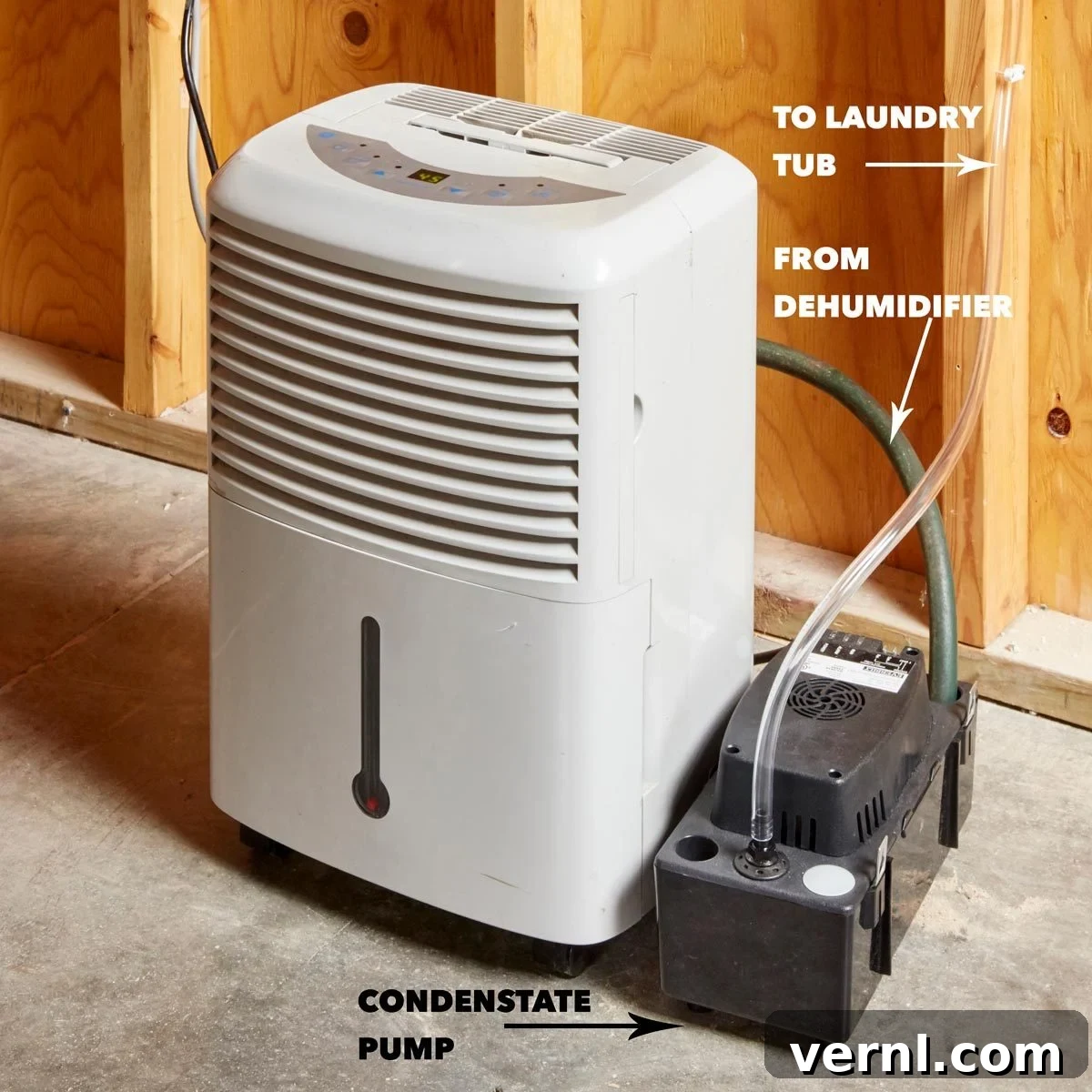
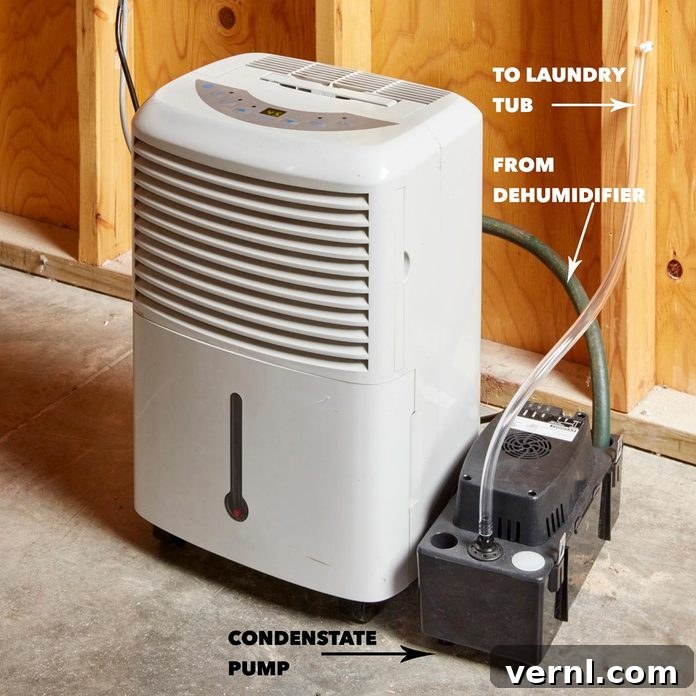
Doug Baltzer, like many homeowners, faced this exact challenge in his basement. Lacking a convenient floor drain in the problem area, the manual tank-emptying routine was a constant burden. His brilliant solution? Investing in a condensate pump. These clever devices, typically costing between $40 to $100 at home centers, are designed to automatically pump the collected water uphill or over longer distances to a suitable drainage point. Doug rigged his condensate pump to his dehumidifier, running the tubing up to the ceiling, through the joist areas, and finally down to his laundry tub. This simple yet effective setup transformed his dehumidifier from an intermittent chore into a fully automated, continuous moisture management system. Now, his dehumidifier runs full time, ensuring optimal humidity levels without ever needing to be emptied or worrying about it shutting off unexpectedly.
Understanding Self-Draining Dehumidifier Options
Doug’s solution highlights the significant advantages of self-draining systems. Continuous operation means your home is consistently protected, preventing the conditions that lead to mold and mildew. This also contributes to improved air quality and a more comfortable living space. Beyond external pumps, there are generally three main ways to achieve self-draining functionality for your dehumidifier:
-
Gravity Drainage
If your dehumidifier is located near a floor drain or a sink that is *lower* than the unit, you might be able to use gravity drainage. Most dehumidifiers come with a drain port, allowing you to attach a standard garden hose. By simply routing this hose to a lower drain, gravity does all the work, continuously emptying the tank. This is the simplest and most cost-effective self-draining method, requiring no additional power or pumps. However, it necessitates a conveniently located and lower drain.
-
External Condensate Pump
As Doug demonstrated, an external condensate pump is the perfect solution when a gravity drain isn’t available or if the water needs to be pumped uphill or over a long distance. The pump connects to the dehumidifier’s drain port and automatically activates when water accumulates in its small reservoir. It then pumps the water through a narrow tube to a designated drainage point, such as a laundry sink, utility tub, or even outside (ensure local regulations are met for outdoor discharge). When installing a condensate pump, always ensure it’s compatible with your dehumidifier and that the tubing is securely routed and free from kinks. Regular checks for clogs or blockages are recommended to ensure uninterrupted operation.
-
Dehumidifiers with Built-In Pumps
For an all-in-one solution, many modern dehumidifiers now come with an integrated pump. These units offer the convenience of self-drainage without the need for a separate external accessory. They are often more compact and aesthetically pleasing, as the pump is discreetly housed within the unit itself. These are an excellent choice for new purchases if you anticipate needing a pump, as they simplify installation and minimize visible components. While typically more expensive than standard models, the added convenience and peace of mind can be well worth the investment.
Maintenance Tips for Continuous Operation
Even with an automated system, a little maintenance goes a long way to ensure your self-draining dehumidifier runs smoothly year after year. Regularly check the drain hose or pump tubing for any signs of mold, mildew, or mineral buildup that could cause blockages. If using a condensate pump, inspect its reservoir for sludge and clean it periodically. Ensure the pump’s float switch is operating correctly. For all dehumidifiers, cleaning or replacing the air filter regularly is crucial for efficient moisture removal and preventing strain on the unit’s motor. By taking these simple preventative steps, you can ensure your self-draining system continues to provide hassle-free humidity control.
Alternative Ideas: Simple & Effective DIY Moisture Control
While mechanical dehumidifiers are excellent for whole-room or whole-house humidity control, they might not always be the most practical or cost-effective solution for every small, enclosed space. For areas like closets, drawers, refrigerators, gym bags, or even inside your car, a traditional dehumidifier can be overkill or simply won’t fit. In these instances, there are a few clever and economical alternative ideas for taking moisture out of the air using common household chemicals and materials. These DIY tactics are based on the principle of absorption or adsorption, where materials draw moisture directly from the surrounding air.
The beauty of these methods lies in their simplicity. You typically spread the chosen ingredient out in a pan, a bowl, or even an old sock, and then place it in the affected area to begin collecting moisture. It’s important to remember that these ideas are most effective in small, enclosed spaces where their absorbent properties can have a noticeable impact. For larger rooms, a mechanical dehumidifier remains the superior choice.
Effective DIY Dehumidifying Agents:
-
Charcoal (Activated Charcoal)
Charcoal, particularly activated charcoal, is a surprisingly effective moisture absorber and an excellent odor neutralizer. Its porous structure provides a vast surface area for both adsorption of moisture and trapping of odors. For best results, place charcoal briquettes (without lighter fluid) or activated charcoal chunks in a porous container like an old sock, a mesh bag, or a vessel with holes poked in it. This allows for maximum air exposure. Place these in closets, storage bins, or even inside shoes. When the charcoal feels saturated or stops working effectively, you can often reactivate it by placing it in direct sunlight for a day or baking it at a low temperature in an oven for a few hours. This makes it a reusable and environmentally friendly option.
-
Baking Soda
As simple as opening a box! Baking soda (sodium bicarbonate) is a mild desiccant, meaning it has moisture-absorbing properties. It’s especially good for small, contained areas where you also want to neutralize odors, such as in refrigerators, pantries, or small drawers. Simply open a fresh box of baking soda and place it in the affected area. For greater surface area, you can spread it out in a shallow bowl or pan. Replace the baking soda when it begins to harden or clump together, indicating it has absorbed a significant amount of moisture. This usually needs to be done every few weeks, depending on the humidity levels.
-
Silica Gel Beads
You’re likely familiar with these; they are the little pouches that come with medicines, new clothing, electronics, and various packaged goods, usually labeled “DO NOT EAT.” Silica gel beads are highly effective desiccants designed to absorb moisture and protect products during shipping and storage. Gather enough of them together, and they make an excellent DIY dehumidifier. You can place the beads in a breathable container, like a small fabric bag or a perforated plastic container, and position them in areas like jewelry boxes, toolboxes, or camera bags. The great advantage of silica gel is that many types are reusable. When they change color (if they contain an indicator) or feel saturated, you can typically “recharge” them by gently baking them in a low oven (around 200-250°F or 90-120°C) for several hours until they are dry again. This makes them a long-lasting solution.
-
Road Salt (Calcium Chloride)
Calcium chloride, commonly known as road salt or ice melt, is one of the most powerful and effective desiccant options for DIY dehumidifiers. It is highly hygroscopic, meaning it readily absorbs moisture from the air, even to the point of dissolving itself into a brine solution. To use it, place the calcium chloride flakes or pellets in a sock or a container with holes punched in the sides. This container should then be placed over a larger, empty container to collect the excess water that will drip as the salt dissolves. This method works exceptionally well in basements, garages, or even boats, but care must be taken as the collected liquid can be corrosive and should be handled and disposed of safely. Keep it away from children and pets, and avoid contact with skin or delicate surfaces.
-
Rock Salt or Table Salt
Rock salt (halite) and common table salt (sodium chloride) also possess moisture-absorbing properties, similar to road salt, but they are generally not as effective or fast-acting as calcium chloride. They will dissolve as they absorb water, so a similar setup is required: place the salt in a container with holes (like a colander or a sock) positioned over another container to collect the dissolved salty water. Rock salt is typically more economical than table salt, making it a better choice for larger DIY setups where cost is a factor. While less potent than calcium chloride, they are readily available and safer to handle, making them a good option for general moisture absorption in small, less critical areas.
Maximizing Effectiveness of DIY Solutions
Regardless of the DIY agent you choose, consistent monitoring is key. Check the absorbent material regularly for signs of saturation – hardening, clumping, or the accumulation of collected water. Replace or reactivate the material as needed to ensure continuous moisture control. For best results, these DIY dehumidifiers should be placed in areas where air circulation is limited, allowing the absorbent material maximum contact with the humid air. While these methods are fantastic for targeted spot treatments, remember that for pervasive humidity issues in larger spaces, a dedicated mechanical dehumidifier remains the most comprehensive and efficient solution.
Ultimately, whether you opt for the automated convenience of a self-draining mechanical dehumidifier or the targeted simplicity of a DIY moisture absorber, proactively managing humidity in your home is vital. Choosing the right solution for each specific area will help you create a healthier, more comfortable, and damage-free living environment, truly making humidity one less thing to worry about.