The Ultimate Guide to Cleaning Composite Decking: Keep Your Deck Pristine
Composite decking has revolutionized outdoor living spaces, offering homeowners the allure of natural wood without the demanding maintenance. Known for its remarkable durability and low-maintenance appeal, composite decking stands as a superior choice for many. However, “low maintenance” doesn’t equate to zero maintenance. To truly preserve its aesthetic appeal and extend its lifespan, regular cleaning is an essential ritual that should not be overlooked.
As a homeowner, I understand this reality firsthand. Our property is graced by two magnificent oak trees, which, while beautiful, deposit a seasonal layer of oak pollen across our composite deck. Each year, this necessitates a thorough cleaning to restore the deck’s vibrancy. Whether you’re contending with stubborn pollen, fallen leaves, everyday dirt, unsightly shoe prints, or simply aiming to maintain your deck’s pristine appearance, the good news is that composite deck cleaning is a straightforward and rewarding DIY endeavor.
To compile this definitive guide, I consulted extensively with a seasoned deck cleaning professional and reviewed recommendations directly from leading composite decking manufacturers. Our aim is to equip you with the most effective tools and techniques to ensure your composite deck remains beautiful and durable for years to come. Ultimately, effective composite deck cleaning boils down to three fundamental components: water, agitation, and a suitable cleaning chemical. The specific quantities and types of these elements you’ll employ will largely depend on your deck’s composition and the nature of the grime you’re battling.
Choosing the Right Composite Deck Cleaning Chemicals
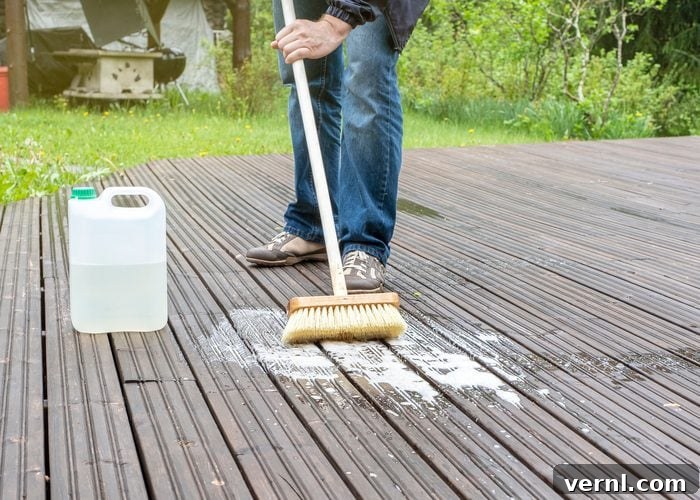
“The true secret to an impeccably clean composite deck lies in the cleaner itself,” asserts Scott Paul, the esteemed owner of DeckStainHelp.com and a recognized authority in deck restoration. According to Paul, a high-quality cleaner should undertake the majority of the heavy lifting, effectively loosening dirt and grime from the deck’s surface, thereby allowing for effortless removal.
The critical factor in selecting the appropriate cleaner is to diligently avoid any product that could potentially discolor or damage your deck material. Always begin with the least aggressive solution available, such as a mild dish soap diluted in warm water. This gentle approach is often sufficient for light dirt and everyday cleaning. If, however, persistent dirt or stubborn stains remain after your initial attempt, then it’s time to incrementally move up to a specialized, dedicated composite deck cleaner formulated for tougher challenges.
At this crucial juncture, Paul strongly advises a thorough inspection of the ingredients list of any prospective deck-cleaning chemical. He cautions, “It is best to avoid using bleach or any deck cleaners that contain bleach unless absolutely necessary and used with extreme caution.” Instead, Paul advocates for cleaners that list sodium percarbonate as a primary active ingredient. This oxygen-based cleaner provides a powerful yet significantly gentler treatment compared to harsh bleach-based alternatives, which can be detrimental to composite materials. Be vigilant for the ingredient “sodium hypochlorite,” as this is the chemical name for full-strength bleach—the same potent substance that can irrevocably damage your clothing if overused in the laundry.
It’s vital to recognize that modern composite decking, particularly those manufactured within the last five to ten years, contains a very high percentage of plastic polymers. This composition makes them exceptionally susceptible to damage and discoloration from aggressive, bleach-based cleaners. Scott Paul emphatically advises against the use of any bleach-based deck cleaners on these newer-generation composite decks.
Older composite decking products, on the other hand, present their own unique vulnerabilities. Due to their lower plastic-to-wood ratio, these earlier composites are inherently more porous, as Paul explains. “These older composites are very porous and are prone to UV discoloration and mildew/mold issues.” If pervasive mildew or mold has penetrated deeply into the composite decking material, a judicious bleach treatment might become a necessary last resort. In such specific circumstances, Paul suggests preparing a solution of 1 part household bleach to 4 parts water. This solution should be applied evenly to the affected composite decking using a pump sprayer. After allowing it to dwell for 10–20 minutes, lightly pressure wash the deck to rinse it thoroughly.
Regardless of the cleaner you choose, the golden rule remains: always test the cleaning solution on an inconspicuous, out-of-the-way section of your deck first. This crucial step allows you to observe how the cleaner reacts with your specific decking material, ensuring there are no adverse effects before you commit to cleaning the entire surface.
Understanding Agitation for Composite Decks
In a perfect world, one could simply apply a cleaning solution and then effortlessly wash away all dirt and grime with a gentle spray from a garden hose. The reality, however, often calls for at least some level of manual scrubbing to achieve truly clean results. Therefore, it’s prudent to always have a soft-bristle nylon brush readily available as part of your cleaning toolkit.
When seeking expert advice on this matter, I engaged with Trex, a leading composite deck manufacturer. Leslie Adkins, a spokesperson for Trex, graciously provided extensive resources detailing the optimal care for their specific product lines. One of the most critical takeaways from this consultation was the understanding that the appropriate level of agitation is not universal; it can vary significantly depending on the particular decking line and its unique composition.
For instance, early-generation Trex composite products are explicitly advised against pressure washing. Using a high-pressure washer on these older materials can cause irreversible damage and, critically, may void the manufacturer’s warranty. In stark contrast, newer Trex lines are engineered to withstand pressure washing, provided that the pressure setting is kept within recommended limits. We will delve deeper into the specifics of pressure washing later in this guide. For now, remember to always commence your cleaning process with the gentlest approach – starting with a light spray and then progressing to manual scrubbing with a soft brush only as necessary.
The Role of Water in Deck Cleaning
While using water to clean a deck might seem like an obvious step, its quality can significantly impact your cleaning outcome. If your household water supply is characterized as “very hard water” – meaning it contains a high concentration of minerals – it can unfortunately leave behind unsightly mineral residue or water spots on your decking surface after it dries. This can detract from the otherwise pristine appearance of your freshly cleaned deck.
Should you encounter this issue, there’s a simple and effective remedy. After cleaning and rinsing, wipe down the affected areas of your decking with a solution of white vinegar. The acetic acid in white vinegar helps to dissolve mineral deposits. Following the vinegar treatment, rinse the deck once more, ideally with softened water if available, or simply ensure a thorough rinse to remove any lingering vinegar residue. This additional step will help ensure a streak-free, gleaming finish.
Tackling Specific Composite Deck Cleaning Challenges
Food and Grease Spills
Prompt action is paramount when dealing with food and grease spills on your composite deck. Grease, in particular, can react unfavorably with the plastic polymers present in composite decking materials, potentially leading to stubborn stains if left unattended. When caught quickly, cleanup is remarkably straightforward – simply treat the spill immediately with warm, soapy water. A gentle scrub with a soft-bristle brush, followed by a thorough spray clean with a garden hose, should be sufficient to eradicate the mess before it sets.
General Dirt and Grime
The most common type of deck mess is also, thankfully, the easiest to clean. Light dirt, dust, and general soiling that accumulate from everyday use can typically be removed with minimal effort. A simple solution of warm, soapy water applied with a soft-bristle brush, followed by a rinse with a standard garden hose, is often all that’s required to restore your deck’s cleanliness and shine.
Leaf Residue and Tannin Stains
While fallen leaves are effortless to sweep away, allowing them to sit on your deck for extended periods, especially when wet, can lead to more problematic issues. As leaves decompose, they can release tannins, natural pigments that leave behind stubborn, brownish stains on the surface of composite decking. To combat these unsightly tannin residues, Trex recommends applying a specialized deck “brightener” product. Always follow the manufacturer’s specific directions for application. As with any new cleaning product, it’s wise to test the brightener on an inconspicuous area of your deck first to ensure you are satisfied with the aesthetic outcome before treating the entire surface.
Pollen Accumulation
Pollen, while seemingly innocuous, poses a significant threat to the cleanliness and longevity of composite decks. Experts at Trex have emphasized that pollen can act as a nutrient source for mold, exacerbating mold growth on composite surfaces. This makes diligent pollen removal even more crucial. Their advice is clear: begin by sweeping the deck thoroughly to remove loose pollen. Subsequently, scrub the entire surface with warm, soapy water and a soft-bristle brush. For more stubborn pollen build-up, power washing with a pressure washer set to no more than 1500 PSI (pounds per square inch) is also an effective option.
Mold and Mildew Growth
Mold and mildew thrive in damp, shaded environments and can quickly diminish the beauty of your composite deck. Regular cleaning, especially in areas prone to moisture, is key to prevention. For lighter mold or mildew growth, a solution of warm water and a composite-safe deck cleaner (like one containing sodium percarbonate) applied with a soft brush and then rinsed, is usually effective. For deeply embedded mildew on older, more porous composite decks, Scott Paul suggests a cautious approach: a dilute solution of 1 part bleach to 4 parts water, applied via a pump sprayer, allowed to dwell for 10-20 minutes, and then lightly pressure washed off. Always remember to test on an inconspicuous area first.
Can You Pressure Wash a Composite Deck? Mastering the Technique
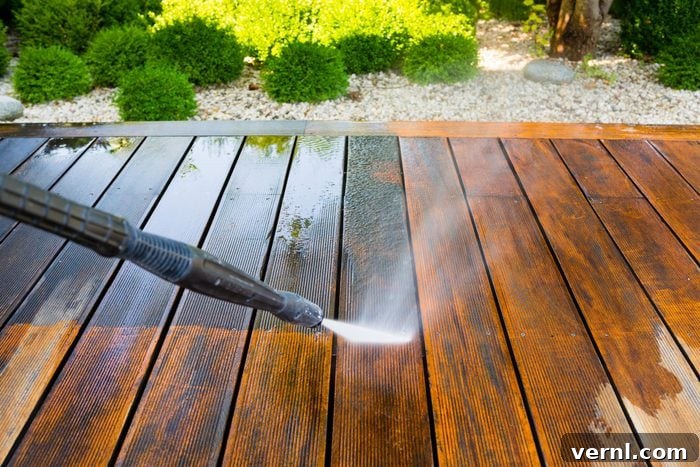
“Yes, you absolutely can pressure wash a composite deck, but only after applying a proper deck cleaner and, crucially, at a very low pressure,” advises Scott Paul. Misusing a pressure washer is one of the quickest ways to inadvertently damage your composite decking. Paul specifically recommends keeping the pressure setting no higher than 1200 PSI (pounds per square inch) for general cleaning. Furthermore, he stresses the importance of maintaining the pressure washer tip at a safe distance of at least eight to twelve inches from the decking surface. This distance helps to prevent the high-pressure spray from marring or etching the material.
It’s important to note that specific recommendations for pressure washing can vary significantly across different composite decking manufacturers and even between different product lines offered by the same brand. For example, TimberTech, another prominent manufacturer, suggests a maximum pressure of 1500 PSI for their products. Trex, on the other hand, recommends 1500 PSI for routine, basic cleaning on their newer lines, such as Transcend, and may even allow for pressures up to 3100 PSI for serious, deeply ingrained cleaning challenges on these robust, modern surfaces. However, for their older, first-generation composite lines, Trex strongly advises against any pressure washing whatsoever, as these materials are not designed to withstand high-pressure water and can be easily damaged.
Before operating a pressure washer on your composite deck, always consult your specific decking manufacturer’s care and cleaning guidelines. Pay close attention to recommended PSI limits, nozzle types (a fan tip is generally safer than a concentrated jet), and specific instructions for distance and technique. Always move the wand consistently in the direction of the deck grain to avoid streaking or uneven cleaning, and ensure overlapping passes for a uniform finish. When in doubt, start with the lowest pressure setting and gradually increase it only if necessary, while continuously monitoring the deck for any signs of damage.
Essential Regular Maintenance for Composite Decks
One of the most compelling advantages of composite decking is its inherently low maintenance requirements. Unlike traditional wood decks that demand annual staining or sealing, composite materials significantly reduce the time and effort homeowners need to invest in upkeep. However, “low maintenance” does not mean “no maintenance.” A minimal, consistent cleaning routine will ensure your investment remains pristine and beautiful for decades.
Leading composite decking manufacturer Trex recommends implementing a maintenance cleaning schedule twice a year. The first cleaning, ideally performed in the spring, prepares your outdoor living space for the warmer months of outdoor enjoyment and entertainment. The second cleaning, typically undertaken in the winter, just before the first snowfall, helps to remove accumulated debris and grime, preventing it from freezing onto the deck surface and potentially causing issues over winter.
Speaking of snow and winter conditions, both Trex and TimberTech issue a strong recommendation against using metal shovels or snow shovels with metal edges to clear snow from your composite deck. The hard, sharp edges of metal tools can easily scratch, gouge, or otherwise damage the surface of your composite boards, compromising their appearance and durability. Instead, opt for plastic shovels or brooms for snow removal to protect your deck’s finish.
Additionally, for year-round preservation, cultivate the habit of regularly sweeping your deck to remove leaves, dirt, and other debris that can accumulate and lead to stains or mold growth if left unattended. Promptly address any spills, especially those involving food, grease, or oil, to prevent them from setting into the material.
Sealing and Staining a Composite Deck
Many homeowners accustomed to the demands of wooden decks frequently inquire whether their composite decks require periodic resealing or staining. The answer largely depends on the age and composition of your composite decking.
For newer composite decks, particularly those manufactured within the last decade, the excellent news is that they are designed to be completely maintenance-free in terms of sealing or staining. These advanced materials do not ever need to be sealed, nor can they typically be stained effectively, as their non-porous surfaces and protective caps prevent absorption. Attempting to stain or seal these modern decks is usually futile and could potentially void your warranty.
However, Scott Paul notes an important exception for older composite decks, specifically those manufactured over ten years ago. “The older, porous composites can be sealed with a clear deck coating or even a penetrating semi-transparent deck stain,” he explains. This is because earlier generations of composite decking often had a higher wood content and lacked the impermeable capping layers of modern products, making them more susceptible to absorption. Applying a clear deck coating or a semi-transparent stain to these older, more porous composites can offer significant benefits. “This will help prevent mold/mildew and with the penetrating semi-transparent deck stains, it can help restore the appearance if UV faded from the sun damage,” Paul elaborates. This approach can breathe new life into an aging composite deck, enhancing its protection and aesthetic appeal.
Frequently Asked Questions About Composite Deck Cleaning
Besides cleaning, what other maintenance does composite decking require?
Very little indeed! The primary non-cleaning maintenance involves addressing spills as soon as possible, especially if they contain grease, oil, or other staining agents. Both Trex and TimberTech strongly caution against leaving oil-based items, such as welcome mats with rubber backings or planter pots that retain moisture, directly on the decking surface for extended periods. These items can trap moisture and chemicals, potentially leading to discoloration or staining of the composite material over time. Regularly lift and clean underneath any mats or planters to prevent such issues. Additionally, ensure proper ventilation around and under your deck to prevent moisture buildup, which can contribute to mold and mildew.
Is composite decking easier to clean than wood?
“Cleaning composite decks is remarkably similar to cleaning wood decks in terms of the basic steps and tools involved,” says Scott Paul. Both require sweeping, washing with a suitable cleaner, and rinsing. However, composite decking generally requires less frequent deep cleaning compared to wood, as it is inherently more resistant to staining, rotting, and insect damage. The biggest advantage lies in the long-term maintenance: composite decks never need sanding, staining, or sealing, which are labor-intensive tasks typically required for wood decks.
Can I use a regular household cleaner on my composite deck?
It is generally advisable to avoid using general household cleaners like all-purpose sprays, ammonia-based products, or abrasive scrubbers on your composite deck. Many household cleaners contain ingredients that can be too harsh for composite materials, potentially causing discoloration, etching, or damage to the surface. Always opt for cleaners specifically formulated for composite decking or, as a first step, a mild solution of dish soap and warm water. When in doubt, refer to your decking manufacturer’s cleaning guide or test the cleaner on an inconspicuous area first.
How often should I clean my composite deck?
For most composite decks, a thorough cleaning twice a year is recommended: once in the spring to prepare for outdoor living and again in the late fall or early winter to remove accumulated debris before colder weather sets in. Beyond these biannual cleanings, regular sweeping to remove leaves and dirt, and immediate spot cleaning of spills, will help maintain its pristine appearance throughout the year. Decks in heavily shaded areas or those prone to high pollen counts or moisture may benefit from more frequent light cleanings.
Meet Our Experts
Scott Paul has been actively cleaning and restoring decks since 1993, accumulating decades of invaluable experience. Today, he is the proud owner of DeckStainHelp.com, a highly regarded resource in the industry. He is widely recognized as an authority in the deck restoration field, frequently contributing his expertise to numerous wood restoration forums and informative websites. Scott and his dedicated companies have successfully restored over 10,000 decks across the Metro Detroit area.
Valuable Resources
Leslie Adkins is the Group Vice President of Marketing and ESG Development at Trex Company. Her insights were provided via an electronic interview, offering direct manufacturer perspectives.
Timber Tech Care and Cleaning Guide
Trex Care and Cleaning Guide
Maintaining a composite deck doesn’t have to be a chore. By understanding the right cleaning agents, appropriate agitation techniques, and the nuances of water usage, coupled with a consistent maintenance routine, you can ensure your deck remains a beautiful, inviting extension of your home for many years to come. Embrace these simple, effective strategies, and enjoy the lasting beauty and effortless appeal of your composite deck.