
Revive Your Dingy White Towels: The Ultimate Guide to Laundry Stripping for a Deeper Clean
There’s an undeniable charm to fresh, bright white towels. Their crisp appearance, the feeling of pristine cleanliness they exude – it’s a simple luxury that many cherish in their homes. However, maintaining that sparkling whiteness can often feel like an uphill battle. Daily use, coupled with factors like hard water, lingering dirt, body oils, and persistent product build-up, frequently leaves even the highest quality white towels looking dull, discolored, and noticeably less absorbent over time. For countless homeowners and renters, the cycle of buying new towels to replace dingy ones becomes a frustrating, costly, and environmentally unfriendly habit. But what if you could break that cycle and restore your beloved linens to their former glory, saving money and reducing waste?
Enter the viral sensation that has been sweeping social media platforms like TikTok: Laundry Stripping. This increasingly popular deep-cleaning method promises to strip away years of accumulated grime, oils, mineral deposits, and stubborn detergent residue that your regular wash cycle simply can’t handle. The results, as showcased in countless mesmerizing videos, appear nothing short of miraculous, transforming murky water into a visual testament of just how much hidden dirt and chemical build-up our fabrics can hold. Could this be the secret weapon against dingy towels and the key to extending their lifespan, making them feel fresh and new again?
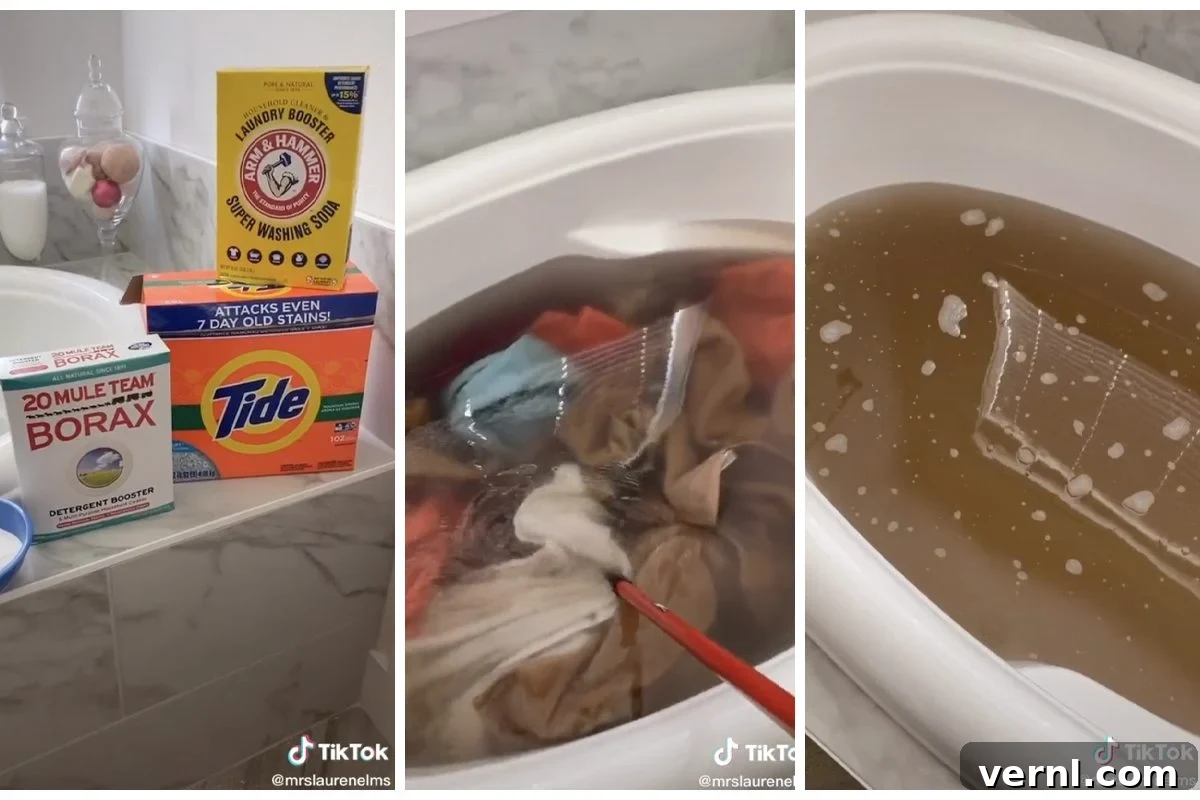
@mrslaurenelms Who’s here for the towel stripping? 🙋♀️ #laundry #cleanfreak #laundrymagic #laundrystripping #tide #borax #armandhammer #diycleaning ♬ original sound – MrsLaurenElms
Driven by the promise of restoring brightness and absorbency to my own collection of white towels, and the potential to save a significant amount of money by not constantly replacing them, I decided to dive deep into the world of laundry stripping. To truly understand its efficacy and uncover the genuine science behind the trend, I consulted an expert in fabric care and put the method to the test myself. Join me as we explore the mechanics of laundry stripping, discover expert opinions, and reveal whether this viral cleaning hack truly lives up to its hype as the ultimate deep clean for your laundry.
Understanding the Science: How Laundry Stripping Works for a Deep Clean
At its core, laundry stripping is a powerful deep-cleaning technique meticulously designed to tackle what regular washing often misses. It employs a specific and potent combination of ingredients—water softeners, a high-performance detergent, and intensely hot water—to methodically lift and eliminate deeply embedded residues from fabric fibers. These aren’t just superficial stains; we’re talking about layers of built-up fabric softeners, the remnants of excess detergent that didn’t fully rinse out, and stubborn mineral deposits from hard water. This cumulative build-up, often unseen, is the silent culprit behind stiff, dull, discolored, and less effective laundry, particularly for items like towels and bedsheets.
The Pervasive Problem of Hard Water in Laundry Care
One of the primary and often overlooked factors contributing to dingy laundry is hard water. If you reside in an area with hard water—and a significant portion of the U.S. does—you’re likely all too familiar with its adverse effects. Hard water contains elevated levels of dissolved minerals, predominantly calcium and magnesium. While these minerals are generally not harmful to consume, they wreak considerable havoc on your laundry and plumbing systems. Over time, these mineral ions adhere tenaciously to fabric fibers, causing clothes to appear dingy, develop an unsightly off-color tinge (especially noticeable on white fabrics), and leave them feeling noticeably stiff, scratchy, and rough to the touch. Furthermore, hard water actively diminishes the effectiveness of your laundry detergent by reacting with its active cleaning agents, thereby reducing their ability to clean. This often leads people to use more detergent in a futile attempt to achieve cleanliness, inadvertently exacerbating the very problem of residue build-up.
The “Residue Snowball”: Fabric Softeners and Excess Detergent
While often marketed as essential solutions for achieving softer, fresher-smelling clothes, fabric softeners and dryer sheets can paradoxically contribute significantly to your laundry woes. These products primarily work by coating fabric fibers with a lubricating agent, which creates a superficial sensation of softness. While this might feel pleasant initially, these synthetic coatings do not fully rinse away. With each subsequent wash and dry cycle, more layers accumulate, forming what can be accurately described as a “residue snowball.” This growing build-up can lead to a host of problems beyond just aesthetic concerns. It can cause irritating skin sensitivity and itchiness, drastically reduce the absorbency of towels (making them less effective at drying), trap unpleasant odors, and even contribute to a dirty, less efficient, and foul-smelling washing machine by clinging to its internal components and encouraging mold and mildew growth.
The Potent Chemistry Behind Laundry Stripping
Laundry stripping is remarkably effective because of the intelligent chemical synergy between its core ingredients. The water softeners—typically Borax and washing soda (sodium carbonate) in most effective stripping recipes—are absolutely crucial. These compounds possess specific chemical properties that allow them to effectively bind to and neutralize hard water ions like calcium and magnesium. By sequestering these minerals, the water becomes “softer,” creating an optimal environment for cleaning. This softened water then dramatically enhances the performance of the third key ingredient: the detergent. Without the interference of hard water minerals and layers of existing residue, the detergent can finally penetrate deep into the fabric fibers, effectively dissolving and pulling out the ingrained dirt, body oils, and stubborn product build-up that has been trapped for so long. The intensely hot water further aids this entire process by relaxing fabric fibers, increasing the solubility of the residues, and promoting a more thorough and efficient release of all the accumulated gunk.
Expert Insights: What The Laundry Evangelist Says About Laundry Stripping
To gain a truly professional and nuanced perspective on this trending deep-cleaning method, I spoke with Patric Richardson, affectionately known as The Laundry Evangelist. His extensive expertise in fabric care shed valuable light on both the undeniable effectiveness and the practical application of laundry stripping, offering critical context for anyone considering this technique.
A Powerful Tool, But Not Always a Necessity for Every Load
“Laundry stripping works—with a caveat,” Richardson states, emphasizing that while it’s undeniably highly effective, its visible impact varies significantly depending on individual laundry habits. He explains that individuals who are heavy-handed with detergents, laundry pods, fabric softeners, and dryer sheets will undoubtedly observe the most dramatic and satisfying results. For these users, the amount of residue accumulated in their fabrics can be substantial, making the visible release of grime during stripping truly impressive and almost shocking. Conversely, if your current laundry routine is already minimalistic, diligently employing clean-rinsing soaps and consistently avoiding excessive products, the effect of laundry stripping will likely be minimal. This is simply because there’s significantly less residue to “strip” away in the first place, indicating healthier fabric care habits are already in place.
Richardson further elaborates that while effective, laundry stripping isn’t necessarily an essential, routine practice for everyone. He suggests that a simple, more sustainable long-term solution lies in merely switching to clean-rinsing laundry soaps. Over time, these thoughtfully formulated products will naturally help to break down and eliminate the accumulated residues from fabric softeners and excess detergents that have built up within your textiles. However, the distinct advantage of laundry stripping is its remarkable ability to achieve these dramatic results all at once, offering an immediate and thorough deep clean that can be incredibly satisfying and revitalizing for your most tired linens.
The Ideal Candidates for Laundry Stripping and Why
For anyone considering a laundry stripping experiment, Richardson offers clear and practical guidance: “Start with cotton towels (yes!).” He explains that cotton, with its naturally long, loose, and highly absorbent fibers, is particularly adept at holding onto residues like a sponge. This characteristic makes cotton towels prime candidates for stripping, as the results tend to be the most visually striking and functionally beneficial. Here’s a staggering fact Richardson shared that highlights the issue: fabric softeners can reduce the absorbency of towels by an astounding 80 percent! This critical insight powerfully demonstrates why towels, which are specifically designed for maximum absorbency, are often the first items to suffer from product build-up, becoming progressively less effective at drying and feeling less plush over time.
“Fabric softeners and fragrances are specifically engineered to linger on fibers,” Richardson notes, explaining the root cause of the problem. Since these synthetic coatings resist thorough rinsing, and we continuously add more with every wash, the cumulative build-up fundamentally alters the textile’s natural properties. He passionately champions the integrity of fabrics, stating, “I want my cotton to feel like cotton, and my wool to feel like wool.” This philosophy underscores the vital idea that our laundry products should genuinely enhance cleanliness and comfort, not mask or degrade the inherent qualities and performance of our clothing and linens. Laundry stripping helps to effectively reset fabrics, allowing them to return to their natural, original state, feeling truly clean, performing as they were intended, and offering a luxurious softness that isn’t artificial.
My Personal Experiment: Putting Laundry Stripping to the Ultimate Test
After my enlightening conversation with Patric Richardson, I felt a renewed sense of confidence in my general laundry routine. I’ve always been judicious with detergent, leaning towards a minimalist approach, and I had long since abandoned fabric softeners. However, I did have one guilty pleasure I needed to address: the occasional use of dryer sheets. Moreover, living in Dallas, I am acutely aware that our tap water is notoriously hard, a significant contributor to fabric dullness. These factors, combined with the daily assaults of four active animals and a passionate gardening hobby, meant my collection of white towels was certainly showing discernible signs of wear, tear, and persistent dinginess, despite my best efforts. The promise of whiter, fluffier, and more absorbent towels, without having to constantly replace them, was simply too tempting to resist. The stage was set: whiter towels, here we come!
The Meticulous Setup and Essential Ingredients
To embark on my personal laundry stripping adventure, I ensured my bathtub was meticulously cleaned and sanitized before filling it generously with the hottest water possible directly from my tap. The elevated water temperature is a critical component of the process, as the intense heat helps to relax and open up fabric fibers, significantly increasing the solubility of the embedded residues. I carefully measured out the classic stripping recipe, as frequently demonstrated in many viral videos and recommended by experts:
- One-quarter cup of Borax (a natural mineral compound revered for its ability to act as a powerful water softener and an effective cleaning booster).
- One-quarter cup of washing soda (sodium carbonate, another potent water softener, alkalinity enhancer, and detergent booster that aids in loosening dirt).
- One-half cup of a high-quality powdered detergent (the primary cleaning agent that works most effectively in softened water to break down and lift grime).
I then thoroughly muddled these ingredients around in the scalding hot water with a dedicated wooden spoon, ensuring they dissolved completely and homogeneously to create a uniform and potent stripping mixture. Once the solution was perfectly ready, I gently but completely submerged four of my dingiest white towels into the murky depths. While my towels were dry at the point of immersion, the expert had advised that as long as they were clean (i.e., freshly washed), their initial wetness or dryness wouldn’t significantly impact the overall process. The crucial prerequisite is simply to ensure they are free of fresh dirt and loose debris, allowing the stripping solution to target embedded residues.
The Revealing Waiting Game and Surprising Results
Immediately after adding the towels, I agitated them thoroughly to ensure they were fully saturated and completely immersed in the powerful stripping mixture. To my genuine astonishment, the water almost instantly began to take on a suspicious grayish tint. This early visual confirmation was both alarming and strangely satisfying, hinting strongly that the process was indeed working its magic and actively drawing out unseen impurities. Over the next several hours, I returned to the bathtub periodically—approximately once every hour—to stir and agitate the towels gently. This regular agitation ensures maximum contact with the stripping solution and actively encourages the continuous release of deeply trapped grime and residue.
The “waiting game” stretched on for approximately five hours. While the water didn’t transform into the dramatically dark brown or black liquid depicted in some extreme TikTok videos, it consistently maintained a distinct, murky, almost “spring-rainwater” tinge. This sustained discoloration served as compelling evidence that residues were continuously being extracted from the towel fibers. Once I was satisfied with the process, or rather, once the visual evidence of residue extraction seemed to plateau and the water color stabilized, I carefully removed the saturated towels from the bathtub. They then went straight into my washing machine for an extra-long, comprehensive rinse cycle. It’s absolutely crucial not to re-wash them with detergent at this stage, as the primary goal is to thoroughly rinse away all the stripped-out grime and the residual chemical agents from the stripping solution itself. A prolonged and thorough rinse ensures no lingering agents or loosened dirt remains trapped within the now-clean fibers.
The Ultimate Verdict: Brighter, Fluffier, and Truly Rejuvenated Laundry
The verdict? It unequivocally worked! Despite the water not turning jet black, the powerful laundry stripping concoction performed its intended job with remarkable efficacy. After the exhaustive rinse cycle and a subsequent spin in the dryer, my towels emerged dramatically transformed. They were noticeably fluffier, their texture restored to a much softer, more luxurious feel that hadn’t been present for years. Crucially, their inherent whiteness was significantly brighter, a clear and undeniable testament to the successful removal of deep-seated dinginess, mineral deposits, and stubborn product residue. This personal experiment truly validated the widespread claims of laundry stripping, proving it to be a powerful, albeit time-consuming, method for revitalizing tired textiles and giving them a second life.
Beyond the Strip: Embracing Sustainable and Healthier Laundry Habits
While the immediate results of laundry stripping are undeniably impressive and satisfying, the process itself is quite time-intensive and requires significant effort. As I considered the prospect of dedicating an entire day every few months to strip my entire linen closet, a crucial question arose: Is this a sustainable long-term solution, or merely a powerful occasional reset for neglected fabrics? The idea of perpetually adding artificial coatings to our clothes, only to have to strip them off later to achieve true cleanliness, feels counterintuitive to truly effective and healthy laundry care. Patric Richardson champions a proactive approach, emphasizing that the ultimate goal should be to prevent residue build-up in the first place. By adopting smarter, more mindful, and sustainable laundry habits, we can significantly reduce, if not entirely eliminate, the need for frequent, intensive stripping, keeping our fabrics fresh, truly clean, and residue-free on an ongoing basis. Here are his expert tips for cultivating a healthier and more effective laundry routine:
- Eliminate Fabric Softeners and Dryer Sheets: This is Richardson’s number one, non-negotiable recommendation. Fabric softeners and dryer sheets are entirely unnecessary for effective cleaning and maintaining fabric comfort. Their primary function is to coat fabric fibers with lubricants and artificial fragrances. Over time, this coating doesn’t just reduce the crucial absorbency of towels; it actively traps dirt, body oils, and detergent residue, paradoxically making your clothes dirtier, less breathable, and prone to developing odors. Opt instead for natural alternatives like wool dryer balls for effective softening, static reduction, and even a slight reduction in drying time.
- Drastically Reduce Detergent Usage: This is a common and easily rectified mistake. Most people habitually use far too much detergent, often filling the cap to the brim without realizing the consequences. This excess detergent doesn’t rinse out properly, leading directly to residue build-up, potential skin irritation, and even a stiff, rough feel to fabrics. For a standard full load of laundry, you generally only need about two tablespoons of concentrated liquid detergent or one detergent pod. Experiment with less to find the optimal amount for your specific water type, machine capacity, and soil level.
- Consider Using Soap Flakes or Natural Laundry Soaps: Unlike many conventional detergents which contain a complex blend of surfactants and other chemicals that can leave residue, traditional soap flakes or natural laundry soaps tend to rinse away much more cleanly. This characteristic means you’re far less likely to overdo it or contribute to problematic residue accumulation, helping your fabrics maintain their natural feel, breathability, and genuine cleanliness. These options are often gentler on sensitive skin too.
- Harness the Power of Dryer Balls for Softness and Static: Instead of chemical-laden dryer sheets, embrace reusable and eco-friendly alternatives. Wool dryer balls are excellent for naturally softening fabrics, significantly reducing static cling, and even shortening drying times by separating clothes and absorbing moisture. For an even more economical and readily available option, make your own dryer balls out of aluminum foil. Simply crumple a few sheets of heavy-duty foil into tight, dense balls. These are incredibly effective at eliminating static cling and can be recycled when they eventually wear out after many uses.
- Regularly Clean Your Washing Machine: Your washing machine, the very appliance designed to clean, can ironically become a significant source of grime, odors, and bacteria if not properly maintained. Residue from detergents, fabric softeners, hard water minerals, and even body soil can accumulate in the drum, dispensers, and hoses, leading to musty smells and less effective washes over time. To effectively “de-gunk” your washer and ensure it starts fresh, run the longest and hottest wash cycle available with an empty drum. During this cycle, add one pound of Borax and one gallon of white vinegar directly to the drum. This powerful combination will work to break down and flush away build-up, leaving your machine sparkling clean and ready to deliver truly fresh and residue-free laundry.
The Long-Term Benefits of Mindful Laundry Practices
Adopting these proactive and mindful laundry practices not only minimizes the need for intensive deep-cleaning methods like laundry stripping but also offers numerous long-term benefits for your textiles, your health, and your wallet. Your clothes and linens will feel genuinely softer, look consistently brighter, and last considerably longer because their fibers aren’t weighed down or degraded by chemical coatings. You’ll also likely experience fewer instances of skin irritations, and your washing machine will operate more efficiently, hygienically, and with a longer lifespan. Furthermore, drastically reducing the amount of laundry products you use is a significant win for both your household budget and the environment. While laundry stripping is undoubtedly a fantastic tool for a “reset” for severely neglected fabrics, consistent, mindful laundry habits are the true, sustainable path to perpetually clean, fresh, and vibrant textiles in your home.
Ultimately, my personal journey into laundry stripping unequivocally confirmed its effectiveness for restoring dingy towels and other fabrics that have suffered from years of build-up. It is a powerful and visually compelling method to address stubborn accumulation. However, the most profound takeaway is the paramount importance of prevention. By truly understanding how our laundry products and local water quality impact our textiles, we can make informed and conscious choices that lead to cleaner, softer, healthier, and longer-lasting laundry, making the need for extreme measures like stripping a rare occurrence rather than a regular, time-consuming chore.
[cf]skyword_tracking_tag[/cf]