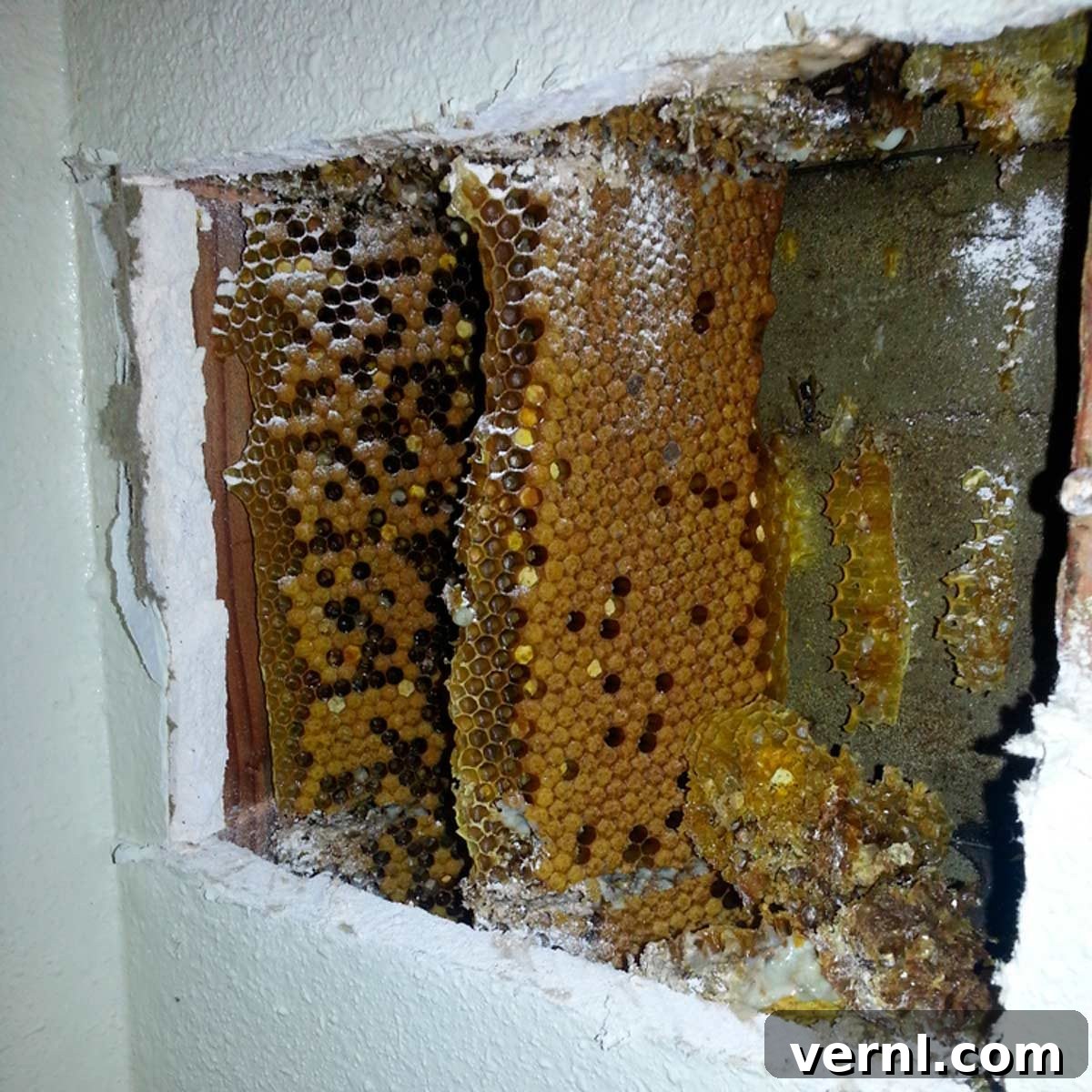
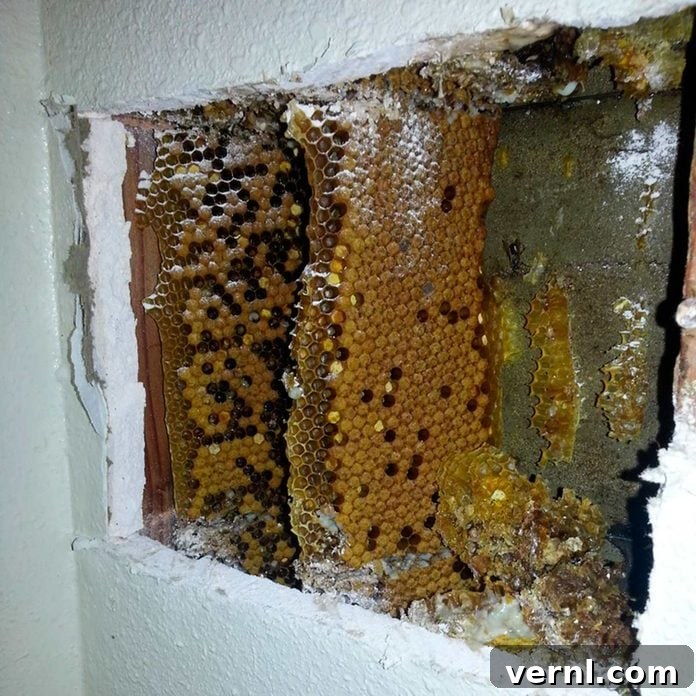
Embarking on a journey to renovate an old home often brings a trove of unexpected discoveries. From forgotten artifacts to hidden rooms, old houses hold countless stories within their walls. However, some homeowners have stumbled upon a truly remarkable and initially alarming find: a thriving beehive ingeniously integrated into the very structure of their home! While the sight of a bustling insect colony within your walls might prompt immediate concern, these historic built-in beehives represent a fascinating and once vital aspect of traditional domestic life and sustainable living.
Far from being a mere pest infestation, these hidden hives often point to an ancient and symbiotic relationship between humans and bees. They were not accidental occurrences but rather deliberate architectural features, meticulously designed to provide homeowners with a ready supply of honey, even in the depths of winter. Understanding their purpose reveals a rich history of ingenuity, resourcefulness, and a profound connection to nature that characterized life in bygone eras. As we delve into the world of wall beekeeping, we uncover not just the mechanics of these unusual structures but also the cultural and environmental significance they held for centuries.
Unearthing the Past: A Glimpse into Historic Wall Hives
The discovery of a built-in beehive can be a truly captivating experience, bridging centuries with a single glance. A memorable instance occurred in 2007 when Robert Brackley Jr. was carefully dismantling the historic Thomas House on the campus of the University of Maine at Farmington. During this process, he encountered something extraordinary: a perfectly preserved beehive, nestled precisely between wall studs, surprisingly close to a chimney. This wasn’t merely a wild swarm that had found its way in; the intricate placement suggested a more deliberate design.
Brackley’s findings offered crucial clues about the hive’s operation. Near its base, he observed a wooden plug firmly inserted into a hole. He surmised this was the principal entry and exit point for the bees, allowing them access to the outside world while keeping the colony contained within the wall. What’s more, visible honeycomb on the exterior of the hive cavity hinted at the productivity of its former inhabitants. Such discoveries are invaluable, offering tangible evidence of a sophisticated, yet largely forgotten, practice that predates modern beekeeping techniques. They prompt us to reconsider the ways in which our ancestors interacted with their environment and harnessed natural resources for daily living.
The Ingenious Purpose of Integrated Beehives
“It seems bizarre,” Brackley reportedly commented, “but it looks like the people built it into the wall and when they wanted honey, they would go up and get it.” Indeed, his deduction was spot-on. The primary motivation behind installing these built-in beehives was remarkably straightforward and practical: to provide homeowners with convenient, fresh honey. This was a direct, localized food source, eliminating the need to trek to external apiaries or rely on purchased goods.
These architectural innovations were tailored for the beekeeping homeowner. Behind the protective layers of the wall, bees could construct their intricate comb and produce honey, all within an environment that was safe from external threats and the elements. When the sweet reward of honey was desired, perhaps for a morning meal in the kitchen downstairs, family members could simply access the hive from an interior point, typically upstairs, by removing a strategically placed panel or door. This system allowed for direct harvesting without disturbing the main activities of the household or exposing the bees to adverse weather conditions. The integrated design made honey a truly homegrown commodity, a testament to self-sufficiency and a seamless blend of architecture and agricultural practice. It wasn’t just about obtaining honey; it was about living in harmony with nature, ensuring a stable food supply, and demonstrating an early form of sustainable resource management.
For those interested in other unique features of historical homes, you might find it intriguing to learn why old houses often have a random toilet in the basement.
Wall Beekeeping: A Practice Rooted in Ancient History
The concept of “wall beekeeping” is far from a niche or recent phenomenon; it is an ancient practice with a rich, global history. Up until relatively recently, integrated beehives were a common element in the architecture of mountain homes nestled in the Himalaya Mountains of Northwest India. Built directly into the thick, protective outside walls of dwellings, these hives offered bees a secure and stable environment. As blogger Christina Selby for Vox notes, “Traditionally wild colonies of bees found the hive themselves, or farmers brought a log with a hive in it from the surrounding forest so the inhabitants could set up shop in the village and produce honey for their human caretakers.” This highlights a beautiful interplay between natural colonization and human intervention, demonstrating how communities leveraged local ecosystems for their benefit.
Modern enthusiasts like Susan Chernak McElroy have embraced and championed this practice, even incorporating it into contemporary homes. McElroy, who refers to her own setup as an “Observation Hive” due to its plexiglass cover, emphasizes the deep historical roots: “my ancient ancestors have been keeping such hives—called walled hives—for millennia.” Her understanding is significantly informed by a fascinating 1998 Bee World article by Eva Crane, a renowned apidologist. Crane’s extensive research meticulously details the existence and methods of wall hives and wall hive beekeeping across some 20 warm-temperate Old World countries. This comprehensive study traces the practice back to at least AD 60, underscoring its enduring legacy and widespread adoption across diverse cultures and geographies. The prevalence and longevity of wall beekeeping underscore its efficacy and the fundamental human need for connection with the natural world.
Building and Sustaining Wall Hives: Traditional and Modern Approaches
The construction of traditional wall hives varied by region and available materials but consistently prioritized the well-being of the bee colony and ease of access for the human keepers. Historically, these hives were often found in structures primarily made of stone, chosen for its excellent insulating properties and durability. Typical dimensions for these cavities were approximately 12 inches wide, 17 inches tall, and 9 inches deep, providing ample space for a thriving colony to build its comb. Soft stone was meticulously carved out to create these hollows, which were then usually sealed with a wooden cover. This cover served as a “door” to the hive, strategically placed on either the outside wall for external management or the inside wall for convenient indoor harvesting. The careful integration of these hives into the very fabric of the house speaks volumes about the value placed on honey and the industrious insects that produced it.
Modern interpretations of wall beekeeping, like Susan Chernak McElroy’s “Observation Hive,” showcase how these ancient methods can be adapted for contemporary living. In her bedroom wall, by the window, McElroy engaged carpenters to precisely cut out the drywall and insulation between two existing framing studs. This careful work revealed the original 1930s wood and shingling of the house’s structure. The cavity was thoroughly cleaned, preparing it for its new inhabitants. To facilitate observation and management, a piece of plexiglass was installed, acting as a transparent inner wall. This plexiglass includes a small, hinged door at the bottom, which allows McElroy to feed the bees if necessary, particularly during leaner seasons. To ensure the bees’ privacy and ability to work in darkness—conditions essential for their natural behavior—she placed a light-proof, thick quilting material over the plexiglass. This thoughtful design marries the convenience of observation with the bees’ biological needs, creating a harmonious and functional living space for the colony.
The Ecological Advantage: Wall Hives Benefit the Bees
Beyond the undeniable convenience for humans, wall hives offered significant benefits to the bees themselves, contributing to the health and longevity of the colonies. Throughout history, bees housed in the thick walls of homes and barns—structures typically made of stone, brick, or adobe—fared remarkably well. This success was primarily attributed to the superior thermal regulation provided by these traditional building materials. As McElroy succinctly states, “It was noted in old writings that bees fared especially well in wall hives, probably owing to the better warmth in winter and probably cool in summer of old stone, brick, or adobe-comb homes.”
This natural insulation created a stable microclimate within the hive cavity, shielding the bees from extreme temperature fluctuations. During the harsh winter months, the substantial thermal mass of stone or brick walls would retain heat, helping the colony maintain the critical internal temperature required for survival and brood rearing. Conversely, in the scorching summer, these same thick walls would keep the interior cool, preventing overheating which can stress a colony and compromise honey production. This natural temperature buffering is a stark contrast to many modern outdoor hive designs, which can be more susceptible to rapid temperature swings. Furthermore, being enclosed within a wall offered unparalleled protection from predators, pests, and severe weather events, fostering a secure environment where the bees could thrive without constant external threats. The design of these traditional structures, whether from stone or other materials that make up a strong retaining wall, proved to be an ideal habitat, closely mimicking the natural hollows in trees or rock crevices that wild bee colonies typically seek.
Beyond Honey: The Enduring Legacy of Wall Beekeeping
The practice of wall beekeeping extends beyond the simple procurement of honey; it embodies a broader philosophy of self-sufficiency, sustainable living, and a deep respect for the natural world. These integrated hives allowed households to produce their own sweeteners and medicinal resources, fostering a sense of independence from external markets. In a time when transportation and commerce were limited, a reliable, on-site source of honey was a significant asset, contributing not only to the family’s diet but potentially also serving as a valuable commodity for trade or barter within the community. The ingenuity behind these installations highlights an era where human structures were often designed with a greater ecological awareness, striving for harmony rather than separation from nature.
Moreover, the resurgence of interest in wall beekeeping in contemporary times, championed by individuals like Susan Chernak McElroy, speaks to a renewed appreciation for traditional skills and sustainable practices. It connects us to ancient agricultural methods and architectural designs that maximized resource efficiency. In an age where bee populations are under increasing threat, understanding and re-adopting such practices can also contribute to conservation efforts. Providing safe, stable, and naturally insulated habitats within human dwellings offers a unique way to support pollinators, contributing to biodiversity and ecological balance. The discovery of an old wall hive in a renovated home, therefore, isn’t just an archaeological curiosity; it’s a powerful reminder of our ancestors’ wisdom and a potential blueprint for more integrated, sustainable living in the future. These hidden structures, once buzzing with life, encourage us to look deeper into the walls of our history and appreciate the ingenious ways in which humans have coexisted with the natural world for millennia.