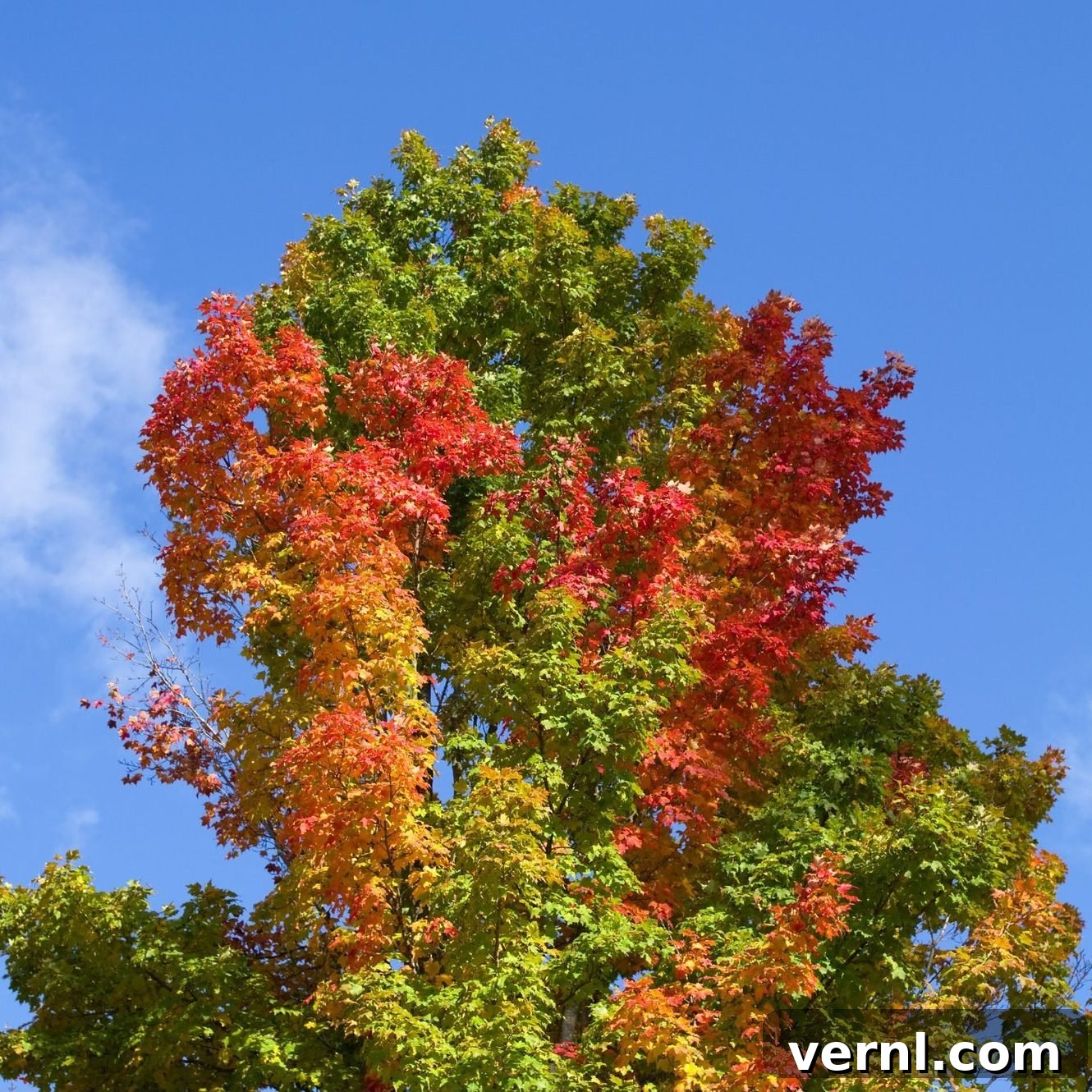
Maple trees, belonging to the genus Acer, are among the most beloved and recognizable trees across the Northern Hemisphere. With over 100 distinct species, these magnificent trees and shrubs showcase an incredible diversity in size, shape, bark texture, leaf coloration, and growth habits. From the towering giants that dominate forests to delicate ornamental varieties perfect for urban gardens, maples offer a myriad of options for both grand landscapes and intimate settings. Revered for their spectacular fall foliage, their valuable timber, and the sweet syrup derived from their sap, maples play significant ecological and economic roles. While Asia boasts the highest concentration of native maple species, North America is home to a robust collection, including some of the most iconic varieties. This guide will delve into the characteristics of six of the most commonly found and appreciated maple varieties in the United States, helping you identify and appreciate these versatile trees.
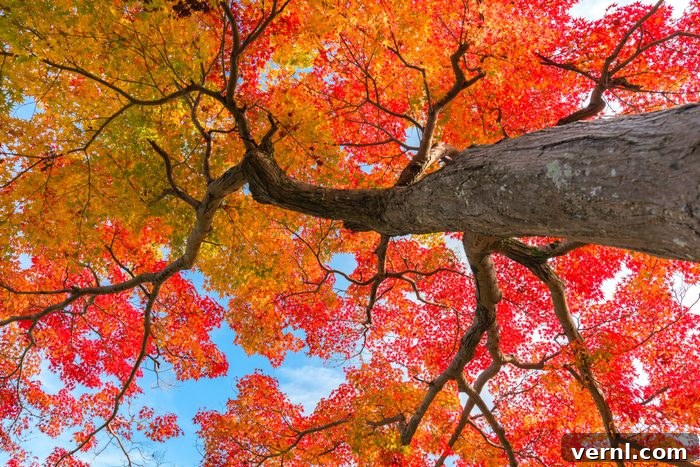
Identifying Different Kinds of Maple Trees
Although the majority of maple species originate from Asia, approximately 13 types are native to the United States and Canada, thriving in diverse climates and soil conditions. Despite their shared genus, maple trees exhibit remarkable variability from one species to another, making identification an engaging challenge for arborists and enthusiasts alike. Key characteristics to observe when identifying maple trees include the specific shape and lobing of their leaves, the texture and color of their bark, the type of fruit they produce (known as samaras or “helicopters”), and their overall growth habit and mature size.
Most maples feature distinctive palmate leaves with three to five prominent lobes, a pattern familiar to anyone who’s seen the Canadian flag. However, there are exceptions, such as the Boxelder Maple, which has compound leaves, or the Bigleaf Maple with its enormous, deeply lobed leaves. Bark can range from smooth and gray on young trees to deeply furrowed, scaly, or even peeling in mature specimens. Understanding these subtle differences is crucial for accurate identification and for choosing the right maple for your specific landscaping needs.
Sugar Maple (Acer saccharum)
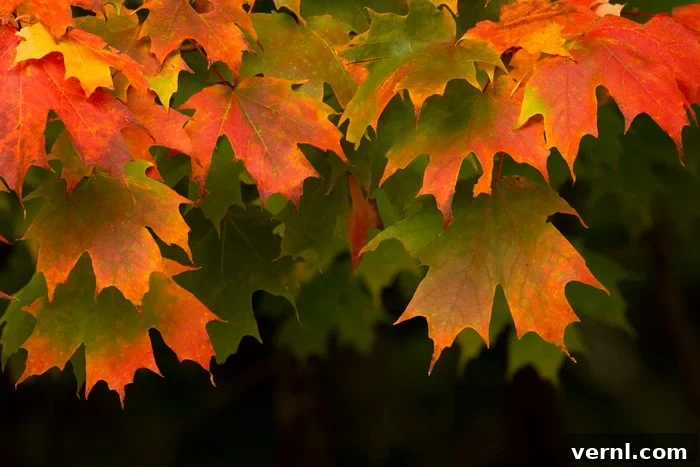
Scientific name: Acer saccharum
The Sugar Maple is arguably the most famous and culturally significant maple tree in North America, largely due to its essential role in producing maple syrup. Without this majestic tree, breakfast tables across the continent would lack their beloved golden topping. Primarily found thriving in the northeastern United States and southeastern Canada, Sugar Maples are celebrated not only for their sweet sap but also for their breathtaking autumn display. Their leaves transition into vibrant hues of fiery orange, crimson, and golden yellow, making them a cornerstone of fall landscapes.
Characterized by brown, deeply furrowed bark that becomes more pronounced with age, Sugar Maples are robust and long-lived. Their leaves are typically dark green and smooth on the upper surface, with a slightly lighter, paler green on the underside. Each leaf features five distinct lobes with relatively smooth margins, a classic maple silhouette. These iconic hardwoods prefer well-drained, fertile soils and are known for their dense canopy, providing excellent shade. Growing to impressive heights of 80 to 100 feet with a spread of 40 to 50 feet, they require ample space to flourish. Beyond syrup and aesthetics, Sugar Maple wood is highly valued for its hardness, used in flooring, furniture, and musical instruments, solidifying its status as a cornerstone of North American forests.
Paperbark Maple (Acer griseum)
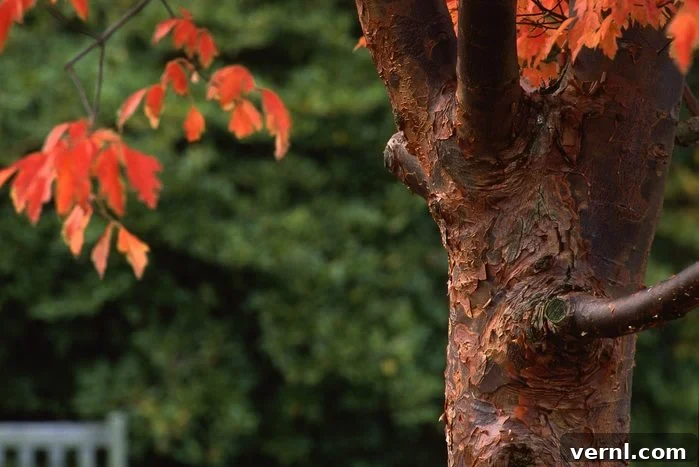
Scientific name: Acer griseum
The Paperbark Maple stands out as one of the most distinctive and easily identifiable maple species, primarily due to its extraordinary exfoliating bark. This unique feature gives the tree a perpetually rustic and intriguing appearance, as its thin, papery strips of cinnamon to rusty-red bark peel away from the trunk and branches, revealing the smoother, dark brown bark beneath. This striking contrast provides year-round visual interest, making it a highly prized ornamental tree, especially during the dormant winter months when its bark truly shines.
Beyond its remarkable bark, the Paperbark Maple offers attractive foliage throughout the seasons. Its leaves are trifoliate, meaning they are composed of three individual leaflets, a departure from the typical palmate maple leaf. These leaflets are dark green and slightly hairy on the upper side, while the undersides are paler and more pubescent. In autumn, the leaves transform into brilliant shades of orange, red, and sometimes even purplish-red, adding another layer of seasonal beauty. Native to central China, this medium-sized maple typically reaches heights of 20 to 30 feet with a similar spread, making it suitable for smaller gardens or as an understory tree. It thrives in well-drained, slightly acidic to neutral soil and prefers locations with full sun to partial shade. Its relatively slow growth rate and unique aesthetic appeal make it a cherished specimen tree for discerning gardeners seeking beauty in every season.
Red Maple (Acer rubrum)
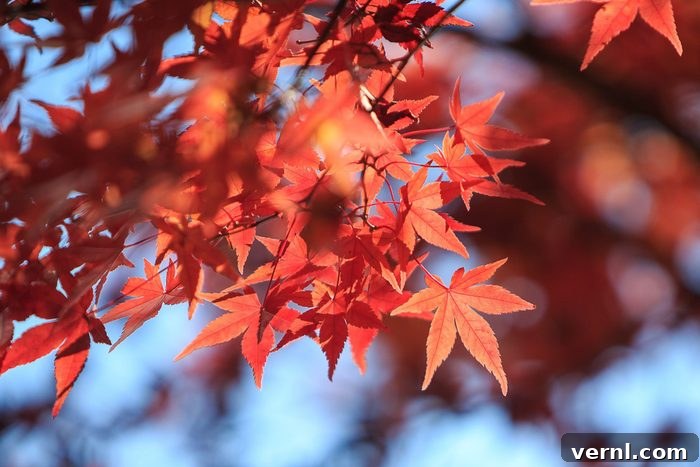
Scientific name: Acer rubrum
The Red Maple is one of the most ubiquitous and adaptable trees found across the entire Eastern United States, from Florida to Canada. Its name is a testament to the vivid reddish hues present in various parts of the tree throughout the year: red buds in winter, red flowers in early spring, red leaf stems (petioles) during summer, and, most famously, spectacular fiery red and orange foliage in autumn. These vibrant fall colors make the Red Maple one of the best choices for seasonal display in any landscape, often being among the first trees to change color in the autumn.
Red Maple leaves typically have three to five lobes with serrated (toothed) edges, a dull to medium green color on the top surface, and a distinctive silvery, sometimes hairy, underside. Young Red Maples have relatively smooth, light gray bark, which gradually transitions to a darker, more furrowed, and scaly texture as the tree matures, sometimes developing shaggy plates. One of the Red Maple’s most significant advantages is its exceptional adaptability. It can thrive in an incredibly wide range of soil types, from poorly drained swamps to drier uplands, and tolerates various pH levels. This resilience, combined with a relatively fast growth rate and a mature height of 40 to 60 feet (with some reaching 90 feet), makes it a popular choice for shade, street trees, and naturalized areas. Its widespread presence and consistent beauty ensure it remains a favorite among landscapers and homeowners alike.
Silver Maple (Acer saccharinum)
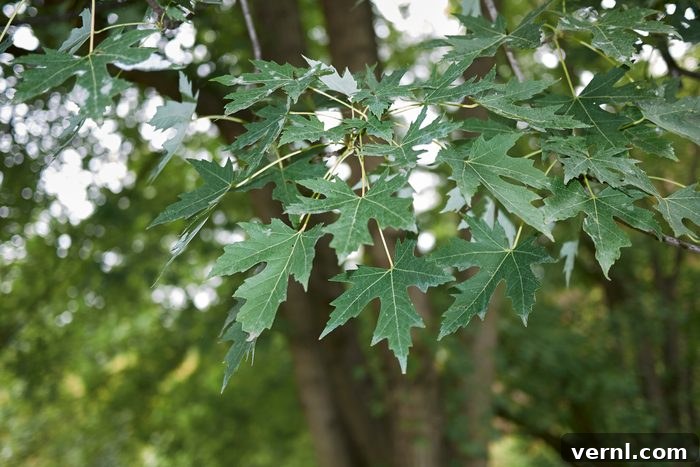
Scientific name: Acer saccharinum
The Silver Maple is a remarkably hardy and fast-growing species, widely distributed throughout much of Eastern and Central North America, particularly along riverbanks and in floodplains. Its robust nature allows it to flourish in a diverse array of climates and environments, tolerating even challenging conditions such as poor soil, urban pollution, and periodic flooding. This adaptability, combined with its rapid growth rate, makes it a popular choice for quick shade and erosion control, often reaching impressive heights much taller than many other maples, commonly ranging from 50 to 80 feet, with some specimens exceeding 100 feet.
Silver Maples are readily identifiable by their conspicuously tall stature, deeply lobed leaves with sharply cut margins, and the striking contrast between the bright green upper surface and the silvery-white underside, which shimmers in the breeze – hence its name. In spring, they produce small, reddish-yellow flowers, followed by distinctive brownish-green samaras (winged seeds), often called “helicopters,” which are larger than those of most other maples and ripen early in the season. The bark of young Silver Maples is smooth and gray, gradually becoming shaggier and peeling in long, thin strips as the tree matures. While highly adaptable to various soil types, its fast growth can sometimes lead to weaker wood and branches that are prone to breakage, especially in storms. Despite this, its resilience and ability to thrive where other trees might struggle make it a valuable, albeit sometimes high-maintenance, addition to many landscapes.
Boxelder Maple (Acer negundo)
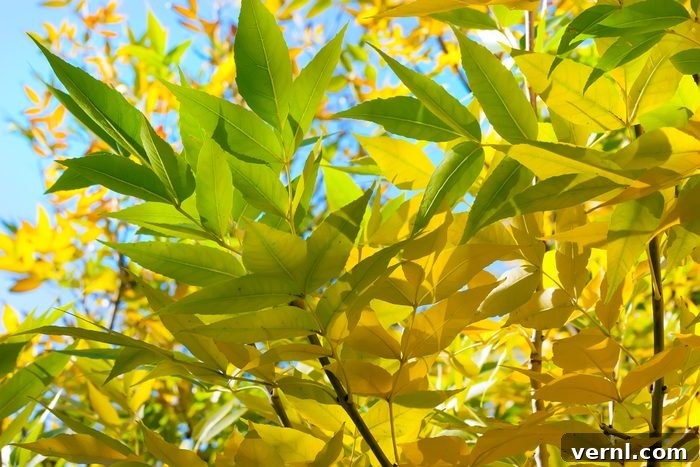
Scientific name: Acer negundo
The Boxelder Maple is a unique member of the Acer genus, often surprising those familiar with the typical maple leaf. Unlike most maples with their characteristic palmate, lobed leaves, the Boxelder stands out with its compound leaves, which resemble those of an ash tree or boxelder bush – hence its common name. Each leaf is typically composed of three to five (and sometimes up to nine) oval-shaped, coarsely toothed leaflets, giving it a very distinct appearance from its maple relatives. The leaves are light green and can be quite variable in shape even on the same tree.
Native to a vast range across Central and Eastern U.S. and extending into Canada and Mexico, the Boxelder is one of the most widely distributed maple species. It is highly adaptable, tolerating a wide range of soil types, moisture levels, and environmental conditions, including urban pollution and harsh climates. This resilience makes it a common colonizer of disturbed sites, riparian areas, and open fields, often growing rapidly to heights of 30 to 50 feet. Its bark is generally light gray to brown, often becoming somewhat furrowed with age. While it provides quick shade and is an important early successional species for wildlife, it is also famously associated with boxelder bugs, those mostly harmless but sometimes irritating household pests that are attracted to these maples for overwintering. Despite its less conventional beauty compared to other maples, the Boxelder’s hardiness and ecological value are undeniable, making it a robust, if sometimes underappreciated, part of North American ecosystems.
Bigleaf Maple (Acer macrophyllum)
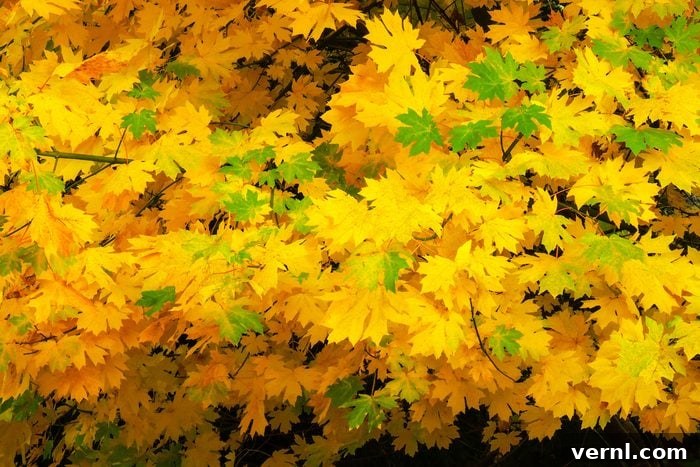
Scientific name: Acer macrophyllum
True to its name, the Bigleaf Maple is renowned for having the largest leaves of all maple species, often growing to an impressive 10 to 12 inches in diameter, and sometimes even larger. These massive, deeply lobed leaves are a defining characteristic, making this tree easily identifiable. Native exclusively to the Pacific Northwest region of North America, from southern British Columbia down to southern California, the Bigleaf Maple thrives in the moist, temperate climates characteristic of this area. It is a dominant deciduous tree in many Pacific Northwest forests, growing in association with conifers like Douglas Fir.
The bark of the Bigleaf Maple is typically gray-brown and can become deeply ridged and furrowed with age. These deep ridges, combined with the region’s abundant moisture, provide an ideal habitat for a variety of epiphytes, meaning it is frequently adorned with a rich tapestry of mosses, lichens, and even small ferns growing directly on its trunk and branches. This gives the tree a uniquely lush and ancient appearance, particularly in old-growth forests. The leaves turn a brilliant golden yellow to orange in the fall, creating spectacular displays against the evergreen backdrop of the Pacific Northwest. Bigleaf Maples are robust trees, reaching heights of 60 to 100 feet and sometimes more, preferring deep, moist, well-drained soils rich in organic matter. Its wood is also valued, especially for veneer, furniture, and musical instruments, often sought after for its curly or quilted grain patterns. Its grand stature and magnificent foliage make it a truly commanding presence in its native habitat.
Why Choose Maple Trees for Your Landscape?
Maple trees offer an unparalleled blend of aesthetic appeal, ecological benefits, and practical utility, making them a superb choice for a wide variety of landscaping projects. Their most celebrated attribute is undoubtedly their spectacular fall foliage, transforming autumn landscapes into vibrant tapestries of red, orange, and gold. Beyond this seasonal showstopper, maples provide excellent shade in summer, reducing cooling costs and creating comfortable outdoor spaces. Their diverse sizes and forms mean there’s a maple for nearly every setting, from towering shade trees to smaller, ornamental varieties perfect for patios or specimen plantings.
In addition to their beauty, maples contribute significantly to local ecosystems, supporting wildlife with their seeds (samaras) and providing shelter. They are generally hardy and long-lived, representing a sound investment in your property’s value and visual appeal for decades to come. With proper selection and care, a maple tree can become a magnificent focal point, a provider of comfort, and a year-round source of natural beauty in your garden.
Caring for Maple Trees: Essential Tips for Healthy Growth
Ensuring the health and longevity of your maple tree involves a few fundamental care practices. When planting a new maple, select a site that matches its specific light and soil requirements, ensuring good drainage. Dig a hole twice as wide as the root ball and just as deep, making sure the tree’s root collar is level with or slightly above the soil surface. Water thoroughly after planting and maintain consistent moisture, especially during the first few growing seasons, as young maples are sensitive to drought.
Mature maples generally require less frequent watering but can benefit from deep watering during prolonged dry spells. Pruning should primarily focus on removing dead, damaged, or diseased branches. For most maples, the best time to prune is in late summer or early fall after the leaves have fully developed, or in late winter when the tree is dormant (avoiding early spring when sap flow is high, especially for Sugar and Red Maples, to prevent “bleeding”). Fertilization is typically not necessary for healthy maples growing in good soil, but a soil test can determine if specific nutrient deficiencies exist. Regular monitoring for common pests and diseases, such as aphids, borers, or verticillium wilt, allows for early intervention and helps keep your maple thriving.
FAQ
What are the most commonly planted maple trees?
Globally and within the United States, several maple species are highly favored for cultivation due to their aesthetic appeal, hardiness, and adaptability. The most commonly planted maple trees include the Red Maple (Acer rubrum) and Sugar Maple (Acer saccharum) for their spectacular fall colors and robust growth, and Silver Maple (Acer saccharinum) for its rapid growth and adaptability. Other popular choices are the elegant Japanese Maple (Acer palmatum) known for its delicate form and diverse leaf colors, the resilient Norway Maple (Acer platanoides, though sometimes considered invasive in North America), the compact Amur Maple (Acer ginnala), and the adaptable Boxelder (Acer negundo).
Which maple trees are best for small yards?
Japanese Maples (Acer palmatum) are unequivocally the best choice for small yards, courtyards, and container planting. Their incredible diversity includes numerous dwarf and semi-dwarf varieties that remain compact, typically growing only 5 to 20 feet tall and wide. They offer stunning foliage that can be green, red, purple, or variegated, often changing spectacularly in the fall. Many Japanese Maple cultivars also feature graceful, weeping forms or interesting bark textures, adding year-round interest without overwhelming a limited space. They generally prefer temperate climates with some afternoon shade, especially in hotter regions, and well-drained, slightly acidic soil.
How fast do maple trees grow?
Maple tree growth rates vary significantly by species. Fast-growing maples, such as the Silver Maple (Acer saccharinum) and Red Maple (Acer rubrum), can add 1-2 feet or more in height per year, quickly providing shade. Moderate-growing maples, like the Sugar Maple (Acer saccharum), typically grow about 1 foot per year. Slower-growing ornamental varieties, such as the Japanese Maple (Acer palmatum) and Paperbark Maple (Acer griseum), may only grow 6-12 inches annually, but their unique features often compensate for their slower pace.
What is the lifespan of a typical maple tree?
The lifespan of a maple tree depends heavily on the species, growing conditions, and care. Many large maple species, such as the Sugar Maple and Silver Maple, can live for 100 to 300 years or even longer under ideal conditions. Red Maples typically live for 80-150 years. Smaller ornamental maples like Japanese Maples usually have shorter lifespans, often ranging from 50 to 100 years, but can exceed this with excellent care.
Sources
- Arbor Day Foundation: Tree Overview: Red Maple
- The Morton Arboretum: Sugar maple
- Lake Forest College: Acer saccharinum (Silver Maple) Sapindaceae