
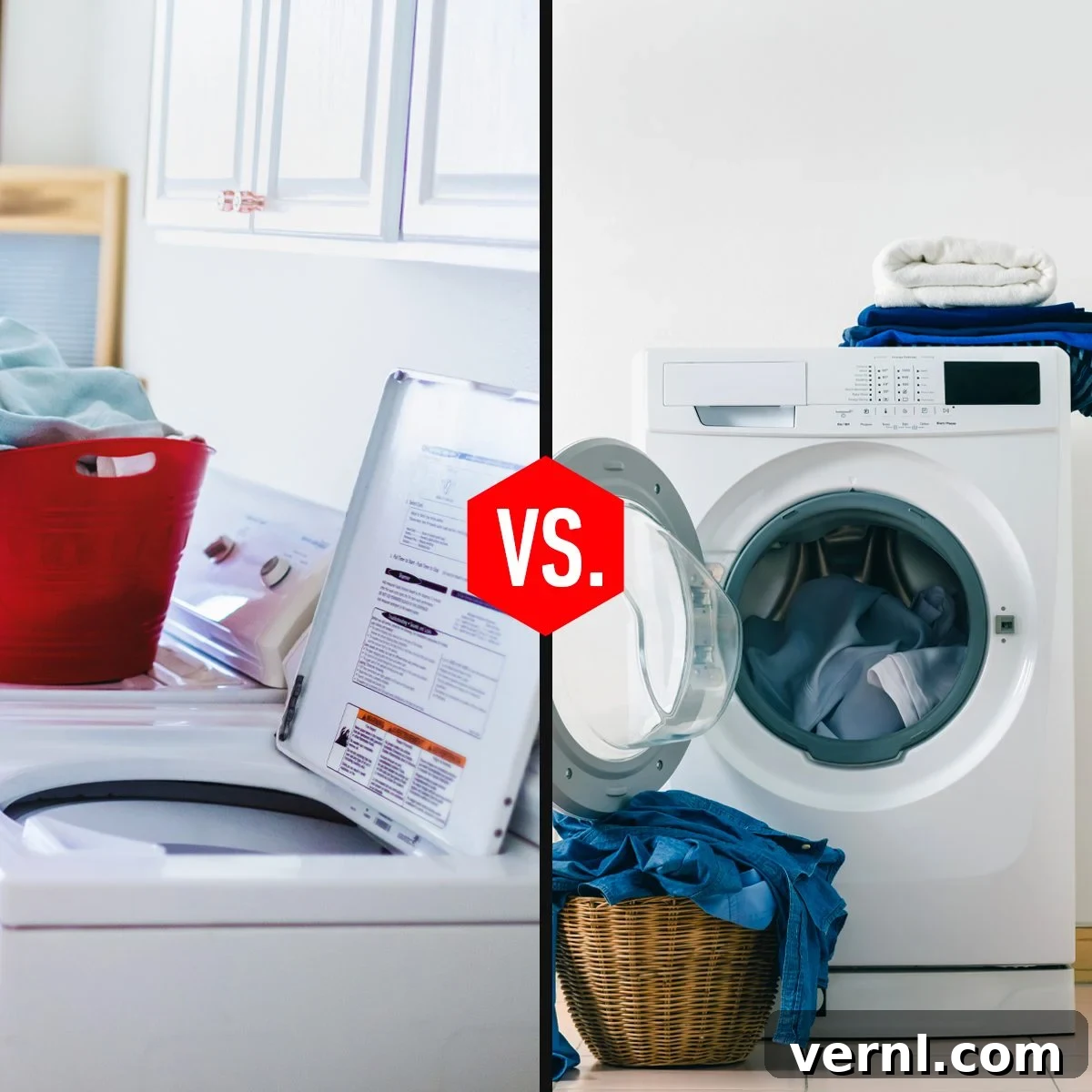
Top Load vs. Front Load Washing Machines: The Ultimate Laundry Showdown
In the world of household appliances, few debates spark as much passion as the classic rivalry between top-loading and front-loading washing machines. It’s a choice that impacts everything from your utility bills and laundry routine to the longevity of your clothes and the layout of your laundry room. For decades, top loaders were the undisputed champions of the home market, a familiar fixture in nearly every household. Front loaders, once relegated primarily to commercial laundromats, have staged a remarkable comeback since their reintroduction in the late 1990s, steadily gaining popularity and challenging the long-held dominance of their upright counterparts.
This isn’t just about different designs; it’s about fundamentally different approaches to getting your clothes clean. Are you drawn to the nostalgic reliability and quicker cycles of a top loader? Or perhaps the innovative efficiency and gentle care of a front loader have caught your eye? Whether you’ve experienced both, have a deep-rooted loyalty to one, or are simply trying to make an informed decision for your next appliance purchase, understanding the nuances of each type is crucial. Let’s dive deep into the advantages and disadvantages to help you decide which washing machine reigns supreme for your specific needs.
The Enduring Debate: Top Loader vs. Front Loader
The choice between a top load and front load washing machine is more than just aesthetic; it’s a decision that affects your daily life, your budget, and even your environmental footprint. Both types have evolved significantly, offering advanced features, improved efficiency, and specialized cycles. However, their core operational principles remain distinct, leading to unique sets of pros and cons that homeowners must weigh carefully. This comprehensive guide will break down each contender, offering insights into their performance, convenience, and long-term value.
Unpacking the Traditional Choice: Top-Loading Washing Machines
A Familiar Friend: Overview and Market Dominance
For generations, the top-loading washing machine has been a staple in American homes. Its design is instantly recognizable: a lid on top, a central agitator (in traditional models) or an impeller (in high-efficiency models), and a deep tub. This familiarity, combined with a reputation for reliability and often a more accessible price point, has ensured top loaders maintain a strong foothold in the appliance market. They represent a tried-and-true method of laundry care that many consumers grew up with and continue to trust.
Key Advantages of Top Loaders
Speed and Convenience: Shorter Wash Cycles
One of the most frequently cited benefits of top-loading washing machines, particularly traditional agitator models, is their speed. According to Consumer Reports, normal wash cycles on top loaders can be significantly shorter than those on front loaders, often completing a load in as little as 35 minutes. Express cycles can take even less time, making them ideal for busy households or when you need a quick refresh for lightly soiled items. Patric Richardson, known as The Laundry Evangelist and author of Laundry Love: Finding Joy in a Common Chore, asserts that a 30-minute cycle is often sufficient for most clothes, provided you use warm water and the correct amount of laundry detergent.
Effortless Loading and Unloading
The upright design of a top-loading washer offers ergonomic benefits, especially for individuals who prefer not to bend down. Loading and unloading clothes involves standing comfortably, which can be a significant advantage for those with back issues or mobility concerns. Furthermore, the ability to add forgotten items mid-cycle is a major convenience. Misplaced a sock or a forgotten towel? Simply lift the lid and toss it in, even after the wash has begun. This flexibility is a small but often appreciated feature that front loaders, with their locking doors, cannot easily replicate.
Simplicity in Design and Maintenance
Top loaders are generally considered less prone to certain maintenance issues compared to front loaders, particularly concerning mold and mildew. Because the tub fills with water and drains completely, and there’s no complex watertight gasket around the door opening (as water levels typically don’t reach the lid), air circulates more freely. This reduces the likelihood of moisture getting trapped and fostering mold growth, even if the lid is left closed between loads. While all washing machines benefit from regular cleaning, top loaders often require less specialized attention in this regard, contributing to their reputation for straightforward, fuss-free operation.
The Pre-Soak Powerhouse
Many top-loading machines excel at presoaking heavily soiled garments. Their design allows you to fill the tub with water and detergent, letting clothes soak for extended periods before starting the wash cycle. This can be incredibly effective for tackling stubborn stains, dirt, or odors, giving the cleaning agents more time to break down grime before agitation begins. This feature is particularly valued by families with active children, gardeners, or anyone who frequently deals with deeply soiled items.
Accessibility for Specific Needs
For individuals who find bending and kneeling difficult, the top-loading design offers superior accessibility. The drum is positioned higher off the ground, making it easier to reach in without significant strain. This upright access caters to a broad demographic, including seniors or those with physical limitations, who prioritize ease of use over other factors.
Potential Drawbacks of Top Loaders
Despite their enduring appeal, top-loading washing machines do come with a few considerations. Traditional agitator models, while powerful, can sometimes be harsher on delicate fabrics due to the vigorous twisting action. While high-efficiency (HE) top loaders with impellers mitigate this, they can still consume more water than their front-loading counterparts. Furthermore, top loaders are typically not stackable, requiring dedicated floor space for both the washer and dryer, which can be a challenge in smaller laundry rooms or apartments.
Embracing Modern Efficiency: Front-Loading Washing Machines
A Shift in Laundry Dynamics: Overview and Growing Popularity
The first automatic washing machine in 1937 was a front loader, and this design has been a workhorse in commercial laundries ever since. In recent decades, home-use front loaders have surged in popularity, driven by advancements in technology, a focus on energy efficiency, and a sleek, modern aesthetic. These machines tumble clothes rather than agitating them, offering a different, often gentler, cleaning mechanism. Their growing presence in the home market signifies a shift towards more sustainable and sophisticated laundry solutions.
Core Benefits of Front Loaders
Pioneers of Efficiency: Water and Energy Savings
One of the most compelling arguments for front-loading washing machines is their exceptional energy and water efficiency. Ron Shimek, president of Mr. Appliance, highlights that “Front loaders use less water than top loaders.” Specifically, Energy Star certified front loaders can use up to 50 percent less water than traditional top loaders. This translates directly to significant savings on your utility bills, as less water needs to be heated, and less energy is required for the wash cycle itself. Even with potentially longer cycle times, their overall efficiency is superior, as validated by Energy Star and Consumer Reports. Moreover, front loaders typically have faster spin cycles, extracting more water from clothes, which in turn reduces drying time and further conserves energy.
Gentle Care for Your Garments
Unlike top loaders with central agitators that twist and pull clothes, front loaders clean by tumbling garments through a small amount of water. This gravity-assisted action is significantly gentler on fabrics, reducing wear and tear, stretching, and fading. This benefit extends even to high-efficiency top loaders with impellers, as testers at Consumer Reports confirm front loaders generally offer a softer touch. For households that frequently wash delicates, expensive clothing, or simply want their garments to last longer, this gentle cleaning action is a major advantage.
Maximizing Space: The Stackable Solution
In homes where space is at a premium, front-loading washing machines offer a distinct design advantage: they are inherently stackable. By pairing a front-load washer with a compatible front-load dryer (often requiring a stacking kit), you can vertically orient your laundry appliances. This frees up valuable floor space in small laundry rooms, utility closets, or even bathrooms, making them an ideal choice for apartments, condos, or compact homes. While some top loaders come in smaller, stackable versions, Mr. Appliance’s Ron Shimek notes that “in most cases, the top-loading machines are of a smaller capacity” when designed for stacking.
Superior Cleaning for Bulky Loads
Without a central agitator, the drum of a front-loading washing machine offers an unobstructed space, making it perfect for washing large, bulky items like comforters, sleeping bags, and large pillows. The tumbling action ensures these items are thoroughly saturated and cleaned evenly, something that can be challenging in top loaders where large items can get tangled around an agitator or fail to submerge fully.
Ergonomic Advantages for Some
While some users find bending over to load a front loader inconvenient, for others, particularly wheelchair users or those of shorter stature, the front-facing door and controls offer easier access. They can load and unload laundry and operate the machine without reaching over a tall tub, providing a more inclusive laundry experience.
Considerations and Challenges with Front Loaders
Despite their numerous benefits, front-loading washing machines come with their own set of considerations. The sealed door gasket, crucial for preventing leaks, can become a breeding ground for mold and mildew if not properly maintained. Regular cleaning of the gasket and leaving the door ajar between loads are essential preventative measures. The cleaning process for a front-load washer typically involves more steps than for a top-loader. Additionally, their wash cycles are often longer, and the initial purchase price can sometimes be higher than comparable top-load models. Finally, the inability to easily add forgotten items after a cycle has started can be a minor inconvenience for some users.
Making Your Choice: A Side-by-Side Comparison
Ultimately, the “better” washing machine isn’t an objective truth but a subjective match to your individual lifestyle, space, and priorities. To help you solidify your decision, consider these scenarios:
A Top Loader Might Be Your Best Fit If…
- You appreciate speed and convenience: With typically shorter wash cycles, top loaders get the job done faster.
- You value the ability to presoak: Top loaders allow you to fill the tub and soak heavily soiled items for extended periods, a feature some front loaders lack.
- You frequently forget items: The ease of pausing a cycle and adding forgotten clothes is a distinct advantage.
- You have mobility concerns or prefer not to bend: The upright loading position can be more comfortable for individuals with back issues or who find bending difficult.
- You’re a traditionalist: Many consumers simply prefer the familiar operation and aesthetic of a top loader.
- You want less mold maintenance hassle: While all washers need cleaning, top loaders are generally less prone to mold and mildew issues in the drum or gasket area.
- Your budget is a primary concern: Top loaders, especially traditional agitator models, often have a lower upfront cost.
A Front Loader Might Be Your Best Fit If…
- Energy and water efficiency are top priorities: Front loaders are champions of resource conservation, leading to lower utility bills and a smaller environmental footprint. They often boast superior Energy Star ratings.
- You wash a lot of large or delicate items: The agitator-free drum and gentle tumbling action are ideal for bulky comforters and preserving the life of your fine garments.
- Space-saving is crucial: Their stackable design makes them perfect for compact laundry areas, apartments, or small homes.
- You have specific accessibility needs: For wheelchair users or those who prefer eye-level operation, the front door and controls can be more accessible than reaching into a deep top-load tub.
- You’re investing in the long term: While potentially having a higher initial cost, the long-term savings on water and energy can justify the investment.
- You prioritize a thorough clean for every item: The tumbling action often ensures all parts of a load are evenly cleaned, especially larger items.
The Final Spin: Which Washing Machine Reigns Supreme?
The great washing machine debate ultimately boils down to personal priorities. There’s no single answer for everyone, as both top-loading and front-loading machines offer compelling benefits and minor trade-offs. Your ideal choice will align with your laundry habits, the available space in your home, your budget, and your personal preferences for convenience and efficiency.
Consider how often you do laundry, the types of garments you wash most frequently, your physical comfort with loading and unloading, and how much you value long-term savings versus upfront cost. By carefully evaluating these factors against the detailed pros and cons outlined above, you can confidently choose the washing machine that truly works best for you and your household, ensuring many years of clean clothes and efficient operation.