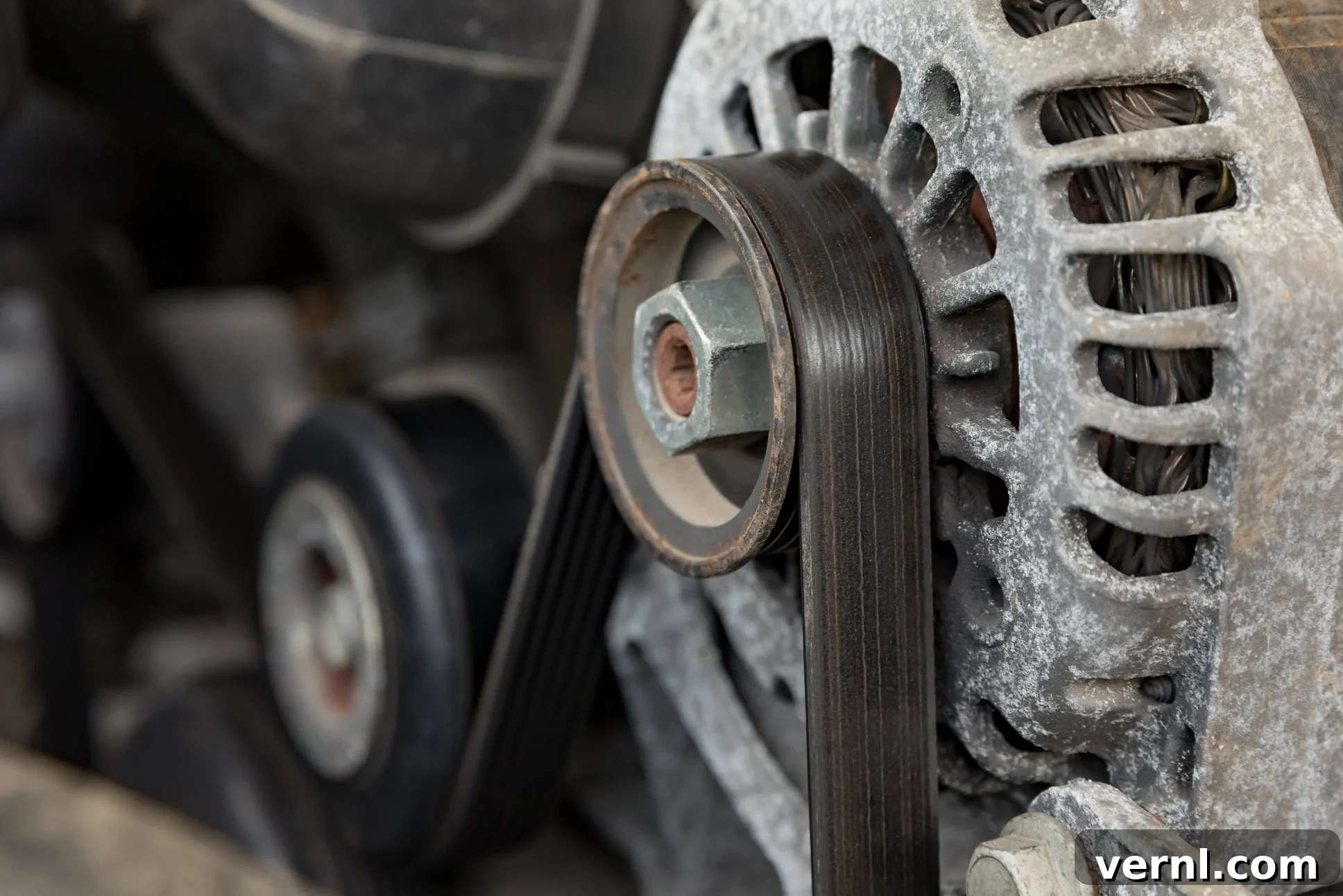
In the evolving landscape of automotive technology, even seemingly minor components can present significant challenges if overlooked. Many years ago, during my time as an auto mechanic, I vividly recall a cautionary tale involving a customer’s vehicle with a persistent, noisy fan belt. This incident occurred shortly after self-adjusting serpentine belts became common, revolutionizing how accessory systems were driven.
Back then, the immediate, albeit ill-advised, solution for a noisy belt was to spray it with belt dressing. This temporary “fix,” unfortunately, led to a cascade of problems for me. The dressing caused the belt to lose its crucial grip on the pulleys, exacerbated by a loose idler pulley mounting bolt. In a regrettable instant, the belt flew off, inflicting damage upon the crankshaft sensor. The resulting confrontation with both the customer and service manager was one of those indelible “uh-oh” moments that every mechanic dreads and learns from. It’s precisely why dismissing the warning signs of a noisy serpentine belt can be a costly mistake.
While a noisy serpentine belt doesn’t trigger a dreaded check engine light, its presence is a clear indicator that something is amiss within your vehicle’s intricate drive belt system. However, it’s vital to understand that the belt itself may not always be the primary culprit. Often, the noise points to deeper issues with other components that rely on the belt for power.
A serpentine drive belt can produce a wide array of unusual and often misleading noises. These sounds can range from persistent squeaks and high-pitched squeals to rhythmic chirps and even distinct clunks. Such noises can mimic symptoms of a failing engine-driven accessory, like an alternator or power steering pump, or even suggest an issue with an engine bearing. This deceptive nature means that even seasoned mechanics can be fooled, potentially leading to an expensive and incorrect diagnosis.
Among the various auditory warnings, squeals and chirps are by far the most prevalent serpentine belt noises, and critically, they typically stem from different underlying problems. Understanding the distinction between these two common sounds is the first step in accurate diagnosis.
- Chirping: This sound manifests as a series of sharp, pulsing sounds, often likened to a bird’s chirp. A key characteristic of chirping is that as the engine speed increases with acceleration, the pitch and volume of the chirp tend to remain constant. This consistency can be a vital diagnostic clue, suggesting a specific type of belt-to-pulley interaction. To delve deeper into identifying car noises, refer to what you need to know about bad car sounds.
- Belt Squeal: In contrast to chirping, a belt squeal is a high-pitched, continuous shrieking sound. While the volume of a squeal may intensify with increasing engine speed, the pitch itself typically remains constant. This prolonged, high-frequency sound often indicates a more continuous slip across a pulley surface, rather than intermittent engagement.
Unraveling the Mystery: Common Reasons for Engine Belt Noise
Beyond the expected wear and tear that naturally occurs over time, nearly any defective component within the accessory drive belt system can become a source of belt noise or contribute to premature belt wear. One of the most insidious threats to a serpentine belt’s integrity and quiet operation comes from fluid contamination. Leaks of common automotive fluids such as engine oil, antifreeze (coolant), or power steering fluid onto the belt surface will rapidly cause the serpentine belt material to deteriorate. These fluids can soften the rubber compound, leading to a loss of friction, glazing, and eventually, the structural breakdown of the belt. Crucially, before installing a new belt, it is imperative that the source of the leak is identified and repaired, and all affected pulleys are thoroughly cleaned to prevent immediate re-contamination and premature failure of the new belt.
For the mechanically inclined DIY enthusiast, replacing a serpentine belt can be a straightforward repair. With the aid of an inexpensive serpentine belt tool, the task becomes significantly simpler, allowing for proper tension release and installation. However, a critical piece of advice that cannot be overstated: Never, under any circumstances, use spray belt lube or dressing to silence a noisy serpentine belt. As my own painful experience taught, these products are merely temporary bandages that contaminate and ultimately ruin the belt, often leading to more severe and costly damage down the line.
Deciphering the Chirp: Common Causes and Solutions
When it comes to persistent belt chirping, the number one culprit is often not the belt itself, but rather misaligned engine pulleys. Even a slight misalignment can cause the belt to ride improperly in the pulley grooves, leading to intermittent slipping and the characteristic chirping sound. If chirping continues even after a new serpentine belt has been installed, the most likely underlying causes point to worn or dirty pulleys, failing pulley bearings, incorrect belt installation, or the use of a substandard or defective belt.
Here’s a detailed inspection guide for resolving belt chirp:
- Pulley Alignment Verification: Employ a straight edge or a more precise laser alignment tool to meticulously ensure that all pulleys are perfectly parallel to each other. Even a fraction of an inch of misalignment can be enough to induce chirping. This check is crucial, as bent mounting brackets or improperly installed components can throw off alignment.
- Component Security Check: Systematically inspect all mounting brackets, individual pulleys, the tensioner assembly, and idler wheels to confirm they are securely fastened to the engine block or accessory mounts. Loose components can shift during operation, leading to misalignment and noise. Torque specifications should be adhered to where applicable.
- Pulley and Idler Wheel Integrity: Manually spin all accessory pulleys and idler wheels. They should spin freely and smoothly, without any binding, gritty feel, or noticeable wobble. Pay close attention to signs of excessive wear on the pulley grooves, such as burrs, rust deposits that can create friction points, or flat spots that indicate bearing failure or prolonged contamination.
- Thorough Inspection of Component Pulleys: Carefully inspect all individual component pulleys, including those for the air conditioning compressor, power steering pump, alternator, and the harmonic balancer. Look for signs of wear within their grooves, such as glazing, uneven wear, or contamination from debris or degraded material from an old belt “gunking up” the pulley grooves. A clean, properly grooved pulley is essential for optimal belt grip.
Silencing the Squeal: Diagnosing Belt Squealing Issues
According to Gates, one of the foremost global manufacturers of drive belts, insufficient belt tension stands as the primary reason for a squealing belt. Belt tension is crucial for maintaining adequate friction between the belt and the pulleys, ensuring power transfer without slippage. When tension is too low, the belt slips continuously, generating that characteristic high-pitched squeal.
Several factors can lead to this critical loss of belt tension. A belt that has stretched over time or is simply worn out will no longer maintain proper tension. A fatigued spring-loaded automatic belt tensioner, which is designed to automatically apply the correct tension, can lose its effectiveness. Similarly, a manual belt tensioner that is out of adjustment will fail to provide the necessary force. The use of the wrong belt—either incorrect in length or material specification—or a belt that has been installed improperly can also directly contribute to low belt tension. Unlike the older “V” belts, which typically only contacted pulleys on their V-shaped sides, modern serpentine belts are designed to engage pulleys on both their ribbed and smooth surfaces, meaning wear on either side can compromise performance.
Here’s a detailed inspection guide for addressing belt squeal:
- Tensioner Health Check: Carefully inspect the belt tensioner. It should swing freely and smoothly, without any accompanying squeaking, binding, clicking, or rattling sounds. These noises often indicate a weak, rusted, or internally busted tensioner spring, or seized pivot points. A failing tensioner cannot maintain proper belt tension, leading to continuous slip and squeal.
- Belt Rib Wear Assessment: Closely examine the ribs of the serpentine belt. Look for signs of significant wear, such as ribs that appear visibly rounded over, flattened, or have lost their sharp, distinct profile. Worn ribs reduce the belt’s ability to grip the pulley grooves effectively.
- Surface Condition of Belt and Idlers: Check the smooth/top side of the belt and the surfaces of any idler wheels. These should not appear shiny, glossy, or glazed. A shiny appearance is typically a sign of excessive heat build-up due to prolonged slipping, which hardens the rubber surface and further reduces friction.
- Contamination Investigation: Thoroughly inspect the belt and all pulleys for any signs of contamination. This includes oil, power steering fluid, antifreeze, or residue from previously applied belt dressing. Also, check for pulley grooves that are mucked up from degraded material of an old belt, or damaged by impacts from stones or road debris. Any foreign substance or physical damage will compromise belt grip.
- Belt Quality and Installation Verification: Always consider the possibility of a poor-quality belt that fails to meet OEM specifications or an improper installation. Ensure that the correct belt length has been used for your specific vehicle application, as an incorrectly sized belt can never achieve or maintain proper tension.
Proactive Maintenance: Checking for Belt Wear and Preventing Engine Belt Noise
A significant advancement in serpentine belt technology occurred around the year 2000, when major vehicle manufacturers began transitioning to serpentine belts made from ethylene propylene diene monomer (EPDM). This material marked a substantial improvement over the traditional Chloroprene (neoprene) engine drive and accessory belts that were previously common. EPDM belts are renowned for their enhanced durability and longevity, typically lasting anywhere between 50,000 and 100,000 miles, often double the lifespan of their neoprene predecessors. However, this extended lifespan comes with a unique challenge: unlike neoprene belts, EPDM belt ribs tend to wear slowly and may not exhibit obvious visual signs of wear, such as cracking, even when they are critically close to failure. This characteristic means that an EPDM belt can appear to be in good condition, deceiving vehicle owners and technicians alike, when it is actually on the verge of failing.
Therefore, understanding the subtle indicators of EPDM belt wear is paramount. Replace the serpentine belt if you observe any of the following critical signs:
- Rib Profile Degradation: Look for belt ribs that have become rounded over or flattened out. This indicates a loss of the original profile designed to grip the pulley grooves efficiently, leading to reduced friction and potential slippage.
- Cracking Patterns: While minor, isolated cracks in the belt ribbing, spaced roughly every 1/8-inch, might be acceptable, pay close attention to the severity. The presence of spider web-like cracking across the surface of the belt ribs signals extreme wear and indicates that the belt’s structural integrity is severely compromised.
- Physical Damage and Material Loss: Any signs of missing pieces of the belt ribbing or visible fraying along the edges or within the grooves are clear indicators of imminent belt failure. These are direct results of material fatigue and breakdown.
- Smooth Side Imperfections: The smoother, non-ribbed side of the belt should also be inspected carefully. A glossy or shiny appearance on this surface, along with rounded edges, missing chunks, glazing, large cracks, or peeling and fraying, all point to significant wear, overheating, or contamination that has degraded the belt material.
Given the deceptive nature of EPDM belt wear, a visual inspection alone might not be sufficient. A specialized tool, such as a Gates belt wear gauge (Gates part number 443-0382-R5, available by contacting Gates), is highly recommended. This precision instrument can accurately measure the remaining material on serpentine belt ribs, allowing for an objective determination of whether the belt should be replaced based on manufacturer specifications, thereby preventing premature failures.
Although newer EPDM belts offer significantly extended lifespans compared to traditional neoprene belts, it is still crucial to incorporate regular belt inspections into your vehicle’s scheduled maintenance service. Proactive inspection, rather than reactive troubleshooting after noise begins, is key to preventing unexpected breakdowns and costly repairs.
Beyond routine checks, there are specific circumstances where belt replacement is highly advised, even if it doesn’t appear overtly worn. Always replace belts if they become contaminated by oil, coolant, or power steering fluid, as these substances compromise the belt’s material properties and grip. When installing a new idler pulley or tensioner, it’s best practice to install a new belt simultaneously, ensuring optimal performance and matching wear characteristics across new components. Furthermore, major repairs such as replacing a leaking water pump, which often involves removing the belt, or undertaking a worn timing belt replacement, provide an opportune moment to install a fresh serpentine belt. Lastly, unless you have recently replaced the drive belt, consider installing a new one if you are replacing a major accessory component like your alternator, power steering pump, or AC compressor. A new belt ensures that the new component operates with the correct tension and reduces the risk of future belt-related issues, providing peace of mind and extending the overall reliability of your vehicle’s accessory drive system.