
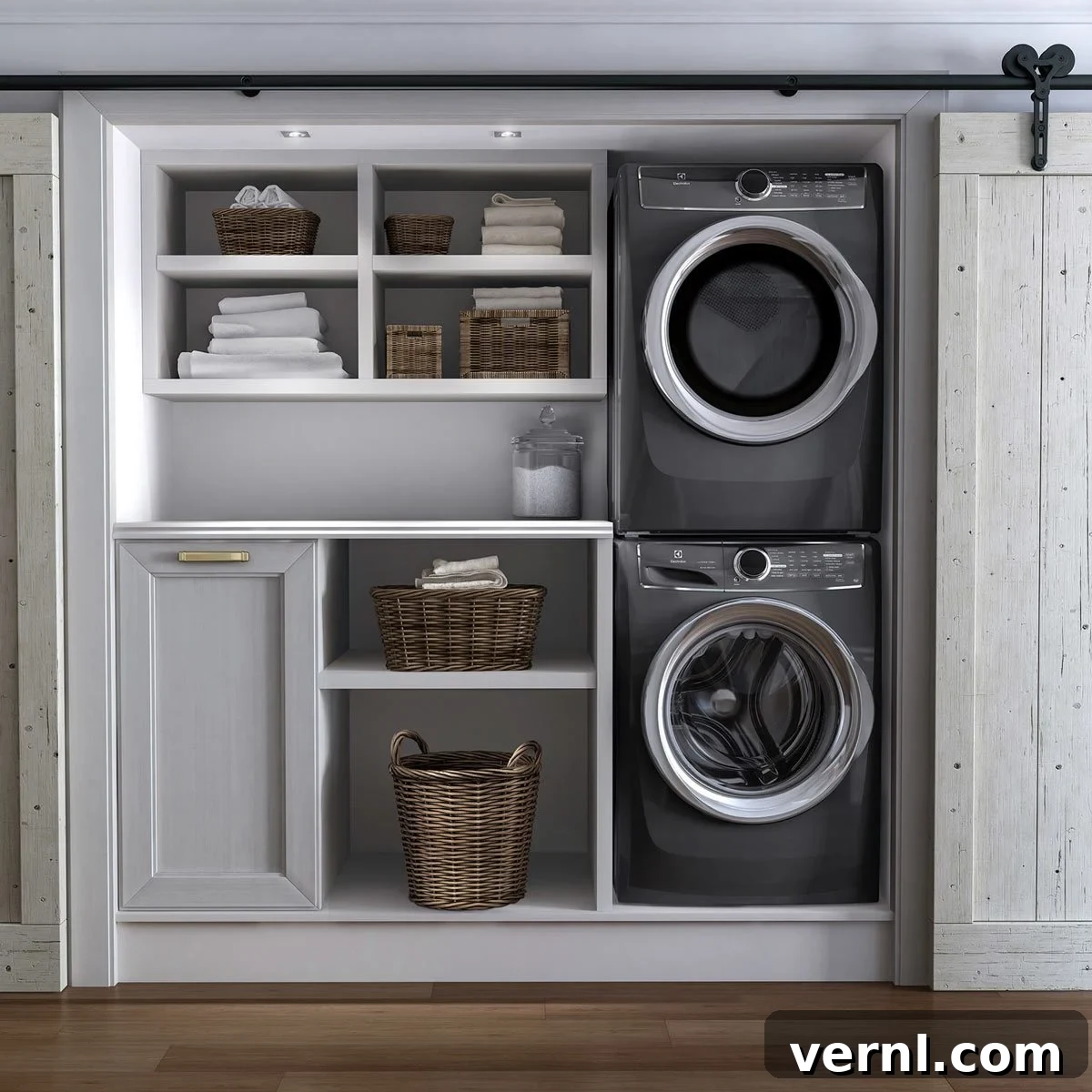
The Ultimate Guide to Stacked Washers and Dryers: Maximizing Your Laundry Space
In the evolving landscape of modern home design, space is often a premium. Whether you reside in a cozy urban apartment, a charming compact house, or even a spacious dwelling with an awkwardly shaped utility area, the quest for efficient and functional living solutions is constant. Among the most innovative answers to this challenge is the stacked washer and dryer setup. Far from being a mere compromise for small laundry rooms, this configuration offers a clever blend of utility, design versatility, and sometimes, unexpected advantages that extend far beyond simply saving square footage.
For many, particularly those with a tight hallway alcove or a tiny closet designated as their laundry zone, a stacked washer and dryer unit isn’t just an option—it’s a necessity. This vertical arrangement allows homeowners to enjoy the convenience of in-home laundry without sacrificing valuable floor space. However, the appeal of stackable washer and dryer sets isn’t limited to homes with spatial constraints. Even in generously sized laundry areas, homeowners are increasingly opting for this setup to free up room for other amenities, enhance accessibility, or simply achieve a more streamlined aesthetic.
This comprehensive guide delves into every facet of stacked laundry systems, exploring the various types available, the compelling reasons to choose them, critical considerations for installation, and potential drawbacks to be aware of. We aim to equip you with all the knowledge needed to determine if a stacked washer and dryer is the perfect fit for your home and lifestyle.
Understanding Your Options: Types of Stackable Laundry Units
Before diving into the pros and cons, it’s essential to understand the two primary configurations when considering vertical laundry solutions:
1. All-in-One Laundry Centers
These units are designed specifically for stacking, with the dryer permanently mounted directly above the washer. They are typically sold as a single, cohesive appliance. Laundry centers are renowned for their compact footprint and integrated design, making them an ideal choice for the most constrained spaces. They often feature a single control panel for both machines, simplifying operation. While they excel in space efficiency, they may sometimes offer slightly less capacity than full-sized individual units and can have fewer advanced features or customization options. Their ‘fixed’ nature means that if one component fails, repairing or replacing it can sometimes be more complex, as the entire unit is interconnected.
2. Separate Stackable Washer and Dryer Units
This option involves purchasing two distinct appliances—a front-loading washing machine and a compatible dryer—and then stacking them using a specialized stacking kit. This approach offers significantly more flexibility. You can often choose full-sized, high-capacity machines with a wider array of features and technologies tailored to your specific laundry needs. The ability to select different brands or models (provided they are compatible for stacking) allows for greater customization. If one machine requires repair or replacement down the line, it’s generally simpler to service or swap out a single unit compared to an integrated laundry center, though the top unit might still need to be temporarily moved for access to the bottom one.
Why Opt for a Stacked Washer and Dryer? Unlocking the Benefits
The decision to stack your laundry appliances is often driven by practical considerations, but it also brings a host of other advantages to the table:
1. Unrivaled Space Efficiency
This is undeniably the most compelling reason for most homeowners. By arranging the washer and dryer vertically, you effectively halve the floor space required for your laundry setup. For apartments, tiny homes, or even compact utility closets, this is a game-changer. The freed-up space can be utilized in myriad ways:
- Expanded Storage: Install shelving, cabinets, or a tall storage cart next to the stacked units for detergents, cleaning supplies, or laundry accessories.
- Dedicated Work Zones: Create a dedicated folding counter, a small utility sink, or even a compact ironing station in what was once consumed by side-by-side appliances.
- Improved Traffic Flow: In narrow hallways or tight laundry nooks, removing bulky appliances from the floor can significantly improve accessibility and movement.
- New Home Features: In larger homes, the extra space might finally allow for that dream pool table in the basement, a mini-bar, or an expanded pantry.
2. Enhanced Design Flexibility and Aesthetic Appeal
A stacked configuration can contribute to a cleaner, more streamlined look in your home. Instead of two bulky appliances dominating a wall, you have a single, tall tower that can be more easily integrated into cabinetry or a dedicated closet. This vertical alignment creates a cohesive visual line, making the laundry area feel less cluttered and more intentionally designed. For those who prioritize modern, minimalist aesthetics, a stacked setup can be a stylish solution.
3. Potential Cost Savings (for Laundry Centers)
While not universally true, some entry-level all-in-one laundry centers can be more budget-friendly than purchasing two separate, comparable individual machines. This can be an attractive option for first-time homeowners or those outfitting a rental property on a tighter budget. However, it’s crucial to balance initial savings against potential limitations in capacity and features, as well as the long-term repair considerations.
4. Improved Ergonomics (for Some)
With the dryer positioned at eye level or slightly above, some users find it more comfortable to load and unload clothes, reducing the need for bending. This can be particularly beneficial for individuals with back issues or mobility concerns. However, this advantage can also become a disadvantage for shorter individuals when reaching to the back of the dryer drum, which we will discuss later.
Crucial Considerations Before Stacking: Planning for Success
While the benefits are clear, successfully implementing a stacked laundry system requires careful planning and attention to detail. Ignoring these factors can lead to safety hazards, installation headaches, or long-term frustrations:
1. The Indispensable Front-Loading Washing Machine
This is non-negotiable. To stack appliances, your washing machine must be a front-loader. Top-loading washing machines, by their very nature, require access from above, making it impossible to place a dryer on top of them. If you’re planning to purchase new units, ensure you understand the fundamental differences between top-load versus front-load washers, as their design and operational characteristics vary significantly.
2. The Essential Stacking Kit: Safety First!
You absolutely cannot simply place a dryer on top of a washer without proper securing. This is a significant safety risk. Dryers, especially during their operation cycles, can vibrate and shift. Without a dedicated stacking kit, the top unit could easily wobble off and crash to the floor, causing extensive damage to both appliances, your home, and potentially severe injury. A stacking kit typically includes robust brackets, clips, and sometimes anti-vibration pads specifically designed to firmly secure the dryer to the top of the washing machine. It’s paramount to purchase a stacking kit that is compatible with both the brand and specific models of your washer and dryer to ensure a secure and safe installation.
3. Appliance Compatibility and Dimensions
Not all front-loading washers and dryers are inherently stackable, even within the same brand. Always verify that the models you choose are explicitly designed to be stacked together. Compatibility extends beyond just the brand; you need to ensure the dimensions (width, depth, and sometimes height if you have overhead constraints) are suitable. Check the manufacturer’s specifications for both machines and the stacking kit to guarantee a perfect and safe fit. Mismatched units can lead to instability or even prevent installation.
4. Utility Connections and Location Planning
Proper utility hookups are critical. Ensure your designated laundry area has the necessary plumbing (hot and cold water lines, drain), electrical connections (a dedicated 240V outlet for electric dryers, or a standard 120V outlet for gas dryers and washers), and appropriate venting for the dryer. A stacked setup requires these connections to be accessible and positioned correctly for both machines. Consider the path for dryer venting – shorter, straighter vents are always more efficient and safer.
5. Accessibility for Future Maintenance and Repairs
While often overlooked, consider how technicians will access your machines for future maintenance or repairs. In a stacked configuration, particularly for the bottom unit, service can be more challenging. It may require the top unit to be unstacked and moved, potentially increasing the time and cost of a service call. Plan for adequate space around the stacked unit for technicians to work safely.
The Trade-offs: Potential Downsides of Stacked Units
Despite their numerous advantages, stacked washer and dryer units do come with a few potential disadvantages that should be carefully weighed against your specific needs:
1. Potential Capacity Limitations
While many separate stackable units offer full-sized capacities, some all-in-one laundry centers or compact stackable pairs might have smaller drums. This could mean you have to run more loads, especially when washing bulky items like king-sized comforters, blankets, or large batches of towels and bedding. For larger families or those who frequently wash oversized items, this reduced capacity could become a frequent inconvenience, forcing you to break up larger loads.
2. Challenges in Maintenance and Repair
As briefly mentioned, servicing either appliance in a stacked setup can be more complicated. If the washing machine (the bottom unit) requires repair, the dryer (the top unit) often needs to be unstacked and moved out of the way to grant the technician access. This adds an extra step to the repair process, potentially increasing labor costs and the overall duration of the service appointment. Similarly, reaching components at the back of the dryer can be more awkward due to its elevated position.
3. Limited Replacement Options and Longevity Concerns
If one of your stacked machines malfunctions beyond repair, finding a perfectly compatible replacement for the other unit can be challenging, especially years after the initial purchase when models have been discontinued. This limitation might force you to replace both appliances prematurely, even if one is still fully functional, simply to maintain a stackable configuration. With laundry centers, if one component fails, the entire unit may need to be replaced, which can be a significant investment.
4. Ergonomics for Shorter Individuals
While the elevated dryer can be ergonomic for some, it can pose a challenge for shorter individuals who might struggle to reach items at the very back of the dryer drum or access controls positioned high up. This can lead to discomfort or even necessitate using a step stool, which can be inconvenient.
5. Potential for Increased Vibration and Noise
Even with a properly installed stacking kit and leveled appliances, a stacked configuration *can* sometimes generate or transmit more noticeable vibration and noise compared to side-by-side units, especially during the washer’s spin cycle. This is more pronounced if the appliances are located on a less rigid floor or near living spaces where noise is a concern. Modern anti-vibration technologies in higher-end models can mitigate this, but it remains a factor to consider.
Making the Right Choice: Stacked vs. Side-by-Side
The decision ultimately boils down to your specific needs, available space, and personal preferences. Here’s a summary to guide your choice:
- Choose Stacked If: You have extremely limited floor space, a compact laundry closet, a desire to free up room for other amenities, or a strong preference for a streamlined, modern aesthetic.
- Choose Side-by-Side If: You have ample dedicated laundry room space, require maximum capacity for very large loads, prioritize ease of access for maintenance and replacement, or prefer the option of a countertop above your machines.
In conclusion, a stacked washer and dryer unit is a powerful and efficient solution for optimizing your home’s utility space. Unless your laundry area is severely limited by a small space, there’s no inherent superiority of one configuration over the other. Both stacked and side-by-side arrangements can work beautifully as long as you meticulously plan the installation, ensure appliance compatibility, and adhere to proper safety guidelines. By understanding the nuances of each option, you can confidently select the laundry setup that best serves your household for years to come.