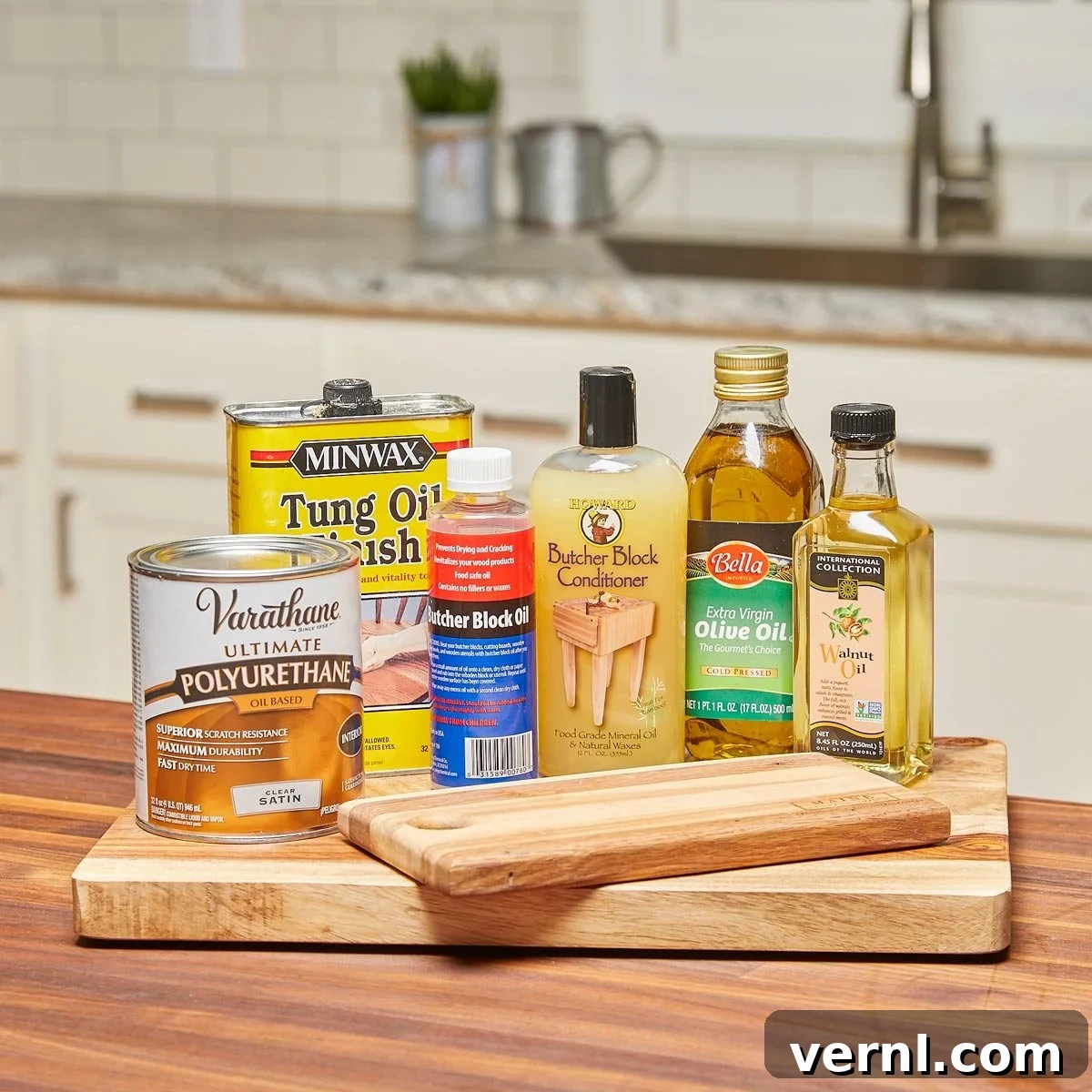
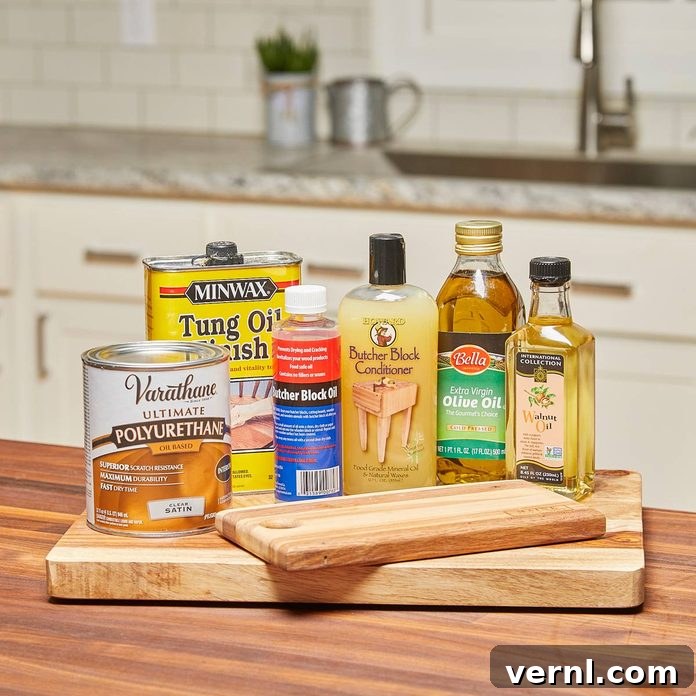
Wood, with its natural warmth and beauty, is a staple in homes for everything from structural elements to decorative accents. Whether you’re crafting a beautiful piece of furniture for your living room or a functional item for your kitchen, applying a finish is essential. A well-chosen finish not only enhances the wood’s aesthetic appeal but also provides crucial protection, extending its lifespan and preserving its inherent colors from fading or wear. This holds particularly true for wooden items that frequently come into contact with food, such as elegant countertops, sturdy tabletops, and indispensable cutting boards.
The concept of food safety becomes paramount when selecting a finish for these items. Many wood finishes, in their liquid, pre-application state, contain chemical compounds that are undoubtedly toxic. In this raw form, the idea of them interacting with food is unthinkable. However, a significant transformation occurs once a finish has been properly applied to the wood surface, penetrating its fibers and undergoing a complete curing process. It’s this cured state that dictates whether a finish can be considered truly food-safe. Navigating the world of wood finishes for food-contact surfaces can be confusing, but understanding the science behind the curing process and distinguishing between different types of finishes is key. Let’s delve into what genuinely constitutes a food-safe wood finish and how to ensure the items you create are both beautiful and safe for culinary use.
Demystifying Food-Safe Wood Finishes: The Complete Guide
When the question arises, “Which wood finishes are food-safe?”, the concise answer might surprise you: essentially all of them, but with a critical caveat. The paramount condition for any wood finish to be deemed food-safe is that it must be fully cured. This curing process involves a chemical reaction where the finish hardens and inert, transforming from a potentially hazardous liquid into a stable, non-toxic solid film or impregnation. The duration required for full curing can vary significantly, ranging from a few days to an extensive 30-day period, depending on the specific product, environmental conditions like temperature and humidity, and the thickness of the application.
Historically, concerns about finish toxicity were more pronounced due to the inclusion of harmful additives. For instance, some older wood finishes contained lead as a drying agent, which would unequivocally render them toxic even after curing. Thankfully, such practices have long been banned, and modern finishes adhere to much stricter safety regulations. Today’s primary consideration revolves around the physical transformation of the finish itself.
Wood finishes can generally be categorized into two main types based on their interaction with the wood: penetrating oils and film-forming finishes. Penetrating oils, as their name suggests, soak deep into the wood fibers, hardening within the wood itself to provide protection from the inside out. Film-forming finishes, on the other hand, create a durable protective layer on top of the wood surface. Each type has its own advantages and ideal applications, especially when food contact is involved. Understanding the nuances of these types will help you choose the right oil to finish wood or select an appropriate film finish for your project.
FAQs About Food-Safe Wood Finishes
Can I use regular polyurethane or varnish on food prep surfaces like cutting boards?
Using a film-forming finish such as polyurethane, varnish, or lacquer on wooden items that do not experience heavy cutting, like decorative serving bowls, fruit platters, or dining tabletops, is generally acceptable once the finish has fully cured. These finishes create a robust and aesthetically pleasing barrier that protects the wood from moisture and general wear. However, their suitability drastically changes when it comes to surfaces that will endure direct, repeated contact with knives and other utensils, such as cutting boards.
The primary issue with film finishes on cutting surfaces is their susceptibility to developing cracks and scratches under heavy use. These microscopic (and eventually macroscopic) fissures compromise the integrity of the protective layer. Once cracked, water and food particles can seep into the underlying wood, becoming trapped. This moisture ingress, without an adequate means of escape, can lead to several problems: it can cause the wood to degrade, swell, harbor bacteria, and become discolored. Furthermore, refinishing a film-finished piece that has sustained such damage is a labor-intensive undertaking. It typically requires sanding the entire piece back down to bare wood to remove the compromised finish and then reapplying new coats. This extensive process is often something woodworkers and homeowners prefer to avoid.
For wooden bowls, cutting boards, or any item that will experience rigorous treatment from knives and cooking utensils, a penetrating oil finish is the vastly superior choice. Oils like pure tung oil, food-grade mineral oil, raw linseed oil (also known as flaxseed oil), or even edible oils such as olive oil or walnut oil (with a note on potential allergens for the latter) are ideal. These oils penetrate the wood, conditioning and protecting it from within, without forming a surface film that can crack. They are also incredibly easy to maintain: simply refresh the finish as needed with another coat of oil. If you opt for an oil that is not explicitly edible (like mineral oil or tung oil), it is absolutely crucial to allow ample time for the finish to fully cure and harden before the item is put into service for food preparation. This ensures that any non-food-grade solvents or additives have completely evaporated and the finish has become inert.
Is linseed oil food-safe for wooden items?
Linseed oil, derived from flax seeds, is a popular choice for finishing wood due to its ability to penetrate and harden, offering good protection and a beautiful sheen. When discussing its food safety, it’s important to distinguish between different types of linseed oil. Raw linseed oil, which is essentially food-grade flaxseed oil, is perfectly safe for food contact after it has cured. In fact, flaxseed oil is an edible product.
However, many products marketed as “boiled linseed oil” are chemically altered or contain metallic driers to accelerate the curing process. According to Safety Data Sheets (SDS) for products like Sunnyside Boiled Linseed Oil, the product itself is generally “not considered hazardous” under normal handling conditions. However, there’s often a warning that it “may be harmful if ingested” in its liquid form. This warning applies to the oil before it has been applied and fully cured. Once boiled linseed oil has completely dried and hardened through its curing process, the chemical additives polymerize and become inert, significantly reducing any chance of adverse effects upon incidental contact with food. The crucial factor remains full curing, which can take several weeks for boiled linseed oil to achieve completely. For absolute peace of mind and strict food safety applications, especially for items that will be used by individuals with sensitivities or for infant products, pure, food-grade raw linseed oil (flaxseed oil) or dedicated food-safe mineral oil is often preferred over boiled varieties.
Understanding the Curing Process: The Key to Food Safety
The concept of “curing” is central to understanding food-safe wood finishes. Curing is not simply drying; it’s a chemical process where the finish undergoes a molecular transformation, hardening and becoming a stable, inert substance. During this process, solvents evaporate, and resins or oils polymerize. It’s only after this complete chemical change that a finish can be considered food-safe. The duration of curing depends on several factors: the type of finish (oils generally take longer than some film finishes), the thickness of the application, ambient temperature, and humidity. Adequate ventilation is also critical during this phase to allow solvents to dissipate properly. Always consult the manufacturer’s instructions for specific curing times and conditions, as rushing the process can compromise both the finish’s durability and its safety.
Types of Food-Safe Finishes for Different Applications
Penetrating Oil Finishes: Ideal for Cutting and Prep Surfaces
Penetrating oils are the go-to choice for wooden items that see heavy use, especially cutting and food preparation. Their ability to soak into the wood grain means they don’t form a surface film that can peel, crack, or chip. Instead, they condition the wood from within, making it more resilient to moisture and damage.
- Mineral Oil: This non-drying petroleum-based oil is perhaps the most widely recommended and safest option for cutting boards and butcher blocks. It’s inexpensive, easily applied, and simply needs to be wiped on regularly to keep the wood moisturized and protected. It never goes rancid and is entirely non-toxic.
- Pure Tung Oil: A natural drying oil derived from the nut of the tung tree, pure tung oil creates a relatively hard, water-resistant finish. It penetrates well and offers good protection. Ensure you use “pure” tung oil, as some products may contain additives or solvents. It takes time to cure but provides a durable, food-safe barrier.
- Raw Linseed Oil (Flaxseed Oil): As mentioned, raw linseed oil is food-grade and cures into a hard, protective finish. It’s an excellent choice for items that require a natural, non-toxic finish. Be patient with its curing time, as it can be quite slow.
- Walnut Oil: An edible drying oil, walnut oil offers a beautiful finish and good protection. However, due to its allergenic potential for individuals with nut allergies, it should be used with caution and clearly labeled if given as a gift.
- Beeswax and Carnauba Wax: Often used in conjunction with penetrating oils, waxes provide an additional layer of protection, especially against moisture, and impart a lovely luster. They are entirely food-safe and can be reapplied as part of routine maintenance.
Film-Forming Finishes: Best for Non-Cutting Surfaces
While often safe after full cure, film-forming finishes like polyurethane, varnish, and shellac are better suited for wooden items that will not be subjected to sharp knives or heavy abrasion.
- Polyurethane and Varnish: These durable finishes create a hard, protective layer on the wood surface. Once fully cured (which can take up to 30 days for some products), they are generally considered inert and food-safe. They are excellent for dining tables, serving trays, and decorative bowls that will hold food but not be cut upon. The critical issue, as discussed, is cracking with heavy utensil use on cutting surfaces.
- Shellac: This natural resin, derived from the lac beetle, is dissolved in denatured alcohol for application. Once the alcohol evaporates and the shellac cures, it forms a hard, non-toxic film. In fact, food-grade shellac is used as a glaze on some candies and pharmaceuticals. It’s a very safe option for decorative bowls or serving pieces, but like other film finishes, it’s not ideal for cutting boards.
Application and Maintenance for Long-Lasting Safety
Beyond selecting the right finish, proper application and ongoing maintenance are crucial for ensuring the longevity and continued food safety of your wooden items. Always apply finishes in a well-ventilated area to facilitate solvent evaporation and protect your health. Follow the manufacturer’s instructions for the number of coats and drying times between applications. After the final coat, allow the item to cure for the recommended period – this step cannot be overstressed. A good way to test for full cure is by a smell test; if you can still detect the scent of the finish, it likely needs more time.
For items finished with penetrating oils, regular reapplication is key to maintaining their protective qualities. When the wood starts to look dry or dull, simply clean it with mild soap and water, let it dry thoroughly, and apply another thin coat of your chosen oil. For film finishes, regular cleaning with a damp cloth and mild soap is sufficient. Avoid harsh abrasive cleaners or chemicals, which can degrade the finish over time. With proper care, your beautifully finished wooden items will remain both functional and safe for many years to come.
Source
Sunnyside Boiled Linseed Oil: Material Safety Data Sheet; 2010.